
Mexico’s Record Sargassum Surge Spreads Across Cancun, Tulum and Caribbean Beaches

Published
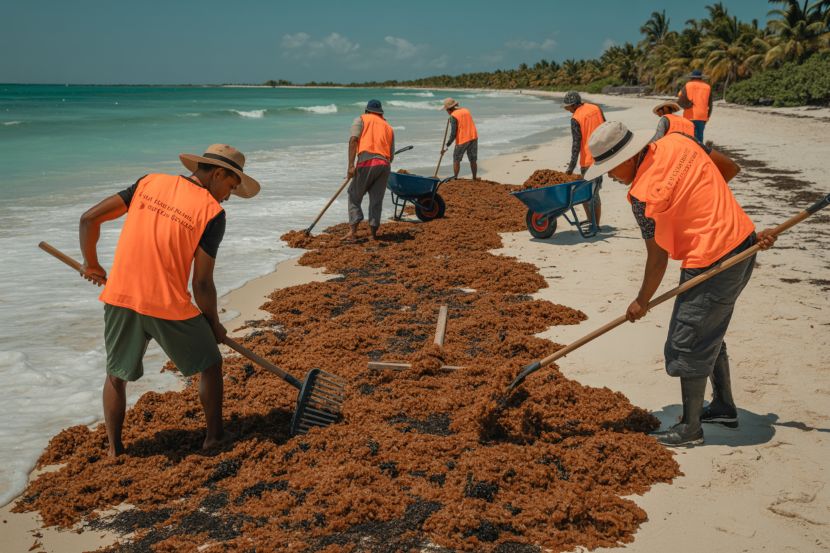 Image generated with Ai
Mexico’s record sargassum surge is reshaping Caribbean travel, as Cancun, Tulum, Playa del Carmen and other Caribbean beaches face growing seaweed pressure. Meanwhile, Mexico’s Caribbean beaches continue attracting global travellers despite changing coastal conditions. The record sargassum surge affects beaches differently, so travellers need current information before planning Cancun, Tulum or Playa del Carmen escapes. Moreover, the Caribbean beaches and Mexico beaches can experience rapidly changing conditions because winds, currents and tides influence arrivals. Travel And Tour World urges readers to continue through this story for essential travel guidance, beach insights and practical information about Mexico’s record sargassum surge, Cancun, Tulum, Playa del Carmen and Caribbean beaches.
Mexico Sargassum Surge: What Global Travellers Need to Know Before Visiting Quintana Roo
Mexico’s Caribbean coast is confronting an exceptional sargassum season in 2026. The brown macroalgae has arrived in large quantities along Quintana Roo’s famous coastline.
The development matters to international travellers planning beach holidays in Cancun, Playa del Carmen, Tulum and Puerto Morelos.
The latest reported collection has already surpassed the previous annual record. That has increased pressure on local authorities to protect beaches and tourism.
Advertisement
Advertisement
However, travellers should not assume every beach is affected equally. Conditions can change between resorts, beaches and even different days.
Why the Mexico Sargassum Surge Matters to Travellers
Sargassum is a naturally occurring marine macroalgae. Large accumulations become a tourism concern when they reach beaches faster than crews can remove them.
Advertisement
Advertisement
As the material remains on shore and decomposes, it can produce unpleasant smells. Tulum’s municipal tourism guidance also advises visitors to avoid prolonged direct contact with accumulated sargassum because organisms living within the algae can cause skin reactions in some people.
For beach-focused travellers, the main issue is therefore not simply whether sargassum exists.
Advertisement
Advertisement
The more important question is where it is arriving and how quickly local teams are clearing it.
This makes flexible planning particularly valuable during the current season.
Quintana Roo Faces a Heavy Cleanup Operation
Authorities in Quintana Roo began strengthening their response early this year after sargassum arrived sooner than expected.
The state government reported that thousands of tonnes had already been collected by February. It also announced more intensive beach operations using land-based equipment from March.
Advertisement
Advertisement
Playa del Carmen has been particularly exposed.
Local authorities have explained that its heavier accumulation compared with some neighbouring destinations is influenced by geographic and oceanographic conditions. The difference does not necessarily indicate weaker cleaning efforts.
For visitors, this distinction is important.
A traveller staying in one part of the Riviera Maya may experience significantly different beach conditions from another visitor staying elsewhere.
What Travellers Should Expect in Cancun and Riviera Maya
Cancun remains one of Mexico’s most important international beach destinations. Playa del Carmen and Tulum also attract visitors seeking Caribbean beaches, water activities, nightlife and cultural experiences.
Yet travellers should treat daily beach conditions as changeable during a major sargassum season.
Advertisement
Advertisement
The Mexican Navy uses satellite monitoring through its oceanographic capabilities to track arrivals and support containment operations. This early-warning approach helps authorities coordinate collection and cleaning activities.
Playa del Carmen has also established a broader response involving marine barriers, daily satellite monitoring and beach-level alerts.
This means travellers should check current local conditions shortly before heading to a particular beach.
A hotel’s beachfront can also differ considerably from another property only a short distance away.
Tulum Offers More Than a Beach Day
Travellers visiting Tulum can reduce the impact of changing beach conditions by building variety into their itinerary.
The municipality highlights cenotes, lagoons, canals and inland recreational experiences alongside coastal activities. These alternatives can provide useful options when seaweed affects the shoreline.
Advertisement
Advertisement
Visitors can therefore combine beach time with cultural, nature and inland experiences.
This approach also avoids making an entire holiday dependent on one day of perfect Caribbean water.
Puerto Morelos Is Also Preparing for Arrivals
Puerto Morelos has maintained dedicated sargassum operations throughout 2026.
Municipal authorities reported that more than 4,000 tonnes had been collected between January and May. The destination also uses marine barriers and equipment to reduce the impact along its coastline.
The municipality says cooperation between government authorities, the navy and tourism businesses remains central to the response.
For travellers, this means beach conditions can improve rapidly after collection teams complete their work.
Advertisement
Advertisement
Mexico Is Investing in a Bigger Response
Mexico’s federal government has now moved toward a broader national strategy.
In July, President Claudia Sheinbaum announced an integrated plan designed to clean beaches across Quintana Roo. The programme is being coordinated by Mexico’s Navy and Tourism Secretariat.
Days later, the Quintana Roo government announced that more than 2 billion Mexican pesos would be directed toward strengthening the integrated sargassum strategy.
The programme includes collection in open water, shallow areas and beaches, together with transportation, final disposal and potential utilisation of the macroalgae.
That could eventually change how destinations manage future arrivals.
Turning Sargassum Into a Tourism Sustainability Opportunity
Authorities and businesses are also exploring ways to turn collected sargassum into useful products.
Advertisement
Advertisement
Mexico’s Environment Ministry has highlighted work involving biomaterials, bioplastics and fertilisers. The government views these projects as part of a broader circular-economy approach.
The concept could reduce the long-term burden of simply collecting and disposing of the algae.
It could also create new environmental and commercial opportunities for coastal communities.
Mexico and Caribbean Beaches Facing Sargassum in 2026: A Detailed Guide to the Beaches Travellers Should Watch
The 2026 sargassum season is creating a major challenge across parts of Mexico and the wider Caribbean. However, the impact is not uniform.
Some beaches are receiving substantial amounts of the brown seaweed, while nearby stretches can remain comparatively clear after daily cleanup. Official monitoring also shows that offshore sargassum can move rapidly towards different coastal areas depending on currents and winds.
For travellers, therefore, the most useful information is not simply whether a destination has sargassum. The important question is which beaches are being monitored, which beaches have recorded arrivals and where authorities are actively removing the seaweed.
Advertisement
Advertisement
The following beach-by-beach guide focuses on destinations where government authorities have documented sargassum arrivals, monitoring or cleanup activity.
Mexico: Beaches Most Relevant for Travellers
| Beach or coastal area | Destination | 2026 evidence | What travellers should know |
|---|---|---|---|
| Playa Delfines | Cancun | 18,188 tonnes removed across Cancun’s public beaches by June 28 | Daily cleaning continues |
| Playa Coral | Cancun | Included in municipal cleanup programme | One of Cancun’s monitored public beaches |
| Playa Marlín | Cancun | Sargassum arrivals previously recorded | Permanent maintenance continues |
| Playa Chac Mool | Cancun | Recorded significant arrivals during earlier operations | Conditions can change quickly |
| Playa Ballenas | Cancun | Recorded sargassum arrivals | Daily municipal cleaning |
| Playa Fundadores | Playa del Carmen | Major cleanup location | More than 21,000 tonnes collected in municipality by July |
| Playa Mamitas | Playa del Carmen | Included in municipal sargassum monitoring | Conditions vary by day |
| Punta Esmeralda | Playa del Carmen | Included in monitoring | Nearby beaches can have different conditions |
| Xcalacoco | Playa del Carmen | Included in monitoring | Check daily beach status |
| Santa Fe | Tulum | Officially listed for sargassum removal | Located in Tulum National Park |
| Pescadores | Tulum | Officially listed for removal | Conditions can change seasonally |
| Maya | Tulum | Officially listed for removal | Part of Tulum’s managed beach zone |
| Mezzanine | Tulum | Officially listed for removal | Monitoring and collection take place |
| Punta Piedra | Tulum | Officially listed for removal | Alternative beach requiring current checks |
| Puerto Morelos beaches | Puerto Morelos | More than 4,000 tonnes collected Jan-May | Offshore barrier supports prevention |
| Cozumel beaches | Cozumel | Navy monitoring recorded possible arrivals | Island conditions vary by coastline |
| Mahahual | Costa Maya | Repeated Navy arrival forecasts | Cruise visitors should check conditions |
| Xcalak | Southern Quintana Roo | Repeated Navy arrival forecasts | Remote does not mean sargassum-free |
| Xcacel | Riviera Maya | Navy forecasts identified possible arrivals | Nature-focused visitors should monitor conditions |
| Akumal | Riviera Maya | Repeated official arrival forecasts | Marine tourism can be affected |
Playa Delfines, Cancun
Playa Delfines is one of Cancun’s best-known public beaches and remains under active municipal maintenance. On June 28, 2026, Cancun authorities reported that 18,188 tonnes of sargassum had been removed from the city’s beaches during the year. More than 200 workers were participating daily in beach maintenance and seaweed removal.
Delfines is particularly important for international visitors because it is one of Cancun’s principal public beaches and a popular sightseeing location. Municipal teams continue to clean the sand, remove sargassum and maintain visitor facilities. The city also includes Delfines among its seven Blue Flag beaches for the 2025-2026 season.
Playa Coral, Cancun
Playa Coral is another Cancun beach specifically included in municipal sargassum operations. Earlier municipal data recorded Playa Coral as having the largest volume of sargassum collected among seven public beaches in one reported cleanup period, with 1,344.30 cubic metres removed.
The beach is also part of Cancun’s current group of seven public Blue Flag beaches. Travellers should therefore distinguish between a beach having strong management standards and being completely free of seasonal sargassum. Blue Flag status does not guarantee that natural seaweed arrivals will never occur.
Playa Marlín, Cancun
Playa Marlín is another heavily visited Cancun beach appearing in official sargassum management reports. In June 2025, municipal authorities identified Marlín, Ballenas and Chac Mool as beaches experiencing considerable arrivals, although officials reported that the situation at Marlín and Ballenas had subsequently been brought under control.
Advertisement
Advertisement
Marlín is also among Cancun’s seven Blue Flag beaches in 2026. The city continues routine cleaning and beach maintenance, giving travellers a managed alternative even during periods of higher sargassum pressure.
Playa Chac Mool and Playa Ballenas, Cancun
Playa Chac Mool and Playa Ballenas are particularly useful beaches to watch because municipal records have specifically identified both locations during sargassum operations.
In June 2025, Chac Mool recorded a considerable arrival, while Ballenas and Marlín had already seen their arrivals brought under control. The municipality has continued maintaining all seven principal public beaches during 2026.
Both beaches are also among Cancun’s Blue Flag locations, alongside Delfines, Coral, Marlín, Las Perlas and Del Niño.
Playa Fundadores, Playa del Carmen
Playa Fundadores is one of the most important beaches to monitor in Playa del Carmen. Municipal authorities have repeatedly included the beach in sargassum cleanup operations.
On March 28, officials reported that 5,538 tonnes had already been collected in Playa del Carmen during the 2026 season. The cleanup programme was strengthened with additional equipment and personnel.
Advertisement
Advertisement
By June 6, the municipality reported that seasonal collection had exceeded 20,000 tonnes, with approximately 70 tonnes removed during one large cleaning operation involving more than 2,000 participants.
By July 8, municipal authorities reported approximately 21,000 tonnes collected, with more than 300 Navy and ZOFEMAT personnel involved in daily containment and cleaning operations.
Playa Mamitas, Punta Esmeralda and Xcalacoco
Playa Mamitas, Punta Esmeralda and Xcalacoco are among the named beaches included in Playa del Carmen’s official sargassum monitoring system.
Historical municipal beach-status bulletins demonstrate why travellers should check conditions at individual beaches rather than relying on a city-wide assessment. In one official update, several beaches were classified green, others yellow and some red according to the amount of sargassum present.
This is particularly useful for tourists because Playa del Carmen’s coastline can experience substantial differences over relatively short distances.
Municipal officials have also explained that the heavier arrivals in Playa del Carmen compared with Puerto Morelos are influenced by geographical and oceanographic factors, rather than simply differences in cleaning performance.
Advertisement
Advertisement
Santa Fe, Pescadores, Maya, Mezzanine and Punta Piedra, Tulum
Tulum provides some of the clearest official beach-level information.
The municipal tourism authority specifically identifies Santa Fe, Pescadores, Maya, Mezzanine and Punta Piedra as beaches where authorities conduct sargassum removal operations.
The authority also stresses that the sargassum season does not mean every Tulum beach will be covered. Instead, April through August represents the period when arrivals are more likely.
This distinction matters enormously for travellers.
A Tulum holiday can include beaches, cenotes, archaeological attractions, lagoons and other inland experiences. The municipality itself encourages visitors to explore these alternatives while following environmental guidance.
Puerto Morelos Beaches
Puerto Morelos is an important comparison with Playa del Carmen because official authorities have reported different levels of accumulation between the two destinations.
Advertisement
Advertisement
Municipal authorities reported that more than 4,000 tonnes of sargassum were collected between January and May 2026. The town also deployed approximately 2.3 kilometres of anti-sargassum barriers as part of its response.
The result is important for tourists because a nearby destination can sometimes experience less visible accumulation even during the same regional sargassum event.
Cozumel Beaches
Cozumel is also included in Mexico’s official monitoring network.
Navy bulletins have repeatedly identified potential sargassum arrivals around Cozumel. One January report recorded approximately 8,131 tonnes of sargassum biomass in the Mexican Caribbean region, with movement forecasts indicating possible arrivals around the island.
A later May bulletin again identified potential arrivals around Cozumel and along the coast between Playa del Carmen and Puerto Morelos.
For divers and snorkellers, this means checking the exact marine location is particularly important rather than assuming island-wide conditions.
Advertisement
Advertisement
Mahahual and Xcalak
Mahahual and Xcalak are two southern Quintana Roo locations that repeatedly appear in Navy sargassum forecasts.
A January 10, 2026 Navy bulletin identified potential arrivals between Xcalak and Mahahual and recorded approximately 6,449 tonnes of sargassum biomass in the Mexican Caribbean at that time.
Later April monitoring again identified Xcalak and Mahahual as possible arrival zones.
Mahahual is particularly relevant to cruise passengers visiting Costa Maya. Travellers should not assume that a smaller or less urban destination automatically means clearer beaches.
Xcacel and Akumal
Xcacel and Akumal are additional Riviera Maya beaches that have appeared in official arrival forecasts.
A January 24 Navy bulletin identified possible sargassum arrivals in Tulum, Xcacel and Akumal.
Advertisement
Advertisement
An April 21 report again identified Tulum and Akumal among areas with possible arrivals, while satellite observations placed sargassum approximately 0.95 kilometres from Akumal during that monitoring period.
For travellers interested in marine wildlife, these locations deserve particular attention because coastal conditions can affect visibility and the quality of water-based experiences.
Caribbean Beaches Beyond Mexico
The phenomenon extends beyond Mexico. NOAA describes large sargassum arrivals as a recurring issue across the Caribbean, the Gulf of America and tropical Atlantic since 2011. Its monitoring system assesses coastal inundation risk using satellite-derived observations and ocean-current information.
San Pedro, Caye Caulker and Placencia, Belize
Belize is another destination where travellers should monitor sargassum conditions.
The National Meteorological Service of Belize maintains a dedicated Sargassum Forecast. Its current forecast warns of a high probability that additional sargassum mats could affect beaches, particularly across the northern half of the country.
This matters for San Pedro and Caye Caulker, two popular island destinations, as well as Placencia, a major southern coastal tourism area.
Advertisement
Advertisement
Because Belize’s tourism economy relies heavily on marine recreation, travellers should check the official forecast before planning snorkelling, swimming or long beach days.
Barbados Beaches
Barbados also faces recurring sargassum arrivals. The government has acknowledged the wider effects on beaches, tourism and coastal communities and has been examining additional approaches to collection and management.
The island’s experience demonstrates why Caribbean travellers should look at individual coastal conditions rather than treating an entire country as either affected or unaffected.
Tobago’s Atlantic-Facing Beaches
Tobago has historically experienced major sargassum arrivals along several eastern and Atlantic-facing coastal areas.
Government-linked marine information has documented the presence of sargassum as a recurring visitor to Tobago’s beaches. The exposure can differ substantially according to coastline orientation, currents and prevailing winds.
For travellers, this means that choosing a beach on a different side of the island can sometimes provide a better experience than abandoning the destination entirely.
Advertisement
Advertisement
The Most Important Lesson for Travellers
The biggest mistake travellers can make is assuming that “sargassum in Mexico” means every Mexican Caribbean beach is covered.
Official data show a much more complicated picture.
On January 9, Mexico’s Navy estimated 6,449 tonnes of sargassum biomass in the Mexican Caribbean, while by April 10 the monitored figure had reached 40,097 tonnes.
Meanwhile, Playa del Carmen alone reported more than 21,000 tonnes collected during the 2026 season by July, while Cancun reported 18,188 tonnes removed from its beaches by June 28.
These figures demonstrate the scale of the response, but they should not be interpreted as a real-time measurement of how much seaweed is currently sitting on each beach.
For international travellers, the best strategy is therefore to monitor the exact beach, check municipal or government updates close to the travel date and keep alternative activities available.
Advertisement
Advertisement
Sargassum remains a natural marine phenomenon, and floating mats also support marine ecosystems. NOAA notes that Sargassum provides habitat for fish and other marine organisms while floating offshore.
The challenge begins when unusually large quantities accumulate on tourist beaches and decompose.
That is why the smartest 2026 Caribbean holiday is not necessarily one that avoids every destination affected by sargassum. It is one planned with accurate beach-level information, flexible itineraries and realistic expectations.
Advertisement
