
Romania Launches CRRC Electric Train Service on Bucharest–Brașov Route Boosting Rail Tourism and Connectivity

Published
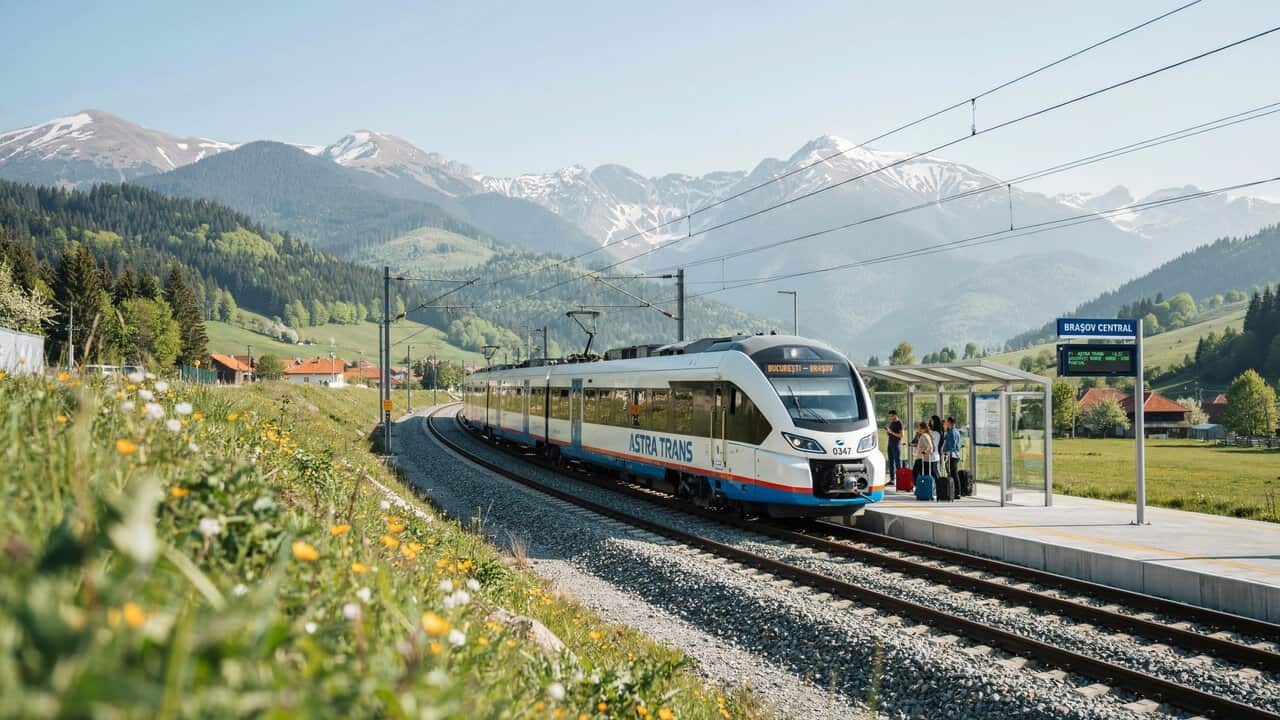
Image generated with Ai
An electric multiple unit (EMU) train is to be put into commercial service in Romania. It concerns the SFEMU-EU01 manufactured by CRRC in Romania and which will run on the major railway corridor linking Bucharest and Brașov. The three-cars electric train started its operation on August 19, 2026.
It is worth noting that the introduction of the train to commercial service is a major step as the vehicle was initially designed for Romanian public procurement programme but the contract was cancelled. After arriving in Romania in 2024, the prototype went through testing, certification and compliance and then entered commercial service with Astra Trans – a subsidiary of Astra Vagoane Călători, a Romanian rolling stock company.
Advertisement
Advertisement
From the point of view of travelling customers, this innovation provides greater accessibility and other facilities as well as an additional transportation option on one of the major Romanian tourist routes.
Why This Matters for Travellers Using Romania’s Rail Network
The launch of the CRRC electric train Romania service represents more than the arrival of a new train. It highlights Romania’s ongoing effort to modernise passenger rail services and introduce newer rolling stock into everyday operations.
Advertisement
Advertisement
The Bucharest–Brașov route is especially important because it connects the country’s largest city with a major tourism destination. Brașov attracts visitors throughout the year for its historic centre, mountain landscapes, ski areas and access to destinations such as Poiana Brașov and the wider Carpathian region.
Advertisement
Advertisement
A more modern railway service can improve the journey experience for domestic travellers and international visitors exploring Romania without relying on private vehicles.
Key Benefits Passengers Can Expect From the New Electric Train
- Modern passenger facilities: The SFEMU-EU01 includes updated interiors, multifunctional areas and accessible facilities.
- Improved accessibility: The partially low-floor design supports easier boarding for passengers with mobility needs.
- Greater comfort: The train provides 210 seats with dedicated passenger areas.
- European-standard design: The unit was developed to comply with applicable European TSI and EN standards.
- More sustainable travel options: Electric rail supports lower-emission transport compared with road travel.
The introduction of the train gives passengers another option for travelling between Romania’s urban and mountain destinations.
What Has Changed With Romania’s New CRRC Train Service?
The SFEMU-EU01 electric multiple unit is now operating regular passenger services between București and Brașov.
Advertisement
Advertisement
The train currently operates two round trips per day, covering approximately 167 kilometres in around two hours and 35 minutes. Its design speed is 160 km/h, although the current maximum operating speed is 140 km/h.
Technical Details of the SFEMU-EU01 Electric Multiple Unit
| Feature | Details |
|---|---|
| Train type | SFEMU-EU01 electric multiple unit |
| Manufacturer | CRRC Qingdao Sifang |
| Romanian partner | Astra Vagoane Călători |
| Operator | Astra Trans |
| Route | București–Brașov |
| Commercial launch | August 19, 2026 |
| Train formation | Three cars |
| Passenger capacity | 210 seats |
| Design speed | 160 km/h |
| Current service speed | Up to 140 km/h |
| Power output | 2.2 MW |
| Traction system | Eight asynchronous traction motors |
| Safety systems | National signalling system and ETCS |
The train combines Chinese rolling stock technology with European operational requirements, creating a new example of international cooperation in railway manufacturing.
Advertisement
Advertisement
How Will the New Train Improve Travel Between Bucharest and Brașov?
The Bucharest–Brașov railway corridor is one of Romania’s most important passenger routes because it links the capital with a major tourism region.
For visitors arriving in Bucharest, rail is one of the main ways to reach Brașov, which serves as a gateway to mountain attractions, historical sites and outdoor experiences.
How Improved Rail Services Support Tourism Mobility
- Provides travellers with an alternative to road transport.
- Creates easier access to mountain destinations.
- Supports sustainable tourism movement.
- Improves travel choices between major cities and regional attractions.
- Helps strengthen rail-based tourism experiences.
Better passenger rail services can encourage visitors to explore more destinations across Romania.
Why Does the Train’s Procurement History Matter?
The SFEMU-EU01 has an unusual background because it was originally built as a prototype for a major Romanian railway procurement programme.
In April 2019, Romania’s railway reform authority ARF launched a tender for 40 regional electric multiple units, with an option for another 40 trains and long-term maintenance requirements.
Advertisement
Advertisement
The CRRC Qingdao Sifang and Astra Vagoane Călători consortium was initially selected as the preferred bidder in September 2019. However, the procurement process was later challenged and eventually cancelled.
Timeline of the CRRC-Astra Train Journey
| Year | Development |
|---|---|
| 2019 | ARF launches regional EMU procurement |
| 2019 | CRRC-Astra consortium selected as preferred bidder |
| Later | Original procurement cancelled |
| 2021 | SFEMU-EU01 prototype manufactured in China |
| April 2024 | Train arrives in Romania through Constanța port |
| 2024–2026 | Testing and compatibility work completed |
| June 2026 | Safety approval granted |
| August 2026 | Commercial passenger service begins |
The train’s journey from prototype to passenger operation shows the complex process involved in introducing new railway technology.
How Does the CRRC Train Fit Into Europe’s Railway Market?
The arrival of the CRRC-built EMU in Romania comes as global railway manufacturers compete for opportunities across Europe.
CRRC-built rolling stock already operates in several European countries, including North Macedonia, the Czech Republic, Austria and Serbia. However, Chinese manufacturers have faced increased scrutiny in some European markets due to procurement and competition concerns.
Wider Impact on European Railway Development
- Encourages competition among international rail manufacturers.
- Expands choices for railway operators.
- Supports technology exchange between markets.
- Highlights the importance of European certification standards.
- Influences future rolling stock procurement strategies.
Romania’s deployment of the prototype demonstrates how international rail projects can evolve beyond their original plans.
Advertisement
Advertisement
What Travellers Should Know Before Using the New Bucharest–Brașov Train
The SFEMU-EU01 is currently operating selected services rather than replacing all trains on the route.
Travellers planning journeys should check current schedules, ticket availability and operating information before departure.
Before Booking
Important Information for Passengers Planning the Journey
- Eligibility: The service is available for passengers travelling on the Bucharest–Brașov route.
- Booking conditions: Travellers should confirm tickets and schedules with the operator.
- Destinations: The train connects Bucharest with Brașov through a key Romanian tourism corridor.
- Availability: The prototype currently operates selected daily services.
- Official advice: Check updated railway information before travel.
Planning ahead will help passengers choose the correct service and avoid schedule issues.
Why This Matters for Romania’s Rail Tourism Future
Romania has significant potential for rail tourism because many cultural and natural attractions are located along railway corridors.
Modern trains can improve the experience for visitors who want to explore Romania without driving. Better connections between cities and tourism regions can also encourage longer stays and wider destination exploration.
Advertisement
Advertisement
Future Opportunities From Passenger Rail Modernisation
- Supports tourism access to regional destinations.
- Encourages sustainable travel choices.
- Improves connections between cities and attractions.
- Creates a more modern passenger experience.
- Strengthens Romania’s railway image among international visitors.
Rail improvements can become an important part of Romania’s tourism infrastructure.
Frequently Asked Questions About Romania’s CRRC Electric Train
When did the CRRC electric train begin passenger service in Romania?
The SFEMU-EU01 began commercial operation on the Bucharest–Brașov route on August 19, 2026.
Who operates the new CRRC-built train?
The train is operated by Astra Trans, a subsidiary of Astra Vagoane Călători.
How many passengers can the train carry?
The three-car electric multiple unit has 210 seats.
What is the maximum speed of the train?
The train has a design speed of 160 km/h and currently operates at up to 140 km/h.
Advertisement
Advertisement
Does the new train create new tourism routes?
The train does not create a new route but improves passenger options on the existing Bucharest–Brașov corridor.
Closing Update
The launch of Romania’s first SFEMU-EU01 by CRRC is a significant milestone towards upgrading the rail network for passengers and connecting the country with tourists. The transition from design stage to the commercial operation of the train showcases that railway projects can be improved further even after the completion of procurement process.
To the tourists, it offers a modern and improved mode of traveling to Brașov, which is a very popular destination in Romania. To the railway sector, it shows the importance of international cooperation in building the future transportation network of Europe.
As Romania upgrades its rail network, it is likely that there may be increased use of modern electric trains.
Advertisement
