Somudranil Sarkar Somudranil Sarkar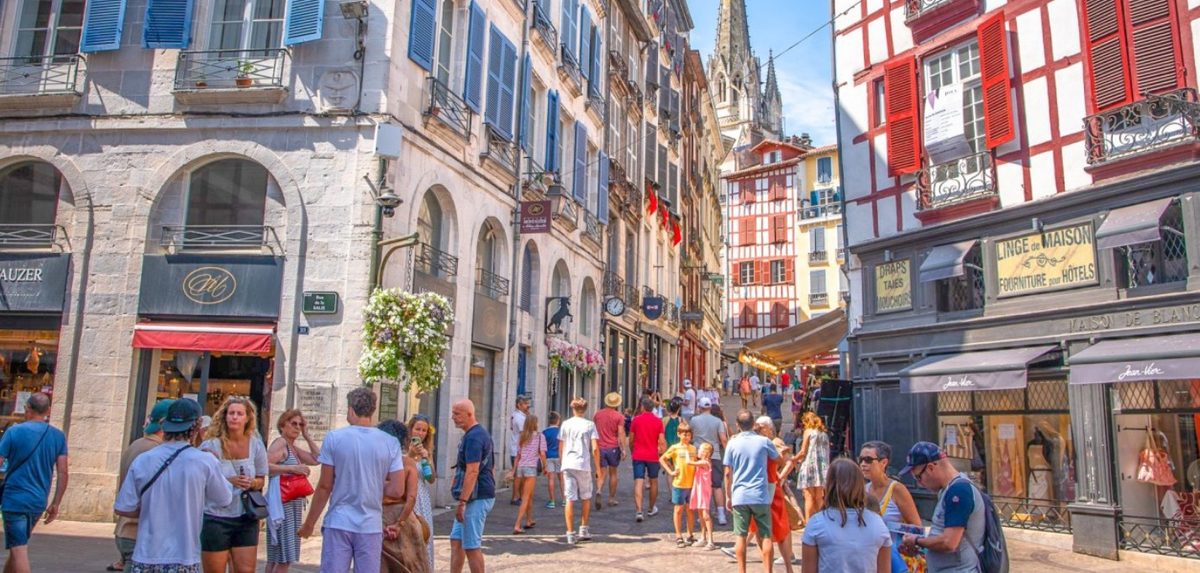
Image generated with Ai
The European Tourism Trends 2026 predict what future travelers will want over the next few years in Europe. The changes from 2019 to 2026 reflect an interesting evolution in much of Europe. The 2026 trends predict much of the same in that future travelers will want to visit many European countries, but different routes. The pace and trends encourage travelers to visit secondary cities. Tourism offices in Europe are encouraging travelers to visit these lesser known tourist destinations. With sweeping changes in travel policies like unpopular increases to travel related taxes, Europe has become the vacation of choice for travelers all over the world in the next few years.
The landscape of international travel has fundamentally transformed over the past few years, moving from desperate pandemic recovery to an era of unprecedented, record-breaking volume. However, the narrative defining European Tourism Trends 2026 is no longer solely about achieving maximum visitor numbers. Instead, governments, national tourism boards, and local municipalities are aggressively recalibrating their strategies to prioritise sustainable growth, infrastructure management, and community well-being.
Throughout the record-setting summers of 2024 and 2025, major European capitals witnessed a staggering influx of visitors that pushed local resources to their absolute limits. The ensuing anti-overtourism protests in several major Mediterranean and Western European cities forced a reckoning among policymakers. Consequently, 2026 has become the defining year for the implementation of radical tourism management strategies. Rather than closing their doors, iconic gateway cities are leveraging their immense popularity to fuel a continent-wide dispersal strategy. This proactive decentralisation is the core reason why destinations like Paris, Amsterdam, Brussels, and Barcelona continue to report robust tourism momentum, even as they actively push visitors towards odd routes and secondary provincial corridors.
This pivot is not merely a reactionary measure; it is a meticulously calculated economic and cultural necessity. By establishing stricter limits in overcrowded metropolitan centres and simultaneously investing in regional transport connectivity, European nations are ensuring that the financial benefits of the booming travel sector are distributed more equitably across rural and lesser-known urban economies.
Advertisement
Advertisement
Recent data published by official government bodies highlights the sheer scale of the European travel sector’s ongoing expansion. According to Eurostat’s official reports released in September 2026, tourist accommodations across the European Union registered a monumental 1.321 billion overnight stays during the first half of 2026. This figure represents a healthy 1.7% increase compared to the 1.299 billion stays recorded during the exact same period in 2025.
The composition of these overnight stays offers crucial insights into the evolving dynamics of Europe markets. Foreign visitors—comprising both non-EU international arrivals and cross-border intra-EU travellers—accounted for nearly half (48.9%) of all overnight stays in the first half of the year. Crucially, the growth rate of nights spent by foreign visitors (+2.5%) significantly outpaced the growth of nights spent by domestic travellers (+0.9%).
However, the distribution of these visitors highlights stark regional variations. Destinations like Malta and Cyprus saw foreign guests dominate their tourism landscape, accounting for 95.2% and 92.6% of overnight stays, respectively. Conversely, in larger domestic-driven markets like Germany and Poland, international tourists represented less than a quarter of the total overnight stays. Notably, the strongest year-on-year growth in overnight stays was recorded outside the traditional tourism powerhouses, with Ireland surging by 14.6%, Malta by 9.9%, and Slovakia by 5.9%.
When examining European travel market statistics, France and Spain continue to exist in a league of their own, setting staggering new benchmarks that dictate the continent’s overall momentum. Official figures released by Atout France in early 2026 confirmed that France successfully welcomed a historic 102 million international tourists in 2025, firmly cementing its status as the world’s most visited country. This extraordinary volume generated a record €77.5 billion in international tourism receipts—a 9% increase from the previous year—and yielded a massive €20.1 billion positive tourism balance of payments for the French economy.
Advertisement
Advertisement
Similarly, the Spanish National Statistics Institute (INE) verified that Spain completely shattered its own historical records by welcoming 96.8 million international tourists in 2025, representing a 3.2% increase from 2024. Total spending by non-resident tourists in Spain surged by 6.8% to reach an astronomical €134.7 billion. Despite facing intense local pushback regarding housing shortages and overcrowding in key coastal regions, Spain’s first-quarter data for 2026 shows no signs of deceleration, with over 17.5 million tourists arriving between January and March alone.
In direct response to these unprecedented volumes, national and local governments have implemented aggressive regulatory frameworks in 2026 to curb the negative impacts of hyper-tourism.
The Dutch capital has arguably taken the most draconian measures to rewrite its relationship with international visitors. Driven by a legally binding mandate to keep annual tourist overnight stays below a 20-million cap, Amsterdam tourism policy 2026 represents a complete paradigm shift from destination marketing to strict destination management.
Starting in April 2026, the city will enforce a severe crackdown on short-term holiday rentals. Homeowners in the bustling city centre and the popular De Pijp district are now restricted to renting their properties for a maximum of just 15 nights per year, a drastic reduction from the previous 30-day limit.
Simultaneously, the financial burden placed on overnight visitors has increased significantly. On January 1, 2026, the Dutch national VAT on hotel stays jumped from 9% to 21%. This is compounded by Amsterdam’s local tourist tax, which currently sits at a world-leading 12.5% of the accommodation price. Local coalition plans mandate that if the strict 20-million visitor cap is breached, this local tax will automatically escalate to 16% by 2027, and potentially up to 20% by 2030. Furthermore, to alleviate congestion on its historic waterways and streets, the city has actively reduced sea cruise calls at its main terminal from 190 down to 100 per year, whilst capping guided walking tours at 15 participants.
Parallel to Amsterdam’s stringent measures, the Catalan capital has launched an uncompromising legislative assault on the factors exacerbating its local housing crisis. Barcelona overtourism regulations have dominated European policy discussions following the city’s announcement to completely phase out and ban all short-term holiday apartments by 2028.
To immediately curtail the strain placed by the 15.8 million tourists who visited in 2025, Barcelona’s city council approved legislation to effectively double its overnight tourist tax starting in April 2026. Depending on the classification of the accommodation, visitors will now face significantly higher daily levies. For instance, guests staying in five-star hotels will be required to pay up to €15 per person, per night, purely in local municipal taxes. The revenue generated from this dramatic tax hike is being directly funnelled into Barcelona’s newly established ‘Tourism Reinvestment Fund,’ which will launch formally in late 2026 to repair local infrastructure and fund social housing initiatives.
The strict legislative barriers erected by primary European capitals have not diminished overall international demand; rather, they have successfully redirected it. This dynamic perfectly explains why major gateways like Paris, Amsterdam, Brussels, Barcelona join gaining tourism momentum as Europe markets face a more odd routes configuration. Tour operators, airlines, and independent travellers are deliberately seeking out secondary European destinations that offer authentic cultural experiences without the crushing density of legacy hotspots.
In France, the momentum of the 102 million arrivals is increasingly being pushed outwards. While Paris remains the undisputed anchor, French residents and repeat international visitors are turning heavily toward regional corridors. Official data reveals that southern regions such as Auvergne-Rhône-Alpes, Occitanie, Provence-Alpes-Côte d’Azur, and Nouvelle-Aquitaine now account for just over 50% of annual overnight stays by French domestic travellers. Furthermore, destinations like Lyon, Strasbourg, Bordeaux, and Nantes are rapidly emerging as prime beneficiaries of this geographical shift, offering robust culinary heritage, seamless rail connectivity, and a more relaxed urban rhythm.
Spain is mirroring this trend masterfully. While Barcelona restricts its capacity, regions like Andalusia are experiencing golden eras of tourism. In 2025, Andalusia welcomed 13.6 million international tourists, driving its combined domestic and international visitor total to an unprecedented 37.9 million. Odd routes focusing on deep cultural immersion are flourishing; for instance, the historic Mezquita-Catedral in Córdoba drew 2.19 million visitors in 2025, firmly establishing the city as an essential secondary pillar in Spain’s broader tourism framework. Cities like Valencia, Girona, and Bilbao are also capturing significant market share by offering the architectural beauty and gastronomy of Barcelona and Madrid without the associated congestion.
In Belgium, Brussels continues to act as a vital international gateway, recording a 4% increase in visits to reach 2.6 million in 2025. However, the broader strategy promoted by Belgian tourism authorities focuses on leveraging Brussels’ unparalleled rail connectivity to disperse visitors into Flanders, which welcomed 3.2 million visitors (a 3% increase). Alternative cities such as Ghent, Antwerp, and Mechelen are being aggressively marketed as highly accessible1. Viral SEO Headline
European Tourism Trends 2026: Paris, Amsterdam, Brussels & Barcelona Pivot to Odd Routes Amid Record Arrivals
As we analyse the rapidly evolving European Tourism Trends 2026, a fascinating, historical paradigm shift is reshaping the continent’s travel landscape. Global travellers are returning in record numbers, yet the traditional playbook has completely changed. Major powerhouse destinations—Paris, Amsterdam, Brussels, and Barcelona—are simultaneously experiencing unprecedented visitor surges and implementing strict new measures to combat overtourism. This delicate balancing act has triggered a massive redistribution of footfall toward secondary, alternative, and decidedly more “odd routes” across Europe. Understanding this vital momentum is essential for industry stakeholders, policymakers, and travellers alike as they navigate a smarter, more sustainable era of European exploration.
The landscape of European travel in 2026 is defined by a striking paradox: extraordinary, record-breaking visitor numbers juxtaposed with stringent new capacity-management frameworks. Following the post-pandemic recovery and the monumental momentum generated by mega-events in previous years, the continent is witnessing an evolution in how, when, and where international visitors choose to spend their holidays. According to the European Travel Commission (ETC), international tourist arrivals to Europe surged by 5.0% in the first half of 2026 compared to the same period in the previous year.
This continued growth demonstrates the resilience of the Europe travel market 2026, yet it also underscores a critical inflection point. Destinations that have historically served as the epicentres of European culture and commerce are now actively shifting their operational strategies. The days of prioritising sheer volume over value have officially ended. Instead, leading national tourism boards and government ministries are aggressively promoting decentralised travel models. By encouraging visitors to explore alternative, secondary, and historically unconventional itineraries—often colloquially termed “odd routes”—Europe is aiming to protect its primary urban assets from the debilitating effects of overtourism while simultaneously boosting regional economies.
The data supporting this strategic pivot is staggering. France recently confirmed its status as the world’s most visited country, welcoming a historic 102 million international tourists in 2025, which generated a record €77.5 billion in tourism revenue. Spain closely followed, breaking its own all-time record with 96.8 million international arrivals. In the face of such immense volume, the harmonisation of visitor distribution has become the central focus of European Tourism Trends 2026, directly influencing policy, infrastructure, and international marketing campaigns.
To fully comprehend the strategic shift defining Europe secondary tourism routes, one must examine the socio-economic and environmental catalysts of the past two years. The summer of 2024 and 2025 witnessed widespread, highly publicised anti-tourism protests across several Mediterranean hotspots. Residents in the Canary Islands, the Balearics, Venice, and Catalonia voiced profound frustrations regarding housing shortages, the proliferation of short-term holiday rentals, and the strain on public infrastructure caused by unmitigated tourist influxes.
Simultaneously, changing climate patterns have fundamentally altered traditional travel behaviours. Extreme heatwaves across Southern Europe during the peak months of July and August have prompted a significant re-evaluation among global travellers. As confirmed by the ETC, travellers are now heavily prioritising destinations perceived as comfortable and safe, while spreading their trips more evenly throughout the year to avoid extreme heat and overcrowding. This has catalysed a surge in shoulder-season travel—spring and autumn—and has notably boosted the appeal of Northern European destinations, which traditionally saw lower summer volumes.
Furthermore, shifting consumer preferences have accelerated the momentum toward alternative routes. A recent analysis by the Mastercard Economics Institute highlights that modern visitors are prioritising authentic local encounters, regional gastronomy, and journey-focused travel over traditional landmark-ticking. Multi-destination rail itineraries and road trips through lesser-known provinces are gaining immense traction. Consequently, major transit hubs are recalibrating their roles from final destinations to mere gateways, expertly funnelling tourists into these emerging, culturally rich secondary routes.
The transformation of European travel statistics 2026 is perhaps most evident in the bold legislative actions taken by the continent’s most iconic cities. Rather than passively observing the influx of visitors, municipal governments have enacted aggressive regulatory frameworks designed to curb public nuisances, alleviate housing pressures, and redefine the visitor demographic.
Amsterdam has arguably implemented the most uncompromising anti-overtourism legislation in modern European history. Having recorded 23.7 million tourist overnight stays in 2025—well above its self-imposed limit of 20 million—the Dutch capital has transitioned from destination marketing to destination management.
Effective from April 2026, the city government has slashed the legal limit for short-term holiday rentals (such as Airbnb) from 30 nights to a mere 15 nights per year in highly contested central districts. This measure is designed to return residential properties to the local housing market. Furthermore, a strict hotel ban remains in place, dictating that no new hotel can be constructed unless an existing one closes, and the replacement cannot increase the overall number of available beds.
Taxation is also being utilised as a primary deterrent. On 1st January 2026, the Dutch national VAT on hotel accommodations surged dramatically from 9% to 21%. When combined with Amsterdam’s local 12.5% tourist tax—which is slated to rise to 16% by 2027 if visitor numbers do not fall below the 20 million cap—the financial burden on overnight visitors has become substantial. The city is also taking decisive action against mass transit tourism, officially reducing sea cruise calls at the main terminal from 190 to just 100 per year from 2026.
Similarly, Barcelona has taken drastic steps to mitigate the pressures of its 15.8 million annual visitors. The Catalan capital, which has been at the epicentre of Spain’s overtourism debate and housing crisis, enacted a sweeping plan to drastically increase the financial contribution of international visitors.
As of April 2026, Barcelona has doubled its overnight tourist tax. Visitors staying in high-end, five-star accommodations now face taxes of up to €15 per night, while levies on short-term holiday apartments have increased to a maximum of €12.50 per night. This aggressive Barcelona overtourism tax is anticipated to generate substantial revenue, which the municipal government is channelling directly into a newly established ‘Tourism Reinvestment Fund’. This fund is exclusively earmarked for community infrastructure, public transport enhancements, and local housing initiatives.
In conjunction with these fiscal policies, Barcelona is proceeding with its long-term objective to entirely ban all holiday apartments by 2028, a move that is fundamentally reshaping the city’s accommodation sector. Additionally, in a bid to ease port congestion and reduce day-tripper volume, the city is limiting cruise terminals and heavily restricting the arrival of mega-cruise ships from 2026 onwards.
France’s strategy represents a masterclass in leveraging immense national appeal to benefit regional economies. According to official data released by Atout France and INSEE in February 2026, the nation achieved a historic milestone in 2025 by hosting 102 million international tourists. Notably, the economic impact grew even faster than the visitor count, with international tourism receipts rising by 9% to €77.5 billion.
However, the French government recognises that concentrating this volume solely within the Île-de-France region is unsustainable. Consequently, France tourism revenue is increasingly being driven by aggressive promotional campaigns targeting regional dispersion. While Paris remains the undisputed primary gateway, national tourism strategies are actively channelling visitors toward the scenic coastal regions of Brittany and Normandy, the vineyard routes of Bordeaux and Alsace, and the mountainous terrains of the French Alps. The strategy is proving successful; smaller cities and rural areas contributed significantly to the 2025/2026 figures, indicating a more balanced, equitable distribution of tourism wealth across the French Republic.
In Belgium, the tourism narrative is characterised by steady, high-value growth. Official OECD tourism trends and policies data for mid-2026 highlights that Brussels experienced a robust 4% increase in visitors compared to previous years, while the wider Flanders region saw a 3% increase.
Rather than implementing the punitive taxation models seen in Amsterdam or Barcelona, Brussels is leveraging its status as the administrative heart of the European Union to promote sophisticated, culture-led tourism. The Belgian strategy leans heavily on excellent domestic rail connectivity, encouraging visitors who arrive in Brussels to swiftly integrate into “odd routes” that encompass historical gems like Ghent, Antwerp, and the expansive natural landscapes of Wallonia. This seamless regional distribution ensures that the economic benefits of international arrivals are felt far beyond the capital’s Grand-Place.
Beyond individual city policies, broader EU overnight stays data provides a clear picture of the changing dynamics. According to the latest Eurostat reports published in September 2026, the first half of the year saw 1.321 billion overnight stays in tourist accommodations across the European Union. This represents a 1.7% increase compared to the same period in 2025.
Crucially, the demographics of these stays highlight a robust international appetite. Foreign visitors accounted for 48.9% of all overnight stays, with the increase in nights spent by foreign visitors (+2.5%) significantly outpacing the growth of domestic tourism (+0.9%).
However, the most revealing data points to exactly where this growth is occurring. The highest increases in the share of overnight stays were not recorded in traditional Southern European strongholds, but rather in alternative, secondary markets. Ireland reported a staggering 14.6% increase in overnight stays, followed closely by Malta (+9.9%) and Slovakia (+5.9%). Conversely, some traditional Mediterranean markets experienced slight contractions, with Cyprus recording a 7.7% fall. This statistical pivot irrefutably confirms that the push toward “odd routes” and alternative European destinations is not merely a marketing concept, but a tangible, statistically validated reality.
The shift in European Tourism Trends 2026 is heavily underpinned by coordinated government announcements at both the national and European Union levels. Policymakers are universally signalling that the era of unfettered, hyper-volume tourism is obsolete.
At the EU level, the European Commission’s Transition Pathway for Tourism continues to guide member states toward sustainable, resilient, and digitalised tourism ecosystems. This involves significant grant funding for eco-tourism initiatives and the improvement of cross-border rail infrastructure. The overarching policy implication is clear: governments are actively disincentivising short-haul, high-frequency aviation in favour of slow travel and rail-based exploration.
National statistical offices, such as Spain’s INE and France’s INSEE, are now placing greater emphasis on measuring “value per visitor” rather than merely counting border crossings. The focus has shifted from expanding hotel capacity to enhancing the quality of existing stock, investing in cultural heritage preservation, and ensuring that the tourism sector provides high-quality, year-round employment for local residents rather than transient, seasonal labour.
The concept of “odd routes” is the defining characteristic of the 2026 European summer season. Travel itineraries are being fundamentally re-written to bypass heavily congested choke points. For instance, rather than braving the immense crowds of Rome or Venice, discerning travellers are increasingly opting for cities like Trieste, Verona, and Bologna—destinations that offer comparable historical and gastronomic richness without the overwhelming footfall.
Similarly, in the Netherlands, visitors deterred by Amsterdam’s stringent new taxes and accommodation limits are discovering Utrecht, The Hague, and Haarlem. These cities provide the quintessential Dutch experience—canals, historic architecture, and vibrant cafe cultures—often at a fraction of the cost and stress.
In Spain, the traditional Barcelona-Madrid axis is being supplemented by deeper explorations of the North. Regions like the Basque Country, Asturias, and Galicia are experiencing a renaissance, driven by their cooler summer climates, world-class culinary scenes, and relative tranquillity. Travel operators are noting a specific rise in demand for “secondary gateways”—flying directly into regional airports like Bilbao, Valencia, or Lyon to commence a holiday, entirely bypassing the continent’s largest aviation hubs.
The private sector’s response to these shifting European Tourism Trends 2026 has been rapid and innovative. Destination Management Companies (DMCs) and international tour operators have entirely overhauled their product offerings. Recognising that modern consumers are willing to pay a premium for comfort and exclusivity, operators are designing itineraries that heavily feature rural boutique hotels, farm-to-table culinary experiences, and private cultural tours.
The aviation industry is also adapting to these changing winds. While major hubs remain crucial for long-haul international arrivals, airlines are increasingly launching direct routes to secondary European cities to capture the growing demand for alternative destinations. However, the sector faces considerable headwinds. The European Travel Commission noted in early 2026 that rising fuel and operating costs, exacerbated by geopolitical tensions, are being passed on to consumers via higher airfares. Furthermore, warnings from bodies like IATA regarding potential jet fuel shortages have added a layer of complexity to European aviation logistics, further driving the appeal of domestic and cross-border rail travel.
In the accommodation sector, a fascinating sub-trend has emerged: luxury sleep tourism. According to industry trend reports from late 2025 and 2026, over 56% of global respondents now name rest and recharge as their primary leisure-travel motivation. Hotels across Europe are investing heavily in sleep-centric amenities, transforming their offerings from mere lodging to comprehensive wellness retreats.
The economic ramifications of this strategic pivot are profound. By limiting volume in primary hubs and driving traffic to secondary routes, European governments are effectively executing a massive wealth redistribution programme.
In Spain, total spending by non-resident tourists reached €134.7 billion in 2025, a 6.8% rise on the previous year, with average daily spending increasing significantly. Industry analysts at Exceltur forecast this economic contribution to grow even further in 2026, pushing tourism’s share of the Spanish GDP to a vital 13.1%.
When tourists travel to “odd routes,” their expenditure tends to remain within the local economy. Spending at family-owned tavernas in rural Greece, boutique wineries in the Loire Valley, or independent artisan shops in Flanders directly supports local livelihoods, as opposed to revenues being absorbed by multinational conglomerates in major capitals. While the sheer volume of tourists in primary hubs might see a controlled plateau due to new legislation, the overall yield per tourist is rising sharply, ensuring that the economic momentum of European tourism remains fiercely robust.
For the public, the aggressive policy resets in cities like Amsterdam and Barcelona are widely viewed as necessary interventions to reclaim civic spaces. The rampant unchecked growth of the late 2010s severely eroded the livability of these urban centres, displacing local residents and homogenising commercial districts. The new caps on short-term rentals and the introduction of heavy tourist taxes are critical steps toward restoring community equilibrium.
For businesses, however, the transition requires delicate navigation. Enterprises that historically relied on high-volume, low-margin day-trippers are facing immediate challenges. Conversely, businesses that pivot toward high-quality, experiential, and sustainable tourism are thriving. The modern European tourist in 2026 is highly educated, ecologically conscious, and willing to invest in premium experiences. Businesses that align with these values—offering authentic cultural engagement rather than mass-produced souvenirs—are reaping substantial rewards.
The overarching sentiment among official bodies is one of cautious optimism, heavily tinged with a mandate for sustainability. Following France’s record-breaking 102 million visitor announcement, official statements underscored that the momentum goes beyond the appeal of major events like the 2024 Olympics; it is the result of a deliberate, long-term strategy to strengthen international tourism’s structural contribution to the economy.
Similarly, the European Travel Commission’s Q2 2026 report stated that European tourism “holds firm despite rising uncertainty and changing traveller preferences,” explicitly noting that travellers are prioritising destinations that offer perceived safety, good value, and a departure from extreme crowds. These official acknowledgements confirm that the shift toward secondary and alternative routes is not an anomaly, but the new foundational baseline for European travel.
As we look toward the conclusion of 2026 and into 2027, the trajectory of European tourism is unequivocally clear. The definition of the “European holiday” has been permanently rewritten. The relentless pursuit of the continent’s most famous landmarks during the peak of summer is being rapidly replaced by nuanced, highly curated explorations of Europe’s diverse regions during the shoulder seasons.
Cities like Paris, Amsterdam, Brussels, and Barcelona will undoubtedly remain the crown jewels of the European continent. However, their future relies on their new roles as highly regulated, premium gateways rather than unlimited playgrounds. As these major hubs successfully cap their capacities, the resulting overflow will continue to breathe incredible economic and cultural life into the continent’s “odd routes.” This intelligent, deeply sustainable evolution ensures that Europe will retain its mantle as the world’s premier travel destination for decades to come, offering wealthier, more diverse, and profoundly authentic experiences for tomorrow’s global traveller.
Advertisement
Tags: Amsterdam tourism policy, Barcelona tourist tax, Europe travel statistics, European tourism trends 2026, Overtourism Solutions
Advertisement
Advertisement












Monday, September 7, 2026

Monday, September 7, 2026

Monday, September 7, 2026

Monday, September 7, 2026

Sunday, September 6, 2026

Monday, September 7, 2026

Monday, September 7, 2026