
Thailand Expands Transit Travel Plans With City Food and Wellness Trips for Eligible Layover Passengers

Updated
Published
Thailand is developing the Amazing Thailand Transfer Passenger Privilege, designed to turn airport layovers into City Express, Food Express, and Wellness Express experiences. The crucial traveler detail is that leaving an airport is different from remaining in international transit. Passengers staying in the secure airside transit zone do not legally enter the country and therefore do not need to complete the mandatory Thailand Digital Arrival Card (TDAC). However, those leaving the airport to participate in these layover tours must pass through immigration, making the TDAC mandatory. The government recently announced that the pilot scheme is targeted to launch in early 2027 at Suvarnabhumi, Don Mueang, Phuket, and Krabi airports for passengers with layovers of six to eight hours, allowing travelers and the travel trade to finally begin preparing for border compliance and connection protection.
Thailand Is Turning Waiting Time Into A New Tourism Product
Thailand’s new transit-tourism initiative could fundamentally alter how longer airport connections are treated. Rather than viewing every transfer solely as time spent inside an airport terminal, authorities are developing a framework through which eligible passengers could temporarily enter Thailand, experience nearby attractions or services and return for their onward flight.
Advertisement
Advertisement
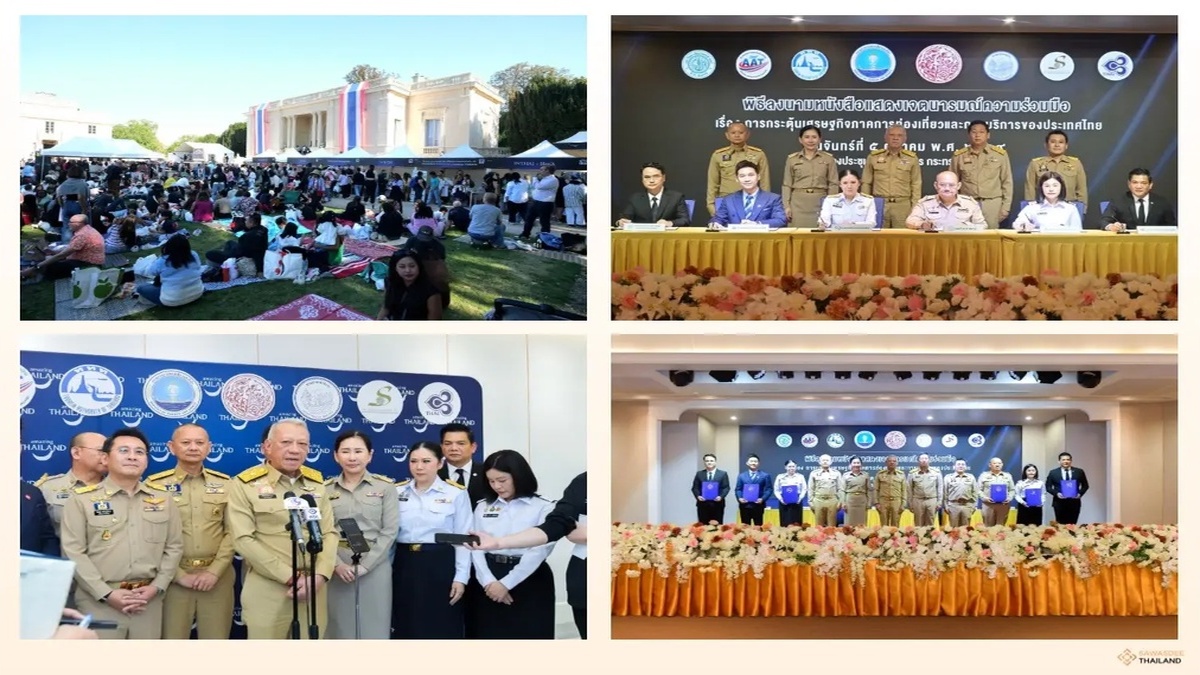
According to the Thai Government announcement published on 6 October 2026, the Tourism Authority of Thailand and Department of Airports are working with aviation, hospitality and academic partners to develop the initiative. The cooperation is intended to connect airports with attractions, restaurants, shops, communities and tourism service businesses.
The initial product concepts are City Express, Food Express and Wellness Express. Experiences are expected to be designed around the length of each passenger’s available connection, with convenience, safety and timely return to the airport incorporated into programme development.
Advertisement
Advertisement
That sounds straightforward. Operationally, it is not.
The moment an international transfer passenger passes Thai immigration and leaves the airport, the journey stops being a purely airside transit process. Entry rules become relevant. That distinction is the most consequential detail for airlines, travel agents, destination management companies and travellers assessing the new scheme.
Advertisement
Advertisement
The Real Latest Travel News Is The Border-Entry Shift
The new programme should not yet be interpreted as blanket permission for every connecting passenger to walk out of a Thai airport.
Thailand’s government has announced a framework and begun developing benefits and transit experiences. Its official English notice does not, as of 6 October, provide a public launch date, list participating airports, establish a universal minimum connection time or define which nationalities will qualify.
This matters because transit status and admission into Thailand are operationally different.
According to the Thailand Immigration Bureau, a foreign passenger transiting Thailand does not need a TDAC when the passenger does not pass immigration. However, if that passenger leaves the airport, a TDAC is required. The card can be submitted within three days before arrival, including the arrival date.
Thailand also changed its visa framework on 15 September 2026. Depending on nationality, travellers may now fall under a 30-day visa exemption, 15-day exemption, Visa on Arrival arrangement, bilateral agreement or another applicable immigration category. A connecting ticket by itself does not create permission to enter the country.
What Thailand Has Confirmed And What Remains Unresolved
| Issue | Verified position on 6 October 2026 | Traveller and trade implication |
|---|---|---|
| Transit-tourism programme | Government cooperation framework is being developed | The initiative is genuine but should not yet be sold as universally operational. |
| Experience types | City Express, Food Express and Wellness Express are initial concepts | DMCs could eventually build culture, gastronomy and wellness products around long connections. |
| Airport exit | Programme envisages eligible transit and transfer passengers leaving airports | Immigration admission becomes part of the journey. |
| TDAC | Required when a foreign transit passenger leaves the airport | Travellers cannot treat an excursion as an airside connection. |
| Visa or exemption | Depends on the traveller’s nationality and applicable entry category | Agents must check passport-specific rules before offering an excursion. |
| Participating airports | Not identified in the 6 October English government announcement | Avoid advertising specific airports until officially confirmed. |
| Minimum layover | No threshold published in the primary government announcement | Gross connection time should not be treated as usable sightseeing time. |
| Launch date | Not stated in the primary announcement | Programme development should not be confused with immediate nationwide availability. |
| Missed-connection treatment | Not detailed | Airlines and package providers will need clear liability and recovery procedures. |
| Baggage arrangements | Not detailed | Through-checked baggage and self-transfer passengers may require different workflows. |
TDAC Could Become A Core Part Of Layover Package Operations
The Digital Arrival Card is more than a minor administrative issue for this project.
Advertisement
Advertisement
The Immigration Bureau says all non-Thai nationals entering Thailand must submit travelling information through TDAC. The system requires passport information, arrival details, an address in Thailand, travel purpose, health information and an email address for receiving the record.
For B2B travel businesses, two additional rules are especially important.
Thailand Immigration confirms that travel agencies can submit TDAC information for clients when authorised, while agents or tour leaders may also submit forms for groups. Family submissions can contain up to ten travellers. Charter and incentive groups entering Thailand are also subject to the requirement.
That creates an obvious future workflow opportunity.
A structured layover product could combine flight eligibility, passport screening, TDAC assistance, ground transport, timed tourism activities and a controlled return to the terminal. However, such integration has not yet been formally specified under the new programme.
It would therefore be premature for sellers to promise seamless airport exit based solely on the 6 October announcement.
Advertisement
Advertisement
Airside Transit And Entering Thailand Are Two Different Journeys
The Civil Aviation Authority of Thailand provides another important distinction.
CAAT’s aeronautical information states that passengers arriving and departing on the same through flight, or transferring at the same airport while remaining within the transit lounge for no more than 12 hours, do not require entry documentation in the same way as passengers entering Thailand. A foreign national seeking admission into the country must comply with the applicable passport and immigration framework, including relevant exemptions.
That difference creates two separate passenger journeys.
| Passenger journey | Airside connection | Layover excursion outside airport |
|---|---|---|
| Pass Thai immigration | Normally no | Yes |
| TDAC | Not required when remaining airside | Required for foreign passengers leaving the airport |
| Thai entry eligibility | Generally not exercised | Must be established |
| Customs implications | Passenger remains within transfer process | Entry procedures may become relevant |
| Ground transport | None | Required |
| Return-to-airport risk | Limited | Becomes a critical planning variable |
| Security or border processing before onward flight | Standard transfer procedure | Additional processing time may be necessary |
| Tourism spending opportunity | Mostly airport-based | Restaurants, attractions, wellness providers, shops and communities can benefit |
This is why the new initiative represents more than another airport amenity. It potentially creates a new travel product sitting between aviation, immigration and destination tourism.
Thailand Has A Large Aviation Market To Convert Into Tourism Value
The economic logic behind the initiative is substantial.
According to the Civil Aviation Authority of Thailand, airports across the country handled approximately 145.10 million passengers in 2025, including around 78 million international passengers and 67 million domestic passengers. Approximately 935,000 flights operated during the year.
Advertisement
Advertisement
Those figures do not represent the number of potential layover-tour participants. They demonstrate the scale of Thailand’s wider aviation ecosystem.
At the same time, Thailand has increasingly shifted tourism strategy from simply maximising visitor counts towards extracting greater economic value from each journey.
Official government information on TAT’s 2026 strategy sets a target of 36.7 million foreign visitors while pursuing approximately 2.78 trillion baht in tourism revenue and more than 205 million domestic trips. The policy places greater emphasis on value rather than volume.
A transit traveller is therefore economically significant even without becoming a conventional overnight visitor.
Someone previously spending several hours inside an international terminal could potentially buy local meals, transport, admission tickets, retail products or wellness services. That allows Thailand to capture tourism expenditure from journeys already passing through its aviation network.
Bangkok Shows Why Connection Mathematics Will Matter
Bangkok offers a useful operational illustration, although the government has not confirmed it as a launch city under the new programme.
Advertisement
Advertisement
Airports of Thailand identifies Suvarnabhumi Airport as Bangkok Airport and publishes detailed transfer procedures for connecting passengers. For international-to-international transfers, passengers remain within the controlled transfer environment, pass applicable security procedures and proceed towards their departure gate. AOT advises passengers to reach the boarding gate at least 45 minutes before boarding.
Leaving the terminal introduces several more components.
AOT’s arrival procedure includes passport control, baggage processes where applicable, customs and onward ground transportation. Suvarnabhumi also connects with the Airport Rail Link, whose published operating hours are 05:30 to 24:00.
The critical metric is therefore not the scheduled layover itself.
For a future excursion, the genuinely usable tourism window can be expressed as:
Scheduled connection time minus arrival formalities minus outbound transport minus excursion duration minus return transport minus immigration or security processing minus airline boarding buffer.
Advertisement
Advertisement
This distinction is fundamental.
A long connection may appear suitable on a booking screen but become operationally unsuitable once border processing, urban transport and reconnection safeguards are added.
Phuket Illustrates Thailand’s Wider Border-Technology Push
Phuket provides another relevant example of Thailand’s evolving airport-entry infrastructure, although it is likewise not identified as a confirmed programme location in the 6 October government release.
According to the Tourism Authority of Thailand, Phuket International Airport introduced automated passport channels for eligible international departures from 13 June 2026, alongside continuing improvements to immigration processing.
Thailand Immigration also identifies Suvarnabhumi, Don Mueang, Phuket, Chiang Mai and Hat Yai among airports equipped with TDAC kiosks.
These systems matter because successful transit tourism depends on predictable border-processing times.
Advertisement
Advertisement
Every additional minute consumed by immigration or security reduces the safe excursion window. Conversely, reliable automated processing, integrated passenger data and pre-arrival documentation could make tightly controlled short-stay products more practical.
That is why travel technology is likely to become as important as sightseeing content.
Thailand Is Expanding Airports While Building A Tourism Hub
The new programme also fits a much larger infrastructure strategy.
The Ministry of Transport has outlined continuing development at Suvarnabhumi, Don Mueang, Chiang Mai and Phuket, alongside regional airport projects. Current plans include Suvarnabhumi passenger-terminal expansion, Don Mueang Phase 3, Chiang Mai development and Phuket expansion, together with runway and terminal improvements elsewhere in the country.
Thailand is therefore trying to improve two different aspects of aviation economics.
The first is connectivity: moving more passengers efficiently through a larger network.
Advertisement
Advertisement
The second is conversion: capturing greater value from passengers already travelling through that network.
Transit tourism belongs to the second category.
Instead of competing solely for passengers whose final destination is Thailand, the country can potentially derive spending from travellers connecting between entirely different international markets.
The Biggest Unanswered Questions For Airlines And Travel Sellers
The 6 October announcement establishes policy direction rather than a completed commercial product.
Before airlines, online travel agencies or tour operators distribute transit experiences at scale, several details will require official clarification.
First is airport eligibility. The government release does not yet provide a definitive list.
Advertisement
Advertisement
Second is minimum connection time. A standardised threshold may be difficult because immigration congestion, terminal layout, transport time and attraction distance vary considerably.
Third is ticket structure. A protected through-ticket presents different risk from independently purchased self-transfer flights.
Fourth is baggage handling. A passenger whose bag is through-checked has a very different operational profile from someone required to collect and re-check luggage.
Fifth is connection protection. The industry needs to know what happens when road congestion, immigration queues, weather or another disruption delays a passenger returning from an official excursion.
Sixth is immigration screening. Eligibility cannot be assumed to be identical across passport nationalities.
Seventh is commercial structure. The government announcement does not specify universal pricing, commissions, inclusions or distribution mechanisms.
Advertisement
Advertisement
These are not reasons to dismiss the initiative. They are the questions that determine whether it becomes a scalable aviation-tourism product rather than a limited promotional experience.
A New Opportunity For Thailand’s Food And Wellness Economy
The selection of City Express, Food Express and Wellness Express also reveals the programme’s economic design.
A conventional city excursion directs spending towards transport operators, guides, cultural attractions and retail businesses.
A food-focused product can distribute expenditure towards restaurants, markets and culinary businesses.
Wellness creates another layer. Spa, traditional treatment and health-related tourism products can command higher expenditure while requiring comparatively limited geographic movement if providers are positioned close to airports.
This aligns with Thailand’s broader strategy to prioritise higher-value experiences rather than relying exclusively on rising visitor volumes.
Advertisement
Advertisement
For regional destinations, the model could eventually matter even more. Airports could become gateways to short experiences in surrounding communities rather than isolated transport infrastructure.
However, expansion beyond the initial development phase should only be reported once participating locations are formally announced.
What Travellers Need To Know On 6 October 2026
The most important point is simple: Thailand has announced and is developing the initiative, but travellers should not yet assume that every long layover automatically qualifies for an airport-exit tour.
The government is still developing routes, privileges, supporting systems and coordination arrangements. Thailand Government
Travellers considering independent airport exits in the meantime must continue following normal Thai immigration requirements.
That means checking passport eligibility, confirming the correct visa or exemption category, completing TDAC when entering Thailand and maintaining enough time for the onward flight.
Advertisement
Advertisement
The new initiative may eventually make those processes substantially more coordinated. The official announcement does not yet say exactly how.
Critical Operational Takeaways For Travel Agents And Tour Operators
- Do not market the programme as universally live yet. Thailand has confirmed development of the framework, not unrestricted nationwide operation.
- Screen nationality before selling an airport-exit experience. Thai entry eligibility varies under the revised visa framework.
- Treat TDAC as part of the excursion workflow. Foreign passengers leaving the airport must complete it.
- Use authorised agent submission carefully. Thai Immigration permits travel agents and tour leaders to submit TDAC information for clients when appropriate.
- Calculate usable excursion time, not headline layover duration. Immigration, transport, security and boarding buffers must all be deducted.
- Differentiate through-ticket and self-transfer passengers. Their baggage and missed-connection exposure can be materially different.
- Avoid naming participating airports until formally confirmed. The current government release does not provide a final list.
- Build disruption contingencies. Weather, traffic, border queues and flight changes can quickly remove the safe excursion window.
- Wait for clear liability rules. Operators need to know who bears responsibility if an excursion affects an onward connection.
- Monitor official TAT, Immigration Bureau, Department of Airports, CAAT and AOT notices. Those sources will be decisive once operating specifications are released.
Thailand’s Layover Strategy Could Redefine The Regional Hub Contest
Thailand’s transit-tourism project has greater strategic significance than a collection of short sightseeing trips.
If implemented with reliable immigration integration, real-time flight information, controlled transfers and appropriate connection buffers, it could turn otherwise unproductive airport dwell time into tourism revenue while giving passengers a reason to consider Thailand for a longer future visit.
The concept also changes how an aviation hub competes.
Hub strength traditionally depends on network breadth, frequency, fares, airport efficiency and connecting time. Thailand is adding another possible dimension: the economic and experiential value of the connection itself.
The opportunity is considerable, but so is the operational challenge.
Advertisement
Advertisement
Thailand must make airport exit easy without weakening border controls, make excursions attractive without putting onward flights at risk, and enable tourism spending without creating additional airport congestion.
As of 6 October 2026, that balancing act is the most important part of this story. The programme is real. The experience categories are confirmed. The ambition is clear. What comes next — airport selection, eligibility, connection thresholds, booking architecture and passenger protection — will determine whether Thailand creates a genuinely scalable new category of transit travel.
Advertisement
