
Indonesia’s Coral Triangle Travel Takes Centre Stage As Luxury Phinisi Voyages Reveal Remote Islands, Pristine Reefs And Komodo Wildlife

Published
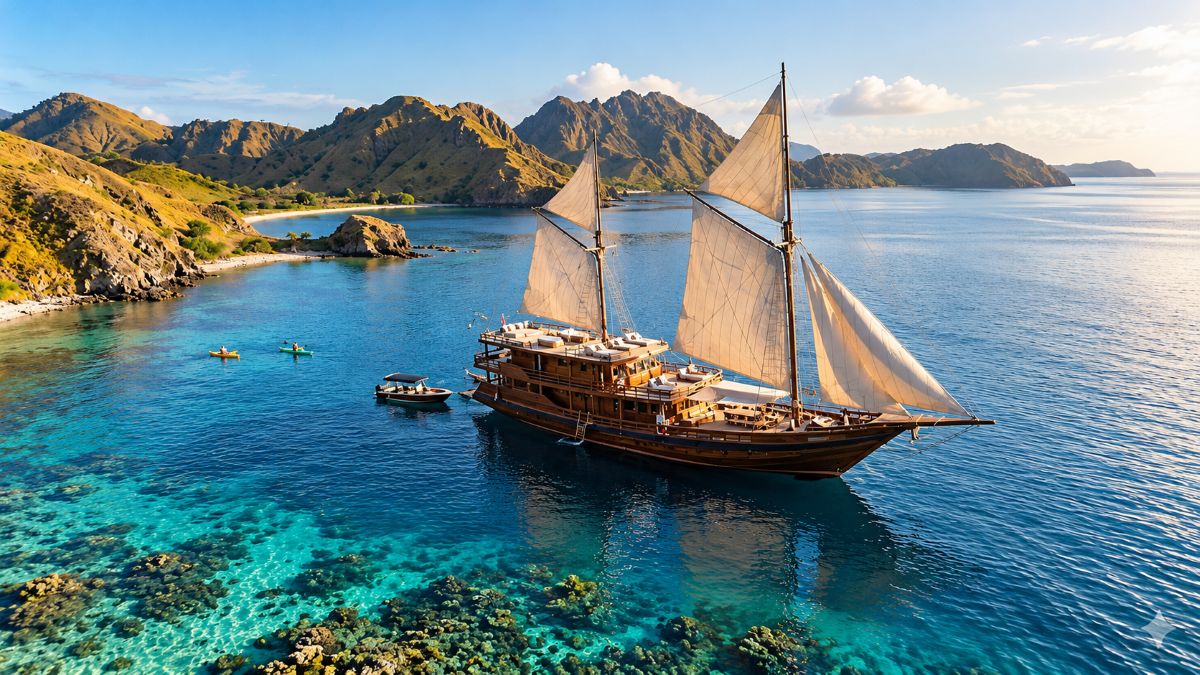
Indonesia is attracting attention among travellers seeking extraordinary marine encounters, remote tropical islands and distinctive sailing experiences. An eight-day voyage aboard a traditional wooden phinisi offers a different perspective on the archipelago, taking guests from Bali towards the waters of the Coral Triangle, where vibrant coral gardens, diverse marine wildlife and secluded coastlines create an exceptional setting for exploration. The journey combines luxury accommodation with snorkelling, diving and excursions to islands that remain relatively isolated from conventional tourism routes.
The experience also highlights Indonesia’s maritime heritage, particularly the traditional boatbuilding skills that have shaped coastal communities for generations. From the forested landscapes of Moyo Island to encounters with manta rays near Komodo National Park, this style of travel brings together nature, culture and relaxation. Its appeal lies in the opportunity to experience Indonesia beyond familiar resort destinations while discovering the extraordinary ecosystems and local traditions that distinguish the region.
The Phinisi Tradition Brings Maritime Heritage Into Luxury Tourism
At the centre of this experience is Aliikai, a 42-metre wooden phinisi that was originally built as a cargo vessel before being refurbished into a luxury liveaboard in 2021. Constructed in Bulukumba, South Sulawesi, an area recognised for its shipbuilding heritage, the vessel reflects the enduring relationship between Indonesian communities and the sea.
The yacht accommodates guests in seven en-suite cabins spread across three levels. Indoor seating, a bar, a dining area and several outdoor lounging spaces provide opportunities to relax between excursions. Its interior combines warm wood, natural fabrics, potted plants and coastal-inspired design, creating an atmosphere intended to complement the surrounding landscape.
Advertisement
Advertisement
Unlike a conventional hotel stay, a liveaboard holiday makes the vessel both accommodation and transport. Guests can wake up near a remote island, spend the morning exploring underwater habitats and return to the same vessel for meals and relaxation. This format allows visitors to reach coastal locations that may be difficult to access during a conventional land-based holiday.
The journey also offers insight into the cultural significance of traditional phinisi boats. Historically associated with maritime trade, these vessels remain an important expression of Indonesian craftsmanship. Their modern use in luxury tourism demonstrates how established maritime traditions can serve contemporary travel interests while maintaining a connection with local identity.
Advertisement
Advertisement
The Coral Triangle Offers Exceptional Marine Biodiversity
The Coral Triangle is one of the world’s most significant marine biodiversity regions, extending across Indonesia, Malaysia, the Philippines, Papua New Guinea and Timor-Leste. Its waters support an extraordinary variety of coral and fish species, making the region an important destination for divers, snorkellers and marine nature enthusiasts.
The area benefits from the movement of water between the Pacific and Indian Oceans. The Indonesian Throughflow transports water, nutrients and marine larvae through the archipelago, helping sustain complex underwater ecosystems. These conditions contribute to the variety of habitats found around Indonesia’s islands.
Advertisement
Advertisement
During the voyage, snorkelling around Angel Reef near Moyo Island provides an opportunity to observe coral gardens populated by colourful fish and soft corals. Large table corals create intricate underwater landscapes, while shafts of sunlight illuminate the reef. Such encounters demonstrate that snorkelling can provide rewarding wildlife experiences even for travellers who do not undertake scuba diving.
The region’s appeal, however, extends beyond its visual beauty. Coral reefs support marine food webs, provide habitat for numerous species and contribute to the ecological health of tropical coastlines. Their conservation is therefore essential to the long-term future of marine tourism.
Travellers visiting these environments can help minimise pressure on fragile habitats by avoiding contact with corals, following guides’ instructions and choosing operators that respect wildlife and marine conservation practices.
Moyo Island Reveals A Quieter Side Of Indonesia
Moyo Island, located off the coast of Sumbawa in West Nusa Tenggara, provides a contrast to Indonesia’s more heavily visited holiday destinations. Its relatively small population and limited tourism infrastructure contribute to an atmosphere of seclusion.
Advertisement
Advertisement
The island has historically attracted visitors seeking privacy and natural surroundings. Its reputation includes a visit by the late Princess Diana in 1993, reflecting its longstanding appeal as a retreat away from busy urban environments.
One of its principal natural attractions is Mata Jitu waterfall, reached through forested highlands. Visitors travel through the landscape in open-air vehicles before continuing on foot. The route leads to cascading water flowing over limestone formations into a series of green pools beneath the forest canopy.
The waterfall experience offers a different dimension of Indonesian travel, moving away from beaches and underwater activities towards freshwater landscapes and tropical vegetation. The sound of falling water, the shaded forest and the cool pools create an opportunity to experience the island at a slower pace.
Excursions of this kind also demonstrate the value of combining marine and land-based activities within a single itinerary. Rather than concentrating exclusively on diving or beach recreation, visitors can discover different ecosystems and gain a broader understanding of the Indonesian archipelago.
Sumbawa Boatbuilders Preserve Generations Of Craftsmanship
The journey also provides an opportunity to encounter the people who continue Indonesia’s traditional boatbuilding practices. On the volcanic black-sand beach at Wera on Sumbawa Island, visitors can observe the construction of wooden phinisi vessels and learn about the knowledge required to build them.
Boat master Irwan Arfan leads a team of carpenters whose work draws on skills passed down through generations. Traditional expertise remains central to the process, with builders relying on accumulated experience rather than depending entirely on modern technical drawings.
Advertisement
Advertisement
The vessels use hardy ironwood, known locally as Kayu Ulin, for their exterior construction. The timber described during the visit comes from Sulawesi, illustrating the material connections that link communities across the Indonesian islands.
Boatbuilding is not simply a technical occupation in this setting. The completion and launching of a vessel can become a significant community event, bringing residents together for a shared celebration. This cultural dimension offers travellers a glimpse into the social importance of maritime craftsmanship.
Such encounters can enrich tourism by connecting visitors with local knowledge rather than presenting destinations solely as scenic backdrops. They also highlight the importance of respecting community customs and ensuring that cultural experiences are presented accurately and sensitively.
Luxury Sailing Combines Adventure With Relaxation
The appeal of a phinisi voyage extends beyond the destinations themselves. Life aboard the vessel combines active exploration with the comforts of a small luxury hotel, allowing guests to move between excursions and periods of rest.
Days can include guided diving, snorkelling, island visits and wildlife observation. Between activities, passengers can relax on deck, read, enjoy the ocean views or share meals in communal spaces. The rhythm of the journey follows the sea, with changing light, sunrises and sunsets becoming important parts of the experience.
Meals combine Indonesian and Western dishes, while the crew provides hospitality throughout the voyage. Returning to the vessel after excursions can become a memorable ritual, with crew members welcoming guests through music and dancing.
Advertisement
Advertisement
An evening barbecue on Gili Banta Island offers another example of the experience’s emphasis on atmosphere. Set on a narrow beach beneath surrounding hills, the meal brings together dining and the natural environment.
These elements position luxury liveaboard tourism as an option for travellers who want adventure without giving up comfortable accommodation. However, the experience remains dependent on weather, sea conditions and the practical requirements of moving between remote islands.
Marine Wildlife Encounters Highlight Komodo’s Natural Appeal
As the vessel travels towards Komodo National Park, the opportunities for marine wildlife observation become particularly compelling. The waters around Gili Lawa and Manta Point are associated with diving experiences that can bring visitors close to large marine animals.
During the voyage, a highlight is the sighting of a reef manta ray with an estimated wingspan of approximately two metres. The encounter illustrates the excitement of observing wildlife in its natural environment, where sightings are never entirely predictable.
Other reported encounters include hawksbill turtles, stingrays, damselfish and a flathead crocodilefish camouflaged against the seabed. These observations demonstrate the variety of marine life that can be encountered in the region, although the precise species and frequency of sightings depend on local conditions.
Wildlife encounters are most rewarding when they take place without disturbing the animals. Visitors should maintain appropriate distances, avoid chasing marine creatures and follow the instructions of qualified guides. Responsible behaviour helps protect wildlife while allowing other travellers to appreciate the same environments.
Advertisement
Advertisement
The journey also includes a visit to Rinca Island, where visitors may encounter Komodo dragons with the assistance of a guide and ranger. These large monitor lizards are among Indonesia’s most recognisable wildlife attractions, but observing them requires adherence to park rules and the guidance of trained personnel.
The combination of marine and terrestrial wildlife makes the wider Komodo region particularly appealing to travellers interested in nature-focused holidays.
Eight-Day Voyage At A Glance
| Travel Feature | Details |
|---|---|
| Destination | Indonesia’s Coral Triangle |
| Voyage duration | Seven nights and eight days |
| Vessel | Aliikai traditional wooden phinisi |
| Vessel length | 42 metres |
| Accommodation | Seven en-suite cabins |
| Departure direction | From Bali towards Indonesia’s eastern islands |
| Marine activities | Guided diving and snorkelling |
| Island experiences | Moyo Island, Sumbawa and Gili Banta |
| Wildlife highlights | Reef manta rays, turtles, reef fish and Komodo dragons |
| Main arrival destination | Labuan Bajo |
| Shared voyage starting price | US$850 per person per night |
| Private charter starting price | US$10,900 per night for up to 14 guests |
The prices listed for 2027 are reported rates and exclude an 11 per cent tax. Travellers should confirm current prices, itinerary details, availability and inclusions before making a booking.
Understanding The Cost Of A Luxury Liveaboard Holiday
A luxury phinisi voyage represents a substantial travel investment, particularly for visitors considering a private charter. The published 2027 rates for Aliikai indicate that shared voyages start at US$850 per person per night, while a private charter starts at US$10,900 per night for up to 14 guests. A different rate applies to an additional fifteenth guest.
The quoted arrangements include a private en-suite cabin, full-board meals, soft drinks, transfers, land excursions and one or two guided dives per day. Diving equipment, including tanks, weights and Nitrox, is also listed among the inclusions.
However, the headline price does not cover every travel expense. Domestic flights, accommodation before and after the voyage, alcoholic drinks, visa fees, crew tips, travel insurance and diving insurance are excluded. Optional equipment rentals may also incur additional charges.
Advertisement
Advertisement
Travellers should therefore compare the complete cost rather than relying exclusively on the nightly rate. Those planning to dive should check whether their experience, certification and insurance arrangements meet the operator’s requirements. Snorkellers should confirm which excursions and equipment are available to them.
The choice between a shared voyage and a private charter depends on budget, privacy preferences and group size. Shared departures may suit individual travellers and smaller parties, while a private charter can provide greater flexibility for families or groups travelling together.
Responsible Tourism Matters In Fragile Island Environments
The growth of nature-based tourism brings economic opportunities, but it also creates responsibilities. Coral reefs, isolated islands and wildlife habitats can be vulnerable to pollution, physical damage and excessive visitor pressure.
Marine excursions require particular care because coral structures can be damaged by direct contact, while careless wildlife interactions may disturb feeding and movement patterns. Travellers can reduce these risks by following professional guidance, using reef-safe practices where appropriate and avoiding the collection of marine organisms or natural souvenirs.
On land, visitors should remain on permitted paths, respect local communities and follow instructions from guides and park rangers. Remote destinations may have limited waste-management facilities, making it important to avoid leaving rubbish behind.
The traditional boatbuilding communities of Indonesia also deserve respectful engagement. Visitors should seek permission before photographing people at work, recognise local customs and avoid treating cultural practices merely as entertainment.
Advertisement
Advertisement
Travel operators can contribute to more responsible tourism through careful excursion planning, appropriate waste management, wildlife protocols and respectful relationships with local communities. Travellers should ask practical questions about these measures when evaluating a marine holiday.
Although a luxury vessel can provide access to remote locations, responsible tourism depends on the behaviour of operators and guests alike. Protecting the ecosystems and cultural traditions that make the journey attractive is essential to maintaining the region’s long-term tourism appeal.
Labuan Bajo Marks The End Of An Immersive Journey
As the voyage approaches Labuan Bajo, the landscape gradually shifts from isolated islands and open water towards a more developed coastal settlement. For travellers, the arrival provides a transition from days shaped by the sea to the practicalities of onward travel.
Labuan Bajo serves as an important gateway to the Komodo region and offers a natural point for concluding an itinerary focused on marine exploration and island excursions. Visitors should allow sufficient time to organise onward transport and account for possible changes caused by weather or operational conditions.
Planning the journey carefully is especially important when international flights, domestic connections and pre-booked accommodation are involved. Travellers should confirm the departure and arrival arrangements with their operator and consider allowing a buffer before any onward flight.
An eight-day voyage of this kind offers a distinctive way to experience Indonesia, combining maritime heritage, remote landscapes, underwater biodiversity and wildlife encounters. Its strongest appeal lies in the variety of experiences available within a single journey, from observing traditional boatbuilders to snorkelling above coral gardens and exploring forested islands.
Advertisement
Advertisement
For travellers seeking an alternative to conventional resort holidays, Indonesia’s Coral Triangle presents an opportunity to discover the archipelago through its waterways, communities and natural environments. The experience also reinforces the importance of preserving these places so that their ecological and cultural value can endure.
Frequently Asked Questions
1. What Is The Coral Triangle In Indonesia?
The Coral Triangle is a marine biodiversity region spanning Indonesia, Malaysia, the Philippines, Papua New Guinea and Timor-Leste. It is recognised for its extensive coral ecosystems and diverse marine life.
2. What Is A Phinisi Boat?
A phinisi is a traditional Indonesian wooden sailing vessel associated with the country’s maritime heritage. Modern versions are also used for passenger voyages and luxury liveaboard holidays.
3. How Long Is The Aliikai Voyage?
Advertisement
Advertisement
The voyage described lasts seven nights and eight days, travelling from Bali towards remote Indonesian islands and the Komodo region before reaching Labuan Bajo.
4. Which Islands And Destinations Feature In The Journey?
The reported itinerary includes Moyo Island, Sumbawa, Gili Banta, Gili Lawa and locations around Komodo National Park, with the voyage concluding in Labuan Bajo.
5. Can Non-Divers Enjoy A Coral Triangle Cruise?
Yes. Snorkelling provides access to coral gardens and marine wildlife without requiring scuba-diving certification. Travellers should confirm the available activities and safety arrangements with the operator.
6. What Marine Animals Might Travellers See?
Advertisement
Advertisement
Possible encounters include reef manta rays, hawksbill turtles, stingrays, damselfish and other reef species. Wildlife sightings are not guaranteed and vary according to conditions.
7. How Much Does An Aliikai Voyage Cost?
The reported 2027 shared-voyage rate starts at US$850 per person per night. Private charters start at US$10,900 per night for up to 14 guests. The listed rates exclude an 11 per cent tax and other specified expenses.
8. What Is Included In The Cruise Price?
The listed inclusions cover a private en-suite cabin, full-board meals, soft drinks, transfers, land excursions, diving equipment and one or two guided dives per day. Travellers should verify the precise inclusions for their booking.
9. What Additional Expenses Should Travellers Budget For?
Advertisement
Advertisement
Additional costs may include domestic flights, hotels before or after the cruise, alcoholic drinks, visa fees, crew tips, travel and diving insurance, and optional equipment rentals.
10. How Can Travellers Help Protect Coral Reefs And Wildlife?
Visitors should avoid touching corals, maintain safe distances from wildlife, follow guides’ instructions, dispose of waste responsibly and respect local communities and protected-area rules.
Advertisement
