
Germany Advances Alongside Spain, Portugal and Italy as Sweeping EU Airline Rules Secure Free Family Seating, Eliminate Charges for Booking Name Corrections and Strengthen Traveller Assistance During Flight Delays and Peak Summer Airport Disruption Across Europe

Published
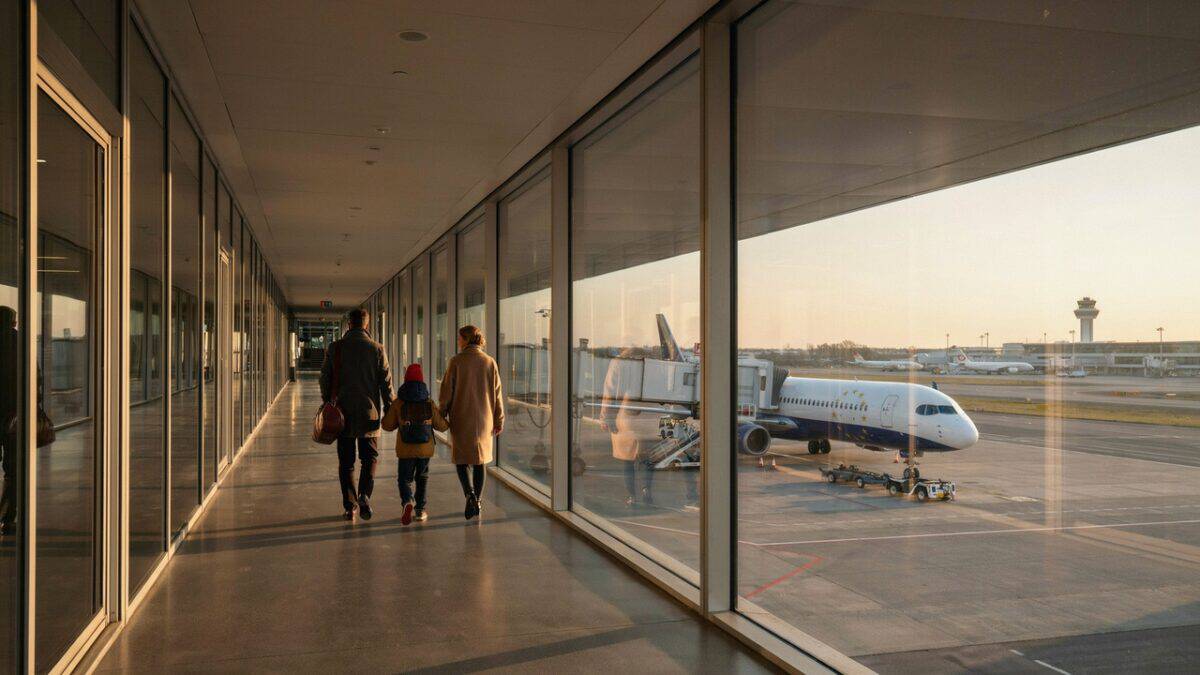
Family Seating is set to be strengthened across Italy, Portugal, Spain, Germany and other European Union countries after the European Parliament approved revised air-passenger rules on 7 July 2026. The reform was backed in Strasbourg after Parliament and Council negotiators reached a joint agreement through the Conciliation Committee. Under the framework, airlines will be required to seat an accompanying person beside a child aged below fourteen without charging an additional fee. Equivalent adjacent-seat protection will be extended to pregnant travellers and passengers with disabilities or reduced mobility.
Eligible passenger-name spelling corrections will also be completed without charge, while compensation after qualifying delays exceeding three hours, automatic reimbursement and wider disruption assistance will be preserved. However, the measures are not yet applicable. Council confirmation is still required before publication, entry into force and a one-year preparation period. Once implementation is completed, families and vulnerable passengers will receive clearer and more consistent protection across covered European journeys.
Advertisement
Advertisement

Wider Passenger Safeguards Will Reshape European Air Travel
Fees for correcting spelling mistakes in passenger names will be prohibited. Compensation eligibility for delays exceeding three hours will also be preserved, while payments of €250, €400 or €600 will be determined according to journey distance.
Automatic reimbursement will be provided when repayment is selected instead of rerouting. Clear claim instructions will be supplied following disruption, while refreshments, meals, communication services, accommodation and essential transport will remain covered by the airline duty of care.
Advertisement
Advertisement

European Parliament Approves the Landmark Aviation Reform
The European Parliament approved the reform on 7 July 2026. The joint text negotiated with the Council through the Conciliation Committee was supported by 646 votes, while 12 votes were cast against it and three abstentions were recorded.
However, the parliamentary vote did not make the revised rules immediately enforceable across Italy, Portugal, Spain, Germany or other EU countries. Final confirmation by the Council was still required by the beginning of August 2026 under the third-reading procedure.
Advertisement
Advertisement

Airlines and EU Countries Will Receive Time to Prepare
Once Council confirmation is secured, the regulation will be published in the Official Journal of the European Union. The updated framework will enter into force 20 days after publication.
A one-year preparation period will then be provided to EU member states, airlines, airports, intermediaries and booking platforms. The development must therefore be viewed as an advanced legislative breakthrough rather than a passenger-rights system already operating during the 2026 summer season.
Advertisement
Advertisement

Family Seating Will Become a Protected Passenger Entitlement
Young children could previously be assigned seats away from their accompanying adults unless families paid to select specific places. The outcome often depended on the airline, ticket type and fare conditions attached to the booking.
Under the revised framework, Family Seating will be treated as a protected entitlement rather than an optional service sold for an additional fee. The financial pressure associated with keeping a young child beside a responsible adult will therefore be removed.

Adjacent Seats Will Be Guaranteed Without Promising Premium Places
The reform will require airlines to place a child below fourteen beside an accompanying person without imposing an extra seating charge. However, families will not automatically receive a preferred row, window position, additional legroom or premium seat.
The legal protection will focus specifically on adjacency. Aircraft layouts and operational, safety and security requirements will still be observed when the seats are allocated. Airlines will therefore retain control over the precise seating position while remaining responsible for keeping protected travellers together.
Advertisement
Advertisement
Pregnant Travellers Will Receive Comparable Seating Support
Equivalent no-cost adjacent seating rights will be extended to pregnant passengers. This protection will help travellers who may require nearby assistance from an accompanying person during boarding, the journey or arrival.
A preferred seat type will not necessarily be provided unless another legal, safety or medical requirement applies. Nevertheless, an additional charge will not be imposed merely because an accompanying person needs to be seated beside the protected passenger.
Passengers With Reduced Mobility Gain Stronger Safeguards
Passengers with disabilities or reduced mobility will receive the same adjacent-seat protection. When support from an accompanying person is required, the necessary seating arrangement will be provided without an additional selection fee.
If airport assistance fails and a protected passenger misses a departure because the boarding gate was not reached on time, rights to compensation, rerouting and airline assistance will also be maintained under the agreed framework.
Common Rules Will Support More Consistent European Journeys
Italy, Portugal, Spain and Germany will not receive separate national concessions through the reform. Instead, common European obligations will be introduced across participating EU countries, airlines, airports, intermediaries and booking platforms.
Families will consequently encounter more consistent seating protections when travelling between European destinations. Major differences created by individual airline seating policies should also be reduced once the regulation becomes enforceable.
Advertisement
Advertisement
Existing Rules Will Continue During the Transition
The revised safeguards will not apply until the remaining legislative process has been completed. Publication and the one-year preparation period must also be concluded before full implementation can begin.
Until then, travellers will need to follow existing European passenger protections and individual airline policies. Once implementation is completed, Family Seating, accessibility support and disruption assistance will operate through a clearer and more unified European framework.
Three-Hour Compensation Protection Will Be Preserved
Passengers affected by an arrival delay exceeding three hours will continue to qualify for financial compensation, provided that the disruption falls within the conditions established by the revised European rules. The long-standing three-hour threshold will therefore be protected rather than increased.
Compensation will also remain available when boarding is denied or when a scheduled service is withdrawn fewer than 14 days before departure. However, payment will not be required when the disruption is caused by qualifying extraordinary circumstances beyond the airline’s control.
Compensation Will Be Calculated by Journey Distance
The revised framework will preserve three compensation levels. A payment of €250 will be provided for journeys measuring up to 1,500 kilometres. Compensation of €400 will apply to intra-EU journeys exceeding 1,500 kilometres and other journeys between 1,500 and 3,500 kilometres.
A payment of €600 will be available for longer journeys falling outside those categories. For the longest routes, compensation may be reduced by 50 per cent when suitable rerouting is offered and the final arrival delay does not exceed four hours.
Advertisement
Advertisement
Passenger Compensation Categories Explained
The main compensation categories established under the European framework can be summarised as follows:
- €250 payment: Journeys measuring no more than 1,500 kilometres will be covered when the qualifying conditions are satisfied.
- €400 payment: Intra-EU journeys exceeding 1,500 kilometres and other journeys measuring between 1,500 and 3,500 kilometres will be included.
- €600 payment: Journeys exceeding 3,500 kilometres and not falling within the intra-EU category will qualify for the highest standard amount.
- Reduced payment: A 50 per cent reduction may be applied to the longest journeys when rerouting is provided and arrival is delayed by no more than four hours.
Extraordinary Circumstances Will Limit Airline Liability
Compensation may be refused when disruption is caused by events that could not reasonably have been prevented by the operating airline. An open list of extraordinary circumstances will be included instead of a completely fixed catalogue.
Natural disasters, severe weather, war, unruly passenger behaviour and strikes involving airports, air-navigation services or ground-handling providers may be considered. Airlines will still be required to explain why compensation has been withheld and direct passengers towards the available complaint process.
Duty of Care Will Continue During Major Disruption
Even when financial compensation is not payable, essential passenger care will still have to be provided. Refreshments will be supplied after every two hours of waiting, while a meal will be offered once the delay reaches three hours.
When an overnight stay becomes necessary, suitable accommodation and transport between the airport and the lodging will be arranged. If circumstances beyond the airline’s control cause the disruption, the accommodation obligation may be limited to three nights.
Automatic Ticket Reimbursement Will Simplify Repayment
Passengers who choose reimbursement instead of rerouting will receive the ticket refund automatically. A separate and unnecessarily complicated application should therefore no longer be required once the traveller’s repayment choice has been recorded.
Advertisement
Advertisement
The full cost of the unused journey will be returned through an accepted payment method. When a completed portion no longer serves the original travel plan, reimbursement and a return journey to the initial departure point may also be provided where relevant.
Rerouting Choices Will Remain Available
Passengers will retain the right to choose between reimbursement and continued travel under comparable conditions. Rerouting at the earliest opportunity or travel on a later suitable date will be offered, subject to seat availability and the passenger’s selected option.
Alternative services operated by another airline may be used when appropriate. A different route, another airport or another suitable mode of transport may also be considered when it allows the passenger to reach the final destination within a reasonable period.
Clear Claim Instructions Will Be Delivered Quickly
Passengers affected by disruption will receive clear information explaining how compensation can be requested. Those instructions will be supplied within four days after the affected journey has ended, and access will not depend on a special mobile application or user account.
A period of nine months will be provided for the compensation request to be filed. This extended filing window will reduce the risk that an eligible claim is lost because a traveller could not immediately complete the procedure.
Airlines Will Face a Defined Response Deadline
Once a complete compensation claim has been received, the airline will be given 30 days to make the required payment or provide a reasoned refusal. Any reliance on extraordinary circumstances will have to be explained to the passenger.
Advertisement
Advertisement
Information about complaint-handling procedures will also be supplied when payment is rejected. Greater accountability will therefore be introduced, while long and uncertain waiting periods for airline responses should be reduced.
Summer Travellers Will Receive More Predictable Protection
The reform will be especially important during peak summer periods, when congestion, weather problems and operational pressure can affect journeys across Italy, Portugal, Spain, Germany and other European destinations.
Once implementation has been completed, clearer compensation thresholds, automatic reimbursement and stronger care requirements will be combined within one framework. Travellers will therefore be given a more predictable route towards repayment, rerouting, assistance and compensation.
Passenger Name Spelling Errors Will Be Corrected Without Fees
Air passengers will no longer be charged for reasonable corrections to spelling mistakes in their names. At least one complimentary name correction will be provided when a request is submitted within the required period before departure.
The protection will apply to genuine spelling mistakes and administrative name updates. It will not permit a ticket to be transferred to another traveller or allow the journey date, departure time, itinerary or passenger identity to be replaced.
Correction Requests Will Need to Meet Clear Conditions
A correction request will generally have to be submitted no later than 48 hours before the scheduled departure time. The request may be made by the affected passenger or by another traveller whose ticket forms part of the same air transport contract.
Advertisement
Advertisement
An intermediary that completed the reservation may also submit the request for the affected customer. Airlines and booking intermediaries will be required to explain the relevant correction deadline and procedure before the ticket is purchased.
Administrative Changes Will Also Receive Protection
An official change to a passenger’s name may be updated without an additional charge when the required conditions are satisfied. Such changes may become necessary following marriage, divorce or another recognised administrative process.
Supporting documentation may still be requested so that the traveller’s identity can be verified. However, the procedure must not be used to impose an avoidable fee when the same passenger remains connected to the original reservation.
Boarding Pass Charges Will Be Restricted
A fee will not be charged for a printed boarding pass when check-in has already been completed. Passengers will also be allowed to obtain a digital boarding pass without being forced to create an account or install a particular airline application.
A traveller will not be denied boarding merely because a personally printed copy of a digitally issued boarding pass has been presented. Relevant airport security, identity verification and travel-document requirements will still have to be satisfied.
Booking and Traveller Rights at a Glance
| Passenger category | New protection | Important condition |
|---|---|---|
| Traveller with a spelling error | At least one name correction will be completed without a fee | The request must normally be submitted at least 48 hours before departure |
| Traveller with an administrative name change | The booking name may be updated without an additional charge | The original passenger must remain the same person |
| Digitally checked-in passenger | A digital boarding pass will be provided without requiring a special account or application | Standard check-in and identity rules will still apply |
| Passenger using a printed boarding pass | Boarding cannot be refused only because a personal printout has been used | The document must originate from a valid digitally issued boarding pass |
| Traveller carrying a personal item | One small bag or backpack will be taken onboard without an additional fee | Published size, weight, safety and storage limits must be respected |
| Passenger missing the outbound journey | The return portion of a two-way ticket may still be used without an extra charge | The booking must remain valid under the revised framework |
Carry-On Pricing Will Become More Transparent
Airlines, intermediaries and search platforms will be required to display fares inclusive of carry-on luggage from the beginning of the booking process. Travellers will therefore be shown a more realistic price before reaching the final payment stage.
Advertisement
Advertisement
Lower fares may still be offered to passengers who voluntarily choose to travel without hand luggage. However, the distinction between included and optional baggage must be displayed clearly so that competing fares can be compared more accurately.
One Personal Item Will Be Carried Without Extra Cost
Every covered passenger will be permitted to take one personal item into the aircraft cabin without paying an additional fee. A small handbag, laptop bag or backpack may be accepted under this entitlement.
The item will still need to comply with the carrier’s published dimensions and weight limits. It must also be stored safely beneath the seat or inside an approved cabin compartment in accordance with aviation-security and operational requirements.
Baggage Conditions Must Be Displayed Clearly
Airlines will be required to communicate the permitted dimensions and weight of cabin and checked baggage. The allowance connected with each fare must be presented before the traveller completes the reservation.
This transparency will make it easier for passengers to understand whether a larger cabin bag or checked suitcase attracts an additional cost. Unexpected charges at check-in or the boarding gate should consequently be reduced.
Return Journeys Will Be Protected After a Missed Outbound Service
A passenger will be allowed to use the return portion of a two-way ticket even when the outbound journey has not been taken. An additional charge will not be imposed solely because the first part of the itinerary was missed.
Advertisement
Advertisement
The safeguard will restrict the automatic invalidation of remaining journey segments through no-show policies. Greater flexibility will therefore be provided when unexpected circumstances prevent the passenger from using the original outward service.
Booking Platforms Will Carry Greater Information Responsibilities
Airlines and intermediaries will have to explain whether an itinerary is covered by one transport contract or several separate contracts. That distinction can determine whether assistance, reimbursement and compensation are available after a missed connection.
Core travel services, optional price supplements, name-correction procedures and passenger obligations will also be disclosed. Through these measures, transparent booking information will become a central part of the reformed European air-passenger framework.
Vulnerable Travellers Will Receive Stronger Journey Protection
Passengers with disabilities or reduced mobility will be given stronger protection when airport assistance breaks down. If a departure is missed because the traveller has not been helped to reach the boarding gate on time, rights to compensation, rerouting and airline assistance will be preserved.
The same passengers will also be entitled to sit beside an accompanying person without paying an additional seat-selection charge. Equivalent adjacent-seat protection will be extended to pregnant travellers and adults accompanying children aged below fourteen.
Mobility Equipment Will Receive Greater Safeguards
Mobility equipment and recognised assistance dogs will be covered by improved airline-liability provisions. A special declaration of interest may be submitted when mobility equipment is handed to the airline or when a recognised assistance dog is presented for boarding.
Advertisement
Advertisement
No additional fee will be charged for submitting that declaration. When mobility equipment is lost, damaged, destroyed or delayed, evidence of replacement costs may be requested so that the appropriate level of compensation can be determined.
Essential Support Will Continue During Disruption
The airline duty of care will remain applicable even when compensation cannot be paid because disruption has been caused by extraordinary circumstances. Stranded passengers will therefore continue to receive essential assistance while they wait.
Support will be determined by the duration and circumstances of the disruption. Airport conditions, passenger needs and the expected departure time of the replacement service will also be considered.
Assistance That Must Be Provided to Stranded Travellers
The expanded passenger framework will require several forms of practical care:
- Refreshments: Suitable drinks and light refreshments will be provided after every two hours of waiting.
- Meals: Appropriate food will be supplied when the waiting period reaches three hours.
- Communication: Access to necessary communication services will be made available during extended disruption.
- Accommodation: Hotel lodging will be arranged when an overnight stay becomes unavoidable.
- Local transport: Travel between the airport and the supplied accommodation will be covered.
- Rerouting information: Available alternative journeys will be explained clearly before a passenger’s choice is recorded.
- Complaint guidance: Passengers will be directed towards the relevant complaint process when a compensation request is refused.
Extraordinary Events Will Not Remove Every Airline Obligation
Natural disasters, warfare, severe weather, unruly passenger conduct and strikes involving airports, air-navigation services or ground-handling providers may be recognised as extraordinary circumstances. Financial compensation may be withheld when a direct link with such an event is demonstrated.
However, care obligations will not automatically disappear. Refreshments, meals and necessary accommodation will still be supplied, although hotel support may be limited to three nights when the event remains beyond the operating airline’s control.
Advertisement
Advertisement
European Reform Categories and Expected Traveller Benefits
| Reform category | Protection being introduced | Expected traveller benefit |
|---|---|---|
| Family Seating | Children below fourteen will be seated beside an accompanying person without an extra charge | Families will be kept together without compulsory seat-selection spending |
| Accessible travel | Adjacent seats and disruption support will be protected for passengers with disabilities or reduced mobility | Necessary assistance will become more consistent |
| Name corrections | At least one eligible spelling correction or administrative update will be completed free of charge | Avoidable booking amendment costs will be reduced |
| Delayed journeys | Compensation after qualifying delays exceeding three hours will be preserved | Existing financial protection will be maintained |
| Reimbursement | Automatic repayment will be provided when a refund is selected | Complicated refund procedures will be reduced |
| Passenger care | Refreshments, meals, accommodation and transport will be supplied when required | Stranded travellers will receive practical support |
| Fare transparency | Prices inclusive of carry-on luggage will be displayed from the start | Ticket costs will be compared more accurately |
| Boarding passes | Digital and personally printed boarding passes will receive stronger protection | Unnecessary printing and application charges will be restricted |
Italy and Other EU Countries Will Follow One Framework
Italy, Portugal, Spain and Germany will implement the same European requirements rather than creating four separate passenger-rights systems. Airlines operating covered journeys will therefore be expected to follow common standards across national borders.
National enforcement authorities will remain important because compliance, complaints and penalties will be handled within each country. However, the underlying passenger entitlements will be drawn from the shared European regulation.
Council Confirmation Will Complete the Legislative Stage
The European Parliament approved the joint agreement on 7 July 2026 by 646 votes to 12, with three abstentions. Final Council confirmation was still required by the beginning of August 2026 before the regulation could proceed towards publication.
The updated rules will enter into force 20 days after publication in the Official Journal of the European Union. A one-year transition period will then be provided so that countries, airlines, airports and booking businesses can prepare their systems.
Summer Passengers Must Continue Following Existing Rules
The revised provisions must not be described as fully operational during the summer of 2026. Existing European passenger rights and current airline policies will continue to govern journeys until the legislative and implementation stages have been completed.
Travellers should therefore check airline seating conditions, baggage allowances and assistance procedures before departure. Receipts, boarding passes, booking confirmations and written disruption notices should also be retained in case a claim becomes necessary.
Advertisement
Advertisement
A Clearer Future Is Being Created for European Family Flying
Once implementation is completed, Family Seating, free eligible name amendments, transparent baggage pricing and improved disruption assistance will be combined within one clearer structure. Families and vulnerable travellers will receive some of the most important benefits.
The reform will not prevent delays, operational failures or severe weather. However, greater certainty will be provided when journeys go wrong, while unnecessary charges will be restricted and airline responsibilities will be communicated more clearly across Europe.
Advertisement
