
Scores of Passengers Face Major Travel Turmoil at Jakarta Soekarno-Hatta International Airport as Batik Air, Citilink, Garuda Indonesia, Super Air Jet and Other Airlines Record 14 Flights Grounded and 101 Delays Affecting Routes Across Indonesia, Singapore, Malaysia, Qatar, China and Vietnam – What Travellers Need to Know Before Heading to the Airport

Published
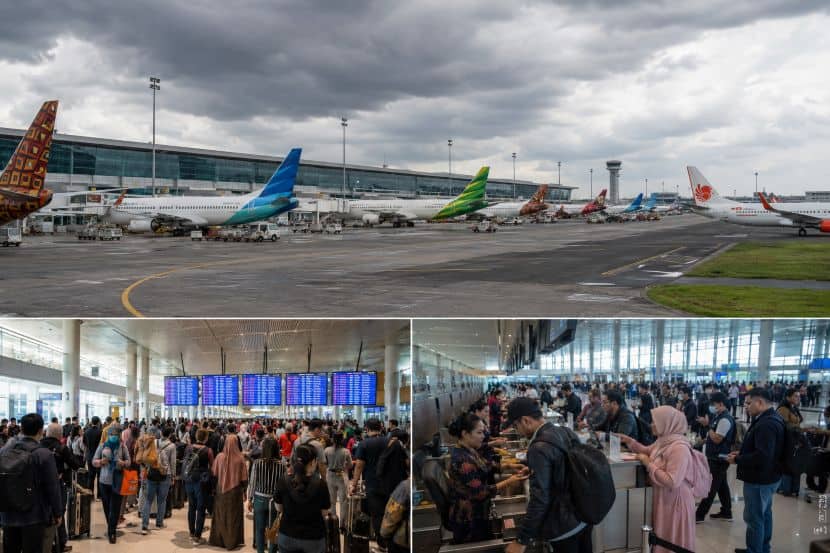
Image generated with Ai
Today (June 22, 2026), Jakarta’s Soekarno-Hatta International Airport is experiencing significant operational disruption, with 14 flight cancellations and 101 delayed services affecting domestic and international passengers. The latest operational data shows that Batik Air accounts for nearly all cancellations, with 13 flights cancelled, while Citilink has one cancellation. Delays, however, are spread across a much broader range of airlines, led by Batik Air (22 delays), Garuda Indonesia (20), Super Air Jet (17), and Citilink (13). The disruption highlights how operational challenges at Indonesia’s busiest gateway can quickly ripple through the country’s domestic network as well as regional and long-haul international services.
Although the total number of cancellations remains relatively limited compared with the airport’s daily traffic volume, the 101 delayed flights indicate a much wider operational slowdown. For passengers, delays often create missed onward connections, longer airport waiting times, schedule uncertainty, and additional travel costs. With Soekarno-Hatta serving as Indonesia’s principal international gateway, even moderate disruptions have consequences extending well beyond Jakarta.
Advertisement
Advertisement
Jakarta Soekarno-Hatta International Airport Flight Disruption Overview
| Airline | Cancelled | % | Delayed | % |
|---|---|---|---|---|
| Batik Air | 13 | 6% | 22 | 11% |
| Citilink | 1 | 0% | 13 | 7% |
| Indonesia AirAsia | 0 | 0% | 6 | 17% |
| AirAsia | 0 | 0% | 1 | 8% |
| China Southern Airlines | 0 | 0% | 1 | 16% |
| Garuda Indonesia | 0 | 0% | 20 | 10% |
| Lion Air | 0 | 0% | 5 | 4% |
| Malaysia Airlines | 0 | 0% | 1 | 7% |
| Malindo Air | 0 | 0% | 1 | 9% |
| Pelita Air Service P.t. | 0 | 0% | 1 | 1% |
| Qatar Airways | 0 | 0% | 1 | 16% |
| Singapore Airlines | 0 | 0% | 3 | 16% |
| Super Air Jet | 0 | 0% | 17 | 14% |
| Sriwijaya Air | 0 | 0% | 2 | 7% |
| Scoot | 0 | 0% | 1 | 10% |
| TransNusa | 0 | 0% | 5 | 12% |
| VietJet Air | 0 | 0% | 1 | 50% |
Understanding the Numbers Behind Today’s Disruption
The operational picture reveals an important distinction between flight cancellations and flight delays. While only 14 flights have been cancelled, the number of delayed services is more than seven times higher, indicating that airlines are largely attempting to keep their schedules operating instead of removing flights entirely.
The most striking statistic is Batik Air’s dominance in today’s cancellations. Of the airport’s 14 cancelled flights, 13 belong to Batik Air, representing approximately 93% of all cancellations. The airline also records 22 delayed flights, making it the most disrupted carrier operating from the airport today.
Advertisement
Advertisement
Citilink is the only other airline recording a cancellation, with one cancelled flight and 13 delayed services, suggesting operational challenges but without widespread schedule reductions.
Among airlines experiencing delays but avoiding cancellations, Garuda Indonesia stands out. The national carrier has 20 delayed flights yet no cancellations, indicating that it has largely maintained its published schedule despite operational pressures.
Advertisement
Advertisement
Another notable performer is Super Air Jet, which reports 17 delayed flights without cancelling any services. This suggests the airline has prioritised maintaining flight frequency even while accepting operational delays.
Several regional and international airlines have also experienced smaller disruptions. Indonesia AirAsia records six delays, while Lion Air and TransNusa each report five delayed flights. Singapore Airlines has three delayed services, while Sriwijaya Air has two.
International operators including Qatar Airways, Malaysia Airlines, China Southern Airlines, Scoot, AirAsia, Malindo Air, Pelita Air Service P.t., and VietJet Air each report one delayed flight. Although these numbers appear small individually, they demonstrate that today’s operational slowdown extends beyond Indonesia’s domestic market into regional and international networks.
Overall, the data indicates that the disruption is broad-based in terms of delays but highly concentrated in terms of cancellations, with Batik Air accounting for nearly all withdrawn flights.
Why Are So Many Flights Being Delayed?
Large aviation hubs such as Jakarta Soekarno-Hatta operate with tightly coordinated schedules throughout the day. Once disruptions begin affecting aircraft rotations or airport capacity, delays often spread rapidly across multiple airlines.
Several operational factors commonly contribute to disruptions of this nature:
Advertisement
Advertisement
- Adverse weather conditions: Heavy rain, thunderstorms, poor visibility, or strong winds can temporarily reduce runway capacity and require increased aircraft spacing for safety.
- Aircraft rotation delays: When one incoming aircraft arrives late, the same aircraft frequently departs behind schedule for its next sector, creating a chain reaction across the network.
- Air traffic congestion: Soekarno-Hatta is among Southeast Asia’s busiest airports, and high traffic volumes can lead to airborne holding, longer taxi times, and departure sequencing delays.
- Ground handling constraints: Aircraft turnaround activities—including baggage loading, refuelling, catering, passenger boarding, and maintenance checks—must all be completed within strict time windows. Delays in any of these processes can affect departure schedules.
- Crew scheduling adjustments: Airlines must comply with regulated crew duty-hour limitations. When delays become prolonged, airlines sometimes need to replace crews or adjust flight schedules to remain compliant with safety regulations.
Rather than cancelling flights outright, airlines often choose to delay departures while operational conditions gradually improve. This strategy helps preserve network connectivity and minimises passenger disruption, particularly at a major transfer hub like Jakarta.
Weather Can Trigger Network-Wide Effects
Even when severe weather affects only part of the day’s operations, its impact can continue for several hours afterwards.
Aircraft delayed during morning operations frequently remain behind schedule throughout the day because every subsequent flight depends on the aircraft completing its previous journey. This creates what aviation experts describe as a “rolling operational delay,” where even improving weather conditions cannot immediately restore the published timetable.
For international airlines operating into Jakarta, these delays may also affect aircraft departing for destinations across Southeast Asia, Australia, the Middle East, East Asia, and beyond, particularly where aircraft are scheduled to operate multiple sectors within a single day.
As Indonesia’s primary aviation gateway, Soekarno-Hatta’s operational performance influences connections across the wider national network. Consequently, even relatively modest cancellation numbers can translate into significantly larger passenger disruption through cascading delays.
What Guests Get: Immediate Passenger Ramifications
Passengers travelling through Jakarta Soekarno-Hatta International Airport today are likely to experience varying degrees of disruption depending on their airline, destination, and connection schedule. While only 14 flights have been cancelled, the much higher figure of 101 delayed flights means that the majority of travellers will still reach their destination, albeit later than planned.
Advertisement
Advertisement
- Longer Waiting Times: Delayed departures can extend airport stays by several hours, particularly during peak travel periods when replacement gates and aircraft become harder to allocate.
- Missed Connecting Flights: Soekarno-Hatta is Indonesia’s primary hub for domestic and international transfers. Even a moderate delay can cause passengers to miss onward connections, requiring itinerary changes.
- Schedule and Accommodation Changes: Travellers with fixed hotel bookings, business meetings or tour departures may have to reschedule plans, potentially incurring additional costs.
- Pressure on Airport Services: Higher passenger volumes in departure lounges, check-in areas and customer service counters are common whenever large numbers of flights operate behind schedule.
Understanding Your Refund and Rebooking Options
Passengers affected by today’s disruptions should first determine whether their flight has been cancelled or delayed, as the available options may differ according to the airline’s conditions of carriage and applicable regulations.
If your flight has been cancelled:
- Contact your airline immediately through its official website, mobile app or airport service desk.
- Ask whether you are eligible for a refund, complimentary rebooking, or an alternative routing.
- If your journey involves multiple flight segments on one booking, confirm that all onward sectors remain protected.
If your flight is delayed:
- Monitor official flight status updates rather than relying solely on third-party tracking platforms.
- Retain boarding passes, booking confirmations and receipts for any additional expenses if reimbursement policies apply.
- If the delay becomes extended, enquire whether the airline is providing meals, accommodation or other passenger assistance in accordance with its policy.
Indonesia’s Tourism Sector Faces Operational Headwinds
Jakarta serves as the country’s largest aviation gateway, meaning disruptions at Soekarno-Hatta can affect travellers heading not only to the capital but also to destinations such as Bali, Yogyakarta, Lombok, Labuan Bajo and Medan through connecting flights.
While today’s 14 cancellations are unlikely to have a lasting impact on national tourism, 101 delayed flights can reduce traveller satisfaction, compress sightseeing schedules and disrupt organised tours. For inbound international visitors with tight itineraries, even several hours of delay may result in missed domestic connections or shortened holidays.
The broader tourism industry is generally resilient to short-term operational disruptions, but repeated periods of delay during peak travel seasons could influence traveller confidence and airline scheduling efficiency.
Advertisement
Advertisement
Beyond the Runway: Economic Implications
Flight disruptions carry financial consequences beyond airlines themselves. Every delayed aircraft may increase fuel consumption during taxiing, require additional crew hours and complicate aircraft utilisation for the remainder of the day.
Airport retailers, ground transport providers and tourism operators can also experience knock-on effects as passenger arrival patterns shift. Although today’s disruption remains moderate compared with major weather-related shutdowns, it illustrates how delays—not just cancellations—carry measurable operational costs throughout the aviation ecosystem.
FAQ (Jakarta Soekarno-Hatta International Airport Flight Cancellations 2026)
How many flights were cancelled today?
A total of 14 flights operating within, into or out of Jakarta Soekarno-Hatta International Airport were cancelled today.
How many flights were delayed?
The airport recorded 101 delayed flights across domestic and international airlines.
Which airline recorded the most cancellations?
Batik Air reported 13 cancellations, accounting for nearly all cancelled flights recorded today.
Which airlines experienced the highest number of delays?
The highest delay counts were:
Advertisement
Advertisement
- Batik Air – 22
- Garuda Indonesia – 20
- Super Air Jet – 17
- Citilink – 13
Should passengers still travel to the airport?
Yes, unless your airline has confirmed a cancellation. Since most affected flights are delayed rather than cancelled, passengers should continue monitoring official airline notifications before departing for the airport.
Guidance for Travellers Flying Through Jakarta in the Coming Days
Passengers travelling over the next several days should regularly monitor flight schedules, check in online where available, and allow extra time for airport procedures. Travellers with connecting itineraries should pay particular attention to revised departure times and remain in contact with their airline if delays continue. Keeping travel insurance details, booking confirmations and airline notifications readily available can also help simplify any rebooking or compensation process.
Author’s Thoughts
Today’s disruption at Jakarta Soekarno-Hatta demonstrates an important aviation reality: delays often affect far more passengers than cancellations. While headlines naturally focus on the 14 cancelled flights, the 101 delayed services represent the broader operational challenge. The encouraging aspect is that airlines have largely chosen to keep flights operating instead of removing them from the schedule entirely. For passengers, timely communication from airlines and careful planning remain the most effective ways to minimize disruption when busy aviation hubs experience operational setbacks.
Advertisement
