
Inside Église Saint-Jean-Baptiste: Canada’s $250K Tourism Project

Published
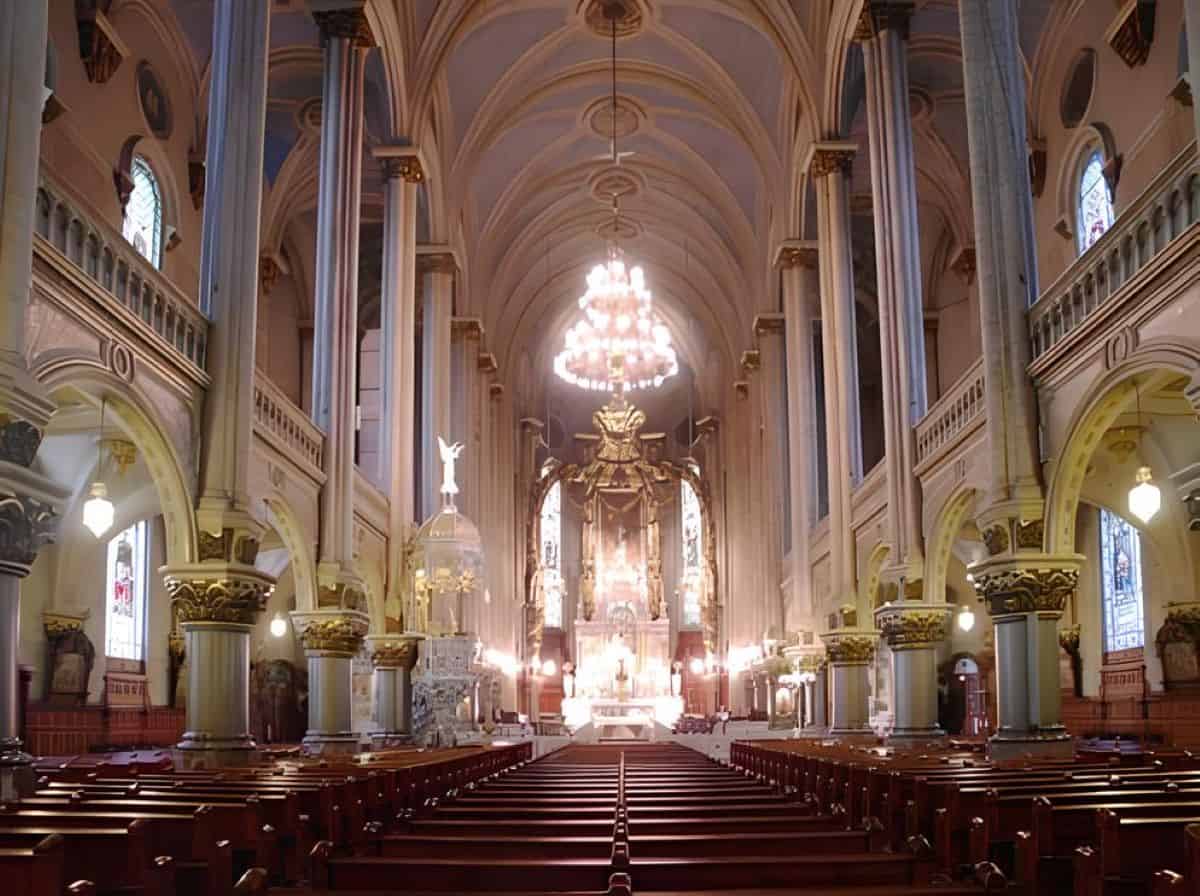
In Quebec City’s historic Faubourg Saint-Jean, a landmark shuttered for nearly a decade is charting a second life. Through a $250,000 contribution from Canada Economic Development for Quebec Regions (CED)—funded under the federal Tourism Growth Program (TGP)—Église Saint-Jean-Baptiste is preparing to reopen its doors as a multi-use cultural and tourism hub.
Rather than attempting to bankroll a complete, multi-million-dollar envelope rehabilitation on its own, this targeted federal grant serves a distinct operational purpose: equipping the vacant landmark to host public exhibitions, acoustic performances, and year-round heritage tourism. By diversifying Quebec City’s tourism offerings outside the high-density summer corridor of Old Quebec (Vieux-Québec), the initiative channels foot traffic directly into the local commercial strip along Rue Saint-Jean.
Advertisement
Advertisement
Architectural Legacy: Peachy’s Masterwork
Constructed between 1882 and 1887, Église Saint-Jean-Baptiste was built to replace an earlier 1849 sanctuary levelled in the devastating Faubourg Saint-Jean fire of 1881. The parish turned to architect Joseph-Ferdinand Peachy, a student of Charles Baillairgé and a resident of the district.
| Feature | Specification |
| Architect | Joseph-Ferdinand Peachy (1882–1887) |
| Primary Influence | Église de la Sainte-Trinité (Paris) |
| Steeple Height | 73 m (240 ft) |
| Key Interior Works | Casavant Frères organ, Louis Jobin carved angels |
Peachy drew direct inspiration from Théodore Ballu’s Église de la Sainte-Trinité in Paris, blending French Academic Revival and Second Empire classicism with a towering 73-metre central spire. Inside, the building houses treasures of Canadian liturgical craftsmanship:
Advertisement
Advertisement
- The Casavant Frères Pipe Organ: Installed in 1890, representing a high-water mark of 19th-century Canadian organ building.
- Sculptural Details: Hand-carved adoring angels created by renowned French-Canadian woodcarver Louis Jobin above the choir.
- Preserved Medallions: Four oil-on-canvas medallions painted by master Antoine Plamondon, rescued from the pre-fire 1849 structure.
Despite its designation as a protected heritage asset under Quebec’s Cultural Heritage Act, the Roman Catholic Archdiocese of Quebec closed the church to worship at Pentecost in 2015. Dwindling parish rosters could no longer bear the immense costs of heating, roof stabilization, and stone conservation.
The Economics of Adaptive Reuse
The rehabilitation of Église Saint-Jean-Baptiste reflects a broader policy pivot across North America toward sustainable heritage reuse:
Advertisement
Advertisement
| Metric | Traditional Worship Model | Adaptive Cultural Hub Model |
| Primary Audience | Denominational parishioners | Local community, cultural patrons, domestic/international visitors |
| Revenue Stream | Tithes and parish collections | Ticketed performances, municipal grants, event rentals, tourism spending |
| Seasonality | Weekly services | Extended four-season cultural programming |
| Neighborhood Spillover | Limited off-peak retail impact | Increased patron traffic for Rue Saint-Jean restaurants and retail |
Similar transitions across Quebec—from the conversion of the historic Monastère des Augustines into a holistic retreat to Montreal’s church-turned-library transformations—illustrate that adaptive reuse safeguards physical infrastructure while returning decommissioned spaces to civic utility.
By balancing federal tourism funds, municipal heritage stewardship, and community programming, the revival of Église Saint-Jean-Baptiste ensures that Peachy’s architectural monument remains an active civic asset rather than a silent casualty of demographic change.
Project Phasing & Anticipated Milestones
To balance urgent conservation requirements with near-term visitor access, the reopening strategy deploys a phased activation model:
| Phase | Projected Timeline | Scope & Visitor Access | Key Deliverables |
| Phase 1: Stabilization & Infrastructure | Mid-2025 – Early 2026 | Closed to general public; site preparation | Interior environmental controls, visitor safety upgrades, acoustic baffling, and accessible entry retrofits. |
| Phase 2: Pilot Activation & Heritage Tours | Summer 2026 | Limited ticketed access | Guided architectural tours of the nave, exhibition of Plamondon medallions, and inaugural Casavant organ recital series. |
| Phase 3: Full Public Operations | Spring 2027 onwards | Year-round public access | Permanent multi-use cultural hub, rotating regional art showcases, seasonal festival programming, and private event bookings. |
By phasing visitor readiness alongside long-term masonry and envelope stabilization, the project ensures the site generates tourism momentum and neighbourhood economic spillover well ahead of its complete multi-year envelope restoration.
Quick Facts: The Saint-Jean-Baptiste Revival
- What is adaptive reuse in Canadian heritage preservation? Adaptive reuse is the process of retrofitting decommissioned historic structures—such as churches—for modern civic, cultural, or commercial uses while legally protecting character-defining architectural elements.
- Why do historic churches across Quebec close? Secularization, demographic shifts, and shrinking congregations leave parishes unable to finance soaring operational expenses, particularly winter heating and complex masonry repairs.
- What does the $250,000 federal grant cover? Administered through Canada Economic Development for Quebec Regions (CED) via the Tourism Growth Program, the $250,000 non-repayable contribution targets tourism readiness, visitor infrastructure, and seasonal event programming. It complements broader provincial and municipal conservation investments rather than funding total structural restoration.
Advertisement
