
Flights Cancelled Across Gulf Airports Including Cairo, Baghdad and More with 34 Cancellations and 1,424 Delays

Published
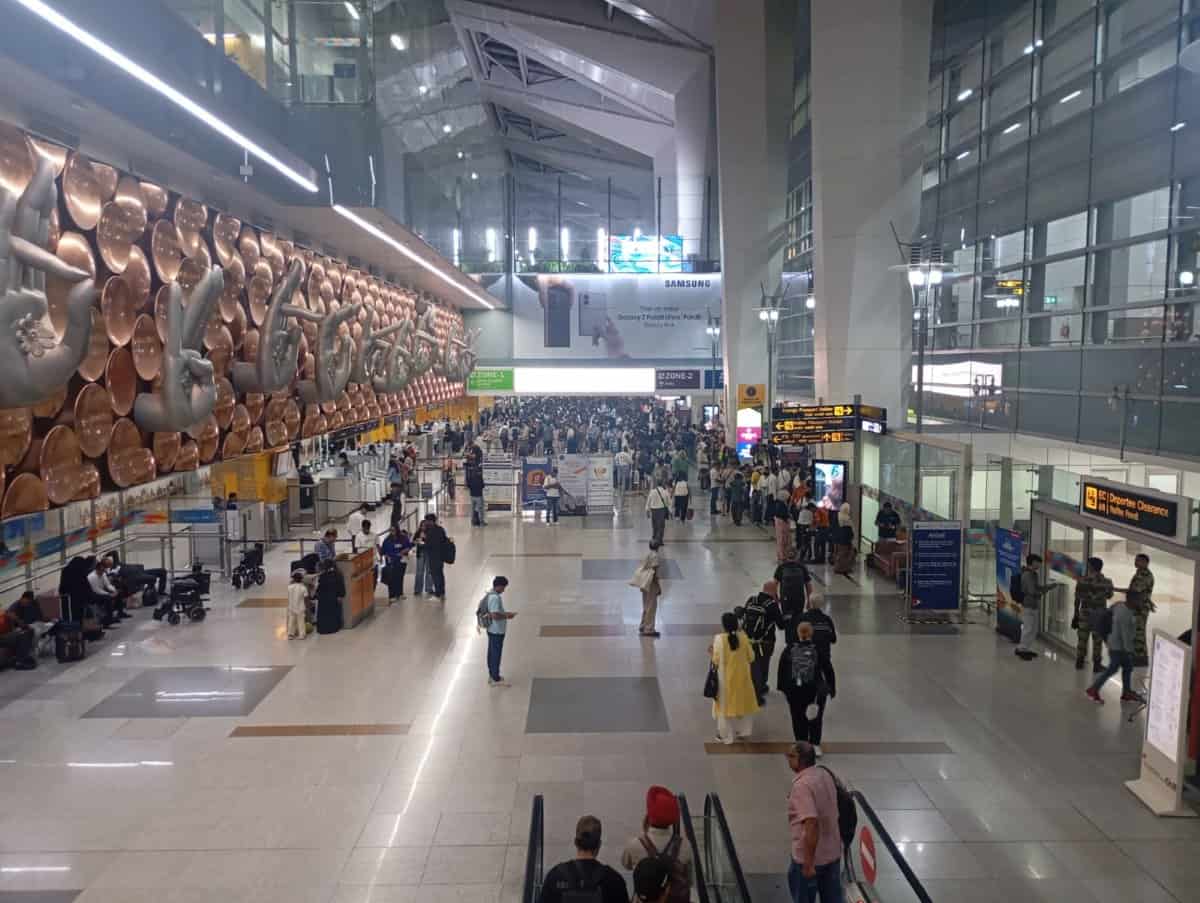
Airlines reported 1,424 delays and 34 cancellations, causing significant disruptions to flights throughout Gulf airports, including Cairo, Baghdad, and others. Passengers with scheduled trips experienced uncertainty as a result of the extensive impact on travelers at major aviation hubs. Additionally, operational difficulties, airport congestion, and regional air traffic demands that interfered with regular schedules were the causes of the flight disruptions. A number of flights were canceled as airlines modified their operations, and airports throughout the Gulf region reported varied degrees of delays. As a result, it is recommended that travelers verify the most recent flight information before departing. The difficulties Gulf airports and international connectivity networks face are highlighted by the most recent disruption.
The disruption impacted both passengers and airlines operating through some of the region’s busiest airports. Istanbul Airport recorded the highest number of delays among the listed airports, while Dubai International Airport reported the highest number of cancellations. Airlines including Turkish Airlines, Saudia, FlyDubai, Egypt Air, and Israir also experienced operational challenges.
Which Gulf Airports Experienced the Highest Flight Disruptions?
Several key airports across the Gulf region and surrounding markets reported significant delays. The scale of disruption varied between locations, with some airports seeing hundreds of affected flights.
Dubai International Airport in the United Arab Emirates recorded 279 delays and 11 cancellations, making it one of the most affected aviation hubs in the region. As a major international connection point, delays at Dubai created challenges for passengers travelling through the airport.
Advertisement
Advertisement
Sharjah International Airport also experienced disruption, recording 113 delays and 2 cancellations. Abu Dhabi International Airport reported 111 delays and 1 cancellation, adding further pressure to UAE aviation operations.
In Saudi Arabia, King Khalid International Airport in Riyadh recorded 88 delays and 3 cancellations. Meanwhile, Abha Regional Airport reported 10 delays and 2 cancellations.
Advertisement
Advertisement
Beyond the Gulf, Cairo International Airport in Egypt recorded 169 delays and 2 cancellations, while Ben Gurion International Airport in Israel reported 256 delays and 3 cancellations. Istanbul Airport in Türkiye experienced the highest delay figure among all listed airports, with 391 delays and 9 cancellations. Baghdad International Airport in Iraq reported 7 delays and 1 cancellation.
How Were Airlines Across the Region Affected?
Airlines operating across the Gulf and neighbouring markets also reported notable disruption levels. Turkish Airlines recorded the highest number of delayed flights among the listed carriers, with 355 delays representing 21% of its operations. The airline also reported 7 cancellations, although its cancellation rate remained at 0%.
Advertisement
Advertisement
Saudia, Saudi Arabia’s national carrier, experienced 76 delays, representing 14%, along with 5 cancelled flights and a 0% cancellation rate.
FlyDubai, based in the United Arab Emirates, reported 124 delays, affecting 42% of its flights, along with 3 cancellations and a 1% cancellation rate. The airline was among the carriers with one of the highest delay percentages in the provided data.
Egypt Air recorded 79 delayed flights, representing 29%, while reporting 2 cancellations with a 0% cancellation rate.
Israir, based in Israel, recorded 45 delays, affecting 47% of flights, and reported 1 cancellation with a 1% cancellation rate.
Advertisement
Advertisement
Airport, City and Country Impact Analysis across the Gulf Region
The disruption affected a wide geographical area covering major aviation centres in the Gulf and neighbouring countries.
In the United Arab Emirates, Dubai, Sharjah, and Abu Dhabi airports all recorded operational challenges. Dubai International Airport faced the largest impact in the UAE, with the highest number of delays and cancellations among the country’s listed airports. Sharjah and Abu Dhabi also experienced delays, affecting regional and international connections.
Saudi Arabia saw disruption at Riyadh and Abha airports. King Khalid International Airport experienced a higher volume of affected flights compared with Abha Regional Airport.
Türkiye’s Istanbul Airport reported the highest delay numbers, highlighting the impact on one of the world’s major international transit points. Egypt’s Cairo International Airport and Israel’s Ben Gurion International Airport also recorded significant delays, affecting passengers travelling across the Middle East.
The disruption also reached Baghdad International Airport, where a smaller number of flights were affected compared with larger regional hubs.
What Can Affected Passengers Do Now?
- Passengers travelling through affected airports across he Gulf should check their latest flight status directly with their airline before heading to the airport. Flight schedules can change quickly during periods of operational disruption.
- Travellers with connecting flights should allow additional time between journeys, especially when passing through major hubs such as Dubai International Airport, Istanbul Airport, and Abu Dhabi International Airport.
- Passengers whose flights have been cancelled should contact their airline for available options, including rebooking or alternative travel arrangements.
- Those experiencing long delays should also confirm updated boarding times, gate information, and any schedule changes through official airline communication channels.
- Keeping digital copies of booking confirmations and travel documents can help passengers manage unexpected changes more efficiently.
Data Verification Notice
The data has been extensively curated by our editorial team using real-time aviation figures recorded on 27 September 2026 at 5:57 pm ET USA (28 September 2026, 1:58 am GST).
Primary Source: FlightAware.
Verification Protocol: All statistics have been independently reviewed and cross-checked by our human editorial desk. Timestamped records, data logs and feed snapshots are securely archived internally to support historical accuracy and editorial transparency.
Note: Real-time flight-tracking figures reflect active airspace and operational data. Minor variations may occur when compared with information displayed at individual airport terminals or airline departure gates.
Yesterday, Gulf airports faced 27 cancellations and delays impacting travel. Click here to read the full report.
Advertisement
Verified by Paramita Sarkar
