
UK Joins Canada and Other Travel Markets as Schengen EES Biometric Checks Reshape Multi Country Europe Trips

Published
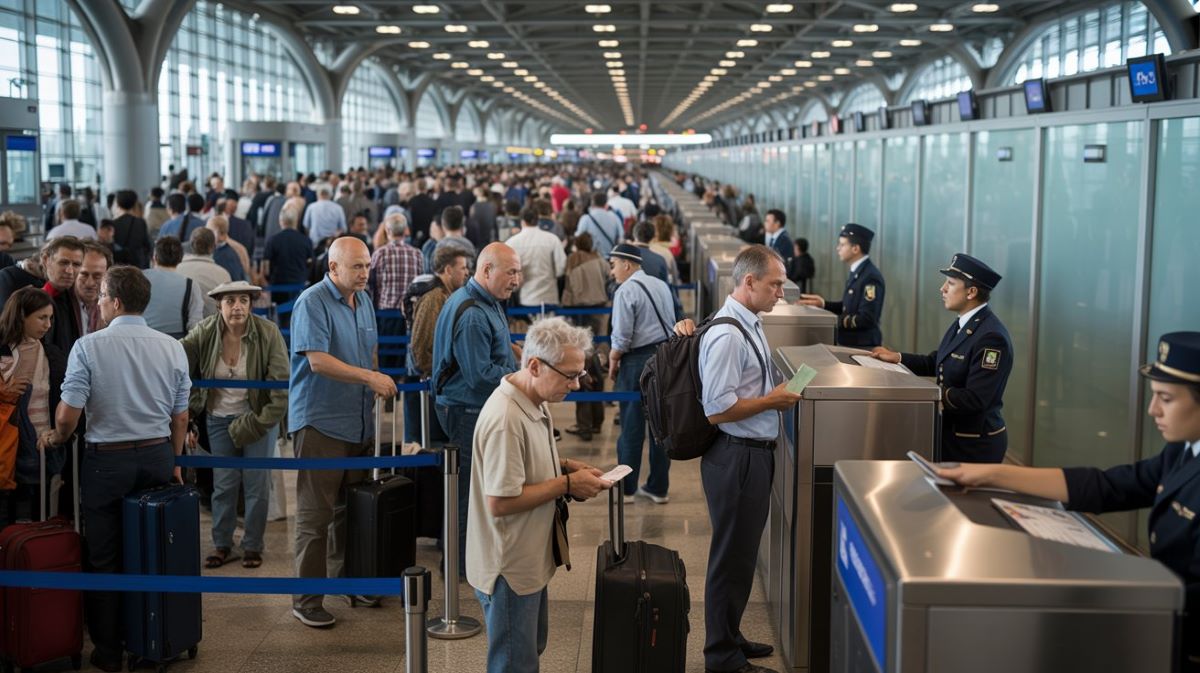
Image generated with Ai
The EES border system is increasingly influencing travellers’ planning of multi-country holidays in Europe. On 10 April 2026, the Schengen Entry/Exit System (EES), which is widely referred to as the ‘fingerprints’ system, entered into full operation at external border-crossing points of the 29 countries of the Schengen Group. It has an electronic system to capture the data of eligible short-term non-EU visitors and eliminates the need to check journeys with a stamp. The change is more than fingerprints for visitors from the UK, Canada, US, Australia, Japan and other major tourist markets. The first Schengen country on an itinerary can now shape connection times, border processing and the overall success of a Europe trip.
More than 150 million entry and exit movements had been registered by 6 August 2026, confirming that EES is now part of everyday European travel.
Advertisement
Advertisement
First Schengen Gateway Can Now Decide How Smoothly a Europe Trip Starts
The most important question for a multi-country itinerary is no longer only “Where am I going?”
Travellers should also ask:
Advertisement
Advertisement
Where do I first enter the Schengen area?
Advertisement
Advertisement
A Canadian traveller flying to Rome through Paris will normally complete Schengen entry formalities in France. Consequently, A British traveller heading to Barcelona through Amsterdam will usually face the external border process in the Netherlands.
| Journey | First Schengen EES gateway |
|---|---|
| Toronto–Paris–Rome | France |
| London–Amsterdam–Barcelona | Netherlands |
| Delhi–Frankfurt–Lisbon | Germany |
| New York–Madrid–Athens | Spain |
| Tokyo–Helsinki–Paris | Finland |
This creates a clear first-gateway effect.
The airport used only for a connection can become one of the most important points in the entire journey.
Advertisement
Advertisement
Schengen EES Covers Twenty-Nine European Countries
EES operates across:
- Austria
- Belgium
- Bulgaria
- Croatia
- Czechia
- Denmark
- Estonia
- Finland
- France
- Germany
- Greece
- Hungary
- Iceland
- Italy
- Latvia
- Liechtenstein
- Lithuania
- Luxembourg
- Malta
- Netherlands
- Norway
- Poland
- Portugal
- Romania
- Slovakia
- Slovenia
- Spain
- Sweden
- Switzerland
Ireland and Cyprus do not operate EES.
Advertisement
Advertisement
However, travellers combining either country with a Schengen destination can still encounter EES when they later cross an external Schengen border.
This matters for rail trips, cruises, island holidays, open-jaw itineraries and complex European tours where the first border crossing may not be obvious when booking.
UK and Canada Travellers Face Digital Border Registration, Not a New Visa
For most eligible British and Canadian short-stay visitors, EES does not introduce a new visa.
Registration happens at the external Schengen border.
For a visa-exempt adult completing first-time enrolment, the process can include:
Advertisement
Advertisement
- Passport scanning
- Recording travel-document details
- A live facial image
- Four fingerprints
- Digital entry information
Children below 12 are generally exempt from fingerprint collection, although facial-image requirements can still apply.
Claims that EES routinely requires eight fingerprints are therefore inaccurate.
How EES differs by traveller
| Traveller type | Typical process |
|---|---|
| Visa-exempt adult | Facial image and four fingerprints |
| Child under 12 | No fingerprints required |
| Schengen visa holder | Facial image in EES; fingerprints generally already held in VIS |
| Returning EES traveller | Existing record can normally support verification |
| Eligible exempt resident | Standard EES registration may not apply |
The practical takeaway is important: two people on the same holiday can face different border procedures.
Tight European Flight Connections Now Carry More Risk
EES changes the way travellers should judge short connections.
A passenger arriving at the first Schengen airport may need to complete immigration before reaching the onward departure gate. That journey can also involve:
Advertisement
Advertisement
- Passport control
- Biometric verification
- First-time EES enrolment
- Terminal changes
- Additional security checks
- Long airport walks
Canadian government guidance advises travellers to allow additional time at airports and between connections because of EES. UK guidance also encourages travellers to prepare for longer border processing.
This does not mean every airport will experience delays.
But it does mean travellers should stop treating immigration time as invisible.
A cheaper ticket with an extremely short connection may no longer offer the best value if one busy border queue can disrupt the entire itinerary.
Eurostar, Dover and LeShuttle Give UK Travellers a Different EES Experience
Some British travellers complete Schengen border formalities before leaving the UK.
Advertisement
Advertisement
French juxtaposed border controls operate at:
| UK departure point | Border process |
|---|---|
| London St Pancras | French controls before Eurostar departure |
| Folkestone | French controls before LeShuttle departure |
| Port of Dover | French controls before ferry departure |
EES infrastructure has been installed at these locations to process eligible travellers before they cross the Channel.
This produces an unusual travel experience: a passenger can effectively complete the Schengen border process while still physically in Britain.
For travellers choosing between flying, driving, taking Eurostar or using a ferry, the location of border processing now deserves attention alongside fare, luggage allowance and total journey time.
China, Türkiye and India Show the Global Scale of EES
EES affects much more than visa-free travel markets.
Advertisement
Advertisement
European Commission figures show that Schengen states received more than 12 million short-stay visa applications in 2025.
| Major market | 2025 applications |
|---|---|
| China | About 1.9 million |
| Türkiye | About 1.26 million |
| India | About 1.15 million |
| Russia | About 679,000 |
| Morocco | About 620,000 |
Visa-required travellers normally provide biometric information through the Visa Information System, or VIS, when applying for a Schengen visa.
Their EES experience can therefore differ from that of a British, Canadian or American traveller undergoing initial biometric enrolment.
For airlines, tour operators and travel agencies, this creates a clear challenge: one generic Europe travel advisory will not suit every passenger.
Families Should Check EES Rules Traveller by Traveller
Families can encounter some of the biggest differences at the border.
Advertisement
Advertisement
One booking could include:
- An EU passport holder
- A British or Canadian visitor
- A child under 12
- A Schengen visa holder
- A residence-permit holder
Each person may follow a different process.
Parents and group leaders should therefore check every traveller individually rather than assuming the same EES requirement applies to everyone.
This is especially important when travelling with children, dual-national family members or relatives holding European residence rights.
EES Makes the Schengen Ninety-Day Rule Much Harder to Overlook
EES also strengthens enforcement of the 90 days in any 180-day period rule.
Advertisement
Advertisement
Those 90 days apply across the Schengen area collectively.
A traveller who spends:
- 30 days in Spain
- 20 days in France
- 25 days in Italy
has already used 75 Schengen days.
Only 15 days remain within the relevant rolling 180-day period.
Digital entry and exit records allow authorities to calculate travel history more accurately than the old system of manually checking passport stamps.
Advertisement
Advertisement
Official eu-LISA figures from the first quarter of 2026 recorded 4,353 refusals involving travellers who had reached the maximum permitted stay.
Another 7,202 refusals involved insufficient justification of the purpose or conditions of the planned visit.
For frequent travellers, second-home users and long-stay holidaymakers, guessing the number of remaining days is increasingly risky.
Travellers Still Need Documents Even Without Passport Stamps
A digital border does not remove the need to prove the purpose of a trip.
Border officers can still ask for supporting evidence.
Advertisement
Advertisement
Travellers should keep important documents easy to access, including:
- Accommodation confirmations
- Return or onward tickets
- Rail or cruise itineraries
- Travel insurance
- Host details
- Residence documents
- Evidence supporting an exemption
- Information explaining the purpose of the visit
Saving key documents offline can also prevent problems when airport Wi-Fi or mobile roaming fails after arrival.
Not Every Non-EU Traveller Falls Under EES
EES has wide coverage, but important exemptions remain.
The system does not normally apply to:
- EU citizens
- Citizens of Iceland, Liechtenstein, Norway and Switzerland
- Certain holders of residence permits issued by EES countries
- Certain holders of long-stay visas
- Qualifying family members covered by EU free-movement rules
- Nationals of Andorra, Monaco and San Marino
- Holders of Vatican City State or Holy See passports
- Certain other protected categories
British citizens covered by the Withdrawal Agreement should carry documentation proving their status.
Advertisement
Advertisement
The key lesson is simple: nationality alone does not always determine whether EES applies.
EES and ETIAS Are Different and Travellers Should Not Confuse Them
EES is already operational.
ETIAS is separate.
| EES | ETIAS |
|---|---|
| Digital border-registration system | Pre-travel authorisation |
| Already active | Not yet active as of 2 September 2026 |
| Records eligible entries and exits | Will apply before departure |
| Uses biometric border information | Does not replace border checks |
ETIAS is expected to begin in the final quarter of 2026, but an exact official start date has not yet been announced.
Travellers should therefore avoid websites suggesting that ETIAS must already be purchased.
Advertisement
Advertisement
Five Questions Travellers Should Ask Before Booking a Multi Country Europe Trip
Before paying for flights, rail tickets or a package holiday, travellers should know:
- Which country is my first external Schengen gateway?
- Will I need first-time EES biometric enrolment?
- Is my connection long enough for immigration and security?
- How many Schengen days have I already used?
- Do my visa, residence or family rights change my EES status?
These five questions can prevent many of the most avoidable problems.
Why Schengen EES Is Reshaping Multi Country Europe Travel
Schengen EES biometric checks are changing more than passport control.
They are changing how travellers should build European itineraries.
For the UK, Canada and other travel markets, the smartest trip now considers destination, first Schengen gateway, connection time, biometric status and remaining Schengen days before departure.
Advertisement
Advertisement
That creates a new hierarchy in Europe travel planning. The cheapest connection is not always the safest. The final destination is not always where immigration takes place. And a passport without fresh stamps does not mean border rules have become less important.
In the EES era, travellers who understand where Europe’s digital border begins will be better placed to move through it smoothly.
In conclusion, UK joins Canada and other travel markets as Schengen EES biometric checks reshape multi country Europe trips because border processing now directly influences how travellers plan connections, entry points and time inside the Schengen area. Thus, with digital entry and exit records, facial verification and fingerprint checks replacing routine passport stamps, the first Schengen gateway has become a key part of every itinerary. Therefore, travellers who understand where EES applies, allow enough connection time and track their 90-day allowance will be better prepared for smoother multi-country Europe journeys.
Advertisement
