
Formula 1 United States Grand Prix 2026 Set to Ignite Austin Tourism as Global Motorsport Fans Fuel Texas Economy

Published
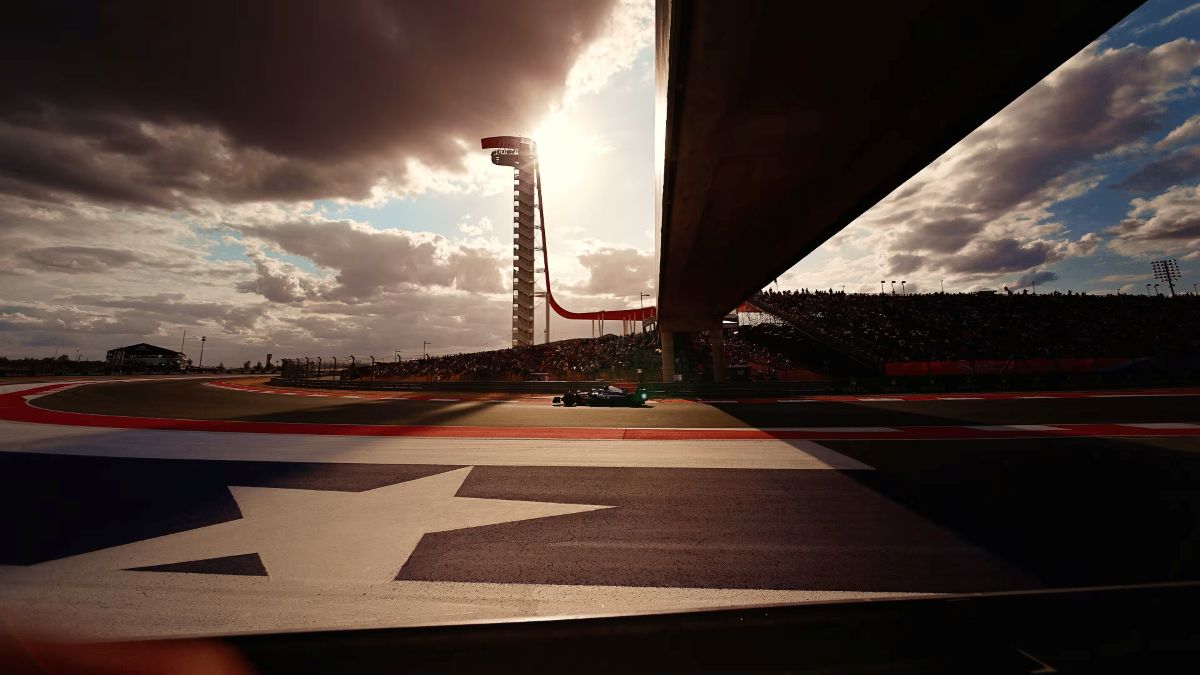
The Formula 1 United States Grand Prix 2026, scheduled for 23–25 October at Circuit of The Americas in Austin, Texas, is preparing to attract motorsport enthusiasts, international visitors and hospitality businesses into one of America’s most important sporting tourism weekends. With previous editions drawing more than 400,000 cumulative spectator visits, the event offers significant opportunities for hotels, restaurants, transport operators and the wider Texas visitor economy. Its growing importance is reinforced by Formula 1’s agreement to keep the Austin race on the championship calendar until 2034.
Where Will the Formula 1 United States Grand Prix 2026 Take Place
The Grand Prix will take place at Circuit of The Americas, a purpose-built motorsport venue in Austin, Texas.
The circuit measures 5.513 kilometres and features 20 corners. Its distinctive uphill approach to Turn 1 and sweeping high-speed sections have made it a recognised destination for international motorsport tourism.
The 2026 race will cover 56 laps, equivalent to approximately 308.4 kilometres.
Advertisement
Advertisement
| Event information | Confirmed details |
|---|---|
| Event | Formula 1 MSC Cruises United States Grand Prix |
| Dates | 23–25 October 2026 |
| Location | Austin, Texas, United States |
| Venue | Circuit of The Americas |
| Championship round | 18 |
| Qualifying | 24 October, 4 pm local time |
| Main race | 25 October, 3 pm local time |
| Race distance | 308.405 km |
| Format | Conventional Grand Prix weekend, without F1 Sprint |
The weekend will also include F1 Academy, Porsche Carrera Cup North America and historic racing activities, providing visitors with entertainment beyond Sunday’s championship race.
Who Will Participate in the 2026 United States Grand Prix?
The 2026 championship features 22 drivers representing 11 Formula 1 teams, including Ferrari, Mercedes, McLaren, Red Bull Racing, Aston Martin, Williams, Haas, Alpine, Racing Bulls, Audi and Cadillac.
Advertisement
Advertisement
Prominent competitors include Lewis Hamilton, Max Verstappen, Lando Norris, Charles Leclerc, George Russell and Fernando Alonso.
A particularly significant development is Cadillac’s debut season. The American-backed team features Mexican driver Sergio Pérez and Finland’s Valtteri Bottas, creating additional interest among North American motorsport audiences.
Audi also joins the championship as a works team, fielding Nico Hülkenberg and Gabriel Bortoleto.
These international participants strengthen Austin’s global sporting profile. Their presence creates opportunities for travelling supporters, sponsors, media organisations and corporate hospitality groups.
How Has United States Grand Prix Attendance Changed Over the Last Five Years?
The Austin Grand Prix has developed into one of Formula 1’s major spectator events, attracting hundreds of thousands of cumulative visits across its race weekends.
Over the last five years (2021–2025), attendance at the Formula 1 United States Grand Prix at Circuit of The Americas (COTA) in Austin, Texas, surged to historic highs fueled by the sport’s American popularity explosion, peaked in 2022, and has since stabilized into a durable plateau of over 400,000 spectators per race weekend.
Advertisement
Advertisement
Five-Year Attendance Trajectory (2021–2025)
| Year | 3-Day Weekend Attendance | Change vs. Prior Year | Key Box-Office & Operational Catalysts |
| 2021 | ~400,000 | +49.3% (vs. 2019) | Return to COTA post-COVID; massive mainstream influx driven by Netflix’s Drive to Survive. |
| 2022 | ~440,000 | +10.0% | All-time COTA attendance record; expanded infield general admission and additional grandstands. |
| 2023 | ~432,000 | -1.8% | High retention despite introduction of competing domestic races in Miami and Las Vegas. |
| 2024 | ~430,000 | -0.5% | Resilient sellout turnout; late ticket sales boost fueled by Red Bull vs. McLaren title race tension. |
| 2025 | ~415,000–425,000+ | Plateaued | Official sellout weekend exceeding 400,000 fans; major headliner concerts anchoring festival-style format. |
Key Factors Behind the Trend
- The Netflix Effect and Rapid Expansion (2021–2022): The 2021 race marked a watershed moment for Formula 1 in North America. After the 2020 cancellation, pent-up demand combined with the popularity of Drive to Survive drove a massive crowd jump from 268,000 in 2019 to 400,000 in 2021, culminating in the circuit’s record 440,000-spectator milestone in 2022.
- Absorbing Domestic Competition (2023–2025): The arrival of the Miami Grand Prix (2022) and the Las Vegas Grand Prix (2023) transformed the U.S. market from a single flagship date to a three-race calendar. Rather than cannibalizing COTA’s gate, Austin retained its identity as the traditional, purist racing festival, holding weekend turnout steadily above 400,000.
- Festival and Super Stage Anchors: COTA shifted toward a hybrid motorsport-and-music model, leveraging major Saturday evening concerts (such as Garth Brooks and pop/rock megastars) to ensure non-racing entertainment fans sustained three-day ticket utilization.
- Infrastructure and Capacity Ceilings: The slight tapering after 2022 was largely operational rather than a drop in interest. COTA management and Austin traffic authorities fine-tuned ticket caps, camping limits, and park-and-ride shuttle logistics to ease regional arterial congestion along FM 812 and SH 130.
Which Countries Host Similar Formula 1 Events in 2026?
Austin competes within a global motorsport tourism market that extends across Europe, Asia, the Middle East and the Americas.
| Country | Grand Prix destination | Tourism attraction |
|---|---|---|
| United States | Austin, Miami, Las Vegas | Racing, entertainment and hospitality |
| United Kingdom | Silverstone | Motorsport heritage |
| Italy | Monza | Ferrari heritage and automotive tourism |
| Monaco | Monte Carlo | Luxury tourism and yachting |
| Singapore | Marina Bay | Night racing and urban tourism |
| Japan | Suzuka | Motorsport culture |
| Australia | Melbourne | International sporting tourism |
| Mexico | Mexico City | Regional motorsport tourism |
| Brazil | São Paulo | Racing heritage and major-city tourism |
| United Arab Emirates | Abu Dhabi | Luxury resorts and entertainment |
These destinations host rounds of the same FIA Formula One World Championship, although their commercial models, visitor markets and economic impacts differ.
The official 2026 calendar lists 24 Grand Prix weekends, making Austin part of a worldwide destination network.
Which Regions Are Most Likely to Send Travellers to Austin?
The United States is the most natural source market because of domestic travel accessibility and the event’s established American fanbase.
Texas and neighbouring US states offer important regional catchment areas. Mexico represents another potentially significant market, supported by geographic proximity and the popularity of Mexican driver Sergio Pérez.
Canada, Europe and Latin America also represent plausible international visitor markets because Formula 1 has established audiences in these regions.
Advertisement
Advertisement
However, publicly verified country-by-country attendance figures for Austin have not been established. Consequently, no specific country can be identified reliably as the largest international visitor source.
For tourism planners, this distinction matters: global television audiences and social media followers do not automatically translate into physical international arrivals.
How Does Formula 1 Strengthen the Texas Economy?
The economic implications extend beyond ticket sales.
According to Formula 1’s official economic-impact announcement, the United States Grand Prix generated approximately US$7 billion in economic impact across Austin and Texas during its first decade.
The organisation also reported that the 2023 Grand Prix generated an estimated more than US$1 billion in direct and indirect expenditure, alongside approximately US$38 million in Texas state tax receipts.
These are economic-impact estimates, rather than audited measures of tourism revenue alone.
Advertisement
Advertisement
Hotels, restaurants, entertainment venues, transport providers and event suppliers can benefit from visitor spending.
The Texas Governor’s Office has separately recognised Formula 1’s contribution to attracting international visitors and supporting local hospitality businesses.
Which Country Benefits Most From the Austin Grand Prix?
The United States is the principal host-country beneficiary, with Austin and the wider Texas economy receiving the most immediate destination-related advantages.
Mexico and Canada may benefit indirectly through regional travel services, commercial partnerships and cross-border motorsport interest. However, there is insufficient verified evidence to quantify those benefits or establish a ranking among foreign countries.
For Austin, the long-term value lies in repeat visitation, international destination recognition and business relationships extending beyond the race weekend.
The championship’s commitment to retain the Grand Prix through 2034 also gives tourism operators a longer planning horizon for investment and marketing.
Advertisement
Advertisement
What Should Travellers Know Before Visiting Austin?
Travellers planning to attend the 2026 United States Grand Prix should arrange accommodation, circuit transport and event tickets in advance.
Austin offers attractions beyond Formula 1, including the Texas State Capitol, Lady Bird Lake, live music venues and its established barbecue and Tex-Mex dining scene.
International visitors should also check US entry requirements, travel insurance and airport connections before departure.
The official race schedule confirms a 3 pm local start on Sunday, 25 October, although organisers advise that event timings may change.
Why Does the 2026 Grand Prix Matter for International Tourism?
The Austin Grand Prix demonstrates how major sporting events can function as destination-marketing platforms.
Its importance extends beyond the circuit into accommodation, food services, entertainment, transport and international business tourism.
Advertisement
Advertisement
With Formula 1 expanding to 11 teams in 2026 and Austin’s hosting agreement secured through 2034, Texas has an opportunity to convert temporary sporting demand into longer-term tourism growth.
The central challenge will be measuring that growth accurately, distinguishing local spectators from travelling visitors and assessing how much spending remains within the regional economy.
For the United States, the 2026 Grand Prix represents another opportunity to strengthen its position in the increasingly competitive international motorsport tourism market.
Advertisement
