
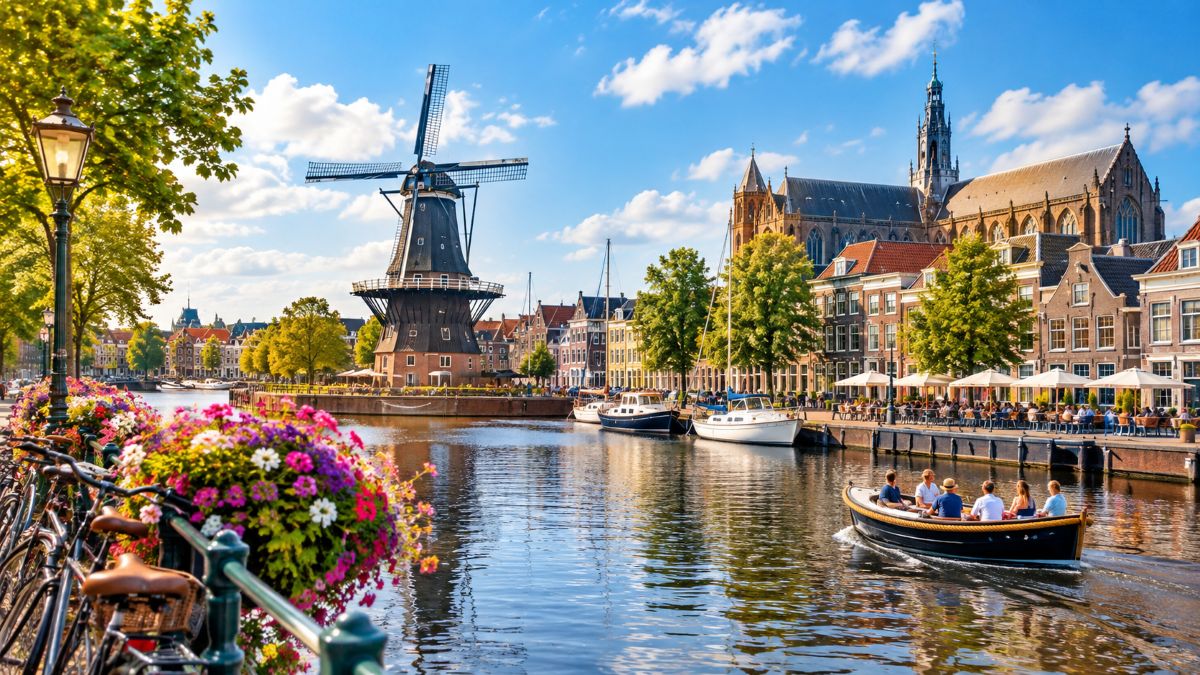
Image generated with Ai
Haarlem, Netherlands, is emerging as a compelling alternative to Amsterdam for travellers seeking Dutch culture, historic architecture, art, local cuisine and a slower urban rhythm without moving far from the country’s most famous destination. Just around twenty minutes by train from Amsterdam, the historic city combines the atmosphere of a traditional Dutch centre with an easy-going contemporary lifestyle, making it particularly attractive for visitors who want to experience the Netherlands beyond the busiest tourist corridors.
For many international travellers, Amsterdam remains the obvious gateway to Dutch culture, with its canals, museums, nightlife and globally recognised landmarks. Yet Haarlem offers a different proposition. Its compact centre, elegant streets, atmospheric squares, independent shops, cafés and cultural institutions create an experience that feels more intimate and less dominated by mass tourism. The city can work as a day trip from Amsterdam, but its character becomes even clearer when travellers stay overnight and experience its streets after the day-tripping crowds have departed.
The appeal of Haarlem begins with its scale. Travellers can explore much of the historic centre on foot, moving between monumental buildings, quiet side streets, attractive shopping areas and traditional cafés without needing to navigate the intensity associated with some of Amsterdam’s busiest districts.
The city has a long-established cultural identity that extends beyond tourism. Its historic architecture reflects centuries of Dutch urban development, while its contemporary cafés, restaurants, galleries and independent businesses give the centre a lively but relatively unhurried character.
Advertisement
Advertisement
For visitors accustomed to Amsterdam’s crowded central areas, this difference can be significant. Haarlem does not attempt to reproduce Amsterdam. Instead, it provides another interpretation of a Dutch city break, where everyday life remains an important part of the travel experience.
Haarlem’s historic centre is one of its greatest assets. Architectural details appear throughout the city, from traditional façades and narrow streets to historic public buildings and picturesque waterways.
At the heart of the city stands Grote Markt, the principal square and an important meeting point surrounded by significant architecture. The square provides a natural starting point for exploring Haarlem because several attractions and pedestrian streets extend from it.
The Grote or St.-Bavokerk dominates the square and remains one of the defining landmarks of Haarlem. Its imposing interior and historic organ contribute to the city’s cultural identity, while the surrounding streets offer opportunities to continue exploring at a more leisurely pace.
Travellers interested in architecture should resist the temptation to rush between individual attractions. Haarlem rewards slow exploration. Turning into a smaller street, stopping for coffee or discovering an independent shop can be as memorable as visiting a major landmark.
Haarlem also has a strong connection with Dutch art. The city is associated with major figures from the Dutch Golden Age, including Frans Hals, whose work is central to Haarlem’s artistic heritage.
The Frans Hals Museum provides an important cultural dimension for visitors interested in Dutch painting. Rather than treating the city solely as a picturesque backdrop, the museum helps explain Haarlem’s historical importance as a centre of artistic production.
The Teylers Museum adds another layer to the experience. Founded in the eighteenth century, it is among the Netherlands’ oldest museums and combines art, science and historical collections. Its unusual character makes it particularly relevant to travellers looking for cultural experiences beyond the most familiar Dutch museum circuit.
Together, these institutions demonstrate why Haarlem works as more than a quieter substitute for Amsterdam. Its cultural attractions have their own historical significance and provide travellers with a deeper understanding of the Netherlands.
One of the practical advantages of a Haarlem city break is the walkability of its central districts. Travellers can build an itinerary around several attractions without spending large amounts of time moving between them.
The compact layout also encourages a different style of tourism. Instead of treating the city as a checklist of landmarks, visitors can combine sightseeing with shopping, dining and informal exploration.
Haarlem’s streets contain a mixture of established businesses and independent retailers, creating opportunities for travellers to discover local products and design-led shops. This commercial environment contributes to the feeling that the city functions primarily as a living urban centre rather than simply as a tourist attraction.Haarlem Experience What Travellers Can Expect Ideal For Historic Centre Monumental buildings, canals and atmospheric streets First-time visitors Grote Markt Central square and architectural highlights Sightseeing and photography Frans Hals Museum Dutch art and Haarlem’s artistic heritage Art enthusiasts Teylers Museum Art, science and historic collections Culture-focused travellers Independent Shopping Local boutiques and specialist retailers Leisure travellers Cafés And Restaurants Relaxed dining and social atmosphere Couples and food travellers Amsterdam Rail Connection Around twenty minutes by train Combined city breaks
Food is another reason to spend more than a few hours in Haarlem. The city’s cafés and restaurants contribute strongly to its relaxed character, allowing travellers to pause between cultural visits rather than rushing through an itinerary.
Traditional Dutch snacks and bakery products can be combined with modern international cuisine, while cafés provide spaces for a slower afternoon. This makes Haarlem particularly suitable for travellers who view dining as part of the destination experience rather than simply a practical necessity.
A leisurely meal can also reveal another side of Dutch urban culture. Instead of focusing exclusively on famous attractions, visitors can observe local routines, social life and the rhythms of the city.
For travel planners, this is one of Haarlem’s most useful qualities. The destination can support a cultural morning, a long lunch, an afternoon museum visit and an evening meal without requiring an exhausting schedule.
The short rail journey between Haarlem and Amsterdam makes the two destinations easy to combine. Travellers staying in Haarlem can visit Amsterdam during the day while returning to a smaller and quieter environment afterwards.
This arrangement may appeal to visitors who want access to Amsterdam’s major attractions but prefer not to stay in the busiest parts of the capital. It also creates flexibility for different types of travellers, from couples and families to independent visitors interested in culture and architecture.
A Haarlem base can be especially attractive during periods when Amsterdam experiences high visitor numbers. Travellers can still reach the capital efficiently while making Haarlem itself part of the holiday rather than treating it merely as a transport stop.
Haarlem fits naturally into the growing interest in slower forms of European city tourism. Instead of concentrating on a handful of globally famous sights, slow travel encourages visitors to spend more time in one destination and engage with its food, neighbourhoods, history and everyday culture.
The city’s relatively compact geography supports this approach. A traveller can walk between historic landmarks, pause at a café, browse local shops and visit a museum without covering enormous distances.
This makes Haarlem particularly appealing for visitors who have already experienced Amsterdam or who want a less hectic introduction to the Netherlands. The city offers recognisable Dutch characteristics without requiring travellers to follow the conventional Amsterdam itinerary.
Comparing Haarlem with Amsterdam is ultimately less useful than understanding what each city offers. Amsterdam remains an internationally important destination with major museums, historic canals and a much larger tourism infrastructure.
Haarlem, by contrast, is more intimate. Its appeal lies in the combination of heritage, culture, independent commerce and relaxed urban life.
That distinction is important for travellers planning a Dutch holiday. Choosing Haarlem does not mean giving up access to Amsterdam. Instead, it can provide a broader experience of the region by combining the energy of the capital with the calmer character of a historic provincial city.
For visitors concerned about overcrowding, the difference can also improve the overall quality of a short break. A destination where travellers can comfortably walk, eat, explore and pause may offer greater satisfaction than attempting to cover every famous attraction in a packed schedule.
A well-planned Haarlem itinerary does not need to be complicated. Travellers arriving from Amsterdam can begin at the historic centre before exploring Grote Markt and the surrounding streets.
The Frans Hals Museum or Teylers Museum can provide the main cultural focus of the day, followed by lunch or coffee in the centre. The afternoon can then be used for independent shopping, architecture and relaxed exploration.
Visitors with more time should consider staying overnight. Evening hours reveal a quieter side of Haarlem, when day visitors have largely returned to Amsterdam and the city settles into its local rhythm.
The destination is therefore particularly effective for travellers who value flexibility. A short visit can introduce its principal attractions, while a longer stay allows greater immersion in its food, culture and neighbourhoods.
Haarlem demonstrates that experiencing the Netherlands does not have to mean concentrating exclusively on Amsterdam. Its historic streets, artistic heritage, museums, cafés, independent shops and convenient rail connection create a destination with a strong identity of its own.
The city’s greatest strength may be its balance. It provides enough cultural and architectural interest to fill a city break while remaining manageable enough to explore without constant rushing.
For travellers seeking Dutch history and contemporary city life in a more relaxed setting, Haarlem offers a persuasive alternative. Its proximity to Amsterdam makes the decision even easier: visitors can experience both cities while allowing each destination to retain its distinctive character.
Rather than competing directly with Amsterdam, Haarlem complements it. For travellers interested in culture, architecture, food and a more measured pace, that combination can turn a conventional Netherlands trip into a richer and more varied travel experience.
1. How far is Haarlem from Amsterdam?
Haarlem is approximately twenty minutes from Amsterdam by train, making it convenient for a day trip or as an alternative base.
2. Is Haarlem worth visiting instead of Amsterdam?
Haarlem offers a different experience rather than a direct replacement. It is particularly appealing for travellers seeking history, culture, architecture and a quieter atmosphere.
3. Can Haarlem be visited as a day trip?
Yes. Its compact historic centre allows visitors to experience several major attractions within a single day.
4. Is Haarlem good for a weekend break?
Yes. Its museums, historic streets, cafés, restaurants and independent shops provide enough variety for a relaxed weekend.
5. What is Haarlem best known for?
Haarlem is known for its historic architecture, artistic heritage, museums, Grote Markt and association with painter Frans Hals.
6. What can visitors see in Haarlem?
Key experiences include the historic city centre, Grote Markt, the Grote or St.-Bavokerk, the Frans Hals Museum and Teylers Museum.
7. Is Haarlem quieter than Amsterdam?
Generally, Haarlem has a smaller and more relaxed urban atmosphere than Amsterdam’s busiest tourist districts.
8. Is Haarlem suitable for slow travel?
Yes. Its walkable centre, cafés, museums, independent businesses and manageable scale make it well suited to slower exploration.
9. Can travellers stay in Haarlem and visit Amsterdam?
Yes. The short rail connection makes Haarlem practical for travellers who want to combine both destinations.
10. Who would enjoy a trip to Haarlem?
Haarlem is especially suitable for travellers interested in Dutch history, art, architecture, food, independent shopping and relaxed European city breaks.
Advertisement
Tags: Amsterdam alternative, Dutch city breaks, Dutch culture, Haarlem attractions, Haarlem city break
Advertisement
Advertisement












Saturday, September 5, 2026

Saturday, September 5, 2026

Saturday, September 5, 2026

Saturday, September 5, 2026

Saturday, September 5, 2026

Saturday, September 5, 2026

Saturday, September 5, 2026