
Travel Chaos Leaves Passengers Stranded at Jakarta-Soekarno-Hatta International Airport as Batik Air, Garuda Indonesia, Lion Air, Citilink and Super Air Jet Record 28 Flight Withdrawals and 97 Delays, Affecting Connections to Singapore, Malaysia, Thailand, Vietnam, China, Hong Kong, India and Beyond—Here’s the Full Breakdown

Published
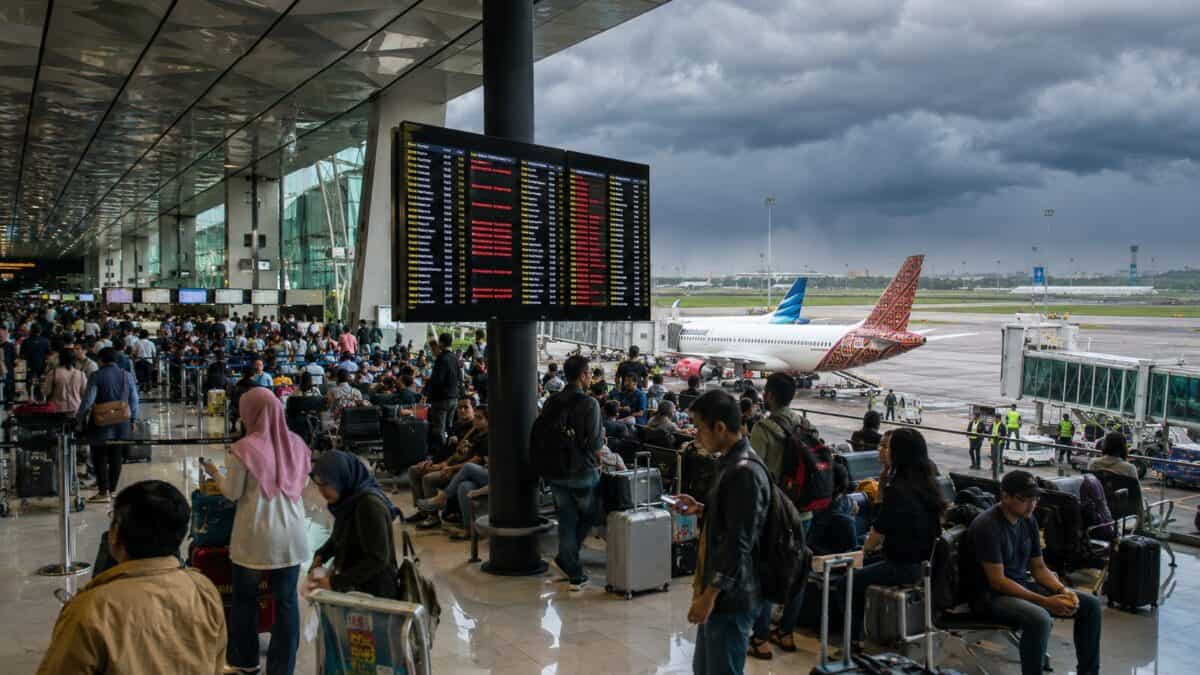
Image generated with Ai
Today, June 24, 2026, Jakarta-Soekarno-Hatta International Airport (CGK) is experiencing significant operational disruption after 28 flights were cancelled and 97 flights delayed within, into, or out of Indonesia’s busiest aviation gateway. The widespread disruption has affected thousands of domestic and international travellers as airlines continue adjusting schedules amid operational constraints, aircraft rotations, weather-related challenges, and network-wide scheduling pressures.
While the airport has continued operating throughout the day, the latest flight data shows that disruptions are concentrated among several major Indonesian carriers, particularly Batik Air and Garuda Indonesia, which together account for almost every cancellation recorded today. Other airlines have largely maintained their schedules but have still reported varying levels of delays that are affecting passenger connections, airport congestion, baggage handling timelines, and onward travel plans.
Advertisement
Advertisement
As Indonesia’s primary international gateway, Jakarta-Soekarno-Hatta International Airport plays a critical role in connecting Southeast Asia with Australia, the Middle East, East Asia, and Europe. Consequently, even a relatively modest number of cancellations can ripple through hundreds of subsequent departures and arrivals, making today’s disruption important not only for passengers travelling through Jakarta but also for travellers connecting across Indonesia’s wider aviation network.
Jakarta-Soekarno-Hatta International Airport Flight Operations Today at a Glance
The latest operational figures indicate:
Advertisement
Advertisement
| Flight Status | Total |
|---|---|
| Cancelled Flights | 28 |
| Delayed Flights | 97 |
Although the airport continues to operate normally overall, the imbalance between cancellations and delays paints an important operational picture.
Only 28 flights have been cancelled, suggesting that airlines have generally preferred to keep aircraft operating rather than suspend services altogether. However, the much higher figure of 97 delayed flights demonstrates that airlines are instead absorbing disruption through revised departure timings, longer aircraft turnaround periods, crew scheduling adjustments, and temporary congestion across airport operations.
Advertisement
Advertisement
This operational strategy is common at major international hubs because preserving aircraft rotations often minimizes wider network disruption compared with outright cancellations. Nevertheless, delayed flights frequently create secondary impacts, including missed connections, longer passenger waiting times, increased terminal congestion, and disruptions to airport ground services.
For leisure travellers, business passengers, and international visitors alike, today’s figures underline the importance of checking live flight status before travelling to the airport and remaining in close communication with their airline.
Advertisement
Advertisement
Airline Performance Today at Jakarta-Soekarno-Hatta International Airport
The following airline data reflects cancellations and delays exactly as reported today.
| Airline | Cancelled | % | Delayed | % |
| Batik Air | 17 | 8% | 18 | 9% |
| Garuda Indonesia | 10 | 5% | 15 | 7% |
| Lion Air | 1 | 0% | 8 | 7% |
| Indonesia AirAsia | 0 | 0% | 4 | 11% |
| AirAsia | 0 | 0% | 3 | 25% |
| Shandong Airlines | 0 | 0% | 1 | 50% |
| Cathay Pacific | 0 | 0% | 1 | 12% |
| Spring Airlines | 0 | 0% | 2 | 200% |
| Citilink | 0 | 0% | 9 | 5% |
| IndiGo | 0 | 0% | 1 | 50% |
| My Indo Airlines | 0 | 0% | 1 | 16% |
| Pelita Air Service P.t. | 0 | 0% | 7 | 12% |
| Super Air Jet | 0 | 0% | 18 | 15% |
| Sriwijaya Air | 0 | 0% | 1 | 3% |
| Scoot | 0 | 0% | 1 | 10% |
| Thai Airways | 0 | 0% | 1 | 25% |
| TransNusa | 0 | 0% | 5 | 12% |
| VietJet Air | 0 | 0% | 1 | 50% |
Batik Air Bears the Largest Share of Today’s Flight Cancellations
Among all airlines operating through Jakarta-Soekarno-Hatta International Airport, Batik Air has experienced the most significant operational disruption.
The airline has recorded 17 cancelled flights alongside 18 delayed flights, representing the highest cancellation total of any carrier operating at the airport today.
From an operational perspective, Batik Air alone accounts for over 60% of all cancellations recorded at the airport today (17 out of 28 total cancellations). This concentration suggests that today’s disruption is not evenly distributed across all carriers but is instead heavily focused on one airline’s operational network.
Advertisement
Advertisement
The airline’s 8% cancellation rate and 9% delay rate indicate that while the majority of scheduled services continue to operate, a noticeable portion of its network has encountered operational challenges. Such figures often reflect aircraft availability issues, crew scheduling adjustments, maintenance requirements, or network-wide rotation pressures rather than a complete operational shutdown.
Because Batik Air serves an extensive domestic network connecting Jakarta with destinations throughout Indonesia, today’s disruption may extend beyond the capital, potentially affecting aircraft positioning and later departures across multiple regional airports.
Passengers travelling with Batik Air are therefore likely to experience longer waiting times, schedule revisions, and possible rebooking onto later services depending on aircraft availability throughout the day.
Garuda Indonesia Records the Second Highest Number of Cancellations
Indonesia’s flag carrier, Garuda Indonesia, has also experienced notable operational challenges.
Today’s figures show:
- 10 cancelled flights
- 15 delayed flights
- 5% cancellation rate
- 7% delay rate
Garuda Indonesia accounts for approximately 36% of all airport cancellations recorded today, making it the second most affected airline after Batik Air.
Advertisement
Advertisement
Unlike carriers that reported delays without cancellations, Garuda’s figures suggest that certain scheduled services could not be maintained despite operational recovery efforts. However, the airline continues operating the overwhelming majority of its network, with delays serving as the preferred strategy for maintaining flight schedules wherever possible.
Given Garuda Indonesia’s extensive international operations from Jakarta—including flights across Asia, Australia, Europe, and the Middle East—even isolated cancellations may influence connecting passengers travelling onward through the carrier’s global network.
Business travellers are particularly vulnerable to these disruptions because missed connections often cascade into delayed meetings, revised itineraries, and additional accommodation expenses.
Lion Air Experiences Limited Cancellations but Continues to Face Delays
Lion Air has reported a considerably different operational profile compared with Batik Air and Garuda Indonesia.
The airline recorded:
- 1 cancelled flight
- 8 delayed flights
The single cancellation indicates that Lion Air has largely maintained operational continuity despite today’s disruptions. However, the eight delayed flights demonstrate that schedule reliability has nevertheless been affected.
Advertisement
Advertisement
This operational pattern is often viewed as more manageable because delays generally allow airlines to preserve passenger itineraries without requiring widespread rebooking. Nevertheless, accumulated delays throughout the day can still place pressure on aircraft rotations and crew duty limitations, particularly on high-frequency domestic routes.
For travellers, this means departures may continue later than originally scheduled while avoiding outright cancellation in most cases.
Delays Dominate Across Indonesia’s Wider Airline Network
One of today’s most striking operational trends is that many airlines have reported no cancellations whatsoever, yet continue experiencing measurable delays.
Among these carriers:
- Super Air Jet has reported 18 delayed flights, the joint-highest delay total alongside Batik Air, despite recording zero cancellations.
- Citilink has logged 9 delayed flights without cancelling any scheduled service.
- Pelita Air Service P.t. has recorded 7 delays while maintaining its full schedule.
- TransNusa has experienced 5 delayed flights but avoided cancellations.
- Indonesia AirAsia has reported 4 delayed flights, indicating relatively limited disruption.
Several international airlines—including Cathay Pacific, Thai Airways, Scoot, Shandong Airlines, Spring Airlines, IndiGo, and VietJet Air—have each reported only one or two delayed services while maintaining zero cancellations.
This pattern suggests that the broader disruption at Jakarta-Soekarno-Hatta International Airport is characterised more by operational delays than widespread flight suspensions. Airlines appear to be prioritising schedule recovery by absorbing delays rather than removing flights from their networks altogether.
Advertisement
Advertisement
Such an approach helps preserve passenger connectivity but can contribute to increased aircraft congestion, longer turnaround times, and extended waiting periods within airport terminals as delayed departures accumulate throughout the operating day.
Overall, today’s airline performance illustrates a mixed operational landscape: while cancellations remain concentrated among a small number of carriers, delays are affecting a much broader cross-section of airlines operating through Indonesia’s busiest airport, underscoring the interconnected nature of modern aviation networks.
Why Are So Many Flights Being Cancelled and Delayed?
While airlines have not attributed today’s disruptions to a single cause, flight delays and cancellations at major international hubs such as Jakarta-Soekarno-Hatta International Airport are typically influenced by a combination of operational and environmental factors.
Possible contributing reasons include:
- Adverse weather conditions – Heavy rain, thunderstorms, or reduced visibility can slow aircraft movements and delay departures.
- Air traffic congestion – Peak-hour traffic may require aircraft to wait longer for take-off and landing slots.
- Aircraft rotation issues – Delays on earlier sectors often affect later flights operated by the same aircraft.
- Crew scheduling constraints – Flight crews must comply with regulated duty-hour limits, sometimes leading to schedule adjustments.
- Technical inspections and maintenance – Routine or precautionary checks can delay aircraft departures to ensure safety.
- Ground handling delays – Baggage loading, refuelling, catering, or boarding delays may extend turnaround times.
Although today’s 28 cancellations are noteworthy, the far higher 97 delays suggest airlines are largely trying to maintain operations rather than cancel services outright.
Weather Could Continue to Influence Flight Operations
Indonesia’s tropical climate frequently presents operational challenges for airlines, particularly during periods of intense rainfall and thunderstorm activity. Even when weather conditions remain safe for flying, storms around airports can temporarily reduce runway capacity and increase separation between aircraft.
Advertisement
Advertisement
These weather-related adjustments may not necessarily lead to mass cancellations but often contribute to departure delays, longer taxi times, and revised arrival schedules. Passengers travelling later today should continue monitoring their airline’s latest operational updates before leaving for the airport.
What Guests Get: Immediate Passenger Ramifications
Passengers affected by today’s disruption should be prepared for several immediate consequences.
- Longer airport waiting times
Delayed departures may increase time spent at boarding gates and security areas, particularly during peak travel periods. - Possible missed onward connections
Travellers connecting through Jakarta or onward to international destinations could face itinerary changes if delays become prolonged. - Rebooking on later services
Passengers whose flights are cancelled may be accommodated on the next available flight, subject to seat availability. - Changes to baggage delivery
Delayed aircraft rotations can occasionally affect baggage handling timelines, especially for connecting passengers. - Higher demand for customer service
Airline service counters and customer support channels may experience increased queues throughout the day.
Understanding Your Refund and Rebooking Options
Passengers whose flights have been cancelled should first contact their airline directly before making alternative travel arrangements. Depending on the airline’s conditions of carriage and the nature of the disruption, travellers may be offered rebooking on the next available service or a refund for the unused portion of their ticket.
Travellers should retain boarding passes, booking confirmations, payment receipts, and any written communication from the airline. These documents can help if a refund request, travel insurance claim, or reimbursement for eligible expenses becomes necessary. Those travelling under package holidays should also notify their travel provider, as they may be able to assist with revised accommodation or transport arrangements.
Looking Ahead for Travellers Flying Through Jakarta
Passengers travelling through Jakarta-Soekarno-Hatta International Airport over the next few days should continue checking their flight status before leaving for the airport. Arriving early, enabling airline notifications, and allowing extra time for connections can help reduce stress if operational schedules change.
Travellers with tight international connections should also review alternative flight options where possible and remain in contact with their airline in case of schedule revisions.
Advertisement
Advertisement
FAQ – Jakarta-Soekarno-Hatta International Airport Flight Cancellations 2026
Why were flights cancelled at Jakarta-Soekarno-Hatta International Airport today?
A total of 28 flights were cancelled and 97 flights were delayed today. While no single official reason has been identified, operational factors such as weather, aircraft rotations, air traffic congestion, crew scheduling, and technical inspections can contribute to such disruptions.
Which airline recorded the most cancellations?
Batik Air recorded the highest number with 17 cancelled flights, followed by Garuda Indonesia with 10 cancellations. Lion Air reported one cancellation, while the remaining airlines listed reported none.
Are international airlines also affected?
Yes. Although no international carrier reported cancellations in the provided data, airlines such as Cathay Pacific, Thai Airways, Scoot, AirAsia, Shandong Airlines, Spring Airlines, IndiGo, and VietJet Air recorded one or more delayed flights.
What should passengers do if their flight is cancelled?
Passengers should check directly with their airline for rebooking or refund options, monitor official flight updates, and keep all travel documents and receipts in case reimbursement or insurance claims are required.
Should travellers expect more disruptions?
Flight operations can change throughout the day depending on operational and weather conditions. Travellers should monitor their airline’s official updates before heading to the airport.
What Travellers Should Keep in Mind Before Flying Through Jakarta in the Coming Days
Although today’s disruption is relatively moderate compared with major global aviation events, it serves as a reminder that even limited cancellations at a busy international hub can affect thousands of passengers. Travellers should arrive at the airport earlier than usual, regularly check their flight status, and remain flexible if schedules change. Those with connecting flights should allow additional transfer time and ensure they receive notifications from their airline.
Advertisement
Advertisement
Author’s Thoughts
Days like today demonstrate how closely connected modern aviation has become. While 28 cancellations may appear modest for an airport the size of Jakarta-Soekarno-Hatta, the accompanying 97 delays show that disruptions often spread well beyond the flights that are ultimately cancelled. In my view, airlines deserve credit for keeping most services operating, but passengers also deserve timely communication and practical assistance when schedules change. Reliable updates and efficient customer support can make a significant difference to travellers facing unexpected delays.
Advertisement
