
France Matches Spain as Italy Advances With United States in a Powerful Aviation Surge Beyond Summer Peak

Published
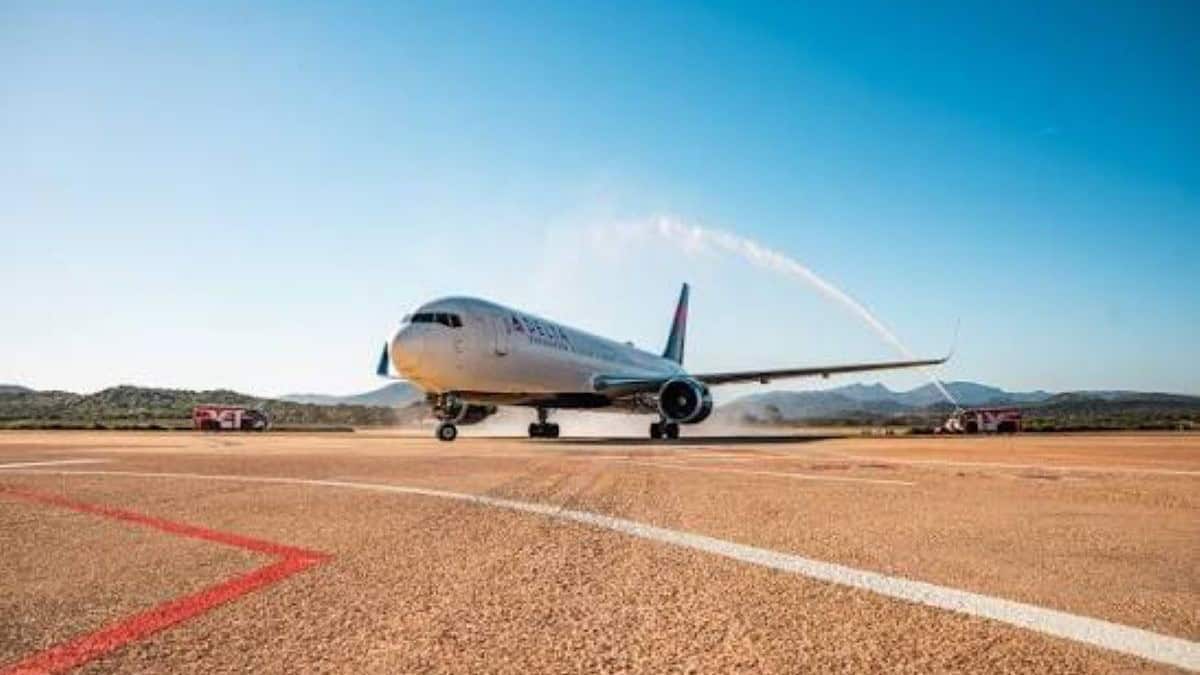
France stands alongside Spain as Italy advances with the United States for a powerful aviation surge past the summer peak. In Europe, airlines are revolutionizing air travel by creating new routes and making better connections, as well as extending the season in the airline schedule. In addition, both France and Spain remain popular destinations for international travelers, and Italy sees some new impetus through improved air connectivity. The United States is another vital component of this evolving aviation scene since airlines offer more routes to take American travelers to Europe. This is not just about additional flight services but also about extending services into the shoulder season and even the winter to allow travelers to explore Europe past the summer season. From coastal holiday resorts to cultural cities and even regional centers, the air network is expanding and evolving in Europe. The Travel and Tour World looks at how this powerful aviation surge is taking place, what destinations are getting new routes, and why airlines are extending services beyond the summer peak. Read on for the full story here.
2026 Tourism Performance Across Key European Markets
| Country / Market | Latest 2026 period | Tourist arrivals | Tourist overnight stays | 2026 change |
|---|---|---|---|---|
| Spain | January-July | 58.1 million international tourists | — | +4.6% arrivals |
| Italy | April-June | 47.0 million arrivals | 148.0 million | +3.9% nights |
| France | April-June | — | 61.1 million hotel nights | +1.4% hotel nights |
| Croatia | January-July | 11.7 million | 51.2 million | +1.4% arrivals; +0.8% nights |
| Germany | January-July | — | 282.1 million | +0.9% nights |
| EU-27 | January-June | — | 1.321 billion | +1.7% nights |
Five Airlines Open New European Routes as Longer Seasons Reshape Summer Travel
Europe is entering another busy year for aviation, but the story for 2026 is not simply about more flights. Airlines are changing where they fly, how often they fly and, increasingly, how long those services remain available.
Advertisement
Advertisement
Across the continent, carriers are adding direct links to cities that have traditionally sat outside the biggest European aviation hubs. At the same time, some airlines are taking routes that were designed for the summer peak and extending them into autumn and winter.
The result is a European travel calendar that is becoming more flexible. Travellers are being offered more ways to reach regional cities, coastal destinations and cultural centres without relying on traditional gateway airports. For tourism businesses, the longer operating periods could also help spread demand beyond the busiest months. Five airlines illustrate this shift particularly clearly: United Airlines, Finnair, Aer Lingus, SWISS and Delta Air Lines. Together, their 2026 schedules show how airlines are looking beyond the traditional July and August rush.
Advertisement
Advertisement
“Airline expansion across Europe is becoming more strategic, with carriers adding regional destinations while extending services beyond the traditional summer peak. This gives travellers greater choice and helps destinations attract visitors across more of the year. The trend also strengthens connectivity between major source markets and emerging European tourism hubs.” – Anup Kumar Keshan, Founder and Editor-in-Chief, Travel And Tour World.
United Airlines Pushes Deeper Into Regional Europe
United Airlines has made one of the most visible expansions of the year, adding new direct services between the United States and several European destinations.
Advertisement
Advertisement
The airline’s summer 2026 schedule introduced services from Newark to Split in Croatia, Bari in Italy, Glasgow in Scotland and Santiago de Compostela in Spain. It also introduced a new Washington-Dulles to Reykjavik service.
The routes began at different points from late April through May.
Advertisement
Advertisement
Split became part of United’s network on 30 April, with three weekly flights from Newark. Bari followed on 1 May with four weekly services. Glasgow launched on 8 May with daily flights, while Washington-Dulles to Reykjavik began on 21 May. Santiago de Compostela joined the network later in May with three weekly flights from Newark.
The significance is not simply the number of new services. These destinations represent a move towards cities and regions that are highly attractive to leisure travellers but are not always served directly from major overseas markets.
Split provides access to Croatia’s Dalmatian coast. Bari opens a direct gateway to Puglia in southern Italy. Santiago de Compostela connects travellers with Galicia and its historic pilgrimage centre, while Glasgow gives visitors a direct link to Scotland’s largest city.
United has also brought back several destinations introduced during its previous European expansion. Faro, Madeira, Palermo and Bilbao returned to the summer schedule, with Madeira and Nuuk beginning earlier than in 2025.
Advertisement
Advertisement
The airline said its 2026 schedule would include flights to 36 destinations in Europe, including Greenland, with up to 210 daily flights during peak periods.
This combination of new routes and returning seasonal services shows that the airline is not treating each summer as a completely separate programme. Instead, successful routes from earlier expansions are being retained while new destinations are added.
For European tourism, that creates a broader choice of direct markets.
Finnair Turns Summer Connections Into Year-Round Links
Finnair offers perhaps the clearest example of airlines stretching the European travel season.
The Helsinki-based carrier announced 12 new European destinations for summer 2026. The list includes Catania, Florence, Kos, Kuressaare, Luxembourg, Stavanger, Thessaloniki, Tirana, Turin, Valencia, Alta and Umeå.
But several of these connections are no longer simply summer propositions. Finnair confirmed that its new routes to Luxembourg, Valencia and Turin would continue throughout the year. Stavanger and Umeå would also continue beyond the summer period.
Advertisement
Advertisement
The decision changes the role of these services.
Luxembourg, for example, has demand from business and transfer passengers travelling through Helsinki. Finnair plans to increase the Luxembourg service from three weekly flights in summer to four weekly flights during winter.
Valencia offers a different proposition. Its appeal includes the possibility of a warmer city break when much of northern Europe is in the middle of winter. Finnair plans four weekly services during the winter.
Turin also has a strong seasonal opportunity of its own. The city provides access to the Western Alps, making it relevant not only for summer visitors but also for winter sports travellers. Finnair plans one weekly service during winter, increasing to two weekly flights during the January-to-March winter sports period.
The strategy is revealing. Rather than treating European routes as purely seasonal products, the airline is testing how different types of demand can support the same city throughout the year.
A destination may attract leisure travellers in summer, business passengers in autumn and winter sports visitors during the colder months. A route that can serve several audiences has more opportunities to remain commercially useful beyond the traditional peak.
Advertisement
Advertisement
That is particularly relevant for European cities that are trying to reduce their dependence on a short summer tourism window.
Aer Lingus Expands From Dublin and Cork
Aer Lingus is also adding more choice to the European map, with seven new summer routes from Dublin and Cork.
From Dublin, the airline and Aer Lingus Regional, operated by Emerald Airlines, are introducing services to Asturias in Spain, Oslo in Norway, Tours in France, Inverness in Scotland and Montpellier in southern France.
From Cork, new flights are being introduced to Nice on the French Riviera and Santiago de Compostela in Spain.
The selection gives the network a distinctly varied character.
Oslo provides access to a major Nordic capital. Asturias opens a connection to northern Spain, while Montpellier and Tours offer alternatives to the country’s better-known international gateways. Nice provides access to the French Riviera, and Santiago de Compostela strengthens links with Galicia.
Advertisement
Advertisement
There is also a significant season-extension element.
Aer Lingus has extended its Cork-Prague service from a seasonal operation to a year-round route.
That change is important because Prague is a city-break destination rather than a destination dependent solely on traditional summer holidays. Its appeal can extend across spring, autumn and winter, allowing an airline to make better use of a route across a longer period.
The move also strengthens Cork’s role as an international departure point.
For travellers in southern Ireland, a year-round direct connection can reduce the need to travel through another airport to reach Prague. For the destination itself, a longer operating season creates more opportunities to attract visitors outside the summer peak.
Aer Lingus described its summer 2026 programme as its most diverse yet, reflecting a broader effort to offer travellers a wider selection of European destinations.
Advertisement
Advertisement
SWISS Adds Poznań and Rijeka
SWISS is taking a slightly different approach.
The airline is adding two European destinations to its network from Zurich: Poznań in Poland and Rijeka on Croatia’s Adriatic coast.
The Poznań service began on 29 March 2026 and operates three times a week.
The city is an important commercial and university centre, while its historic Old Town also gives it leisure appeal. For SWISS, the route has both business and leisure potential.
That combination matters because it can create demand at different points of the year.
Rijeka is more directly tied to the summer travel market. SWISS is operating two weekly flights to the Croatian port city during July and August.
Advertisement
Advertisement
The route gives travellers direct access to the Kvarner Gulf and Croatia’s northern Adriatic region.
SWISS is also increasing frequencies to several existing European destinations, including Alicante, Valencia, Manchester, Montpellier, Tirana, Budapest and Venice.
The airline’s wider summer schedule includes 112 destinations from Zurich and Geneva.
Its approach shows another part of the 2026 trend. New destinations do not necessarily need to mean completely new markets. Airlines can also increase capacity on established routes where they see sufficient demand.
For travellers, this can mean more flexibility in choosing departure dates. For destinations, additional frequencies can make a city easier to access and potentially more attractive for short breaks.
Delta Takes European Expansion Beyond the Traditional Peak
Delta Air Lines is combining new European destinations with an extension of selected services into the colder months.
Advertisement
Advertisement
The airline launched its largest-ever transatlantic schedule in 2026, adding new services to destinations including Madrid, Nice, Rome, Barcelona, Sardinia and Porto. A new New York-JFK to Malta service also launched in June.
The expansion gives Delta a broader European presence while strengthening its links with Mediterranean destinations.
Porto is particularly notable because Delta is adding it as its second destination in Portugal. The airline has also resumed seasonal services to several European cities, including Edinburgh, Zurich, Munich, Dublin, Copenhagen, Reykjavik, Catania, Prague and Shannon.
But the story does not stop with the summer timetable.
Delta’s winter schedule shows selected European services continuing after the conventional summer season. Minneapolis-St Paul to Rome is scheduled to continue into January 2027.
New York-JFK to Catania is also being extended towards year-round operation, although the schedule includes a seasonal suspension from January to March 2027.
Advertisement
Advertisement
These changes demonstrate why the phrase “summer season” is becoming less straightforward in European aviation.
A route can launch as a summer service, build demand during the high season and then continue operating into the shoulder or winter months if the airline sees sufficient demand.
That approach can be particularly useful for destinations such as Rome, Sicily and Porto, where tourism is not limited to beach holidays.
Leading Source Markets for Key 2026 European Destinations
| Destination | Latest 2026 period | Leading source market | Tourist volume / share | Second major source market | Third major source market |
|---|---|---|---|---|---|
| Spain | January-July | United Kingdom | 11.5 million | France — 7.2 million+ | Germany — 6.9 million |
| Croatia | January-July | Germany | 21.1% of foreign nights | Slovenia — 11.1% | Austria — 8.5% |
| Spain | July | United Kingdom | 2.2 million | France — 1.6 million | Germany — 1.2 million |
| Portugal | January-July | United Kingdom | Largest origin/destination market | France | Spain |
| Italy | April-June | Foreign visitors overall | 61.6% of nights | — | — |
Why Airlines Are Looking Beyond July and August
The five carriers are not following the same strategy.
United is adding several new transatlantic city pairs. Finnair is converting selected summer routes into year-round services. Aer Lingus is doing the same with Cork-Prague. SWISS is adding new European destinations and increasing frequencies. Delta is combining a major summer expansion with selected winter extensions.
Yet a common pattern can be seen.
Advertisement
Advertisement
Airlines are trying to make European networks more useful across more months of the year.
The traditional European summer remains hugely important. Coastal destinations such as Split and Rijeka naturally attract strong demand during the warmer months. But the wider network increasingly includes destinations that can perform well in different seasons.
A city such as Turin can benefit from winter sports. Valencia can attract winter city-break visitors. Prague has cultural appeal throughout the year. Rome remains a major historical and cultural destination beyond the summer.
This gives airlines more opportunities to balance their aircraft utilisation.
For airports and tourism authorities, the benefits can extend further.
A route operating for only eight or ten weeks creates a concentrated burst of visitors. A route operating for most or all of the year provides a longer period in which hotels, restaurants, attractions, retailers and local transport providers can serve international visitors.
Advertisement
Advertisement
That does not automatically mean every new route will become permanent. Airline schedules remain commercially driven, and seasonal services can still be adjusted or suspended.
But the direction of travel is clear in the schedules announced for 2026.
Secondary European Cities Are Gaining More Attention
Another important feature is the number of regional or secondary destinations appearing in these schedules.
Split is not Zagreb. Bari is not Rome. Santiago de Compostela is not Madrid. Poznań is not Warsaw. Asturias is not Barcelona.
Yet travellers often want to reach a particular region rather than simply arrive at the country’s largest airport.
Direct aviation links can make those journeys considerably simpler.
Advertisement
Advertisement
A visitor interested in Croatia’s Adriatic coast may prefer to land close to the region they plan to explore. Someone visiting Galicia may value direct access to Santiago de Compostela rather than connecting through a larger Spanish gateway.
The same applies to regional business travel.
Poznań, for example, has a significant trade-fair and business community. Luxembourg has business and connecting demand. Glasgow serves both corporate and leisure travellers.
Airlines therefore have reasons to look beyond the biggest European capitals.
What This Means for Travellers
For travellers, the immediate benefit is choice.
More direct services can reduce the number of connections needed to reach a destination. New routes can also create new possibilities for short breaks because the journey becomes easier to organise.
Advertisement
Advertisement
The longer season is equally important.
Travellers who prefer quieter periods may have more opportunities to visit destinations in spring or autumn. Winter travellers may find routes that previously disappeared after the summer timetable continues for longer.
This can also change the type of holiday people plan.
A European trip no longer has to be tied to the conventional summer window. A winter break in Turin can combine city sightseeing with access to the Alps. A colder-month visit to Valencia offers a different experience from a peak-season beach holiday. Prague can work as a city break outside the summer rush.
For travellers, however, route announcements should not be interpreted as a guarantee of permanent service. Airlines regularly review schedules based on demand, aircraft availability, and commercial conditions.
A More Flexible European Aviation Map
The 2026 schedules from these five airlines reveal a European aviation market that is becoming more geographically diverse and seasonally flexible.
Advertisement
Advertisement
United is reaching further into regional European markets with new transatlantic services. Finnair is extending several new connections beyond summer. Aer Lingus is adding seven new routes while making Cork-Prague a year-round service. SWISS is introducing Poznań and Rijeka while increasing frequencies to several existing destinations. Delta is expanding across Europe and keeping selected services running deeper into the winter timetable.
The individual strategies differ, but the broader movement is significant.
Europe’s travel season is no longer defined only by the busiest weeks of July and August. Airlines are building networks that can respond to different demand patterns throughout the year.
For travellers, that means more direct choices and more possibilities for off-peak trips. For European destinations, it offers a chance to attract visitors across a longer calendar.
The real test will come as airlines assess how these routes perform beyond their launch periods. If demand remains strong, today’s seasonal services could become tomorrow’s permanent links.
For now, however, the 2026 schedules offer a clear glimpse of where European aviation is heading: more regional connections, more direct access and a travel season that increasingly stretches beyond summer.
Advertisement
