
Italy Joins Croatia and Other Destinations as Europe Tourism Hotspots Drive Record Regional Travel Demand

Published
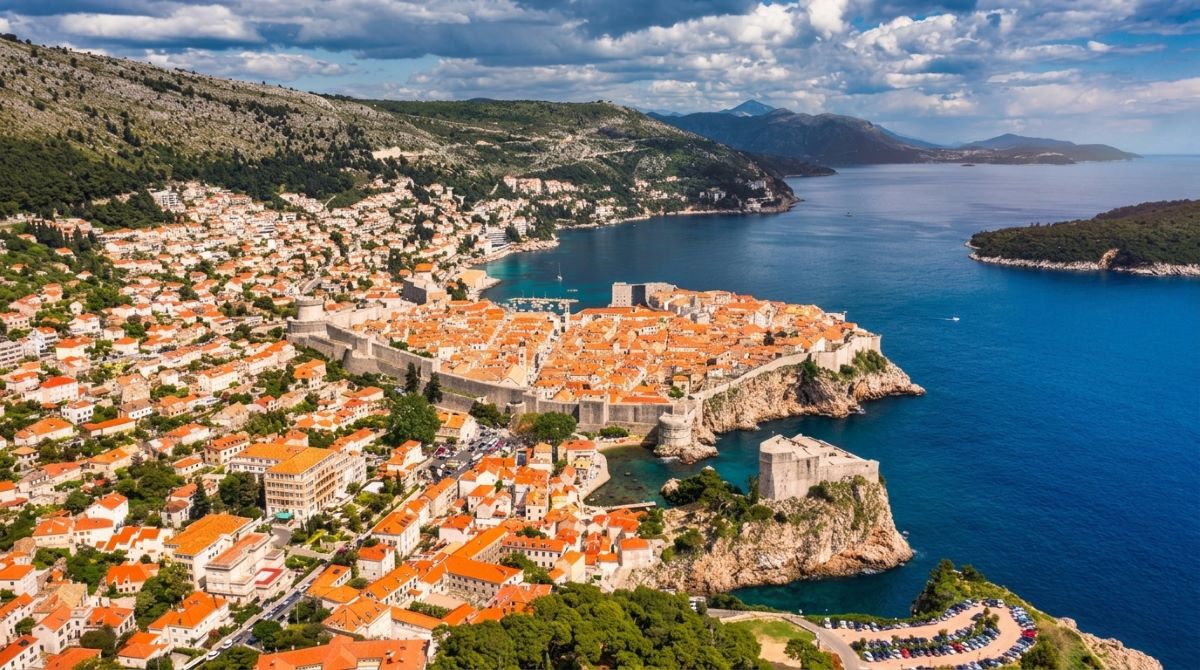
Europe’s tourism boom is becoming increasingly concentrated in a small group of powerful regional destinations. This travel map now lives in the heart of Spain, Croatia, France and Italy, as islands, coastal destinations and big cities of culture are among those with some of the highest accommodation demand in the European Union. According to Eurostat’s Regional Yearbook 2026, the four most important NUTS-2 tourism regions in the EU in 2024 were the Canary Islands, Catalonia, Adriatic Croatia as well as Île-de-France. These figures didn’t go away; they continued to grow in more recent 2025 and 2026 figures. Despite the challenges of the pandemic, Europe continues to welcome visitors in record numbers, and the short-term rental market, international tourism and peak season travel are changing the nature of where people stay and how tourism is managed.
Europe Tourism Hotspots Are Becoming More Concentrated
National tourism totals can hide where travellers actually go. Regional data reveal a much sharper picture.
In 2024, four destinations stood clearly above the rest of Europe at NUTS-2 level:
| European tourism region | Country | Tourist nights |
|---|---|---|
| Canarias | Spain | 99.5 million |
| Cataluña | Spain | 88.7 million |
| Jadranska Hrvatska | Croatia | 88.4 million |
| Île-de-France | France | 83.7 million |
Spain also placed Andalucía, Illes Balears and Comunitat Valenciana among the EU’s top 10 regions. Italy entered through Veneto, while France added Provence-Alpes-Côte d’Azur and Rhône-Alpes.
Advertisement
Advertisement
The traveller takeaway is significant: Europe’s tourism growth is not spread evenly. It is clustering around regions already known for beaches, heritage, urban tourism and strong air connectivity.
Spain Tourism Demand Is Translating Into Higher Hotel Pressure
Spain provides the clearest example of concentrated regional demand.
Advertisement
Advertisement
The country holds several of Europe’s busiest tourism regions, and its hotel sector remained heavily used in summer 2026. Spain’s National Statistics Institute recorded 48.8 million hotel overnight stays in August 2026, up 1.4% year on year. International visitor nights rose 2.8%.
The strongest foreign demand was concentrated in familiar tourism centres:
Advertisement
Advertisement
- Illes Balears generated 33.0% of foreign hotel nights
- Cataluña accounted for 20.6%
- Canarias represented 18.2%
- Mallorca alone exceeded 8.5 million hotel nights
The pressure also appeared in prices. Spain’s Hotel Price Index increased 6.3%, while average revenue per occupied room reached €166.90, up 7.3%.
Author analysis: this combination matters more than visitor growth alone. Rising nights, occupancy and hotel pricing indicate that peak-season travellers are competing for accommodation in exactly the regions already carrying Europe’s highest tourism volumes.
Croatia Tourism Shows How Peak Season Can Reshape a Destination
Croatia’s tourism pattern is even more concentrated.
Jadranska Hrvatska recorded 88.4 million nights in 2024, making the Adriatic region Europe’s third-largest NUTS-2 tourism destination.
Advertisement
Advertisement
In July 2026, Croatia recorded 4.5 million arrivals and 25.3 million commercial accommodation nights. Foreign visitors generated an extraordinary 92.7% of those nights.
Regional demand was heavily focused on the coast:
| Croatian tourism area | July 2026 overnight stays |
|---|---|
| Istria | 7.5 million |
| Split-Dalmatia | 5.3 million |
| Primorje-Gorski Kotar | 4.2 million |
Croatia’s average net occupancy rate for permanent beds reached 93.9% during July.
For travellers, that figure provides one of the clearest signals in the entire European dataset. Visiting Croatia in July can be very different from travelling in June, September or October because such a large share of demand is compressed into a relatively short coastal season.
Italy Tourism Growth Is Moving Beyond Traditional Hotels
Italy adds a different dimension to the regional tourism story.
Veneto ranks among Europe’s largest tourism regions, but the more revealing 2026 trend is the rapid expansion of accommodation outside conventional hotels.
Advertisement
Advertisement
ISTAT recorded almost 148 million tourism nights in Q2 2026, up 3.9% from the same quarter of 2025. International travellers generated 61.6% of all nights and their stays increased 4.6%.
The accommodation split shows how traveller behaviour is evolving:
| Accommodation segment | Q2 2026 nights | Annual growth |
|---|---|---|
| Hotels | 77.6 million | +2.4% |
| Non-hotel accommodation | 70.3 million | +5.6% |
Non-hotel stays are therefore growing more than twice as quickly as hotel nights.
This is an important shift for travellers. Italy’s tourism market increasingly includes holiday homes, apartments and other short-stay accommodation, expanding choice beyond established hotel districts.
France Tourism Growth Is Powered by Domestic and International Travel
France stands apart because of the strength of its domestic travel market.
Eurostat found that the three EU regions with the highest numbers of domestic tourism nights in 2024 were all in France:
Advertisement
Advertisement
| French region | Domestic tourism nights |
|---|---|
| Île-de-France | 39.6 million |
| Rhône-Alpes | 38.2 million |
| Provence-Alpes-Côte d’Azur | 38.0 million |
That gives France a powerful tourism base even when international markets fluctuate.
The trend continued in 2026. INSEE recorded 84.2 million overnight stays in collective tourist accommodation excluding campsites during Q2, up 1.0% year on year. Hotel nights reached 61.1 million.
The more revealing detail lies outside France’s densest cities. Coastal hotel nights increased 4.0%, while intermediate-density urban areas recorded growth of 9.2%.
Traveller insight: this suggests part of France’s tourism demand is spreading beyond the traditional Paris-centred itinerary, creating stronger opportunities for coastal towns and smaller regional cities.
Europe Tourism Hits Record Levels as International Travel Expands
Europe’s regional hotspots are operating inside a record-sized tourism economy.
EU tourist accommodation recorded almost 3.1 billion overnight stays in 2025, up 2.2%, or approximately 66.4 million nights, from 2024.
Advertisement
Advertisement
Four countries dominated:
| Country | Tourist nights in 2025 |
|---|---|
| Spain | 513.6 million |
| Italy | 476.9 million |
| France | 471.7 million |
| Germany | 442.1 million |
Together, they represented 61.7% of all EU accommodation nights.
Momentum continued into 2026. The EU recorded 1.321 billion tourism nights during January-June, up 1.7% year on year, with foreign visitors responsible for 48.9% of total demand.
Short-Term Rentals Are Redrawing Europe’s Accommodation Map
One of the most important changes for travellers is happening outside traditional hotels.
Eurostat recorded 951.6 million guest nights in EU short-term accommodation booked through Airbnb, Booking.com and Expedia during 2025. That represented 11.4% annual growth.
Growth continued in Q1 2026, when platform-booked accommodation generated 144.3 million guest nights, increasing 9.7% year on year.
Advertisement
Advertisement
The pattern matters because it spreads visitor demand beyond traditional hotel zones. Residential neighbourhoods, secondary districts and smaller towns can increasingly become part of the tourism economy.
For travellers, that creates more accommodation choice. For destinations, it can also increase pressure on housing, transport and local services.
What Europe’s Tourism Boom Means for Travellers Planning 2026 Trips
The strongest lesson from the data is not simply that Europe is busy. It is that location and timing now matter more than ever.
Travellers heading to Europe’s most popular regions should consider:
- Peak-season concentration: Croatia and Mediterranean Spain can experience extremely high accommodation use in July and August.
- Hotel price pressure: Spain’s rising room prices show how strong demand can affect travel budgets.
- Alternative accommodation growth: Italy and other major markets are seeing faster expansion in non-hotel stays.
- Regional alternatives: France’s growth outside dense urban areas shows that demand is spreading into secondary destinations.
- Shoulder-season opportunity: travelling before or after the summer peak can reduce exposure to the most concentrated visitor pressure.
The broader pattern is now clear. Spain, Croatia, France and Italy are not simply receiving more travellers; they are shaping where European tourism growth is being concentrated.
That distinction makes regional data especially valuable. A national visitor figure tells travellers how popular a country is. Regional tourism data reveal something much more useful: where the crowds are likely to be, which places face the greatest accommodation pressure, and where smarter timing may create a better trip.
In conclusion, Italy Joins Croatia and other destinations as Europe tourism hotspots drive record regional travel demand because visitor growth is concentrating in powerful coastal, island and urban regions across the continent. But Spain, France, Italy and Croatia keep seeing huge numbers of overnight visitors while international visitors, short term rentals and high seasonal demand are changing the way travellers are choosing where and when to go. With European Tourism Hotspots growing, the demand for travel to this region is on the rise and is making planning as well as staying at the right place, at the right time and in the right region more critical for the tourists.
Advertisement
