
Istanbul Airport Inaugurates Landmark Fourth Runway to Redefine European Aviation Capacity

Published
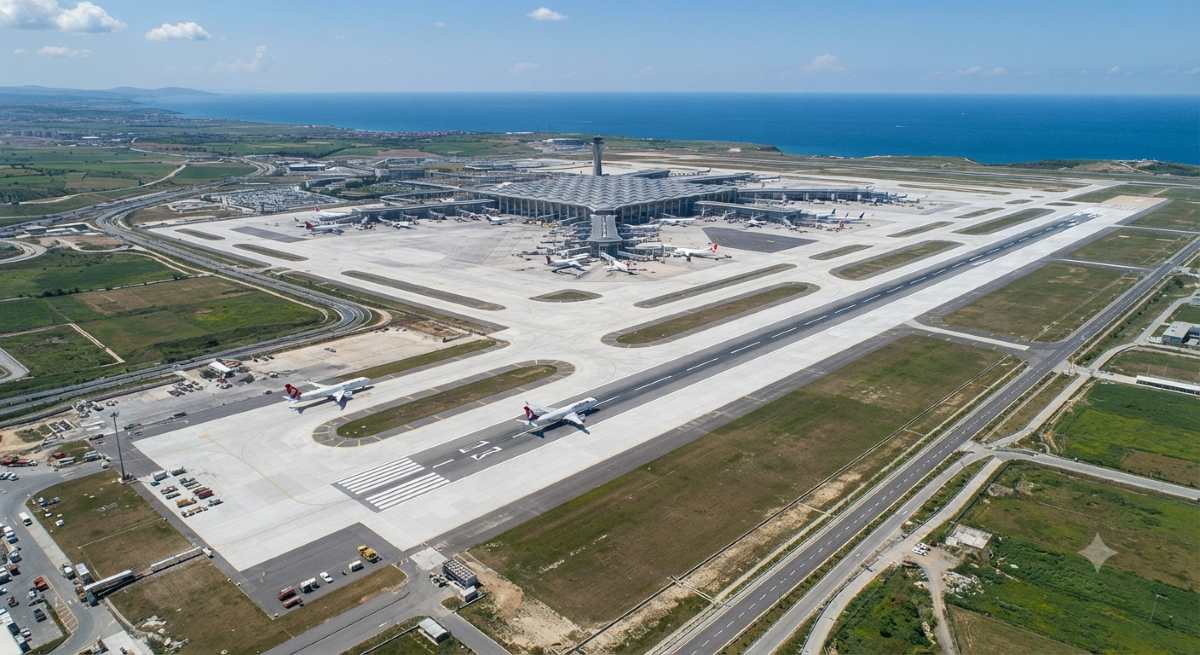
The aviation landscape in Europe witnesses a pivotal milestone as Istanbul Airport (IST) prepares to commission its fourth main runway on September 18, 2026. Official announcements delivered by Transport and Infrastructure Minister Abdulkadir Uraloğlu confirm that President Recep Tayyip Erdoğan is expected to grace the inauguration ceremony. Unlike the three existing primary strips aligned in a north-south orientation, this newly constructed concrete asset measures 2,820 meters (9,250 feet) in length and 45 meters in width, introducing the facility’s inaugural east-west alignment.
Rooted in a master planning framework established since commercial operations commenced in 2018, the site selection near the Black Sea—roughly 20 miles north of legacy municipal aviation footprint—demanded extensive earthworks across former open-cast mining zones and thousands of acres of forest. While initial geographical hurdles and environmental transformations stirred polarized public discourse, the incremental infrastructure strategy has consistently treated passenger volume growth as a dynamic variable rather than a restricted ceiling. Following the introduction of a third independent runway in 2020 which positioned Istanbul as Europe’s first simultaneous triple-independent-runway operator, this fourth addition marks the next structural progression.
Advertisement
Advertisement
Operational Mechanics and Industry Insights
Operational flexibility is fundamentally transformed by the orthogonal geometry of the new east-west surface. Air traffic control units gain enhanced tactical vectors, mitigating meteorological bottlenecks that traditionally restrict parallel north-south operations during crosswind events. Industry observers note that the alignment directly streamlines domestic legs and traffic corridors streaming toward eastern destinations.
From a macro-analytical perspective, traffic data compiled by ACI EUROPE for 2025 indicated that Istanbul handled 84.44 million passengers—trailing London Heathrow’s 84.48 million by a slim margin of 40,000 travelers. Momentum accelerated further into 2026, highlighted by Daily Sabah reports detailing 1,739 movements and roughly 290,000 passengers handled on August 16, followed by a subsequent peak movement record of 1,787 operations on August 30. Long-term global benchmarking places Istanbul in eighth position among worldwide busiest facilities in recent 2025 aggregations, contrasting sharply with historical rankings from 2005 where the location was nascent or structurally absent from top tier tiers. Connecting routes linking Central/Western Europe with Middle Eastern, Central Asian, and domestic Turkish nodes (such as Ankara, Izmir, Antalya, Baku, Tbilisi, and Gulf gateways) absorb the primary efficiency dividends from reduced circuitous routing.
Advertisement
Advertisement
Impact on Travellers
Passenger experience metrics experience indirect yet substantial optimization through reduced ground congestion. Aircraft assigned to eastern departure vectors or matching arrival corridors execute shorter taxi paths from terminal aprons to lift-off points. Consequently, cumulative block times shrink, fuel burn diminishes for carriers, and terminal gate turnaround reliability improves.
Travelers transiting through the massive single-terminal complex encounter fewer holding patterns during peak weather deterioration windows. While passenger-facing terminal amenities remain unchanged by the tarmac addition, the systemic reduction in cascading delays curbs missed connections across high-density intercontinental itineraries spanning European origin points to regional Anatolian and Asian destinations. Behavioral adaptations for travelers involve minimal disruption, though schedule stability across participating network carriers improves tangibly during seasonal traffic surges.
Advertisement
Advertisement
Practical Information for Stakeholders
- Commissioning Date: September 18, 2026.
- Dignitary Presence: Expected attendance by President Recep Tayyip Erdoğan; announcement led by Transport and Infrastructure Minister Abdulkadir Uraloğlu.
- Physical Specifications: 2,820 meters (9,250 feet) long, 45 meters wide, concrete composition.
- Orientation: East-west main alignment (complementing existing north-south primary infrastructure and backup strips).
- Primary Utility Focus: Domestic schedules and eastern-bound departure/arrival streams.
- Geographical Reference Point: Situated near the Black Sea coast, approximately 20 miles north of former municipal aviation infrastructure.
- Operational Contact/Control Authority: iGA Istanbul Airport management and state air navigation service providers.
Comparison with Previous Policies or Developments
Initial operational philosophy upon the 2018 transition relied upon a dual-main-runway configuration supplemented by contingency strips, treating anticipated capacity through strict phased thresholds. The 2020 commissioning of the third independent north-south runway shattered single-mode constraints, allowing simultaneous triple operations—a historic first for European multi-runway hubs.
By contrast, the 2026 integration of an east-west orientation departs from uniform directional parallelism. Older capacity paradigms across European legacy hubs like London Heathrow are constrained by fixed territorial boundaries, strict noise-quota caps, and political resistance to physical footprint expansion. Istanbul’s policy diverges by continuously appending orthogonal infrastructure matched against actual traffic scaling—bridging the gap where traffic volume closes to parity with Heathrow’s historic scale. Rather than relying solely on procedural slot compression or traffic redistribution penalties, structural geometry is deployed to resolve meteorological and directional bottlenecks organically.
Advertisement
