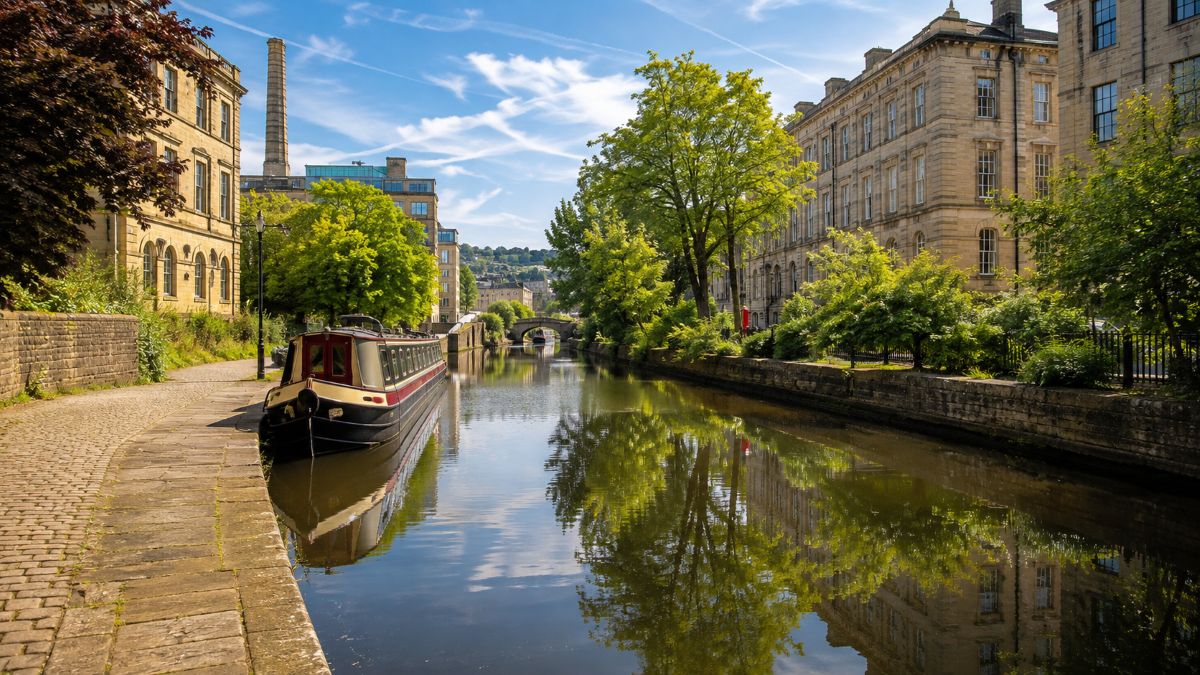
Image generated with Ai
Huddersfield is emerging as an appealing destination for travellers seeking a slower-paced Yorkshire experience away from the region’s better-known cities. Positioned between Manchester and Leeds in West Yorkshire, the historic market town combines Victorian architecture, industrial heritage, waterside walking routes and access to the Pennine countryside. Its story is closely connected with the textile industry, which transformed Huddersfield into an important manufacturing centre during the Industrial Revolution and left a distinctive architectural legacy that remains visible today.
For visitors, the town offers an attractive mix of cultural exploration and outdoor experiences within a compact destination. St George’s Square provides an easy starting point for discovering the Victorian railway station, historic civic buildings and traditional commercial streets, while the Huddersfield Narrow Canal leads towards greener landscapes and countryside communities. Castle Hill adds another dimension, offering panoramic views and evidence of settlement dating back thousands of years. Its convenient rail connections also make Huddersfield a practical base for exploring wider West Yorkshire and the Pennine landscape.
Huddersfield’s identity is strongly associated with the wealth generated by wool and textile manufacturing. The River Colne and River Holme helped support the town’s industrial development, while the canal network provided an important means of moving materials and finished goods.
Today, that industrial past is reflected in the town centre, where grand Victorian buildings stand alongside independent businesses and traditional streets. St George’s Square is particularly significant, creating an impressive architectural introduction to Huddersfield.
Advertisement
Advertisement
The railway station, completed in the 19th century, is among the town’s best-known landmarks, with its classical architectural detailing giving the square a distinctive appearance. Nearby buildings further demonstrate how closely Huddersfield’s commercial growth was connected with railway travel and textile trading.
The town’s historic environment provides visitors with an opportunity to experience northern England’s industrial story without travelling between numerous separate attractions.
| Attraction | Travel appeal | Experience |
|---|---|---|
| St George’s Square | Historic town centre | Victorian architecture |
| Huddersfield Railway Station | Architectural landmark | Classical design |
| Greenhead Park | Outdoor recreation | Gardens, lakes and bandstand |
| Huddersfield Narrow Canal | Waterside exploration | Walking and countryside scenery |
| Castle Hill | Heritage and viewpoints | Ancient settlement and panoramic views |
| Town Hall | Civic architecture | Victorian-era heritage |
| Byram Arcade | Shopping and leisure | Independent shops and cafés |
The compact nature of central Huddersfield means several attractions can be explored during a single walking excursion. From St George’s Square, visitors can continue towards the Town Hall, Open Market and Byram Arcade, creating a route that combines architecture, shopping and local atmosphere.
For travellers interested in traditional northern town centres, this concentration of historic buildings provides a particularly rewarding experience.
Water remains central to Huddersfield’s character, and the Huddersfield Narrow Canal provides one of the most attractive ways to experience the surrounding landscape.
The canal passes through a changing environment of waterways, vegetation and open countryside. Walkers can follow sections of the route towards communities and reservoirs beyond the town, with the landscape gradually becoming more rural.
One of the most notable engineering features is Standedge Tunnel, an important part of Britain’s canal heritage. The surrounding canal corridor demonstrates how waterways once supported the movement of goods during the Industrial Revolution while now providing recreational routes for walkers and visitors.
Greenhead Park offers another opportunity to experience Huddersfield outdoors. Established in the Victorian era, the park combines landscaped gardens, water features and traditional recreational spaces, providing a quieter setting close to the town centre.
Huddersfield’s attractions extend well beyond its Victorian heritage. Castle Hill, rising above the surrounding valleys, offers one of the strongest connections between the area’s ancient past and its modern tourism appeal.
Archaeological evidence indicates that the hill was occupied during the late Bronze Age and Iron Age, making it an important location for understanding the long history of settlement in the region.
Victoria Tower stands prominently on the summit. Constructed in the late 19th century to commemorate Queen Victoria’s Diamond Jubilee, the tower has become one of Huddersfield’s most recognisable landmarks.
The elevated location also provides expansive views across the surrounding valleys and Pennine landscape. For visitors combining heritage sightseeing with outdoor exploration, Castle Hill creates a natural conclusion to a Huddersfield itinerary.
Huddersfield’s location provides easy access to countryside beyond the urban centre. The surrounding Pennine landscape offers rolling hills, open fields, reservoirs and walking opportunities that contrast sharply with the town’s dense Victorian architecture.
Travellers can therefore combine a heritage-focused morning in the centre with an afternoon exploring open landscapes. This combination is particularly attractive for visitors who prefer destinations where cultural attractions and outdoor recreation are located close together.
The wider region also makes Huddersfield useful as part of a multi-destination Yorkshire or northern England itinerary. Leeds and Manchester provide larger urban experiences, while nearby historic destinations offer additional cultural attractions.
Huddersfield’s railway station is not simply an architectural attraction. Its position on the regional rail network gives travellers a practical way to reach the town without relying entirely on a car.
The journey across the Pennines between Huddersfield and Manchester can itself become part of the travel experience, with changing landscapes providing views of northern England’s distinctive terrain.
For visitors staying in either Manchester or Leeds, Huddersfield can consequently work as a day-trip destination. Its combination of historic streets, canals, parks and countryside allows travellers to experience a different side of the region without committing to a lengthy journey.
Huddersfield offers travellers an alternative to the better-known destinations of Yorkshire. Rather than relying on a single headline attraction, the town’s appeal comes from the way its industrial heritage, Victorian architecture, waterways and countryside fit together.
Its historic centre provides architectural interest, the canal offers a longer outdoor route, Greenhead Park introduces Victorian leisure heritage and Castle Hill connects the destination with Yorkshire’s much older past.
For travel itineraries focused on authentic northern England experiences, Huddersfield can therefore provide a compact and varied stop between larger destinations. Its position, heritage and access to the Pennines make it particularly suitable for visitors looking for a destination that combines history with walking and scenic exploration.
1. Where is Huddersfield located?
Huddersfield is a historic town in West Yorkshire, situated between Manchester and Leeds.
2. What is Huddersfield known for?
Huddersfield is known for its textile heritage, Victorian architecture, canals, parks and surrounding Pennine countryside.
3. Is Huddersfield suitable for a day trip?
Yes. Its compact centre, historic attractions, canal routes and transport connections make it well suited to a day trip.
4. What is the main historic square in Huddersfield?
St George’s Square is the town’s principal historic square and contains several notable Victorian-era buildings.
5. Can visitors walk along the Huddersfield Narrow Canal?
Yes. The canal provides attractive waterside walking opportunities through the town and surrounding countryside.
6. What is Castle Hill in Huddersfield?
Castle Hill is a historic elevated site associated with prehistoric settlement and is known for its views across the surrounding valleys.
7. What is Victoria Tower?
Victoria Tower is a prominent landmark on Castle Hill, built to commemorate Queen Victoria’s Diamond Jubilee.
8. Is Huddersfield good for architecture enthusiasts?
Yes. The town has a substantial collection of historic buildings, particularly examples associated with its Victorian and industrial past.
9. What outdoor attractions are near Huddersfield?
Visitors can explore canal-side routes, Greenhead Park, Castle Hill and the surrounding Pennine countryside.
10. Can Huddersfield be combined with Manchester or Leeds?
Yes. Its location and rail connections make it practical to include Huddersfield alongside Manchester or Leeds in a wider northern England itinerary.
Advertisement
Tags: Castle Hill Huddersfield, England day trips, Huddersfield attractions, Huddersfield canal walks, Huddersfield heritage
Advertisement
Advertisement












Wednesday, September 2, 2026

Wednesday, September 2, 2026

Wednesday, September 2, 2026

Wednesday, September 2, 2026
Tuesday, September 1, 2026

Wednesday, September 2, 2026

Wednesday, September 2, 2026