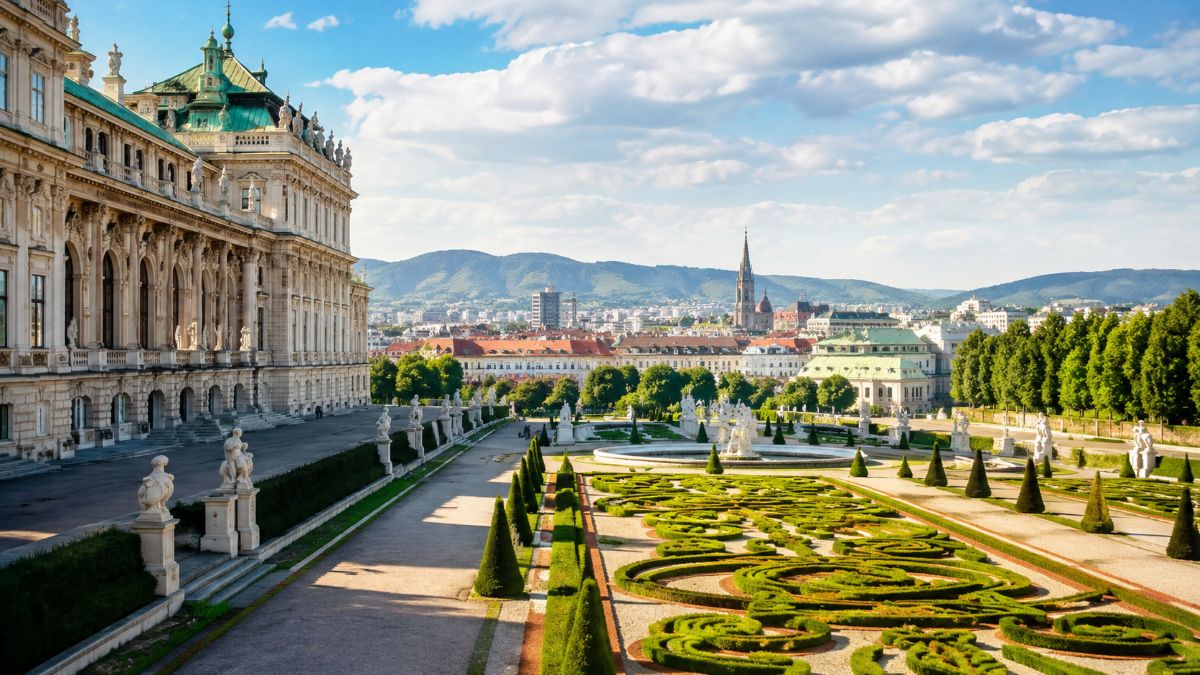
Image generated with Ai
Vienna, Austria’s most populous city and capital, offers travellers a compelling blend of imperial history, Austrian cuisine, historic architecture, celebrated Viennese coffee houses, grand palaces and world-class museums. With more than 1.9 million residents, Vienna stands apart from other major Austrian cities, including Graz, and remains one of the most popular destinations for Vienna tourism and Austria travel. From its UNESCO-listed landmarks and historic city centre to its vibrant food culture and cultural attractions, the city provides visitors with an extensive European travel experience.
For travellers planning a Vienna city break, the capital combines historic attractions with convenient accessibility. Vienna’s extensive public transport network makes it relatively easy to travel between Vienna attractions, museums, palaces, restaurants and food districts. The city’s distinctive Viennese coffee culture also encourages visitors to experience local life at a slower pace, while Vienna food traditions add another dimension to the journey. Spring and autumn are particularly appealing seasons for visiting Vienna, while December attracts travellers seeking Vienna Christmas markets and festive experiences. Staying around the Vienna Inner City can also place first-time visitors within convenient reach of major Vienna tourist attractions, historic landmarks, shopping areas and cultural sites.
Advertisement
Food is an important part of experiencing Vienna, with traditional cafés, confectioneries, markets and wine-growing districts contributing to the city’s culinary identity.
Naschmarkt remains one of the most recognisable food destinations for visitors. Its extensive collection of stalls provides opportunities to discover fresh produce, spices, prepared dishes and international flavours. The market also incorporates restaurants and establishments where visitors can enjoy drinks while exploring the surrounding area.
Advertisement
Vienna’s confectionery traditions provide another essential part of the city’s food story. Traditional pastry shops offer visitors an opportunity to sample cakes, pastries and other sweets associated with the capital’s long-established culinary culture.
Coffee houses are equally significant. Vienna’s café tradition is built around lingering rather than rushing, making a coffee stop an experience in its own right. Visitors can try a Wiener Melange, a classic coffee prepared with steamed or frothed milk, while taking time to appreciate the atmosphere of a traditional café.
| Travel consideration | What visitors should know |
|---|---|
| Best seasons | Spring and autumn offer comfortable conditions and generally fewer summer crowds |
| December travel | Christmas markets create a particularly festive atmosphere |
| Recommended area | The Inner City is convenient for many major attractions |
| Public transport | Underground trains, trams and buses provide extensive city coverage |
| Airport access | Vienna Airport is connected to the city by rail and road |
| Accommodation | Typical hotel prices vary considerably according to location, season and standard |
| Food experience | Naschmarkt, traditional cafés and confectioneries are key culinary stops |
| Cultural attractions | Museums, palaces and historic buildings dominate many itineraries |
Vienna’s architectural identity is closely connected with the Habsburg dynasty, whose influence shaped the city and much of Central European history.
The Hofburg complex provides travellers with an opportunity to explore the former imperial centre. Visitors can learn more about the lives of the Habsburgs through the Imperial Apartments, the Sisi Museum and the Silver Collection. The complex demonstrates the scale and ceremonial character associated with the Austrian imperial court.
The Imperial Treasury provides another perspective on the monarchy, with historic objects and regalia offering insight into the political and cultural significance of the former empire.
Schönbrunn Palace is another major attraction. The former imperial summer residence combines elaborate interiors with extensive gardens and grounds. Its historical significance and architectural character have helped establish it as one of Vienna’s most important visitor attractions and a UNESCO World Heritage property.
For travellers interested in European royal history, these locations provide considerably more than photographic opportunities. They help explain how political power, court culture and architecture developed across centuries.
Vienna’s cultural appeal extends well beyond imperial buildings. The city has a large and diverse museum landscape covering art, history, music and other subjects.
The Kunsthistorisches Museum is particularly significant for travellers interested in European art and historic collections. Its architecture and exhibitions make the institution an important cultural stop within the city.
The Belvedere, Leopold Museum and Albertina also feature prominently on Vienna itineraries. Each provides a different perspective on European and Austrian art, allowing visitors to build an itinerary around particular artistic interests rather than attempting to see every museum during a short stay.
Music history adds another dimension. Vienna’s association with major composers, including Mozart and Beethoven, has contributed strongly to its international cultural reputation. Museums and historic locations connected with musical heritage allow visitors to explore the people and traditions that helped establish Vienna as one of Europe’s great musical centres.
Vienna’s transport network is one of the practical advantages of visiting the capital. Underground services, trams and buses connect central areas with neighbourhoods and major attractions, reducing the need to rely on private vehicles.
The underground network is particularly useful for travellers attempting to cover several attractions in one day. Weekend night services also provide additional flexibility for visitors spending evenings in restaurants, cafés or cultural venues.
Vienna Airport is connected with the city through rail services and road transport, making the transition from arrival to sightseeing relatively straightforward. For international visitors, this accessibility can make Vienna a convenient destination for a short European break as well as a longer cultural holiday.
Spring and autumn can provide an attractive balance between sightseeing conditions and visitor numbers. Mild weather can make walking through historic neighbourhoods, palace gardens and outdoor areas more comfortable than during periods of summer heat.
Summer remains popular, particularly for travellers seeking longer daylight hours and a busy cultural atmosphere. However, popular attractions can become more crowded during peak periods.
December offers a completely different experience. Vienna’s Christmas markets transform parts of the capital into festive gathering spaces, combining seasonal food, decorations and traditional shopping with the city’s historic architecture.
Accommodation costs vary according to season, neighbourhood and hotel category, so travellers should compare options before finalising their itinerary. Staying centrally can reduce travel time between major attractions, although visitors willing to stay farther from the historic centre may find a wider range of accommodation choices.
Vienna’s appeal comes from the way its different experiences complement one another. A morning can begin with traditional coffee and pastries, continue through an art museum, move into the grand interiors of a former imperial residence and finish with Austrian cuisine or wine.
The capital’s combination of cultural depth, historic architecture, culinary traditions and efficient transport makes it particularly suitable for travellers seeking more than a conventional sightseeing trip. Rather than depending on one landmark, Vienna offers an interconnected experience shaped by centuries of European history and contemporary city life.
For visitors planning an Austrian holiday, Vienna provides a strong starting point for understanding the country’s artistic, culinary and imperial heritage while enjoying the conveniences of a modern European capital.
1. What is Vienna known for?
Vienna is known for imperial palaces, museums, classical music, traditional coffee houses, Austrian cuisine and historic architecture.
2. Is Vienna Austria’s largest city?
Yes. Vienna is Austria’s largest city by population and its national capital.
3. What is the best time to visit Vienna?
Spring and autumn are generally attractive for sightseeing, while December is especially popular for Christmas markets.
4. What food should visitors try in Vienna?
Visitors can explore traditional pastries, Viennese coffee specialities and Austrian dishes while visiting markets, cafés and restaurants.
5. What is Naschmarkt?
Naschmarkt is a well-known Vienna food market featuring numerous stalls, food establishments and opportunities to explore local and international flavours.
6. Why are Vienna’s coffee houses famous?
Viennese coffee houses are associated with a leisurely social tradition in which guests can sit, enjoy coffee and spend time in a relaxed setting.
7. Which palace should first-time visitors see in Vienna?
Schönbrunn Palace is one of the city’s most significant palace attractions, while the Hofburg offers extensive insight into Habsburg imperial life.
8. Which museums are important in Vienna?
The Kunsthistorisches Museum, Belvedere, Leopold Museum and Albertina are among the major museums frequently included in Vienna itineraries.
9. Is public transport convenient in Vienna?
Yes. The city has an extensive network of underground trains, trams and buses that makes travelling between major areas relatively easy.
10. Where should first-time visitors stay in Vienna?
The Inner City is a convenient choice because it places visitors close to numerous historic attractions, cultural sites, restaurants and shopping areas.
Advertisement
Advertisement
Advertisement












Wednesday, September 2, 2026
Wednesday, September 2, 2026

Wednesday, September 2, 2026
Wednesday, September 2, 2026

Wednesday, September 2, 2026
Tuesday, September 1, 2026

Wednesday, September 2, 2026
Wednesday, September 2, 2026