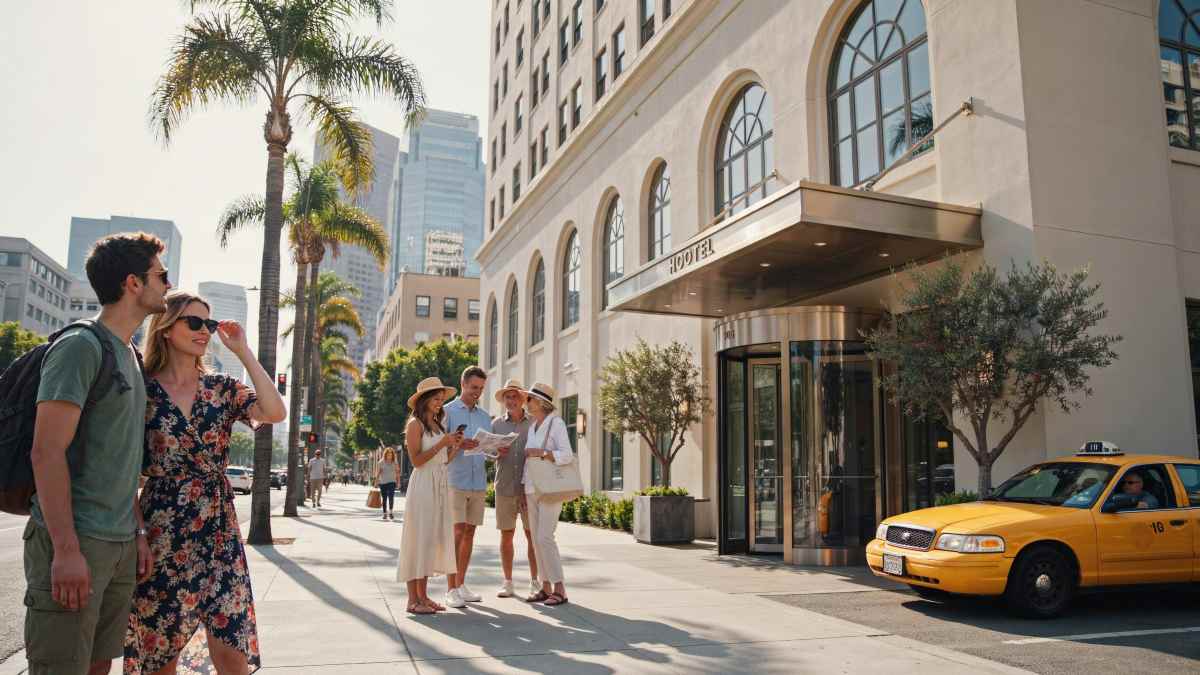
Image generated with Ai
Travel and tourism in the USA are in a vital stage of preparation in anticipation of the 2028 Summer Olympics in Los Angeles, with metro destination marketing organisations and hotel chains gearing up for renovations and conversions to meet the future needs of international travellers. At the same time, long waiting periods for visa interviews in growth countries such as India and Latin America are becoming a significant hurdle in the full recovery of inbound tourism.
The 2028 Los Angeles Summer Olympics are becoming an important medium-term driver for tourism infrastructure investment across the United States.
Advertisement
Metropolitan destination marketing organisations and major hotel chains are accelerating renovation cycles and pursuing conversion opportunities ahead of the Games. The preparations are aimed at increasing the availability and quality of accommodation as international visitors plan trips around Olympic events.
The effect extends beyond Los Angeles itself. International sports travellers frequently combine major events with visits to multiple destinations, creating opportunities for wider US tourism markets.
Advertisement
Advertisement
Multi-destination itineraries could connect Los Angeles with destinations such as San Francisco, Las Vegas, New York, Miami and other major American tourism centres. Visitors attending Olympic events may therefore extend their trips to include cities, national attractions, shopping districts, entertainment venues and cultural destinations elsewhere in the country.
Hotel investment linked to this anticipated demand is consequently being considered within a broader tourism cycle rather than solely around the Olympic host city.
Hotel renovation programmes are an important component of preparations because accommodation quality, capacity and location influence international travel planning.
Renovated properties can provide updated rooms, improved public areas and upgraded facilities for leisure and business travellers. Conversion deals can also bring existing buildings into hotel operations, potentially increasing room supply without relying entirely on new construction.
Advertisement
Advertisement
For Los Angeles, additional accommodation capacity will be relevant as the city prepares for increased visitor flows surrounding the Olympic period. Hotels across the wider metropolitan area can also benefit as travellers seek alternatives based on price, location and availability.
The broader US tourism market could gain from the same international travel wave if visitors build longer itineraries around their Olympic trips.
International sports tourism often involves more than the host destination. Travellers making a long-haul journey to the United States can seek to maximise their trip by visiting several destinations.
For international visitors, a Los Angeles Olympic itinerary could be combined with California road trips, visits to other major US cities or leisure stays in destinations outside the Olympic region.
This creates opportunities for airports, airlines, hotels, tour operators, attractions and local tourism businesses across multiple markets.
Destination marketing organisations are therefore preparing not only for visitors travelling to Los Angeles but also for the potential redistribution of international visitor spending across wider US tourism corridors.
The timing of hotel renovations and conversions is important because accommodation supply needs to be ready before demand reaches its peak. Investment undertaken ahead of the Games can also provide upgraded inventory for visitors after the Olympics.
While infrastructure investment is accelerating, international tourism recovery continues to face inbound travel friction linked to visa processing.
Long visa interview wait times in high-growth source markets, including India and Latin America, can affect travellers’ ability to plan and confirm trips to the United States.
For long-haul visitors, visa processing is an important part of the travel decision. Uncertainty around appointment availability can influence booking timelines for flights, accommodation and attractions, particularly for trips connected with major international events.
The issue is particularly significant for tourism markets seeking stronger growth from countries with expanding outbound travel demand.
Tourism coalitions and travel-industry organisations are lobbying for greater automation in consular processing to reduce visa-related friction.
The focus on processing efficiency reflects the wider importance of international arrivals to the US travel economy. Faster and more predictable visa procedures could give travellers greater certainty when arranging trips and allow tourism businesses to plan more effectively around future demand.
India represents a particularly important source market for US international tourism, while Latin American markets provide substantial regional demand. Delays affecting travellers from these markets can therefore influence the pace at which inbound tourism capacity translates into actual arrivals.
The issue also has implications for travel-trade balances. Industry groups are seeking measures that can reduce barriers to inbound travel and support stronger international visitor flows.
In consequence, the next stage of tourism revival is coming up in the USA on the basis of two parallel approaches. On the one hand, Los Angeles 2028 stimulates hotel renovation and conversion. At the same time, destination marketing organisations prepare for foreign tourists who will be creating multi-destination itineraries across the whole USA. However, delays in visa processing are still one of the key limitations of international tourists. The capacity to transform potential demand into actual travel is determined not only by the availability of hotel rooms and destination readiness but also by the possibility of getting travel permission in reasonable time periods. Thus, for Los Angeles and the entire USA, the upcoming Olympics of 2028 will imply both infrastructural preparations and minimisation of travel friction. While hotel investment will increase the tourism capacity, visa-processing will define the efficiency of attracting international demand to different destinations. In turn, such a combination of investment related to the Olympics and visa-processing reform determines the next step of USA travel and tourism, where Los Angeles serves as an entrance gate for foreign tourists.
Advertisement
Tags: California, hotel conversion USA, inbound tourism USA, international visitors USA, LA 2028 travel, Los Angeles, Los Angeles 2028, Los Angeles 2028 Olympics, Los Angeles hotels, Los Angeles Tourism, Olympic tourism USA, United States, United States tourism, US hotel renovation, usa, USA tourism, USA travel
Advertisement
Advertisement












Wednesday, September 2, 2026

Wednesday, September 2, 2026

Wednesday, September 2, 2026
Wednesday, September 2, 2026

Wednesday, September 2, 2026
Tuesday, September 1, 2026

Wednesday, September 2, 2026
Wednesday, September 2, 2026