
Istanbul Airport Flight Delays are Secretly Driving an Unprecedented Tourism Surge

Updated
Published
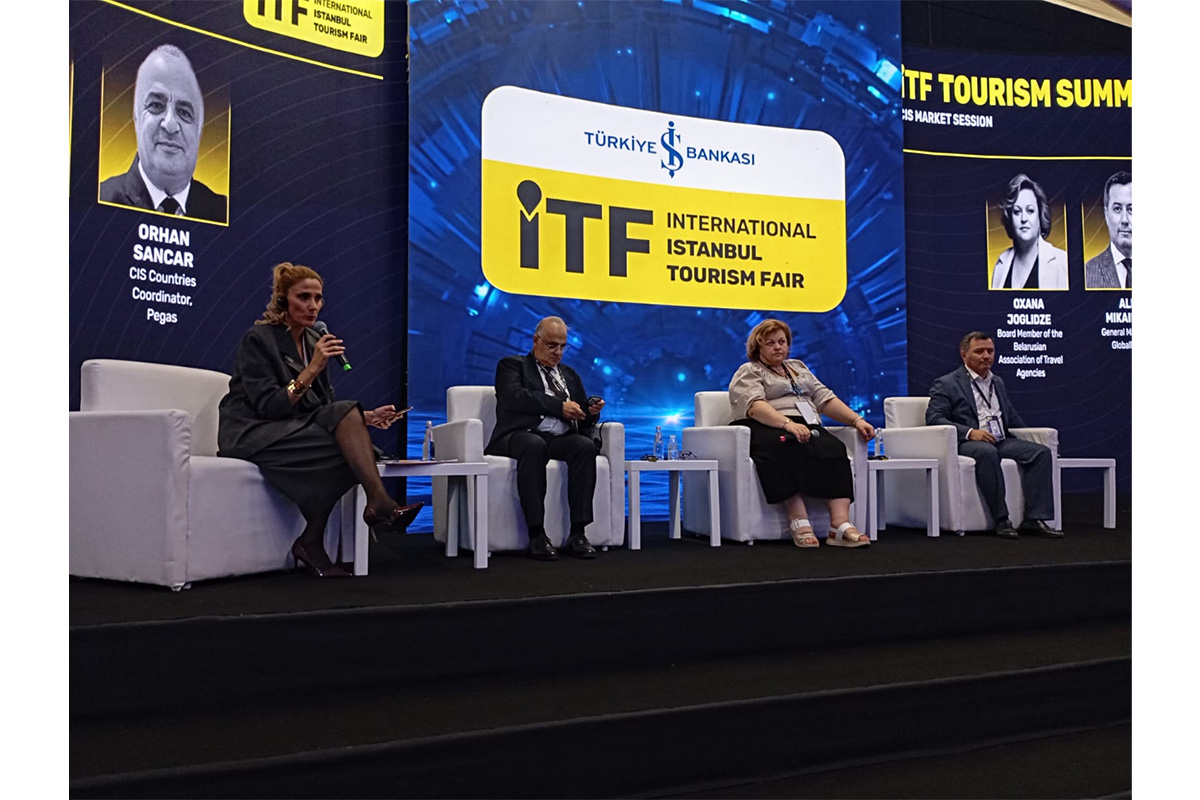
The global aviation industry has long relied on highly optimized mega-hubs to efficiently funnel millions of passengers across continents. For decades, the standard operating procedure for international transit was built entirely around the concept of Minimum Connecting Time (MCT). Airports and airlines competed fiercely to ensure passengers spent as little time as possible on the ground, creating hyper-efficient bridges between East and West. This structural shift in global travel habits was a focal point of discussion at the International Istanbul Tourism Fair (ITF) 2026, held at the Yenikapı-Eurasia Performance and Art Center. Previously, travelers would fly in and use, let’s say, the exact same Istanbul airport as a hub. They would allocate literally three, maybe four hours for a layover, observed by one of the speakers, during the industry gathering amongst Oxana Joglidze, Board Member of the Belarusian Association of Travel Agencies, Ali Mikailov, General Manager, GlobalDMC, Orhan Sancar, CIS Countries Coordinator, Pegas. Furthermore reiterating that, today, it is seen that clients who are flying to other countries and using the Istanbul airport as a hub are setting aside a full day. Over the last three years or so what can be told is that the demand for Istanbul as a destination and for accommodation there has easily tripled.
However, a complex web of modern geopolitical shifts, airspace restrictions, and chronic flight delays has fundamentally altered this behavioral paradigm. Travelers who historically viewed layovers as a temporary logistical inconvenience to be minimized are now intentionally building extensive, multi-day stopovers into their itineraries. What began as a defensive scheduling tactic to absorb the shock of missed connections has inadvertently triggered an unprecedented boom in Istanbul’s urban tourism and hospitality sectors, fundamentally reshaping the financial landscape of the city’s visitor economy.
Advertisement
Advertisement
While Mikailov‘s observations highlight the immediate economic realities facing Turkish financial institutions, the underlying drivers of this phenomenon reveal a much broader story about global aviation, geopolitical friction, and the adaptive resilience of the tourism industry. The transformation of Istanbul from a transient waypoint into a mandatory, standalone destination is not merely a marketing triumph; it is a direct byproduct of international crises forcing a permanent evolution in consumer travel behavior.
The Geopolitical Redrawing of Air Corridors
To understand the sudden tripling of demand for short-term accommodations in Istanbul, one must first examine the fractured state of global airspace. Following the geopolitical crises in Eastern Europe that escalated significantly in 2022, vast swaths of Russian and Ukrainian airspace were closed to Western airlines, and reciprocal bans were placed on Russian carriers by European and North American aviation authorities. As a result, traditional flight paths connecting Europe, the Americas, and Asia were effectively severed or forced into massive, fuel-heavy detours.
Advertisement
Advertisement
Istanbul Airport, geographically situated at the crossroads of Europe and Asia, emerged as the most critical neutral aviation hub in the world. For travelers moving between Russia and the West, or from Russia to destinations in the Caucasus such as Azerbaijan, the Middle East, and beyond, Istanbul became the primary, and sometimes the only, viable transit point.
Advertisement
Advertisement
However, this increased reliance on the Istanbul corridor coincided with severe operational degradations within the Russian aviation sector. Sanctions restricted access to spare parts, maintenance software, and new aircraft for Russian carriers, leading to a cascade of logistical challenges. Routine flights out of major hubs like Moscow’s Sheremetyevo or St. Petersburg’s Pulkovo began to experience chronic, off-schedule departures. Lengthy flight delays became the statistical norm rather than the exception.
For the international traveler, an unpredictable departure time transforms a meticulously planned three-hour layover into an incredibly high-risk gamble. Missing a connecting flight at a mega-hub like Istanbul Airport (IST)—which operates hundreds of international routes daily—does not just mean a few hours of inconvenience; it often results in exorbitant rebooking fees, overnight stays on terminal floors, and cascading disruptions to final travel plans.
The End of the “Minimum Connecting Time” Era
Faced with this volatile aviation environment, consumer behavior began to adapt defensively. Travel agents, tour operators, and independent travelers recognized that the era of the tight, three-hour layover was essentially over for specific regional routes. The solution was to deliberately pad itineraries.
Instead of booking the tightest possible connection, passengers began voluntarily scheduling layovers of 24, 48, or even 72 hours. This deliberate buffer absorbs any potential delays from the originating flight. If a flight out of Russia is delayed by eight hours, the passenger with a two-day layover merely loses an afternoon in Istanbul, rather than missing their onward flight to Baku or Dubai entirely.
This behavioral pivot fundamentally altered the nature of the trip. A passenger stuck in an airport for four hours is a captive consumer, spending money primarily on duty-free goods and terminal food and beverage. A passenger with a 24-hour layover, however, requires a hotel room, ground transportation, external dining, and entertainment. They cross the border from the transit zone into the city proper, transforming instantly from a transit statistic into a high-yield international tourist.
Advertisement
Advertisement
What began as a logistical necessity quickly evolved into a desired itinerary feature. Travelers began utilizing this mandatory buffer time to purposefully explore one of the most historically rich cities on the planet. Instead of viewing the layover as a penalty, it was reframed as a “two-for-one” vacation opportunity. Passengers heading to beach resorts in the Maldives or business meetings in Azerbaijan found themselves spending a day touring the Hagia Sophia, navigating the labyrinthine alleys of the Grand Bazaar, and dining along the Bosphorus Strait.
The Institutionalization of the Stopover Economy
The Turkish tourism and aviation sectors were quick to recognize the massive economic potential of this captive audience. Rather than passively observing this trend, institutions actively developed infrastructure and promotional programs to institutionalize the stopover economy.
Turkish Airlines, the national flag carrier operating the majority of international connections through Istanbul, aggressively expanded its “Stopover in Istanbul” program. The initiative directly targets connecting passengers facing long layovers, specifically those traveling from international origins to international destinations with a transit time of at least 20 hours. To incentivize passengers to leave the airport and inject capital into the local economy, the airline offers complimentary accommodation: one night in a four-star hotel for economy passengers, and two nights in a five-star or boutique hotel for business class travelers.
This institutional support essentially de-risks the layover for the consumer. It removes the friction of booking independent accommodation and provides a seamless bridge between the airport terminal and the city center. Furthermore, the physical infrastructure of Istanbul has rapidly evolved to support this micro-tourism. The completion of the M11 Metro line, which connects the sprawling new Istanbul Airport directly to the city center, has slashed transit times. A journey that once required an hour-long, unpredictable taxi ride through notorious Istanbul traffic can now be completed swiftly via rail, making even a 12-hour layover a viable window for urban exploration.
For passengers with shorter buffers, the airport itself and the immediate surrounding areas have adapted. The travel industry is now packaging highly compressed, curated experiences—such as three-hour private tours of the Sultanahmet district designed specifically for layover passengers. These highly optimized micro-tours cater to the time-poor, cash-rich demographic that transit disruptions have funneled into the city.
Advertisement
Advertisement
Economic Windfalls and Banking Sector Mobilization
The macroeconomic impact of this behavioral shift cannot be overstated. When the demand for accommodation in a major metropolis triples over a three-year period, it necessitates a massive mobilization of capital. A single transit passenger deciding to spend 24 hours in Istanbul sets off a chain reaction of economic transactions: visa fees, transportation costs, hotel bookings, restaurant bills, and cultural site entrance fees.
Because these stopover tourists are only in the city for a short duration, their daily spend rate is exceptionally high. They do not have the time to seek out budget-friendly, off-the-beaten-path options; they prioritize convenience, central locations, and premium experiences. This influx of high-velocity capital has been a massive boon for Turkey’s hospitality sector, which has had to rapidly scale its capacity and modernize its offerings to meet the expectations of an increasingly diverse global clientele.
To support this explosive growth, the Turkish financial sector has stepped in aggressively. Institutions like Türkiye İş Bankası have recognized that tourism is no longer just a seasonal industry dependent on summer coastal visitors; it is a year-round economic engine driven by global transit dynamics. In recent years, İş Bankası has injected an estimated $2.5 billion into the tourism sector, providing vital funding for new hotel construction, the renovation of existing historical properties into boutique accommodations, and the digital transformation of hospitality services.
This capital injection is crucial because the modern layover tourist demands a frictionless experience. Hotels must offer seamless digital check-ins, rapid Wi-Fi for business travelers caught between flights, and concierge services capable of arranging hyper-efficient city tours. The financial backing of major banks ensures that the physical and digital infrastructure of Istanbul’s tourism sector can scale rapidly enough to prevent the tripled demand from collapsing into operational chaos.
From Transit Buffer to Standalone Brand
Perhaps the most fascinating aspect of this aviation-driven tourism boom is the psychological shift in the consumer. What starts as a defensive measure against Russian flight delays often serves as an introductory tasting menu to Turkish culture.
Advertisement
Advertisement
Industry data and qualitative feedback from tourism fairs suggest a powerful conversion rate among these accidental tourists. A traveler who spends a rushed 24 hours exploring the Basilica Cistern and taking a brief Bosphorus cruise often leaves with a sense of unfinished business. The layover serves as a potent advertisement for the city itself. Travel agencies are increasingly reporting that clients who first experienced Istanbul as a forced stopover are subsequently returning years later with detailed, week-long itineraries dedicated entirely to the city.
Istanbul is effectively leveraging global aviation disruptions to permanently elevate its status as a standalone tourism brand. It is breaking free of the “transit hub” moniker and establishing itself as a primary destination in the minds of travelers who might never have otherwise prioritized a visit to Turkey. The structural nature of the trip is evolving; Istanbul is no longer just the place you pass through to get to your vacation—it is the opening act of the vacation itself.
The Future of the Disrupted Travel Economy
As the global aviation industry continues to grapple with the realities of restricted airspaces, fluctuating fuel costs, and unpredictable geopolitical tensions, the traditional model of razor-thin connection times will remain fundamentally compromised for specific regional corridors. The defensive layover is not a temporary anomaly; it is a permanent adaptation to a more volatile world.
For Istanbul, this represents an enduring competitive advantage. As long as the city maintains its position as the preeminent bridge between East and West, and as long as airlines like Turkish Airlines continue to incentivize stopovers with free accommodations and streamlined infrastructure, the city will continue to harvest immense economic value from the friction of global travel.
The phenomenon observed at the International Istanbul Tourism Fair 2026 serves as a masterclass in destination resilience. By embracing the shifting behavior of transit passengers—transforming the stress of flight delays into the allure of a historic city break—Istanbul has successfully turned a global logistical crisis into a golden age of urban tourism. The demand that has tripled over the last three years shows no signs of receding, cementing Istanbul’s status not just as the crossroads of the world, but as a destination where the world is more than happy to stop and stay awhile.
Advertisement
