
Queensland Tourism Enters a New Era as Innovation and Brisbane 2032 Reshape the Future of Travel

Published
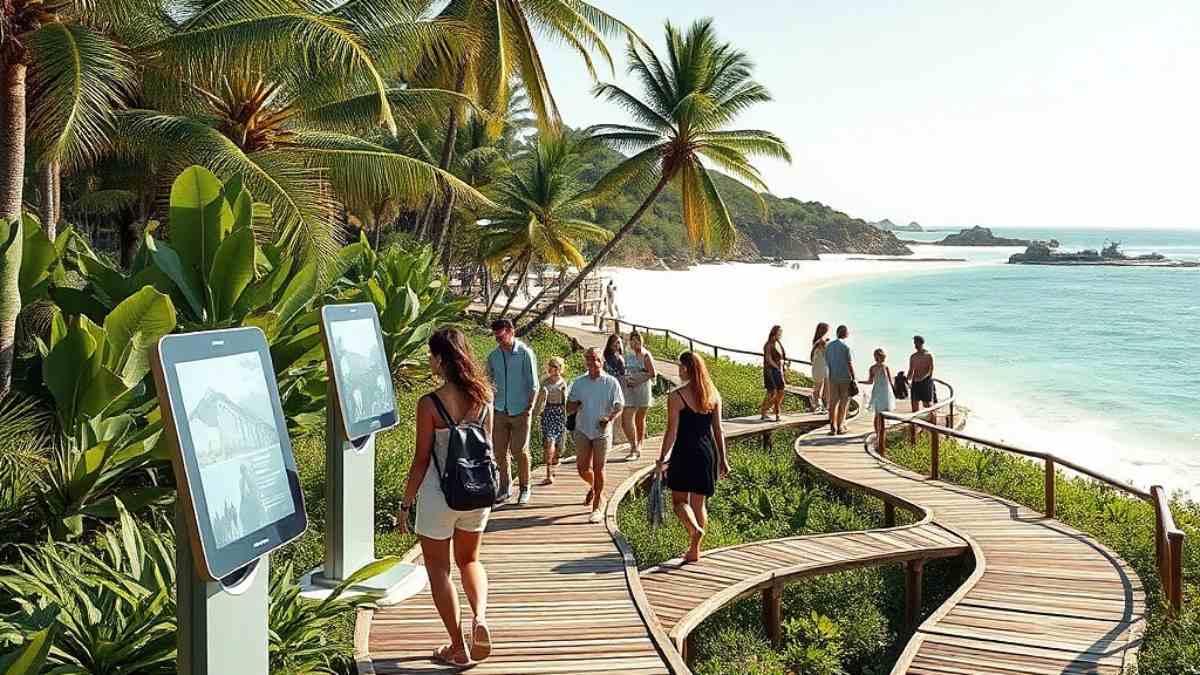
Image generated with Ai
The Queensland destination transformation represents an important move forward for Australia’s Sunshine State in terms of travel destination value creation. Instead of depending only on static natural attractions, Queensland has created an innovation-led framework where the elements of science storytelling, advanced travel technology, and destination sustainability have been combined. This is due to the decade-long lead-up to the Brisbane 2032 Olympic and Paralympic Games. Converting ordinary sightseeing into profitable experiences, this evolution makes visitors’ engagement, length of stay, and high-quality eco-certification key aspects of the transformation, which set a new bar for international destination competitiveness and sustainability.
Queensland Moves From Traditional Tourism to Experience-Based Travel
Evolving Traveller Expectations and the Shift to Experiential Travel
The global tourism landscape has undergone a structural shift, with international and domestic travellers increasingly rejecting static, passive sightseeing in favour of active, transformative experiences. Modern visitors seek deeper personal connection, educational immersion, and environmental responsibility when choosing travel destinations. In response, Queensland has initiated a comprehensive overhaul of its tourism offerings, moving beyond the historical model of selling geographic landmarks to orchestrating multi-layered, interactive visitor journeys.
This evolution is grounded in state policy frameworks designed to modernise visitor touchpoints. Instead of viewing natural wonders like tropical rainforests or coral reefs through a purely aesthetic lens, travellers are invited into active participation. Experience-based travel in Queensland integrates local history, active biological conservation, and bespoke luxury offerings, catering directly to higher-yielding visitor segments. By shifting the core value proposition from physical access to intellectual and emotional engagement, Queensland operators can capture higher daily expenditure while encouraging extended lengths of stay across both coastal hubs and regional inland destinations.
Smart Tourism Technology and Personalised Visitor Journeys
At the center of Queensland’s product redesign is the comprehensive integration of smart tourism technology across every phase of the consumer lifecycle. From pre-departure discovery to on-ground navigation and post-trip engagement, digital innovations are being deployed to eliminate travel friction and deliver custom itineraries. Queensland’s destination management organisations have prioritised the creation of seamless digital visitor journeys, enabling travellers to interact with destinations through real-time data feeds, augmented reality interpretation, and location-aware digital guides.
Advertisement
Advertisement
These technologies allow tourism operators to tailor personalised travel experiences that align with specific visitor preferences, such as nature-based adventure, culinary trails, or cultural heritage. Augmented reality platforms deployed at cultural sites and national parks provide interactive storytelling that enriches the visitor experience without requiring intrusive physical infrastructure. Moreover, digital platforms facilitate seamless booking systems for micro-credentials, eco-tours, and regional transit, directly driving dispersed spending across local economies.
Advertisement
Advertisement
Data-Driven Destination Management and Quality Frameworks
To sustain destination competitiveness, Tourism and Events Queensland (TEQ) and the Department of Tourism, Sport and Innovation rely on data-driven destination management tools. Modern visitor management requires real-time analytics to monitor visitor flows, optimize asset utilization, mitigate environmental over-tourism, and identify emerging consumer preferences.
A cornerstone of this strategy is the Best of Queensland Experiences Program (BOQE), an automated, data-led assessment framework that evaluates operator performance based on consumer reviews, digital presence, and accreditation standards. By evaluating thousands of operators annually against consumer-driven benchmarks, the state maintains strict quality control and delivers actionable performance insights directly to small and medium tourism enterprises.
| Operational Model | Primary Strategic Focus | Visitor Engagement Mechanism | Primary Economic / Market Driver |
| Traditional Sightseeing | Passive landmark viewing | Mass-market itineraries & fixed excursions | Volume-based visitor arrivals |
| Experience-Driven Transformation | Active citizen science & cultural immersion | Personalised digital journeys & custom routing | High-yield expenditure & extended stays |
| Data-Led Destination Management | Real-time flow optimization & quality tracking | BOQE scoring, consumer analytics, digital feedback | Value optimization & repeat visitation |
Science Becomes a New Tourism Asset
Commercialising Environmental and Marine Research into Tourism Products
Queensland’s globally renowned scientific research institutions are playing a transformative role in converting environmental research into export-ready tourism offerings. The Great Barrier Reef, a World Heritage site spanning over 2,300 kilometres, is no longer marketed purely as a scenic wonder, but as an active laboratory for marine conservation and public education. Through structured partnerships between marine science agencies, tourism operators, and academic institutions, scientific findings are converted into accessible, high-value Great Barrier Reef education products.
This process of scientific research commercialisation transforms scientific studies on coral health, marine biodiversity, and oceanography into interactive visitor products. Marine operators now incorporate scientific lectures, underwater laboratory tours, and hands-on coral propagation workshops into standard commercial itineraries. By embedding certified scientific research into marine excursions, tourism businesses elevate their value proposition, commanding premium pricing while positioning Queensland as a global authority in climate resilience and ocean stewardship.
The Master Reef Guide Network and Citizen Science Programs
A primary driver of this scientific integration is the Master Reef Guides program, delivered jointly by the Great Barrier Reef Marine Park Authority (GBRMPA), Tourism and Events Queensland, and the Association of Marine Park Tourism Operators. These guides represent world-leading marine interpreters, trained through rigorous field schools to deliver accurate scientific narrative and ocean stewardship instruction to visitors. Currently, 166 certified Master Reef Guides operate across the Great Barrier Reef World Heritage Area, including 16 in the Far North region, 42 across Cairns and reef-wide operations, 31 in the Townsville and Whitsundays regions, and 15 across southern reef destinations.
Advertisement
Advertisement

Image generated with Ai
Complementing this expert network is the Eye on the Reef program, an integrated monitoring platform that empowers everyday visitors to become active participant scientists. Using mobile software applications, tourists capture real-time observations of coral health, megafauna sightings, and marine ecosystem changes. This data is uploaded directly into GBRMPA’s geospatial databases, contributing to ongoing environmental management while creating a profound sense of purpose for the traveller. Furthermore, groundbreaking ecological restoration partnerships—such as CQUniversity’s Coastal Marine Ecosystems Research Centre seagrass restoration project, where volunteers collected over one million seagrass seeds—demonstrate how scientific research actively enhances visitor engagement and coastal ecosystem health.
Environmental Science and Certified Regenerative Ecotourism
Queensland is actively leveraging environmental science to pioneer regenerative tourism, a model that ensures visitor activity yields a net-positive ecological and social impact. Moving beyond basic sustainability—which seeks merely to minimize damage—regenerative tourism uses scientific frameworks to actively restore ecosystems and enhance destination resilience.
The state’s Sustainable Destinations Program provides a structured pathways framework for regional councils and operator clusters to achieve global sustainability benchmarks. Collaborating with international certification bodies such as EarthCheck, which was developed from the Australian Government’s Sustainable Tourism Cooperative Research Centre, local regions undergo rigorous benchmarking of carbon emissions, waste diversion, energy usage, and social impact. Certified regenerative destinations gain a significant marketing edge in international markets, appealing directly to high-value, environmentally conscious travellers who prioritize verified eco-credentials over unverified marketing claims.
| Scientific Tourism Initiative | Lead Agencies & Partners | Primary Visitor Experience | Scientific Data & Conservation Output |
| Master Reef Guide Program | GBRMPA, TEQ, AMPTO | Masterclass marine interpretation, guided eco-dives | High-standard visitor education & stewardship |
| Eye on the Reef App | GBRMPA, Marine Operators | Tourist-led species reporting, health surveys | Real-time marine park monitoring database |
| Seagrass Restoration Tours | CQUniversity (CMERC), Operators | Hands-on seed collection & nursery propagation | Over 1M seeds collected for coastal restoration |
| Reef Health Impact Surveys | GBRMPA, High Standard Operators | Professional-grade benthic monitoring dives | Quantitative reef condition & bleaching data |
Brisbane 2032 Could Redefine Queensland’s Global Tourism Position
Airport Capacity and Aviation Route Expansion
The announcement of the Brisbane 2032 Olympic and Paralympic Games has catalyzed a transformative wave of long-term infrastructure planning, establishing a “Green and Gold Runway” decade of investment. Crucial to capturing international visitor expenditure is aviation capacity expansion, ensuring that global travellers enjoy direct, high-frequency entry into South East Queensland and regional gateway airports.
Through strategic co-investment initiatives like the $200 million Attracting Aviation Investment Fund (AAIF), the Queensland Government and airport operators have secured critical international flight routes, expanding direct inbound seat capacity. By funding route restoration and opening new international corridors, Queensland is expanding its reach across high-yield international markets including North America, East Asia, Europe, and South East Asia. The AAIF has supported 26 international airline services to Queensland, delivering an estimated 1.97 million inbound seats, generating up to $1.67 billion in overnight visitor spend, and supporting nearly 19,000 jobs state-wide.
Advertisement
Advertisement
Strategic Transport Infrastructure and Accommodation Growth
Preparing South East Queensland for the 2032 Games involves urban infrastructure investments designed to permanently lift destination capacity. Transport improvements, including high-capacity rail corridors, rapid bus networks, and modernized ferry terminals, are engineered to enhance inter-regional mobility between Brisbane, the Gold Coast, and the Sunshine Coast. These transport upgrades ensure that visitors can travel seamlessly between urban event hubs and coastal natural regions without mobility bottlenecks.
Simultaneously, Queensland’s accommodation sector is undergoing a major expansion to meet growing demand for luxury and boutique lodging. The state government’s $50 million Growing Tourism Infrastructure Fund actively co-funds capital projects designed to refresh existing properties and construct visionary new short-stay accommodation. Complementing this is the $140 million Experience Development Fund, established to build visionary products that meet evolving international visitor expectations. By prioritizing luxury resort developments, accessible tourism infrastructure, and eco-certified wilderness lodges, Queensland is addressing historical room shortages while establishing the physical capacity required for high-yield international markets.
Global Brand Exposure and Event Tourism Legacy
The Brisbane 2032 infrastructure legacy extends beyond venue construction and transport logistics; it serves as a powerful global destination marketing mechanism. Hosting the Olympic and Paralympic Games grants Queensland unprecedented media exposure, placing the state’s lifestyle, natural environment, and modern infrastructure in front of billions of prospective international travellers.
To maximize this exposure, state tourism authorities are executing long-term brand alignment strategies that promote Queensland as an inclusive, premium, and sustainable travel hub. Destination marketing campaigns are designed to convert temporary event interest into long-term travel intent, encouraging international visitors to combine sports event attendance with extended regional itineraries. Legacy planning incorporates a 10-plus-10-year trade, investment, and tourism horizon, ensuring that destination equity built leading up to 2032 yields economic benefits well into the mid-2040s.
| Infrastructure / Legacy Program | Capital Allocation & Funding | Physical / Legacy Deliverable | Long-Term Visitor Economy Impact |
| Attracting Aviation Investment Fund | $200 Million joint fund | 26 Direct international air routes secured | 1.97M Inbound seats; $1.67B visitor spend |
| Experience Development Fund | $140 Million allocation | Visionary products & attraction refreshes | Lifts average daily spend & global demand |
| Growing Tourism Infrastructure Fund | $50 Million co-funding | Upgraded public amenities & resort rooms | Solves regional accommodation supply bottlenecks |
| Mega-Event Legacy Framework | 10-plus-10-year strategy | Multi-use sports venues & transport links | Secures 20-year destination brand platform |
Regional Queensland Gains New Visitor Economy Opportunities
First Nations Tourism Leadership and Cultural Authenticity
A critical component of Queensland’s transformed product mix is the amplification of First Nations tourism leadership. Global travellers demonstrate a strong desire for authentic cultural encounters that provide deep connections to Country and Indigenous traditions. The Queensland Tourism Industry Council’s First Nations Tourism Plan, underpinned by the principles of the international Larrakia Declaration, establishes a strategic roadmap for Indigenous-led economic development through tourism.
Advertisement
Advertisement
Queensland policy mandates that 100% of regional tourism organizations maintain dedicated First Nations tourism plans by 2025. Furthermore, the state aims to double the number of market-ready Indigenous-owned and operated tourism businesses by 2032. By embedding Aboriginal and Torres Strait Islander culture into marine guiding, national park tours, art institutions, and culinary experiences, Queensland provides visitors with authentic cultural immersion while supporting self-determined economic empowerment for Traditional Owner communities state-wide.
Outback Paleontology, Dark Sky Reserves, and Agritourism
Regional Queensland is diversifying its product base beyond traditional coastal assets by tapping into niche nature and heritage markets. The inland Outback region, home to rich paleontological sites, has established world-class dinosaur tourism experiences. Interactive facilities such as the Australian Age of Dinosaurs Museum in Winton and fossil dig sites in Eromanga allow visitors to engage directly with paleontological research, converting ancient history into highly educational family and scientific tourism products.
Concurrently, regional councils are developing dark sky reserves to capture the growing global demand for astro-tourism. Free from urban light pollution, outback communities provide organized night-sky tours, telescope observations, and astrophotography workshops. Additionally, regions such as the Somerset Shire and the Scenic Rim are developing structured agritourism trails. These itineraries connect urban and international visitors with farm-gate producers, boutique wineries, and country lifestyle retreats, generating year-round visitation and boosting non-peak regional economies.
Multi-Destination Drive Tourism Strategies
To support flow-through from urban gateways into inland communities, Tourism and Events Queensland launched Discover Queensland: Drive Tourism Marketing Strategy 2032. Multi-destination drive travel remains a primary mechanism for dispersing visitor expenditure throughout regional communities, distributing economic benefits beyond major urban centres.
The drive strategy prioritises drive holiday strategies that showcase themed touring routes—such as tropical coast drives, outback heritage paths, and agricultural food trails. Targeting $4.5 billion in multi-destination drive holiday Overnight Visitor Expenditure by 2032, the strategy focuses on elevating iconic drive experiences and developing consumer-aligned itineraries. By investing in electric vehicle charging infrastructure, high-quality roadside amenities, and interactive digital mapping, Queensland ensures that drive holidays appeal to both domestic self-drive markets and international free-independent travellers seeking multi-region exploration.
Advertisement
Advertisement

Image generated with Ai
| Regional Tourism Segment | Focus Geographic Destinations | Core Product Offering | Strategic Target / Economic Focus |
| First Nations Cultural Tourism | Cape York, Tropical North, Islands | Guided cultural walks, art, storytelling | Double Indigenous tourism businesses by 2032 |
| Paleontology & Dino Tourism | Central West, Outback Queensland | Fossil digs, lab tours, museum displays | Drives high-yield inland visitation |
| Astro-Tourism & Dark Skies | Inland Outback, Regional Parks | Night-sky observation, dark sky reserves | Expands overnight inland stays |
| Agritourism & Country Lifestyle | Somerset Shire, Scenic Rim, Country | Farm-gates, culinary trails, retreats | Captures 24% international arrival growth to 2030 |
Queensland Targets Higher Value Tourism Growth
Policy Evolution: Towards Tourism 2032 to Destination 2045
Queensland’s long-term destination management framework has undergone a strategic evolution designed to guide the state through the Olympic era and beyond. Originally guided by the Towards Tourism 2032 strategy—which set a growth target of $44 billion in annual overnight visitor expenditure (OVE) by 2032—the state updated its strategy with the release of Destination 2045: Delivering Queensland’s Tourism Future.
The Destination 2045 strategy establishes a 20-year roadmap to double total visitor spending to $84 billion per annum. To capture the full economic contribution of tourism, state reporting transitioned from measuring solely Overnight Visitor Expenditure (OVE) to Total Visitor Expenditure (TVE). This change encapsulates day-trip spending, commercial transactions, business event spending, and international education flow-through, providing a comprehensive metric for tracking economic performance.
Yield Realisation and Key International Market Metrics
Queensland’s visitor economy exhibits strong performance, generating $34.7 billion in visitor spending—equating to $95 million injected into the state economy every day. While domestic holiday travel remains a core foundation, securing high-value tourism growth depends on the continued recovery and expansion of premium international markets.
International visitors generated a record $6.2 billion in expenditure across 2.1 million arrivals. China reinstated its position as Queensland’s top international market by visitor expenditure, delivering $833 million driven by returning holidaymakers, international students, and visiting friends and relatives. New Zealand followed closely, generating $821 million from 466,000 visitors. Japan generated $511 million, the United Kingdom $499 million, and the United States $460 million. Notably, South Korea achieved historic records in both visitor volume (102,000) and spend ($339 million), underscoring the success of targeted aviation route investments and high-value marketing campaigns.
The Balanced Scorecard Approach: Economic, Environmental, and Social Sustainability
To ensure that tourism growth remains sustainable and aligned with community expectations, Queensland operates under a rigorous Balanced Scorecard evaluation framework. Unlike traditional destination models that measure success solely through headline visitor numbers, the Balanced Scorecard evaluates four interdependent dimensions: economic performance, social impact, environmental sustainability, and visitor experience quality.
Advertisement
Advertisement
The social dimension tracks local support for tourism (currently at 81%), ensuring that tourism development enhances resident quality of life and maintains social licence. Environmental metrics measure the growth of certified operators (243 eco-certified operators state-wide), carbon reduction goals, and national park visitor management. Meanwhile, visitor experience metrics track repeat visitation (88% return visitation rate) and digital satisfaction rates. This balanced framework guarantees that as Queensland targets $84 billion in TVE by 2045, economic expansion actively protects the state’s natural environment and enriches local host communities.
| Economic & Strategic Indicator | Baseline & Scorecard Data | Current Official Metric (2024–2025) | Long-Term Target (2032 / 2045) |
| Total Visitor Expenditure (TVE) | $33.2 Billion OVE (2023) | $34.7 Billion OVE ($95M/day) | $84 Billion TVE by 2045 |
| International Visitor Spend | $5.2 Billion OVE (2023) | $6.2 Billion OVE (Record high) | Sustained high-yield global expansion |
| Eco-Certified Operators | 227 Operators (2023) | 243 Eco-Certified Operators | 100% NetZero alignment targets |
| Best of Queensland Experiences | 2,130 Certified businesses | Maintained quality benchmarks | Continuous industry accreditation |
| Drive Holiday Expenditure | Baseline drive spend | Dispersed regional spend growth | $4.5 Billion Drive OVE by 2032 |
Conclusion
Queensland visitor economy transformation is indeed an important step that would ensure a radical transformation of travel offerings of Australia and ensure the shift from volume-based tourism to value-added tourism. With the use of commercialization of environmental and marine research, the employment of smart tourism technology, and the creation of infrastructure prior to the 2032 Brisbane Olympics, Queensland is making sure to maintain its position as a world-class destination. The strategic direction taken by Queensland takes into account high yield economic growth while taking care of sustainability and environmental conservation alongside the First Nations’ culture and leadership.
Advertisement
