
South Africa Eases Visa Extension Rules in October 2026, Removing 60-Day Advance Deadline for Foreign Nationals and Travellers

Published
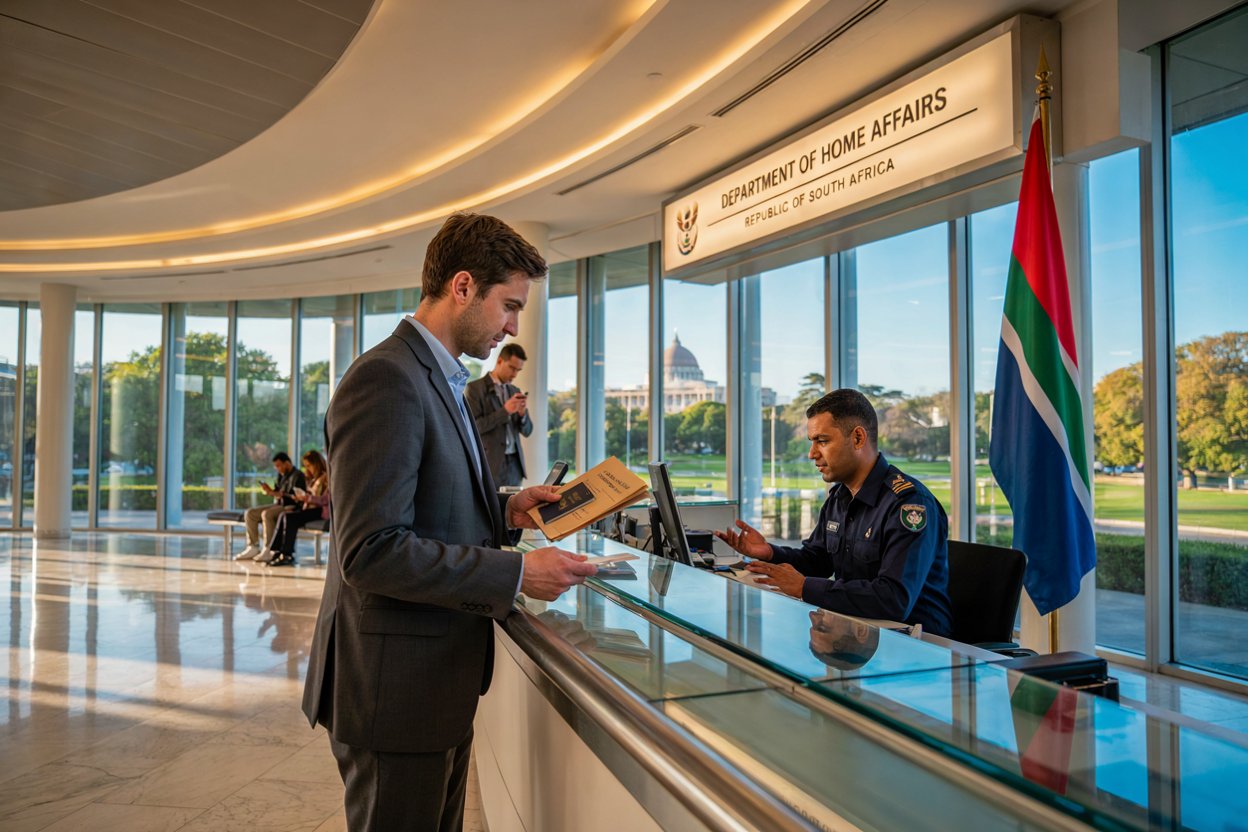
South Africa has introduced greater flexibility for foreign nationals seeking visa extensions or changes to their immigration status, removing the requirement to submit certain applications at least 60 days before their existing visas expire. Home Affairs Minister Leon Schreiber signed Immigration Directive No. 13 of 2026 on 2 October, with the measure becoming publicly known on 8 October. The South Africa visa extension rules 2026 allow qualifying applicants to submit paperwork closer to expiry, provided their current visas remain valid when they apply. The decision also covers certain pending applications and appeals, offering relief to residents, workers, students and eligible long-stay visitors navigating the country’s immigration system.
What Has Changed Under South Africa’s New Visa Extension Rules in 2026?
South Africa has waived the 60-day advance submission requirement for certain visa extensions and applications to change immigration status or existing visa conditions.
Previously, foreign nationals covered by the relevant regulations were generally required to submit their applications at least 60 days before their visas expired.
An application submitted inside that period could be refused because it did not comply with the prescribed filing deadline, even when the applicant had submitted it before the visa expired.
Advertisement
Advertisement
Under the October 2026 directive, qualifying applications can be lodged within the final 60 days of visa validity without being refused solely because of that timing.
The change is particularly important for foreign nationals who need additional time to prepare documents, obtain supporting evidence or make arrangements through the relevant visa application channel.
Advertisement
Advertisement
However, the waiver does not create unrestricted permission to remain in South Africa.
The central requirement remains that the application must be submitted while the existing visa is still valid.
Advertisement
Advertisement
The directive also does not automatically approve a renewal or change the conditions attached to an existing visa.
Applicants must still satisfy the requirements applicable to their immigration category.
The measure was introduced under section 31(2)(c) of the Immigration Act, 2002, which provides the legal basis for ministerial exemptions and waivers in qualifying circumstances.
When Did South Africa Announce the 60-Day Visa Deadline Waiver?
The change was authorised on 2 October 2026, when Home Affairs Minister Leon Schreiber signed Immigration Directive No. 13 of 2026.
Advertisement
Advertisement
The document was circulated on 8 October, before immigration specialists and travel publications reported the measure during the following days.
The timing is important because some coverage describes the change as an October 2026 announcement without identifying the original signature date.
The directive does not specify a fixed expiry date.
However, the underlying immigration regulations have not been formally repealed by the waiver.
This means the measure operates as a ministerial exemption from specified requirements rather than a complete replacement of the legislation.
Key Details of the New Immigration Directive
| Category | Confirmed information |
|---|---|
| Country | South Africa |
| Authority | Department of Home Affairs |
| Responsible minister | Leon Schreiber |
| Directive | Immigration Directive No. 13 of 2026 |
| Signature date | 2 October 2026 |
| Public circulation | 8 October 2026 |
| Legal authority | Section 31(2)(c), Immigration Act, 2002 |
| Regulations affected | Regulation 9(5)(a) and Regulation 9(8)(c) |
| Main change | Waiver of the 60-day advance filing requirement |
| Essential condition | Application must be submitted before the existing visa expires |
| Pending applications | Covered where eligible |
| Pending deadline-related appeals | Covered where eligible |
| Published end date | None specified in the directive |
Source: Immigration Directive No. 13 of 2026, as reproduced by South African immigration specialists. The directive was signed by the Minister of Home Affairs. A direct copy on the department’s official website was not independently located during this review.
Advertisement
Advertisement
The absence of an expiry date does not mean foreign nationals should assume the waiver will remain available permanently.
Applicants should verify the current position before relying on the exemption for a future renewal.
How Did the Previous 60-Day Visa Application Requirement Work?
The earlier framework required many foreign nationals to begin the renewal or status-change process well before their existing permission expired.
Two provisions of South Africa’s Immigration Regulations were particularly relevant.
Regulation 9(8)(c) governed the timing of visa extension applications.
Regulation 9(5)(a) addressed applications to change immigration status or the terms and conditions attached to an existing visa.
Advertisement
Advertisement
Both included requirements for submission at least 60 days before the current visa expired.
The purpose of advance filing was to provide sufficient time for immigration authorities to process applications before an individual’s existing permission ended.
In practice, the requirement could create difficulties for applicants who encountered delays obtaining appointments or supporting documents.
A foreign national might still have several weeks of lawful visa validity remaining but be considered late under the 60-day rule.
Immigration specialists reported that applications submitted during that period could be accepted for processing and subsequently refused because the prescribed submission window had been missed.
Such cases could lead to appeals and additional administrative work.
Advertisement
Advertisement
The new waiver addresses that specific procedural problem.
It does not remove the department’s authority to refuse applications that fail to satisfy substantive immigration requirements.
Old Versus New South Africa Visa Extension Rules
The most important practical change is the removal of a rigid advance-filing threshold for applications covered by the directive.
| Requirement | Previous arrangement | October 2026 waiver |
|---|---|---|
| Standard advance filing | At least 60 days before expiry | 60-day requirement waived |
| Applications within final 60 days | Could be refused for late submission | Cannot be refused solely for breaching the waived requirement |
| Application before visa expiry | Required | Still required |
| Visa category eligibility | Existing rules applied | Existing rules still apply |
| Supporting documentation | Required | Still required |
| Application fees | Applicable where prescribed | Not generally waived |
| Status-change eligibility | Subject to immigration law | Restrictions remain |
| Pending applications | Could face timing-related refusal | Covered where eligible |
| Pending appeals | Previous deadline could remain relevant | Qualifying deadline-related appeals covered |
| Automatic visa approval | Not available | Not introduced |
The waiver is therefore a procedural relaxation rather than a general immigration amnesty.
It gives qualifying applicants more time to submit their paperwork, but it does not remove the obligation to maintain lawful immigration status.
Who Is Eligible for the New South Africa Visa Extension Waiver?
The directive applies to qualifying applications for visa extensions and changes of status or visa conditions that were subject to the relevant 60-day requirements.
Advertisement
Advertisement
These typically concern visas of longer duration, including categories associated with employment, study, business, family residence and other authorised activities.
However, individual eligibility depends on the visa category and whether the proposed application is legally permitted from within South Africa.
The waiver covers three main groups.
Applicants Who Can Benefit
- Future applicants: Foreign nationals submitting eligible extension or status-change applications while their current visas remain valid.
- Applicants awaiting decisions: People whose relevant applications remain pending with the Department of Home Affairs.
- Applicants with pending appeals: Individuals appealing refusals linked to failure to meet the former 60-day filing deadline.
The distinction matters because the directive is not limited to people who have yet to apply.
It also addresses existing cases affected by the previous timing rules.
Nevertheless, foreign nationals should not assume that every immigration category is covered.
Advertisement
Advertisement
The directive waives specific filing requirements. It does not override all other restrictions contained in South Africa’s immigration legislation.
For example, certain visitors may be unable to change immigration status from within the country except in legally recognised exceptional circumstances.
Those substantive restrictions remain relevant.
Does the Waiver Apply to Tourists and Short-Term Visitors?
The answer depends on the visitor’s visa category, validity period and the type of application being submitted.
South Africa issues different forms of temporary residence permission, including short-term visitor visas and longer-duration visas for specific purposes.
The 60-day requirement generally concerned applications involving visas valid for more than 90 days.
Advertisement
Advertisement
Shorter visas may be subject to separate filing requirements.
The October 2026 waiver should not be interpreted as permission for every tourist to extend a holiday until the final day of an existing visa.
Short-Term Visa Deadlines That Remain Important
South Africa’s immigration regulations contain a separate advance-filing provision for certain short-duration visas.
For visas originally issued for less than 30 days, Regulation 9(8)(c) specifies a deadline of seven working days before expiry.
This differs from seven calendar days.
The October waiver targets the 60-day requirement and does not expressly abolish that separate short-duration deadline.
Advertisement
Advertisement
Therefore, visitors should establish whether their application falls under the general waiver or another provision.
A tourist holding a short visitor visa should also confirm whether an extension is permitted and how the relevant application must be submitted.
For international travellers, the distinction is particularly important because missing an applicable deadline can create complications with departure arrangements.
The waiver does not change ordinary visa-free entry entitlements or create a new tourist visa category.
Visitors who do not require a visa for a short holiday should continue following the entry conditions applicable to their nationality.
Can Foreign Nationals Change Their Visa Status Under the New Rules?
The directive provides greater flexibility concerning when eligible applications to change visa status or conditions may be filed.
Advertisement
Advertisement
However, it does not grant unrestricted permission to switch between immigration categories.
South Africa’s Immigration Regulations distinguish between extending an existing visa and changing the purpose or conditions of residence.
An extension generally seeks additional time under an existing immigration category.
A change-of-status application seeks permission to move into another legally recognised immigration classification.
A change of conditions may involve modifying restrictions attached to an existing visa.
These applications can require different documentation and eligibility assessments.
Advertisement
Advertisement
For example, a foreign national seeking to move from study-related residence to employment-related residence may need to satisfy the requirements applicable to a work visa.
Similarly, someone seeking to change the conditions of a business visa may need to provide supporting evidence relating to the proposed activity.
The October waiver removes the specified 60-day timing requirement, but it does not guarantee that such changes are permitted in every situation.
Under Regulation 9(5), holders of visitor or medical treatment visas generally face restrictions on changing status from within South Africa, subject to recognised exceptional circumstances.
The 2024 regulatory amendments expanded certain exceptional circumstances relating to family connections with South African citizens or permanent residents.
Applicants should therefore distinguish between being eligible to submit later and being legally eligible to request a particular change.
Advertisement
Advertisement
A valid application still requires the correct immigration basis.
How Does the Waiver Affect Work Visa Holders and International Professionals?
South Africa’s employment-based immigration framework includes several categories for foreign nationals seeking to work in the country.
These include general work visas, critical skills visas and other categories governed by specific immigration requirements.
For professionals already residing legally in South Africa, renewing a visa can involve coordination with employers, professional bodies or other institutions.
Documents may need to demonstrate continued employment, qualifications, compliance with visa conditions and eligibility under the relevant regulations.
The previous 60-day rule added a fixed submission requirement to that process.
Advertisement
Advertisement
Under the waiver, eligible applicants have greater flexibility to complete their paperwork without facing refusal solely because they applied within the final 60 days.
This can be particularly relevant when supporting information becomes available later than expected.
However, the change does not remove professional eligibility requirements or conditions attached to existing work visas.
It also does not automatically authorise employment beyond the period permitted under the applicable law.
Foreign workers should check whether any separate concession applies while an application remains pending.
Employers should avoid assuming that an application receipt independently authorises all forms of continued employment.
Advertisement
Advertisement
The immigration status of the employee and any applicable ministerial concessions remain important.
What Does the Change Mean for International Students?
International students enrolled at South African educational institutions may also find the filing flexibility relevant.
Study visas often involve supporting documentation from the educational institution, evidence of enrolment and other requirements.
Students seeking additional time to complete an academic programme may need to apply for an extension.
Others may seek a change of immigration status after completing their studies, subject to the applicable legal framework.
The waiver can reduce the risk of a timing-related refusal where an otherwise eligible application is submitted during the final 60 days of visa validity.
Advertisement
Advertisement
However, students must still obtain the documents required for their specific application.
The directive does not create an automatic extension linked to university enrolment.
Nor does it guarantee permission to work after completing a course.
Students planning international travel during an immigration application should confirm whether they can depart and return under their current documentation.
Academic calendars, application appointments and visa validity dates should be considered together when making travel plans.
What Happens to Visa Applications Already Awaiting a Decision?
One of the directive’s most important provisions concerns applications that had already been submitted and remained pending when the waiver was introduced.
Advertisement
Advertisement
The ministerial decision applies to qualifying extension and status-change applications still awaiting adjudication.
This means applicants do not necessarily need to start the process again simply because the 60-day requirement has been waived.
Previously, a person who submitted an application within the final 60 days might face refusal because of that timing.
The waiver removes the requirement as a ground for rejecting covered pending cases.
However, the application must still satisfy other immigration requirements.
The Department of Home Affairs may continue examining documents, eligibility and compliance with the law.
Advertisement
Advertisement
Immigration specialists have advised that applicants with qualifying pending cases generally do not need to take additional action solely to obtain the benefit of the waiver.
They can await the outcome of the existing application.
Nevertheless, individuals should retain receipts, reference numbers and correspondence demonstrating the status of their cases.
Applicants should also ensure that their contact information remains current so that any request for further documents or decision notice can reach them.
The waiver does not establish a new guaranteed processing deadline.
What Happens to Pending Appeals Against Late Visa Applications?
The directive also extends relief to qualifying pending appeals relating to refusals based on the former 60-day advance-filing requirement.
Advertisement
Advertisement
This provision addresses applicants who had already challenged an adverse decision when the minister introduced the waiver.
Where the appeal concerns failure to submit the original application at least 60 days before expiry, the waived requirement can no longer be treated in the same way for covered cases.
This may allow the Department of Home Affairs to reconsider such applications without relying on the removed timing barrier.
However, not every immigration appeal is automatically covered.
The directive specifically addresses pending appeals connected with the relevant filing deadline.
An appeal involving missing documentation, ineligibility, misrepresentation or another substantive issue may require separate consideration.
Advertisement
Advertisement
Similarly, the directive does not expressly reopen every case where a refusal became final before the waiver.
Applicants whose appeals have already been decided should obtain advice on the options available under their individual circumstances.
For those with pending appeals, the practical priority is maintaining accurate records and monitoring the department’s decision.
Could the Visa Waiver Help South Africa Reduce Immigration Backlogs?
The measure arrives during a period of continuing immigration administration reform.
South Africa’s Department of Home Affairs has been addressing substantial backlogs involving visa applications, waivers and appeals.
In August 2026, the South African Parliament’s Select Committee on Security and Justice reviewed the department’s progress.
Advertisement
Advertisement
The committee reported that 21,847 appeals were pending as of 28 July 2026.
Of those, 13,148 were overdue, representing 60.2% of the total.
These figures demonstrate the scale of administrative pressure facing the immigration system. They are historical figures from July 2026, not a current October count.
Official Immigration Appeals Backlog
| Indicator | Reported figure |
|---|---|
| Reference date | 28 July 2026 |
| Total pending appeals | 21,847 |
| Overdue appeals | 13,148 |
| Percentage overdue | 60.2% |
| Reporting authority | South African Parliament |
Source: South African Parliament, Select Committee on Security and Justice, 27 August 2026.
The parliamentary committee identified application complexity, fragmented systems, data integration problems and capacity constraints among the factors contributing to delays.
Waiving the 60-day deadline could reduce the number of appeals arising solely from late filing.
Advertisement
Advertisement
It may also allow officials to concentrate more closely on substantive eligibility issues.
However, no official estimate establishes how many applications or appeals will be resolved specifically because of Directive No. 13.
It would therefore be premature to claim that the waiver has already eliminated significant processing backlogs.
The change represents one procedural improvement within a wider modernisation effort.
How Is the New Waiver Different From South Africa’s Other Temporary Visa Concessions?
South Africa has introduced several immigration concessions during 2026, but they address different legal circumstances.
Understanding the distinction is essential because foreign nationals may encounter more than one directive when researching their immigration position.
Advertisement
Advertisement
The October 2026 measure concerns the timing of certain applications.
A separate directive issued in March 2026 concerns foreign nationals affected by processing delays.
That earlier measure, Immigration Directive No. 7 of 2026, took effect on 1 April.
It granted qualifying applicants temporary relief until 30 June 2027, subject to detailed conditions.
Those provisions cover specified pending waiver, visa and appeal applications.
The earlier directive includes requirements concerning lawful admission, the relevant application categories and verifiable submissions through VFS Global.
Advertisement
Advertisement
It also contains separate travel and re-entry arrangements for qualifying applicants.
Comparison of Two Major 2026 Immigration Directives
| Feature | Directive No. 7 of 2026 | Directive No. 13 of 2026 |
|---|---|---|
| Date signed | 30 March 2026 | 2 October 2026 |
| Main purpose | Temporary relief for processing delays | Waiver of the 60-day filing requirement |
| Main beneficiaries | Specified pending waiver, visa and appeal applicants | Eligible extension and status-change applicants |
| Published end date | 30 June 2027 for covered temporary concessions | No fixed end date specified |
| Travel provisions | Specific departure and re-entry arrangements | No comparable general travel permission |
| Filing-deadline change | Not the principal purpose | Removes the specified advance deadline |
| Substantive eligibility rules | Remain applicable | Remain applicable |
The Department of Home Affairs published Directive No. 7 on its official website.
The official document makes clear that its concessions apply only to specified groups and cease when the relevant application outcome is received.
Foreign nationals should not combine the two directives into a general assumption that every pending visa application automatically remains valid until June 2027.
Eligibility under each instrument must be established separately.
Does the October 2026 Waiver Automatically Extend a Visa?
No. Waiving an advance application deadline is not the same as extending the validity of an existing visa.
Advertisement
Advertisement
This is one of the most important distinctions in the new policy.
Directive No. 13 allows eligible applications to be submitted closer to the expiry date.
It does not, by itself, issue a new visa, grant additional days of residence or authorise a foreign national to disregard an expired visa.
Where an application remains pending after existing permission expires, the applicant’s legal position depends on the applicable immigration law and any separate concession.
For example, a person covered by Directive No. 7 may benefit from temporary arrangements that do not arise under Directive No. 13 alone.
Applicants should therefore identify the legal basis for any continued stay rather than assume that submitting paperwork automatically provides unrestricted permission to remain.
Advertisement
Advertisement
The October directive specifically requires submission while the existing visa is valid.
It refers to section 32(1) of the Immigration Act and Regulation 30(1), which concern the consequences of unlawful presence.
This condition reinforces the importance of filing before expiry.
Although the measure introduces flexibility, leaving an application until the final possible date can still create avoidable risks.
Why This Matters
South Africa’s decision to waive the 60-day advance filing requirement could make the immigration process more manageable for foreign nationals who are already legally present in the country.
For international professionals, the change provides additional flexibility when preparing employment-related renewal documentation.
Advertisement
Advertisement
Students may have more time to obtain supporting records from educational institutions.
Families seeking eligible changes to immigration arrangements may also benefit from a less rigid timetable.
For longer-stay visitors, the waiver may help avoid procedural refusals where applications are otherwise permitted.
The change is also relevant to South Africa’s international competitiveness.
A predictable immigration system supports business mobility, education and extended stays.
These activities can contribute to demand for accommodation, domestic transport and other travel-related services.
Advertisement
Advertisement
However, the effect on tourism spending, foreign investment or visitor numbers has not been quantified.
The immediate confirmed benefit is narrower: eligible applicants no longer have to satisfy the specified 60-day advance filing rule.
The wider economic consequences will depend on implementation, application processing and the effectiveness of other immigration reforms.
What Travellers Should Know
Foreign nationals planning to remain in South Africa beyond their existing visa validity should review the new waiver carefully.
It offers greater flexibility but does not remove the need to submit a complete and eligible application through the appropriate channel.
Before Booking Travel or Submitting an Application
- Confirm current visa validity: Identify the exact expiry date and any conditions attached to the visa.
- Check the correct filing deadline: Establish whether Directive No. 13 applies or a separate short-duration requirement remains.
- Identify the required application: Determine whether the request concerns an extension, a change of status or a change of conditions.
- Prepare supporting documentation: Follow the requirements for the relevant visa classification.
- Confirm the application channel: Check whether submission must be completed through VFS Global or another authorised process.
- Submit while the visa remains valid: Do not treat the waiver as permission to apply after expiry.
- Keep evidence of filing: Retain receipts, application references and appointment records.
- Check departure and re-entry requirements: Do not assume a pending renewal guarantees admission after an international journey.
Travellers should also distinguish between a temporary visa renewal and an application for permanent residence.
Advertisement
Advertisement
The applicable procedures and legal protections may differ substantially.
What Documents Are Required for a South African Visa Extension?
The exact documentation depends on the immigration category, the applicant’s circumstances and the nature of the request.
The 2014 Immigration Regulations establish the general framework for applications.
For extensions, Regulation 9(8) refers to the prescribed application form and a declaration concerning compliance with the terms of the existing visa.
Applications to change status or visa conditions have separate requirements.
General Application Checklist
| Document or requirement | Purpose |
|---|---|
| Valid passport | Establishes identity and travel-document validity |
| Current South African visa | Confirms existing immigration classification |
| Correct application form | Identifies the requested extension or change |
| Supporting category-specific evidence | Demonstrates eligibility |
| Required declarations | Confirms compliance where prescribed |
| Application appointment | Enables submission through the required channel |
| Payment confirmation | Records payment of applicable charges |
| Submission receipt | Provides evidence that an application was lodged |
| Additional supporting information | Addresses requests arising during processing |
The list is general and should not be treated as a complete checklist for every visa.
Advertisement
Advertisement
For example, employment, study, business and family-related applications may require different evidence.
Applicants must also take account of separate waivers that may affect individual documentary requirements.
The Department of Home Affairs introduced a distinct medical-report waiver during July 2026.
That measure concerns specified medical-report requirements and should not be confused with the October filing-deadline waiver.
The official Immigration Regulations remain an important reference for identifying the legal basis of an application.
Can Applicants Travel Outside South Africa While Their Visa Application Is Pending?
International travel requires particular care because filing an application and obtaining permission to re-enter South Africa are separate matters.
Advertisement
Advertisement
The October waiver does not establish a general new right of departure and re-entry for every applicant awaiting a decision.
A foreign national considering travel should examine the validity of their passport, existing visa and any documentation relevant to their pending application.
Separate temporary concessions may provide travel arrangements for specified categories.
For example, Directive No. 7 of 2026 includes provisions for certain applicants with pending waiver, long-term visa or appeal cases.
Some qualifying foreign nationals may depart and return under the stated conditions.
However, travellers from countries that are not visa-exempt may still need to obtain an appropriate port-of-entry visa before returning.
Advertisement
Advertisement
For pending appeals, the directive also specifies documentary evidence that applicants must produce.
These requirements are detailed and category-specific.
A person who qualifies for the October filing waiver does not necessarily qualify for every travel concession contained in the March directive.
Travellers should verify their position before purchasing non-refundable international tickets.
This is particularly important for those whose current visas may expire while they are outside South Africa.
How Could the Relaxation Support Business Travel and South Africa’s Tourism Sector?
The new visa policy may have implications beyond individual immigration applications.
Advertisement
Advertisement
South Africa receives international visitors for leisure, conferences, education, investment and professional assignments.
Johannesburg is an important commercial centre, while Cape Town attracts international meetings, leisure visitors and business travellers.
Pretoria is a major administrative centre, and Durban serves visitors through its coastal tourism and commercial activities.
Foreign nationals who remain in South Africa for extended periods may use domestic airlines, accommodation providers and other travel services.
A more flexible visa renewal process could make certain long-stay arrangements easier to manage.
For employers, the ability to prepare eligible renewal applications closer to visa expiry may provide additional administrative flexibility.
Advertisement
Advertisement
For educational institutions, the change could help students whose supporting documents become available later than expected.
However, the waiver does not represent a broad liberalisation of tourist entry requirements.
It does not create visa-free access for additional nationalities.
Nor does it automatically simplify the initial visa application process for travellers applying from overseas.
Its confirmed scope is the removal of a specific advance filing requirement for covered in-country applications.
Any broader contribution to tourism or business travel remains a potential outcome rather than an established result.
Advertisement
Advertisement
Does the Visa Waiver Form Part of South Africa’s Immigration Modernisation Programme?
The Department of Home Affairs has been pursuing wider administrative reforms intended to improve immigration processing.
These include measures addressing visa backlogs, electronic services and the development of more integrated systems.
In May 2026, Home Affairs Minister Leon Schreiber outlined progress on the country’s electronic travel authorisation initiative.
The government described the initiative as part of a broader shift towards digital processing and improved verification.
At the same time, parliamentary scrutiny has continued to focus on unresolved applications and appeals.
The August 2026 parliamentary committee statement highlighted the importance of sustainable reform rather than relying exclusively on temporary relief measures.
Advertisement
Advertisement
The 60-day waiver fits into this wider context.
It addresses a specific procedural obstacle that could create refusals and subsequent appeals.
Removing that obstacle may make the process more practical for applicants and administrators.
Nevertheless, it should not be interpreted as evidence that processing times have already improved across every visa category.
The success of the measure will depend partly on whether the department can process eligible applications consistently.
For travellers, a simpler filing deadline is valuable, but predictable decisions and accessible information remain equally important.
Advertisement
Advertisement
Frequently Asked Questions
1. Has South Africa completely removed the 60-day visa extension deadline?
The Minister of Home Affairs has waived the 60-day advance filing requirement for covered extension and change-of-status applications. The underlying regulations have not been formally repealed. Applicants must still submit while their existing visas are valid.
2. When did the new South Africa visa rule take effect?
Immigration Directive No. 13 of 2026 was signed on 2 October 2026 and circulated on 8 October. It covers qualifying future applications, pending applications and certain pending appeals.
3. Can tourists apply for an extension after their visas expire?
The directive does not authorise applications after existing visa validity has ended. Visitors must also follow any separate deadlines and eligibility restrictions applying to their visa category.
4. Will applicants with pending appeals benefit automatically?
The waiver covers qualifying pending appeals involving refusals based on the former 60-day requirement. It does not necessarily apply to appeals involving unrelated grounds or cases that have already been finally decided.
5. Does submitting a visa extension application guarantee legal residence until a decision is issued?
No. The October waiver concerns filing deadlines. Any continued lawful stay after existing visa expiry must be supported by the applicable immigration framework or a separate concession.
Closing Update: South Africa Offers Greater Visa Flexibility but Retains Important Immigration Safeguards
South Africa’s October 2026 visa waiver represents a practical change for foreign nationals seeking to extend their stay or make eligible changes to immigration status.
Advertisement
Advertisement
By removing the requirement to apply at least 60 days before visa expiry, the government has reduced a procedural barrier that previously created difficulties for some applicants.
The decision also extends relief to qualifying pending cases and appeals involving the former deadline.
However, the change is not an automatic visa extension, immigration amnesty or guarantee of approval.
Applicants must continue meeting category-specific requirements and ensure their submissions are made while existing visas remain valid.
For international travellers, students, workers and families, the most important lesson is to distinguish between greater filing flexibility and permission to remain or travel.
South Africa’s broader immigration reforms may eventually improve administrative efficiency, but the immediate confirmed effect is a more flexible application window for those covered by Immigration Directive No. 13 of 2026.
Advertisement
