
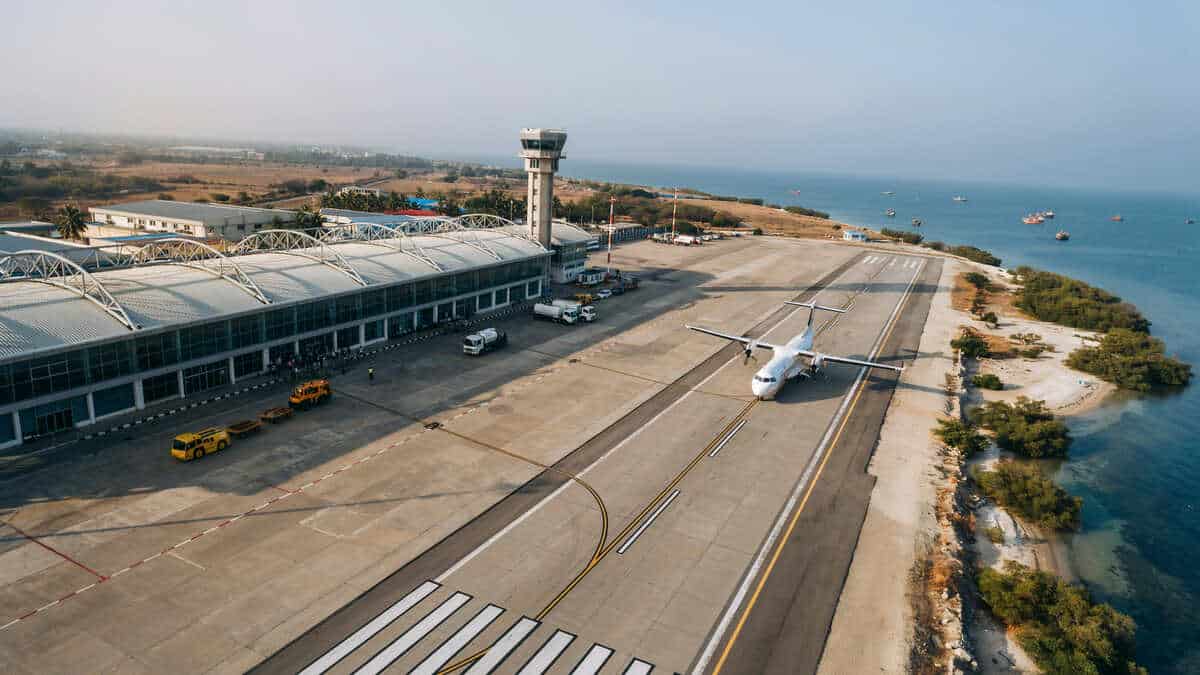
Image generated with Ai
India has unlocked a new aviation gateway as Daman’s NAMO Airport launches its first-ever direct Delhi air link, creating faster travel access to the national capital while strengthening tourism, business mobility, industrial growth and regional connectivity. The new flight service is expected to transform Daman’s travel landscape by reducing journey time, attracting more visitors, supporting local industries and opening fresh economic opportunities across the Union Territory.
A major milestone in India’s aviation expansion has been achieved with the launch of the first direct commercial flight service from NAMO Airport in Daman, providing the coastal Union Territory with its first dedicated air link to the national capital.
The newly introduced Daman–Delhi–Daman route has been launched to provide faster and more convenient travel between the two destinations. The introduction of air connectivity is expected to significantly reduce travel challenges faced by tourists, business travellers and local residents who previously depended mainly on long road journeys.
The journey between Daman and Delhi, which earlier required nearly eight to ten hours by road, can now be completed in approximately two and a half hours by air. The improved travel time is expected to encourage more visitors, strengthen business connections and create new opportunities for tourism and commercial activities.
Advertisement
Advertisement
The new service has positioned Daman as a more accessible destination within India’s growing regional aviation network. With faster connectivity now available, the coastal destination is expected to attract increased attention from leisure travellers, investors and industries looking for improved transportation links.
NAMO Airport has been developed as a strategic aviation facility designed to support both passenger movement and regional economic growth. The airport operates as a dual-use facility alongside the Indian Coast Guard Air Station, allowing aviation infrastructure to serve multiple operational requirements.
Developed at an investment of Rs 124 crore, the airport has been constructed across a 25-acre site with modern facilities designed to handle growing passenger demand.
The airport features a 3,700-square metre terminal building capable of managing up to 14 ATR aircraft operations per day. It has been designed with an annual passenger handling capacity of approximately 3.67 lakh travellers, creating the foundation for future expansion of air services.
The introduction of commercial flights from the airport represents a significant transformation for Daman’s travel landscape. The improved accessibility is expected to support the growth of hotels, restaurants, local experiences and tourism-related businesses by making the destination easier to reach for domestic travellers.
Daman already attracts nearly 20 lakh tourists every year, and the introduction of direct flights is expected to provide additional momentum to visitor arrivals. Easier air access could encourage more short-duration holidays, weekend travel and business-linked tourism.
Beyond tourism, the new aviation connection is expected to strengthen economic activity across the region. Daman, along with Diu, Dadra and Nagar Haveli, represents an important industrial centre with thousands of businesses operating across different sectors.
The Union Territory region is home to more than 7,000 industries, while neighbouring industrial hubs such as Vapi and Valsad contribute another 15,000 industries. Improved air connectivity is expected to make business travel more efficient and support stronger links between companies, investors and markets.
The availability of direct flights to Delhi is expected to benefit entrepreneurs, corporate travellers and industry professionals by reducing travel time and improving access to national business networks.
The enhanced connectivity could also support investment opportunities as companies often consider transport infrastructure a key factor when expanding operations. Faster movement between Daman and major commercial centres may help attract new business activities and contribute to employment generation.
The aviation development is therefore being viewed not only as a transportation improvement but also as a catalyst for wider economic growth.
The benefits of NAMO Airport are also expected to extend to important local industries, including fisheries, marine products and pharmaceuticals.
Daman’s coastal location supports a strong fisheries sector, where quick transportation is essential for maintaining product quality and reaching wider markets. Improved air connectivity could provide new opportunities for faster movement of valuable goods across India.
The pharmaceutical industry in the region is also expected to gain from better connectivity. Faster access to major cities can improve business coordination, strengthen supply chains and support the movement of professionals and commercial partners.
By connecting Daman more efficiently with Delhi, the airport is expected to contribute to the wider development of industries that rely on speed, accessibility and national market integration.
The development of NAMO Airport and the introduction of new regional flights align with India’s broader efforts to expand aviation access beyond major metropolitan cities.
Under the Modified UDAN Scheme, significant investment has been planned to strengthen regional air infrastructure across the country. An allocation of Rs 29,000 crore over the next 10 years has been announced for the development of 100 new airports and 200 new helipads.
The initiative aims to make air travel accessible to more regions while supporting tourism, trade and economic development.
Daman’s new air connection represents the wider impact of regional aviation expansion, where smaller destinations are increasingly being connected with major economic centres.
The launch of direct flights from NAMO Airport marks a major turning point for Daman’s tourism sector. The coastal destination, known for its beaches, heritage locations and cultural attractions, is expected to become more attractive to travellers seeking convenient domestic holiday options.
Improved connectivity with Delhi can help increase tourist flows, encourage longer stays and support local tourism businesses. Hotels, transport providers, restaurants and experience-based operators are expected to benefit from greater visitor movement.
With aviation infrastructure now supporting the destination, Daman is positioned to play a larger role in India’s domestic tourism growth story.
India has strengthened regional air connectivity as Daman’s NAMO Airport launches its first direct Delhi flight service, reducing travel time and boosting tourism, trade and economic growth opportunities.
The opening of the Daman–Delhi air route reflects a broader shift in India’s aviation landscape, where regional airports are becoming important gateways for tourism, commerce and development. NAMO Airport’s first commercial service has created a new travel corridor that is expected to strengthen connectivity, unlock economic opportunities and bring Daman closer to the national aviation network.
Advertisement
Advertisement
Advertisement













Sunday, September 6, 2026

Sunday, September 6, 2026

Sunday, September 6, 2026

Sunday, September 6, 2026

Saturday, September 5, 2026

Saturday, September 5, 2026

Sunday, September 6, 2026
Saturday, September 5, 2026



