
Cancún Aligns With Cozumel and Others as Record Sargassum Threatens Mexico Beach Tourism in Late 2026

Published
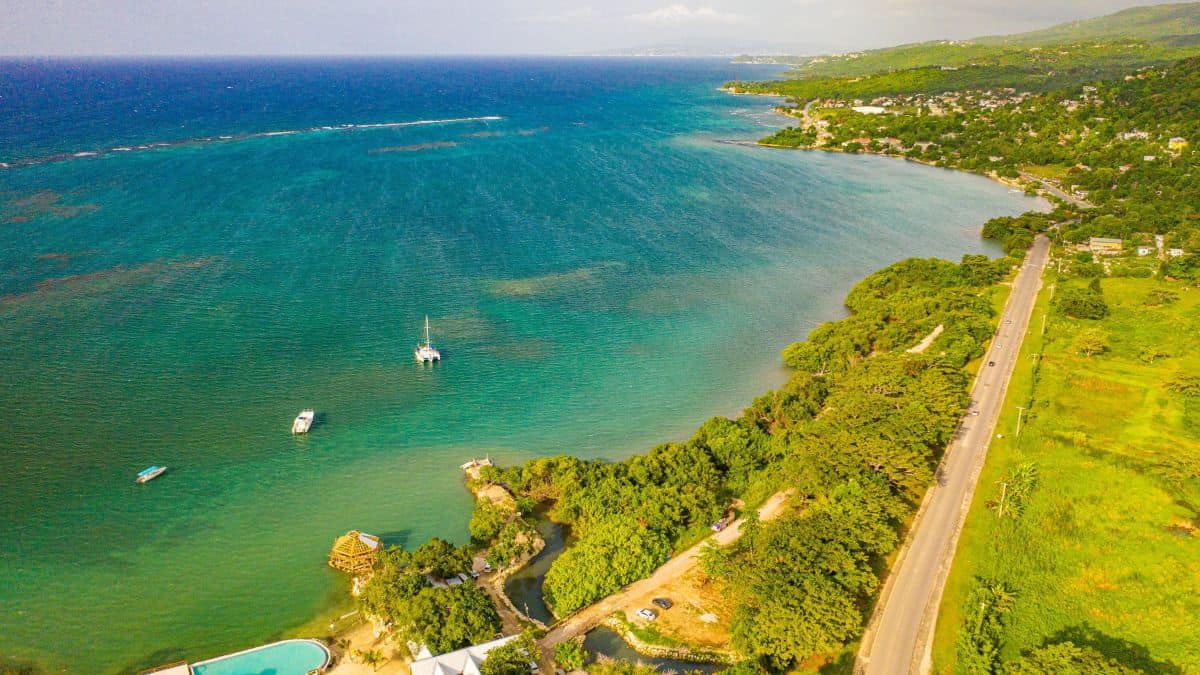
Cancún Aligns With Cozumel and others as record sargassum threatens Mexico beach tourism in late 2026, with Quintana Roo destinations facing unprecedented seaweed arrivals that are affecting beaches, tourism experiences and coastal management. While impacts vary across locations, Mexico is expanding collection efforts, barriers and monitoring systems to protect its Caribbean tourism economy.
Mexico’s Caribbean tourism coast is fighting one of its most difficult sargassum seasons, with Cancún, Playa del Carmen, Tulum, Puerto Morelos and Mahahual facing heavy arrivals of the floating brown seaweed during 2026.
Advertisement
Advertisement
The scale is exceptional. Mexico’s government reported that 96,151 tonnes of sargassum had already been collected in Quintana Roo by 30 July 2026, exceeding the 92,782 tonnes collected during all of 2025. Authorities say these have become the two biggest collection years on record for the state.
The tourism impact is also becoming visible. Average hotel occupancy across Quintana Roo’s principal destinations fell to 59.6% during 4–10 July, according to state tourism information cited by EFE. However, sargassum is not the only reason for softer demand, with aviation capacity and wider economic conditions also influencing tourism.
Advertisement
Advertisement
Mexico Sargassum Crisis at a Glance
| Indicator | 2026 Data |
|---|---|
| Sargassum collected across Quintana Roo by 30 July | 96,151 tonnes |
| Sargassum collected during 2025 | 92,782 tonnes |
| Estimated sargassum moving through Mexican Caribbean waters | 40,000–90,538 tonnes daily |
| Estimated share reaching Quintana Roo coastline | Around 10% |
| Containment barriers deployed by late July | 16,030 metres |
| Coastal sargassum vessels | 11 |
| Ocean-going collection vessel | 1 |
| Small support vessels | 18 |
| Existing/planned near-term collection capacity | 1,227 tonnes/day |
| First-stage target | 1,870 tonnes/day |
| Longer-term target | 4,000 tonnes/day |
| First reinforcement investment | 768.7 million pesos |
| Wider planned strategy | More than 2 billion pesos |
| Quintana Roo hotel occupancy, 4–10 July | 59.6% |
Cancún: Mexico’s Global Tourism Gateway Faces Heavy Pressure
Cancún is one of the destinations most exposed to the 2026 sargassum surge because its beaches are central to its international tourism appeal. By mid-July, authorities had collected around 20,880 tonnes in Benito Juárez municipality, which includes Cancún, according to information from Quintana Roo’s environmental authorities. Earlier reporting put Cancún’s collection at around 20,469 tonnes, showing how quickly the volumes were accumulating.
The problem is both environmental and commercial. When large amounts of sargassum reach shore, the water can turn brown and decomposing seaweed can create strong odours. This can reduce the visual appeal of beaches even when hotels, restaurants and attractions remain fully operational. Cancún is therefore included among the priority areas for Mexico’s reinforced containment programme, with more offshore collection vessels and barriers planned to stop larger quantities before they reach tourist beaches.
Advertisement
Advertisement
Playa del Carmen: More Than 31,000 Tonnes Make It a Major Hotspot
Playa del Carmen has emerged as one of the hardest-hit destinations in Quintana Roo. State environmental figures reported by Cancún’s municipal radio service showed approximately 31,413 tonnes collected there by 20 July, more than any other municipality listed in that update.
The city had already prepared for a difficult season. Its municipal government announced an early 2026 strategy involving five kilometres of marine barriers, daily satellite monitoring and a beach-by-beach warning system.
Advertisement
Advertisement
The scale of the clean-up has been enormous. On 6 June alone, a beach-cleaning operation involving more than 2,000 people removed approximately 70 tonnes, while authorities said more than 20,000 tonnes had already been collected during the season by that point. Playa del Carmen is now one of the priority locations for additional federal containment infrastructure.
Tulum: Famous Caribbean Beaches Confront Thousands of Tonnes
Tulum is also experiencing substantial sargassum pressure. State figures published in July showed approximately 9,663 tonnes had been collected in the municipality during 2026.
This is particularly significant because Tulum’s international tourism identity is closely connected to its Caribbean shoreline, beach hotels and coastal experiences.
Government statistics provide additional context. Hotel occupancy in Tulum averaged 62.6% between July 2025 and June 2026, compared with 70.8% in Cancún and 65.4% in Playa del Carmen. Those figures cover a longer period and should not be attributed entirely to sargassum, but they show the competitive tourism environment in which the seaweed crisis is occurring.
Advertisement
Advertisement
Tulum is now one of five priority areas identified for reinforced barriers, offshore interception and beach collection under Mexico’s expanded strategy.
Puerto Morelos: More Than 10,000 Tonnes Already Removed
Puerto Morelos, located between Cancún and Playa del Carmen, is another significant sargassum pressure point. By July, approximately 10,572 tonnes had been collected in the municipality.
Its location makes the problem particularly important for the Riviera Maya tourism corridor. Puerto Morelos combines resorts, beaches, diving and reef-based tourism, meaning clean coastal water has direct economic importance.
The federal government has consequently included Puerto Morelos among the five priority locations for its reinforced sargassum response.
The approach is increasingly focused on interception rather than simply waiting for seaweed to reach the beach. More barriers and specialised vessels are intended to capture or redirect sargassum offshore, reducing the volume that eventually decomposes along populated tourist coastlines.
Cozumel: Island Geography Brings Lower Sargassum Exposure
Cozumel provides an important contrast to the mainland resorts. Although the island is not completely free from sargassum, reported volumes have been substantially lower than in Playa del Carmen, Cancún, Puerto Morelos and Tulum.
Advertisement
Advertisement
By July, Cozumel had collected approximately 1,113 tonnes, compared with more than 31,000 tonnes in Playa del Carmen and more than 20,000 tonnes in Benito Juárez.
EFE also reported that islands including Cozumel, Isla Mujeres and Holbox were experiencing lower impacts than heavily affected mainland destinations.
This distinction is useful for travellers. Sargassum conditions can vary enormously across Quintana Roo at the same time. Heavy accumulation on one Riviera Maya beach does not mean every beach in the Mexican Caribbean has identical conditions.
Isla Mujeres: Lower Exposure Offers Travellers an Alternative
Isla Mujeres has also experienced sargassum, but conditions have generally been less severe than at the principal mainland hotspots.
State figures reported in July showed approximately 3,348 tonnes collected in Isla Mujeres. This was far below the totals reported for Playa del Carmen, Benito Juárez and Puerto Morelos.
The island’s relative protection is important for tourism because travellers already staying in the Cancún area can reach Isla Mujeres comparatively easily. However, visitors should not interpret lower historical accumulation as a guarantee of seaweed-free beaches on a particular day.
Advertisement
Advertisement
Sargassum movement depends on currents, winds and weather. Mexico now uses satellite observations and oceanographic information to monitor these movements, allowing authorities to estimate where floating concentrations may arrive.
Holbox: Another Destination Reporting Lower Impact
Holbox has also been identified among destinations experiencing less severe sargassum impact than parts of the eastern-facing mainland coast. EFE reported that Holbox, Cozumel and Isla Mujeres were seeing lower effects while Cancún and Playa del Carmen were dealing with much larger accumulations.
This geographic difference matters for Mexico’s tourism industry. Quintana Roo is not one uniform beach destination, and sargassum does not arrive equally across its coastline.
State collection data support that point. Lázaro Cárdenas municipality, which includes Holbox, had recorded only about 36.25 tonnes in the July breakdown, compared with tens of thousands of tonnes in Playa del Carmen and Benito Juárez.
Travellers therefore need destination-specific and ideally beach-specific information rather than treating the entire Mexican Caribbean as equally affected.
How Severe Is the 2026 Sargassum Problem?
Mexico’s environmental authorities describe a phenomenon that has become increasingly persistent rather than merely seasonal.
Advertisement
Advertisement
SEMARNAT said that between roughly 40,000 and 90,538 tonnes of sargassum can be moving through the Mexican Caribbean on a given day, with an estimated 10% reaching Quintana Roo because of the state’s geographic position.
The amount actually landing changes constantly because winds and ocean currents move the floating algae.
The consequences begin when large quantities accumulate and decompose. Beaches can lose their familiar white-sand appearance, near-shore water can become brown, and decomposing material can create unpleasant smells.
That is why authorities increasingly want to capture sargassum before it reaches land.
Mexico Deploys Ships Barriers and Satellite Monitoring
Mexico’s response has become a major marine operation.
By late July, the Navy had deployed 11 coastal sargassum vessels, one ocean-going vessel, one amphibious collector, 18 smaller boats and 16,030 metres of containment barriers across the affected zone.
Advertisement
Advertisement
Satellite monitoring is another important part of the defence. Quintana Roo says its monitoring centre uses data including Sentinel-2 satellite observations, currents, sea temperatures, winds and other oceanographic information to predict sargassum movement.
The objective is straightforward: detect concentrations early, determine where they are travelling, deploy collection equipment and intercept as much material as possible before it reaches beaches.
Government Plans Massive Expansion of Collection Capacity
Mexico is now preparing a much larger response.
The federal government announced an initial 768.7-million-peso investment designed to increase offshore collection capacity to 1,870 tonnes per day. A second phase aims eventually to reach 4,000 tonnes per day.
The wider programme envisages additional ocean-going and semi-ocean-going collection vessels, tugboats, dynamic barriers, monitoring technology and significantly more containment infrastructure.
Government plans presented in July include around 50 kilometres of coastal containment barriers focused particularly on Playa del Carmen, Cancún, Tulum, Puerto Morelos and Mahahual.
Advertisement
Advertisement
The strategy represents an important change in thinking. Mexico increasingly treats sargassum as a long-term environmental and tourism-management challenge rather than an occasional beach-cleaning problem.
Tourism Occupancy Falls Below Expectations
The seaweed surge has coincided with softer hotel performance.
Average hotel occupancy across Quintana Roo’s main destinations stood at 59.6% during 4–10 July, a disappointing result for an important summer travel period.
However, it would be inaccurate to say sargassum alone caused the decline.
Industry reporting has also pointed towards reduced flight availability and wider global economic pressures. Tourism demand depends on air capacity, hotel pricing, source-market conditions, exchange rates and traveller confidence as well as beach conditions.
Sargassum nevertheless adds another challenge because Quintana Roo sells one of the world’s most recognisable beach experiences. Images of brown water, large seaweed deposits or heavy machinery clearing beaches can influence traveller perceptions even when many nearby beaches remain in good condition.
Advertisement
Advertisement
Destination Breakdown Shows Why Travellers Need Local Information
| Destination | Reported 2026 Collection in July Data | Relative Situation |
|---|---|---|
| Playa del Carmen | 31,413 tonnes | Very heavily affected |
| Benito Juárez/Cancún | 20,880 tonnes | Heavily affected |
| Puerto Morelos | 10,572 tonnes | Significant impact |
| Tulum | 9,663 tonnes | Significant impact |
| Othón P. Blanco | 9,446 tonnes | Significant impact |
| Isla Mujeres | 3,348 tonnes | Lower than major mainland hotspots |
| Cozumel | 1,113 tonnes | Comparatively lower |
| Lázaro Cárdenas/Holbox area | 36.25 tonnes | Much lower in reported breakdown |
Mexico’s Sargassum Fight Is Becoming a Permanent Tourism Challenge
The 2026 crisis shows that sargassum can no longer be treated simply as a short summer inconvenience for Mexico’s Caribbean tourism industry.
Quintana Roo had already collected 96,151 tonnes by 30 July, surpassing the total collected throughout 2025. Playa del Carmen alone had passed 31,000 tonnes in the July municipal breakdown, while Cancún, Puerto Morelos and Tulum were also handling thousands of tonnes.
Mexico’s response is consequently moving towards permanent monitoring, offshore interception, more vessels, longer barriers and larger collection capacity.
For travellers, the most important point is that conditions are highly localised. Cancún, Playa del Carmen or Tulum can experience substantial arrivals while Cozumel, Isla Mujeres or Holbox may see much lower levels.
For Mexico, protecting those beaches is about far more than appearance. They are fundamental assets supporting hotels, restaurants, airlines, tour operators, cruise businesses and thousands of tourism jobs across the Mexican Caribbean.
Cancún Aligns With Cozumel and others as record sargassum threatens Mexico beach tourism in late 2026, as unprecedented seaweed arrivals challenge coastal destinations, affect beach conditions and push authorities to expand monitoring, collection and protection measures.
In conclusion, Cancún Aligns With Cozumel and others as record sargassum threatens Mexico beach tourism in late 2026, highlighting the growing environmental challenge facing Quintana Roo’s coastal destinations. While Cancún, Playa del Carmen, Tulum and Puerto Morelos face heavier impacts, Cozumel and other islands show how conditions can vary across the Mexican Caribbean. Mexico is strengthening its response through expanded collection operations, barriers, vessels and monitoring systems to protect its vital beach tourism economy. The future of Mexico beach tourism will depend on managing record sargassum levels while maintaining traveller confidence and preserving the natural attractions that drive global demand.
Advertisement
