

Romania Gains Ground as Schengen Access and Rail Investment Reshape Tourism

Updated
Published
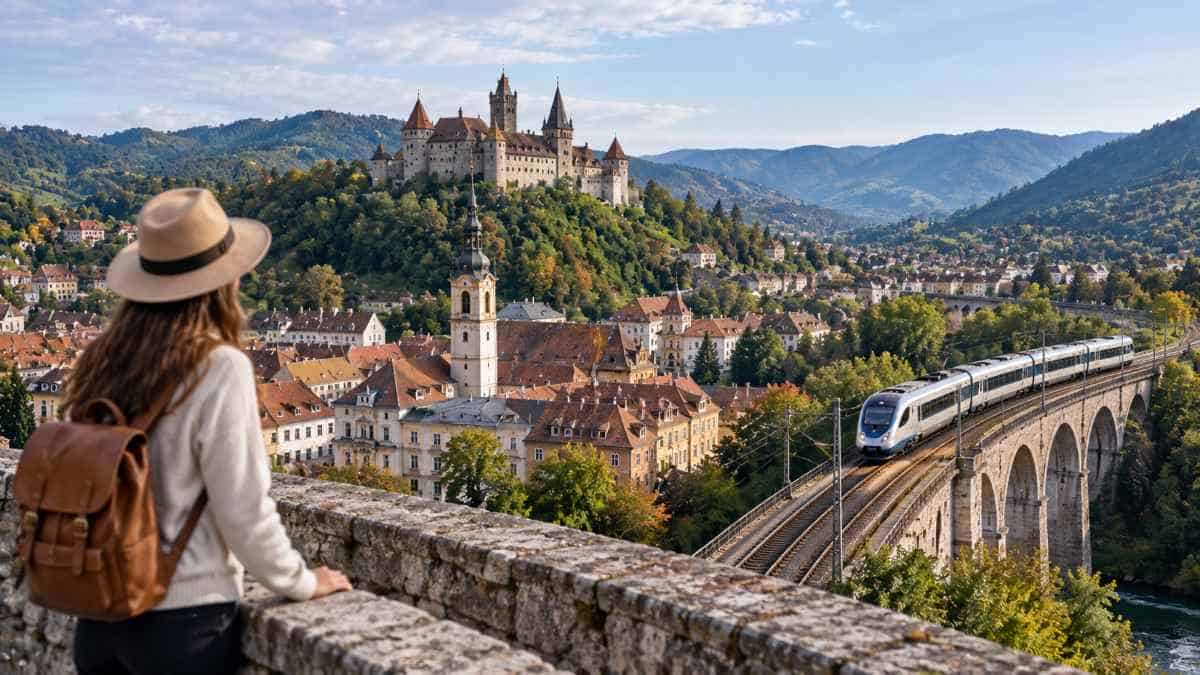
Romania is strengthening its position within Europe’s travel network as full Schengen membership, railway investment and improved seasonal connections reshape access to its cities, historic regions and Black Sea coastline. The changes are creating new opportunities for destinations such as Constanța, Brașov, Sibiu and Cluj-Napoca, while reinforcing Bucharest’s role as the country’s principal international gateway. The country’s integration into the Schengen Area represents a particularly important development. Air and sea border checks with other Schengen countries were removed on 31 March 2024, followed by the lifting of internal land-border controls on 1 January 2025. Romania consequently became a full Schengen member, reducing routine border formalities for eligible travellers arriving from within the zone. Combined with improvements to domestic railway services and wider European transport corridors, this integration is strengthening Romania’s appeal for travellers looking beyond Europe’s most established city-break destinations.
Schengen membership changes the travel equation
Romania’s full Schengen integration has removed an important layer of friction from international travel. For eligible passengers arriving from another Schengen member state, routine internal border checks are no longer required at airports and seaports.
This is particularly relevant to Bucharest Henri Coandă International Airport and Mihail Kogălniceanu International Airport near Constanța, as well as the country’s other international gateways.
The change makes multi-country itineraries easier to organise, particularly for visitors combining Romania with Hungary, Austria, Germany or other destinations within the Schengen Area. Airlines and tour operators can also plan journeys within a more integrated European travel environment.
Advertisement
Advertisement
However, Schengen membership does not automatically create new flight routes or guarantee lower fares. International airline connectivity continues to depend on commercial demand, airport capacity and carrier decisions. Romania’s secondary airports may benefit from the broader travel environment, but their expansion remains a separate aviation-development process.
Constanța benefits from stronger rail connections
Romania’s Black Sea coastline remains one of its most important seasonal tourism markets. Constanța provides access to coastal resorts, beaches, cultural attractions and the wider Dobruja region.
Advertisement
Advertisement
Rail connectivity is central to this market. In May 2026, national railway operator CFR Călători announced its summer programme, Trenurile Soarelui (The Sun Trains), running from 12–13 June until 6–7 September.
The programme provided 60 direct trains, including 28 additional services, connecting the Black Sea coast with cities across Romania. Departures served travellers from regions including Transylvania, the north-west and north-east, as well as Bucharest.
On the Bucharest–Constanța route, InterCity services covered the journey in approximately two hours, while InterRegio services took around two hours and 20 minutes.
These connections make the coastline more accessible to domestic and international visitors travelling through the capital. They also create opportunities to combine seaside holidays with visits to inland destinations and the Danube Delta.
Railway investment strengthens European corridors
Beyond seasonal services, Romania is undertaking a broader railway modernisation programme connected to the European Union’s Trans-European Transport Network (TEN-T).
The investment agenda includes track renewal, electrification, signalling improvements and the introduction of interoperable European railway systems. These developments are intended to improve reliability, increase capacity and strengthen connections with neighbouring countries.
Advertisement
Advertisement
The Bucharest–Constanța line is strategically important, while routes through Brașov, Sighișoara and western Romania form part of wider cross-border connectivity ambitions.
The European Commission’s 2026 assessment of Romania’s transport infrastructure identifies substantial modernisation requirements, including improvements to railway sections connecting the capital with central Europe. It also highlights bottlenecks that must be addressed before the network can deliver more consistent international passenger services.
It is important to distinguish these upgrades from a completed high-speed rail network. Romania’s current programme primarily involves modernising conventional railway infrastructure, with higher operating speeds and improved interoperability as longer-term objectives.
The benefits will therefore emerge progressively rather than through an immediate transformation of journey times.
Transylvania gains from a more connected itinerary
For tourism, improved transport links could strengthen the position of Transylvania’s historic cities and mountain destinations.
Brașov offers access to the Carpathian Mountains, medieval architecture and established outdoor tourism. Sibiu combines cultural heritage with museums, historic squares and access to rural settlements. Cluj-Napoca, meanwhile, serves as a major cultural and commercial centre in north-western Romania.
Advertisement
Advertisement
Better railway reliability would make these destinations easier to incorporate into longer itineraries, reducing the need for visitors to rely exclusively on domestic flights or private transfers.
The opportunity extends beyond individual cities. Travellers could combine Bucharest, the Black Sea coast and Transylvanian destinations in a single journey, spreading accommodation spending across different regions.
A wider European opportunity
Romania’s location on the Rhine-Danube European transport corridor provides another reason for its strategy concerning infrastructure development. The Rhine-Danube corridor links the central European transport systems to the Hungarian capital of Budapest, the Romanian capital of Bucharest, and the Black Sea port of Constanța. Regarding the tourism industry, membership in the Schengen zone, the country’s railway development, and cross-border infrastructure give a better basis for travelling abroad. The country’s competitive edge will be defined by the level of service quality, connection reliability, and the capacity to develop its infrastructure in order to create accessible tourism products. There is much work ahead for the country, but there is a general trend that can be identified: Romania is becoming increasingly integrated into Europe’s travel system.
Advertisement
