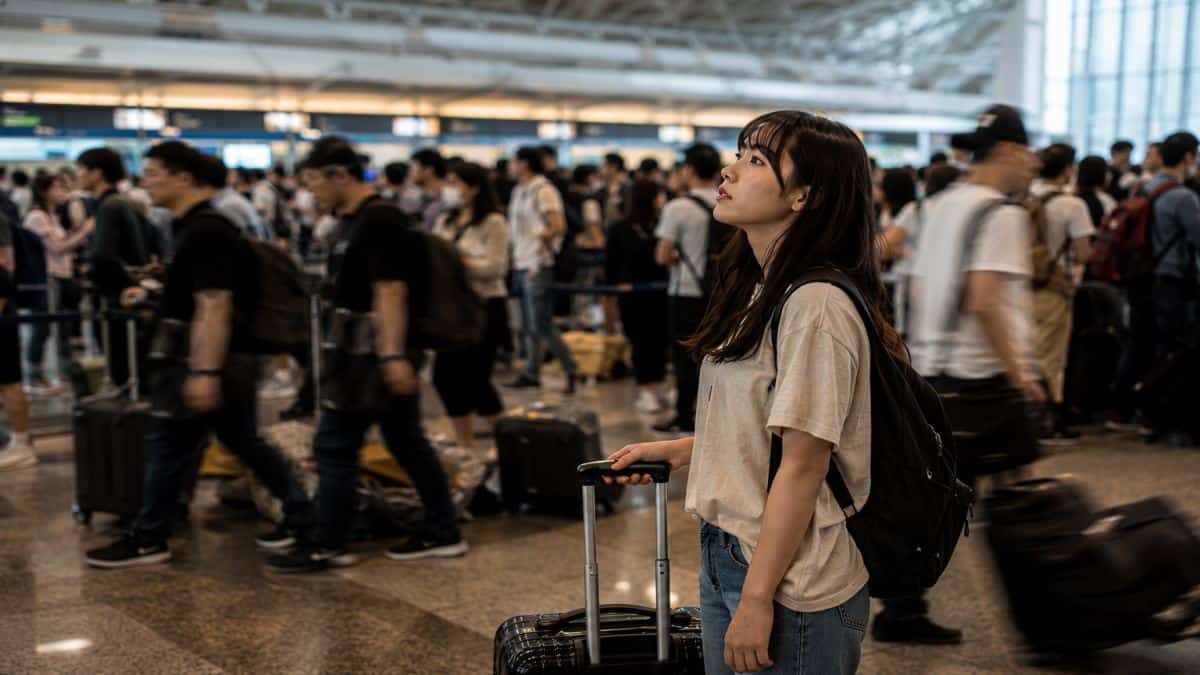
Image generated with Ai
Flight cancellations spread across Asia today, affecting Thailand, China, Japan, India, South Korea, Saudi Arabia, and more countries. 5,716 delays and 305 cancellations were reported, reflecting different operational pressures across major airports. China alone generated about 63% of all delays, driven largely by congestion, China’s restricted airspace, and intense traffic at major hubs.
Guangzhou Baiyun recorded the most delays, while Xiamen Gaoqi logged the highest airport cancellation count. China Southern faced the heaviest delay burden, while Saudia recorded the most cancellations, accounting for nearly 29% of all cancellations.
Other major carriers including China Eastern, Air China, Japan Airlines, XiamenAir, ANA, and IndiGo also experienced significant disruption across cities including Guangzhou, Shanghai, Beijing, Tokyo, Delhi, Bangkok, Jakarta, Riyadh, Jeddah, and Doha.
Today’s disruption pattern showed two very different aviation stories.
China remained overwhelmingly delay-heavy. Aircraft generally continued operating. Many simply departed later than planned. That points toward network congestion rather than widespread service suspension.
Saudi Arabia showed the opposite pattern. More flights disappeared from schedules instead of waiting for departure.
Japan absorbed heavy demand through delays. Major airports continued functioning despite sustained traffic pressure.
India remained comparatively stable. Airlines experienced operational strain but avoided widespread cancellation waves.
Southeast Asia saw moderate disruption. Most services continued operating despite localized delays.
Major Gulf hubs also remained resilient. Doha handled substantial traffic while keeping cancellations relatively limited compared with Saudi airports.
Guangzhou, Shanghai, Beijing, Chongqing, Chengdu, Xiamen, Nanjing, Changsha, Zhengzhou, and Tianjin dominated the region’s delay picture. China Southern, China Eastern, Air China, and XiamenAir carried much of that operational load. China’s restricted military airspace leaves airlines with limited routing flexibility. Heavy passenger demand and closely packed schedules can quickly turn small disruptions into rolling delays across multiple airports. Even so, most flights continued operating rather than being cancelled.
Tokyo Haneda remained Japan’s busiest pressure point. Fukuoka also experienced slower operations. ANA and Japan Airlines handled much of the congestion while maintaining relatively low cancellation levels. The pattern suggested strong network resilience despite sustained traffic volumes.
Advertisement
Advertisement
Delhi remained India’s busiest disruption point, followed by Mumbai and Ahmedabad. IndiGo, Air India, and SpiceJet absorbed much of the operational pressure while keeping cancellations comparatively limited. Further south, Bangkok and Jakarta experienced moderate delays. Thai Airways, Thai VietJet Air, Bangkok Airways, and Batik Air continued operating most scheduled services.
The Middle East experienced a different operational picture. Riyadh, Jeddah, Abha, Najran, and Gizan recorded unusually high cancellation activity. Doha’s Hamad International Airport remained comparatively stable despite heavy traffic. Saudia absorbed the largest operational impact. Saudi-Houthi tensions remained one contributing factor alongside routine operational decisions and regional airspace considerations. Those tensions should not be viewed as the sole explanation for every cancelled flight.
China Southern carried the region’s largest delay burden. Guangzhou Baiyun remained its biggest operational challenge as congestion spread across the carrier’s network.
China Eastern faced sustained pressure across Shanghai, Guangzhou, Beijing, and several inland airports. Heavy hub activity produced rolling delays throughout the day.
Advertisement
Advertisement
Saudia recorded the highest cancellation total among all airlines. Operations across Riyadh, Jeddah, Abha, Najran, and Gizan remained under exceptional pressure.
ANA managed heavy traffic through Tokyo Haneda and Fukuoka. Most disruption appeared as delays instead of widespread flight cancellations.
IndiGo handled India’s busiest domestic network. Most operational pressure centered on Delhi, with additional congestion around Mumbai and Ahmedabad.
Several operational pressures overlapped today.
Majority of China’s airspace is reserved exclusively for the military. Heavy airline schedules can quickly create departure backlogs. Airport congestion then spreads those delays across connected flights.
Major hubs also faced strong passenger demand. Aircraft arriving late often departed late again, extending disruption throughout the network.
In the Middle East, Saudi-Houthi tensions added another layer of uncertainty for airlines operating nearby. Broader regional instability, airport capacity limitations, operational adjustments, and traffic management decisions also influenced schedules. None of these factors alone explains every disruption, but together they increased operational complexity.
Passengers departing Guangzhou, Shanghai, Beijing, and Chongqing should continue expecting longer waits before departure. Rolling delays may continue as airlines reposition aircraft and crews.
Travelers using Tokyo Haneda, Delhi, Bangkok, and Jakarta could experience schedule adjustments even when flights remain operational.
Those travelling through Riyadh, Jeddah, Abha, Najran, or Gizan should pay particularly close attention to airline notifications. Cancellation risk remains higher there than elsewhere across the region.
Today’s disruption picture stretched from Guangzhou and Shanghai to Tokyo, Delhi, Bangkok, Jakarta, Doha, Riyadh, and Jeddah. China Southern, China Eastern, Air China, XiamenAir, Saudia, ANA, and IndiGo all adjusted operations to manage changing conditions. Most of Asia continued moving despite significant pressure, although different regions relied on different operational responses. Airlines are expected to continue refining schedules as aircraft, crews, and airport operations return to normal rhythms over the coming hours.
Data Verification Notice
The data has been extensively curated by our editorial team using real-time aviation figures recorded on 1 August 2026 at 5:05 pm ET USA (2 August 2:35 am IST).
Primary Source: FlightAware.
Verification Protocol: All statistics have been independently reviewed and cross-checked by our human editorial desk. Timestamped records, data logs and feed snapshots are securely archived internally to support historical accuracy and editorial transparency.
Note: Real-time flight-tracking figures reflect active airspace and operational data. Minor variations may occur when compared with information displayed at individual airport terminals or airline departure gates.Travellers are advised to check directly with their respective airlines and airports for the latest flight status, schedule changes and operational updates.
Advertisement
Tags: Asia flight cancellations today, Bangkok Suvarnabhumi Flight Cancellations Today, China flight delays today, IndiGo Flights Cancelled Today, Saudi Arabia Flight cancellations today
Advertisement
Advertisement












Wednesday, September 2, 2026

Wednesday, September 2, 2026

Wednesday, September 2, 2026

Wednesday, September 2, 2026

Wednesday, September 2, 2026

Tuesday, September 1, 2026

Wednesday, September 2, 2026

Wednesday, September 2, 2026