
How Local Travel In Durham County Is Quietly Redefining The Global Economy For Future Generations

Published
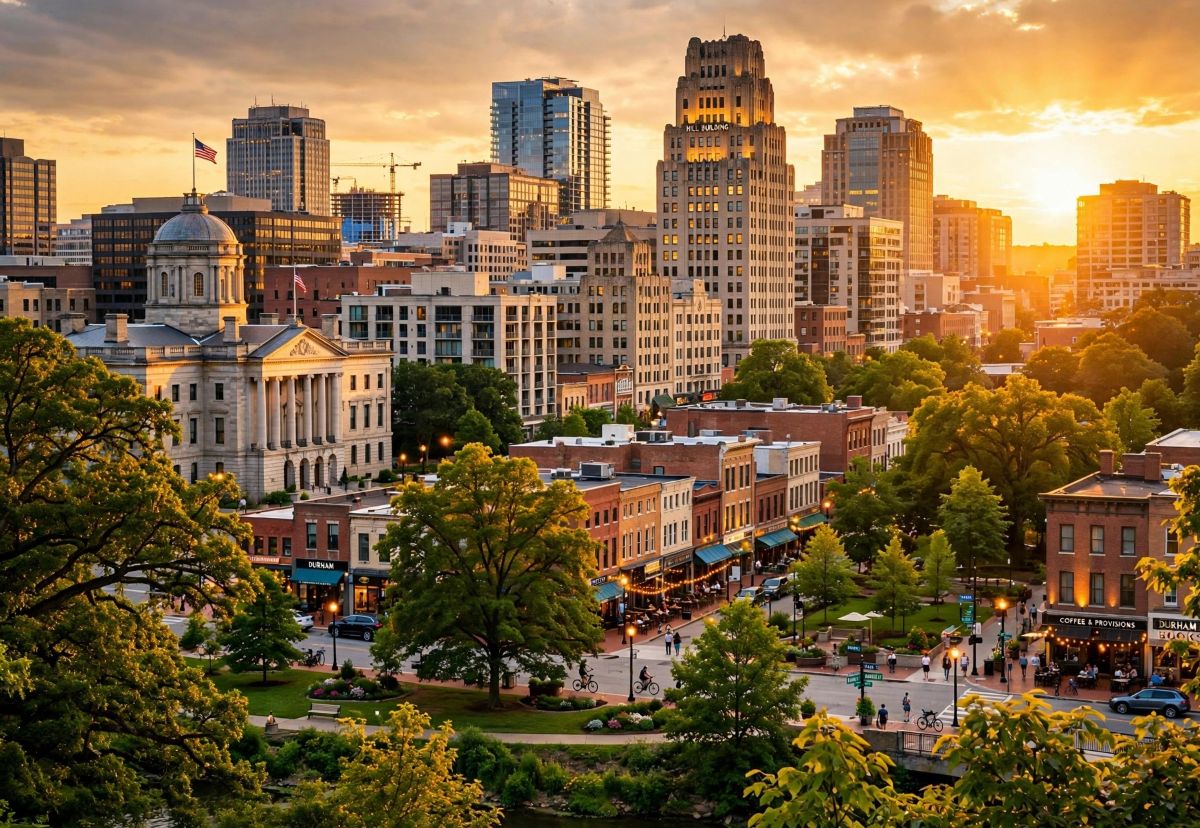
A nice stay at your boutique hotel is an experience for the staff and the community. You purchase coffee locally. You also purchased your festival ticket to support the event. Now you are a community backer even beyond your trip. Spending your travel dollars has the potential to completely alter a community’s life. Tourism dollars in Durham County help to pay the taxes of working families. So you can help tell the community’s story by going to spend your money. You will provide an enormous asset to the community Economically. When you visit Durham, you will help over 1.17 billion dollars worth of travel fulfilled. It will help provide tourism dollars and keep the surrounding community safe for years to come.
Analyzing the Unprecedented Economic Resurgence and the Direct Impact on Regional Job Markets
It was officially documented that domestic and international tourists traveled to Durham County in record numbers throughout the year. Data revealed that an impressive 13.4 million individuals visited the region during 2025, generating significant revenue for regional merchants, hospitality venues, and public services. It was noted that this movement resulted in extraordinary overall financial gains, as total visitor spending reached a historic peak of $1.17 billion within Durham County. This landmark outcome reflected a steady 0.9% increase compared to the $1.16 billion recorded during 2024. Such steady localized growth sends strong signals across the entire global travel sector. Modern wanderers increasingly prioritize locations that offer rich, community-driven environments over artificial resort spaces. Consequently, regional leadership recognizes that adapting to these shifting consumer choices remains fundamental for long-term municipal strength.
Furthermore, reports highlighted how this massive influx of visitors directly transformed the localized labor pool. The travel and hospitality sector supported more than 7,700 jobs across Durham County, illustrating the direct relationship between visitor activity and employment stability. Along with creating widespread employment opportunities, these positions generated a combined workforce payroll totaling $319 million. When international and domestic travelers direct their resources into local business ecosystems, the resulting financial circulation uplifts the general standard of living for area residents. This economic model offers a clear reference point for tourism markets globally. Destinations around the world are carefully analyzing these employment figures to observe how sustained leisure travel reliably protects local workforces, even during broader international economic shifts.
Advertisement
Advertisement
In addition, financial analyses emphasized that public tax structures benefited tremendously from incoming traveler commerce. Official reports verified that tourist transactions generated $82.3 million in combined state and local tax receipts. These critical public revenues directly fund civic infrastructure projects, road maintenance, and essential public services that enhance community well-being. For global travelers, this financial mechanism ensures that the destinations they explore remain well-maintained and continuously updated. Industry observers noted that a healthy travel ecosystem relies on this exact principle: direct visitor spending actively funds the preservation and advancement of the precise cultural assets that attract international guests in the first place.
Evaluating the Softening Growth Trends and the Critical Need for Strategic Ongoing Tourism Investments
Advertisement
Advertisement
Despite achieving record-breaking economic totals, analytical reviews cautioned that year-over-year growth rates within Durham County are beginning to moderate. While total overall expenditure touched an all-time high, the modest percentage gain signaled an important operational transition for regional planners. It was observed that relying solely on historical popularity or unmanaged visitor influx is no longer a viable strategy in today’s competitive landscape. Instead, industry experts argued that destination management must be treated as a continuous, active investment process. Because global leisure options are virtually limitless, municipal regions must proactively update their public amenities, historic sites, and promotional programs to hold international attention.
To address this slowing rate of expansion, strategic reinvestment initiatives were promptly authorized to bolster community programming. Specifically, an allocation of $535,000 derived from visitor-paid tax revenue was dedicated to expanding local public festivals and artistic gatherings. These funds were directed to support high-profile cultural gatherings, including the Full Frame Documentary Film Festival and the Liberty Arts Iron Pour. Reinvesting tax dollars into authentic community gatherings represents the most effective strategy for maintaining high visitor engagement. Global travelers consistently favor distinctive, heritage-focused public events over generic commercial developments. By ensuring financial backing for these unique cultural traditions, regional leadership keeps the area’s event calendar vibrant and attractive to world travelers.
Advertisement
Advertisement
Moreover, this targeted reinvestment framework offers an instructive case study for international tourism boards. Municipalities that systematically direct visitor tax revenues back into public art, local heritage, and community programming consistently retain their market share. For the global tourist, this policy yields richer, more meaningful travel encounters during every visit. When a geographic area supports its underlying creative community, the overall quality of the travel destination rises dramatically. Ultimately, strategic financial planning and dedicated cultural funding rather than passive promotion serve as the true engine for long-term destination success.
Expanding the Statewide Perspective and Anticipating the Far-Reaching Global Effects on Modern Travelers
Looking beyond local county borders, official reports documented that the financial triumphs observed in Durham County reflected broader economic strength across the entire state of North Carolina. Statewide research demonstrated that total spending by domestic and international visitors across North Carolina reached $37.2 billion during 2025. This impressive economic output represented a 1.3% increase over the statewide totals recorded in 2024. These numbers highlight an important evolution in traveler behavior: modern tourists are increasingly pursuing multi-stop regional journeys that combine urban centers with surrounding historic communities, rather than remaining isolated in single metropolitan hubs.
Furthermore, the tangible advantages of this statewide visitor traffic were directly quantified for local households. Calculations indicated that the total volume of tourist spending effectively saved the average household in North Carolina approximately $605 in state and local taxes. When visitor commerce bears a meaningful portion of the civic tax burden, local residents enjoy improved municipal services alongside personal tax relief. This mutual benefit demonstrates the true value of a well-managed travel sector. As global travelers become more conscious of their direct economic footprint, many actively select destinations where their personal spending directly supports host communities and local populations.
Advertisement
Advertisement
In summary, the comprehensive economic data recorded throughout 2025 establishes a valuable standard for understanding modern travel economics. The success demonstrated across North Carolina and its constituent counties proves that intentional destination management yields measurable results. Consequently, international tourism operators are expected to adopt similar localized reinvestment models worldwide. Future travelers can look forward to visiting destinations that are better maintained, culturally rich, and genuinely welcoming to the global guests who help sustain their economic vitality.
Tracking the Global Visitor Divide Across Domestic and International Markets
Recent analytical assessments revealed a widening divergence between domestic traveler expenditures and long-haul international consumption across North Carolina. During 2025, domestic visitor spending reached a dominant $36.1 billion, representing a 1.5% expansion over previous benchmarks. Conversely, international traveler spending totaled $1.1 billion, reflecting a 2.8% year-over-year contraction. This shift illustrates how shifting foreign exchange rates, global inflation pressures, and evolving long-haul flight connectivity directly modify global movement patterns.
To navigate this structural divergence, regional hospitality networks must recalibrate their long-term growth frameworks. While local leisure markets provide reliable baseline revenues, long-distance international visitors traditionally yield higher per-capita spending across hotel, retail, and culinary sectors. Consequently, destination managers are adjusting promotional initiatives to maintain steady domestic booking velocities while simultaneously re-engineering strategic international recruitment programs.
Daily Revenue Velocity and Its Direct Contribution to Local Municipal Tax Relief
Financial monitoring across the state highlighted an extraordinary rate of daily capital circulation driven by leisure and business travelers. Visitors generated approximately $101 million in direct daily expenditures throughout North Carolina in 2025. This high-velocity spending yielded $7.5 million per day in combined public tax revenues, consisting of $3.8 million directed to state accounts and $3.7 million retained by local municipalities.
Advertisement
Advertisement
This daily financial stream provides direct fiscal relief to permanent local populations. Aggregate tax collections effectively saved individual residents an estimated $244 per capita, which translated to roughly $605 in annual tax savings for the average household. By offsetting municipal obligations for civic maintenance, emergency services, and public transit, visitor commerce builds strong community support for ongoing tourism initiatives and reduces local resistance toward municipal infrastructure upgrades.
Strategic Deployment of Visitor-Paid Occupancy Taxes into Community Heritage Initiatives
Civic investment records confirmed that local tax frameworks are increasingly structured to fund regional culture directly. Through dedicated mechanisms like the Community Investment Program, over $535,000 in visitor-generated occupancy taxes was committed directly back into local arts and community heritage infrastructure. These targeted financial allocations provided direct support for high-profile public gatherings, including the Full Frame Documentary Film Festival and the Liberty Arts Iron Pour.
Channelling lodging taxes into regional cultural assets creates a self-sustaining municipal feedback loop. Rather than exhausting community resources, incoming travelers directly underwrite the arts, historical preservation efforts, and public events they arrive to experience. This circular economic model protects authentic destination identities, prevents environmental or cultural dilution, and ensures that municipal cultural assets remain vibrant for local residents and international guests alike.
Assessing the Macroeconomic Payroll Multiplier and Service-Sector Labor Dynamics
Labor market evaluations demonstrated that tourism serves as a major engine for employment stability across the region. Statewide leisure travel directly supported 230,997 jobs throughout North Carolina, generating a collective industry payroll of $9.8 billion. Within Durham County specifically, regional workforce payrolls tied to visitor commerce reached $319 million.
Advertisement
Advertisement
A critical finding in recent workforce data is that overall payroll value grew by 3.5%, significantly outpacing the modest 0.3% growth rate in total headcount creation. This wage expansion signals rising compensation rates, improved job stability, and enhanced retention across the service and hospitality sectors. For the global travel market, higher labor compensation directly supports elevated service quality, ensuring superior experiences for luxury, business, and international travelers.
Mitigating Growth Softening Through Comprehensive Strategic Master Planning
While top-line spending reached historic peaks, detailed performance metrics indicated a stabilizing growth curve across mature travel hubs. In Durham County, year-over-year visitor spending growth moderated to 0.9%, contrasting with faster post-pandemic recovery surges recorded in earlier cycles. Despite this localized plateau, broader public revenue streams remained strong, with overall federal, state, and local tax generation expanding by 2.5% to reach $4.7 billion.
This transition from rapid expansion to market stabilization forces municipal leaders to pivot from passive advertising toward structured physical master planning. When baseline growth moderates, destination managers must prioritize long-term asset development, such as feasibility studies for venue modernizations, stadium upgrades, and convention space expansions. Shifting focus toward sports infrastructure and civic capital projects helps mature markets maintain international competitiveness.
Regional Economic Resiliency Following Major Climate Events and Disasters
Environmental and economic resilience models were tested following severe weather disruptions, including the widespread impacts of Hurricane Helene. Despite severe localized challenges, 10 out of 11 official tourism regions across North Carolina recorded net positive financial growth at year-end. Notably, the Smoky Mountains & Cherokee region achieved a 4.3% expansion in visitor expenditure, propelled by remarkable county-level surges in Cherokee (+14%) and Macon (+11%).
Advertisement
Advertisement
This rapid recovery highlights the critical importance of regional economic diversification and robust community identity during crisis recovery phases. Destinations with deeply rooted cultural attractions and responsive local support networks rebound faster from unexpected environmental setbacks. For global tour operators and risk management teams, these metrics confirm that well-managed regional ecosystems can maintain market appeal, traveler safety, and commercial stability despite unpredictable weather events.
Statewide Destination Hierarchies and Multi-County Economic Spillover Channels
County-level performance data illustrated how dominant economic centers generate positive commercial spillover into surrounding suburban and rural communities. Mecklenburg County led all regional markets by generating $6.5 billion in visitor spending (+1.5%), followed by Wake County at $3.6 billion (+2.4%) and Buncombe County at $2.6 billion.
Concurrently, several secondary and rural jurisdictions recorded exceptional growth rates, including Richmond County (+9.7%) and Chatham County (+8.9%). High-volume metropolitan hubs establish travel corridors that distribute visitor capital into neighboring areas. This geographic dispersion of traveler spending encourages tour providers and transportation operators to design multi-destination itineraries that pair major urban centers with emerging rural cultural destinations.
Advanced Data Analytics Integration for Modern Destination Performance Tracking
Contemporary travel market analysis relies on integrated multi-agency data modeling rather than traditional basic metric tracking. Current industry evaluations pull real-time data from the U.S. Bureau of Economic Analysis, the U.S. Bureau of Labor Statistics, OmniTrak visitor profiles, STR lodging industry reports, and AirDNA short-term rental analytics.
Advertisement
Advertisement
Applying these multi-layered research methodologies revealed that 59 out of 100 counties across the state achieved net annual gains in visitor spending during 2025. Integrating short-term rental tracking, real-time mobility data, and tax filings allows municipal planners, hotel developers, and real estate investors to evaluate economic performance accurately. Access to high-precision predictive tools minimizes investment risk and supports targeted capital deployment in emerging travel destinations worldwide.
The Final Verdict
There are many aspects of travel which can never be quantified, such as the relationships we make; travel Connection and it what makes travel so special. Travel leaves a unique mark of each individual on the places that we go to. North Carolina reminds us of this. The fantastic statistics of North Carolina indicate that we are not just disappearing and returning back home. We are making ourselves available to the community and using our resources. We are the local customers, and without us the craftspeople and the restaurant owners would be forced to close their businesses. Preserving history through travel also means supporting the community to retain their history.
We are achieving this. The future of travel is the silent exchange of services, or reciprocity. Travel allows us to be the customers and the patrons of a community. Positive impressions are created through the community and the street on which they reside. Through travel, the sustenance and preservation of an economy is also achieved. Travel is the most restful of all forms of relaxation, and is the most sustaining to a community.
Advertisement
