

Singapore’s Accessible Travel Shake-Up Puts Asia’s Visitor Journey to the Test

Published
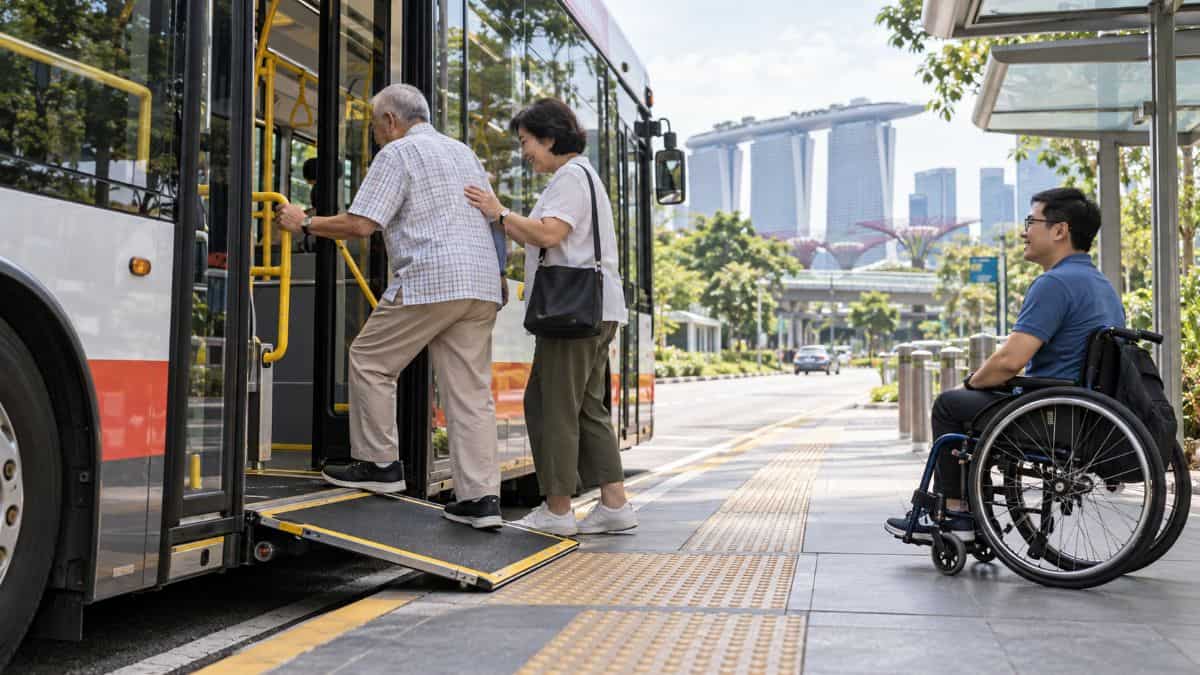
Travel shake-up in terms of accessibility in Singapore challenges the Asian visitors’ experience in 2026. The Travel Shake-Up is based on one single question: Can all travelers be able to easily organize, plan, and successfully execute their travel? Singapore is fitting its buses with technology that will allow easy access to seating positions, while other Asian countries are improving traveling knowledge and helping out travelers.
However, one ramp or new application is not an answer to all issues that travelers face. They need proper information before booking a place and assistance in case of any changes. By going through each step of traveling, we may understand the success of these measures.
Asia’s changing needs call for better travel choices
Ageing populations add urgency to the issue. By 2050, one in four people in Asia and the Pacific will be aged 60 or older, up from 14.3% in 2022. These figures cover Asia and the Pacific, not every part of Asia.
Older people may need more time to board a vehicle, a seat that is easy to reach or a place to rest. Disabled travellers may need step-free routes, clear signs or information about room layouts. Families with young children can benefit from many of the same features.
Advertisement
Advertisement
These needs differ from person to person. Age alone does not tell a business what help someone requires. The useful question is whether travellers can find the right information and ask for support without facing a long chain of confusion.
Singapore’s new buses show why small design details matter
Singapore’s Land Transport Authority says all public buses and trains are wheelchair accessible. It also reports that 98% of bus stops have barrier-free access, while a small number face site constraints.
Advertisement
Advertisement
Yet the details inside a bus still matter. On 2 October 2026, the authority said some seats on newer electric buses sit on raised platforms. Older passengers and people with mobility difficulties may find these seats hard to reach.
The authority said close to 80% of 420 electric buses had been modified, with work on the rest expected by the end of 2026. The changes lower the step to most seats to no more than 23 centimetres.
This example shows that an accessible vehicle is not automatically easy for every passenger to use. Boarding, finding a seat and getting off all shape the trip.
A tourist route needs more than an accessible station
A traveller may reach a city by train and still struggle to visit its attractions. The route between the station, the bus stop, a hotel and a restaurant can decide whether the day works.
South Korea’s Suwon is developing a tourism plan that links transport, pedestrian routes and visitor services. The city says work around Suwon Station includes improving wayfinding, pedestrian routes for people with reduced mobility, boarding areas and connections with tourist information.
Suwon also reported that its accessible tourism minibus, Suwon Haengcha, had begun operating by July 2026. The city’s wider programme includes plans for tourism routes, signs around Suwon Hwaseong and improvements to private facilities.
Advertisement
Advertisement
The key test is whether visitors can use these services together. A working minibus matters most when people can find it, board it and reach places they want to visit.
Japan’s travel survey exposes a booking gap
Japan’s Tourism Agency published a travel-industry manual in March 2026 based on a survey of 135 travel agencies. Its findings point to practical barriers when businesses try to arrange accessible holidays.
Among agencies already offering universal-tourism products, 42.4% said a limited supply of suitable accommodation and attractions made arrangements difficult. Another 33.3% cited a shortage of suitable transport. Among agencies that did not offer these products, 61.8% said they lacked knowledgeable staff or an internal support system. These figures refer to different groups of respondents.
This evidence shifts attention from the destination itself to the booking process. A hotel room may have useful features, but a traveller still needs to find it, check what it offers and arrange transport.
For tourism businesses, the challenge is to turn many separate services into one workable holiday.
India is testing a new way to report access barriers
India’s Department of Empowerment of Persons with Disabilities renewed a partnership in March 2026 to support accessibility audits of public places and popular destinations.
Advertisement
Advertisement
The initiative uses the “Yes to Access” app. The government says trained volunteers and community members will help record accessibility details through a standard format. It aims to create a live information resource that can support planning and follow-up action. The agreement is non-financial.
The idea could help travellers if the information is detailed and recent. A useful record might show whether a route has steps, whether a lift works or whether an accessible toilet is available.
But announcing an audit system does not prove that every destination has been checked. It also does not show whether authorities have fixed problems already reported.
The next questions are who checks the submissions, how often records are updated and what happens after someone reports a barrier.
Certification can help, but travellers need details
Japan has a tourism-facility certification scheme that encourages accessibility measures and clearer information. Its rules were revised in March 2026.
To qualify, a facility must take at least three steps to improve access, train staff at least once a year and share accessibility information on websites beyond its own. The scheme covers such businesses as accommodation providers, restaurants, tourist information centres and museums.
Advertisement
Advertisement
A certification mark can help visitors identify places that have made a commitment. It cannot answer every personal question. A traveller may still need to know the width of a doorway, the height of a bed or whether a toilet has grab rails.
Clear descriptions, photographs and measurements let people judge whether a place suits their needs. The strongest information tells visitors what is available and where barriers remain.
Accessibility also includes sound, crowds and communication
Physical access is only one part of a holiday. Some visitors need quieter spaces, predictable routines or staff who understand sensory needs.
Dubai’s Department of Economy and Tourism announced in April 2025 that the city had become the first Certified Autism Destination in the eastern hemisphere. The programme covered support across parts of the visitor journey, including transport, hotels and attractions. The government said more than 70,000 people had received autism and sensory-awareness training. More than 300 hotels were in the training and certification process; this does not mean all 300 had completed certification.
The announcement also described sensory guides and certified locations. In February 2026, Dubai’s tourism authority again reported the training milestone.
This approach raises a broader question for destinations: can visitors learn what to expect before they arrive, and will staff know how to respond?
Advertisement
Advertisement
Uzbekistan puts heritage sites and basic facilities in view
Accessible travel also matters in destinations built around historic places and long journeys between cities.
Uzbekistan’s Tourism Committee said in January 2026 that the country was working on access features at historic sites, museums, hotels and public transport. Its update also mentioned ramps, wider doors, navigation signs, lifts and staff training at transport hubs. It described websites and mobile applications as ways for travellers to check services in advance.
A government inspection in Khorezm and Karakalpakstan in September 2025 examined public toilets and barrier-free conditions at tourist sites, airports, railway stations and bus terminals. Officials recommended building or improving facilities where they were lacking.
These reports identify work and recommendations. They do not confirm that every proposed improvement is complete. For travellers, toilets, places to rest and usable stops along a route can matter as much as the main attraction.
China’s legal cases point to the need for follow-up
China’s Supreme People’s Procuratorate reported that authorities handled more than 2,500 public-interest litigation cases related to barrier-free environments between January and November 2025. The figure appeared in a March 2026 update.
This is not a count of tourism cases. It does not show how many destinations remain inaccessible or how many visitors faced problems. It does show that accessibility issues can enter a formal process of supervision and legal action.
Advertisement
Advertisement
That creates a useful reporting angle: when a visitor or resident identifies a barrier, who must respond? Is there a public record of the complaint? Can a public body require a correction? Does the change make a real difference to people using the site?
A policy has more force when the public can see what happens after a problem comes to light.
Accessible travel has an economic dimension
Japan’s Tourism Agency has also tried to estimate the value of improving travel access. Research published in 2023 estimated that annual domestic overnight spending by older and disabled travellers could rise from about ¥2.126 trillion to ¥3.014 trillion if identified travel difficulties were resolved. That is a modelled potential increase of ¥888 billion, based on Japanese research and older domestic-tourism data. It is not a measure of current losses across Asia.
Japan’s Tourism Agency opened an application round in 2026 to help accommodation and tourism businesses pay for accessibility renovations and equipment. The published application period ran from 31 March to 15 May.
These measures link access with investment and business planning. The next step is to ask what the money delivered: how many rooms, attractions or routes became easier to use, and how did visitors experience the changes?
Clear digital information helps people plan with confidence
A traveller may need to contact several businesses before booking. If websites provide vague claims or omit key details, the visitor has to make extra calls and may still be unsure what awaits them.
Advertisement
Advertisement
Singapore’s Tourism Board points hotels towards a disability-inclusion playbook that covers accessible spaces, digital interfaces, hiring, staff training and guest programmes.
Japan’s tourism guidance also focuses on how facilities share access details. This reflects a practical truth: people need information before they book, not after they arrive.
Useful details can include photographs of entrances and rooms, measurements, toilet features, step-free routes and how to request assistance. Digital tools can make those details easier to find. They cannot replace accurate information or a staff member who can answer questions.
The strongest test is the whole journey
The Asia accessible travel test for 2026 does not just revolve around an app or ramp anymore but revolves around how confident one feels at each stage of the process starting right from their search till they return back home after their vacation. In the region, there are several efforts made by cities and their tourism agencies to cater to disabled visitors and senior tourists.
Nonetheless, plans and thoughts cannot promise a stress-free vacation. The tourists need all the information upfront, transportation methods that would suit them, and some people who would help them in case of any last minute changes.
Advertisement
