
Germany’s Regional Weekly Markets Invigorate Cultural Travel Across Berlin, Hamburg and Other Cities

Published
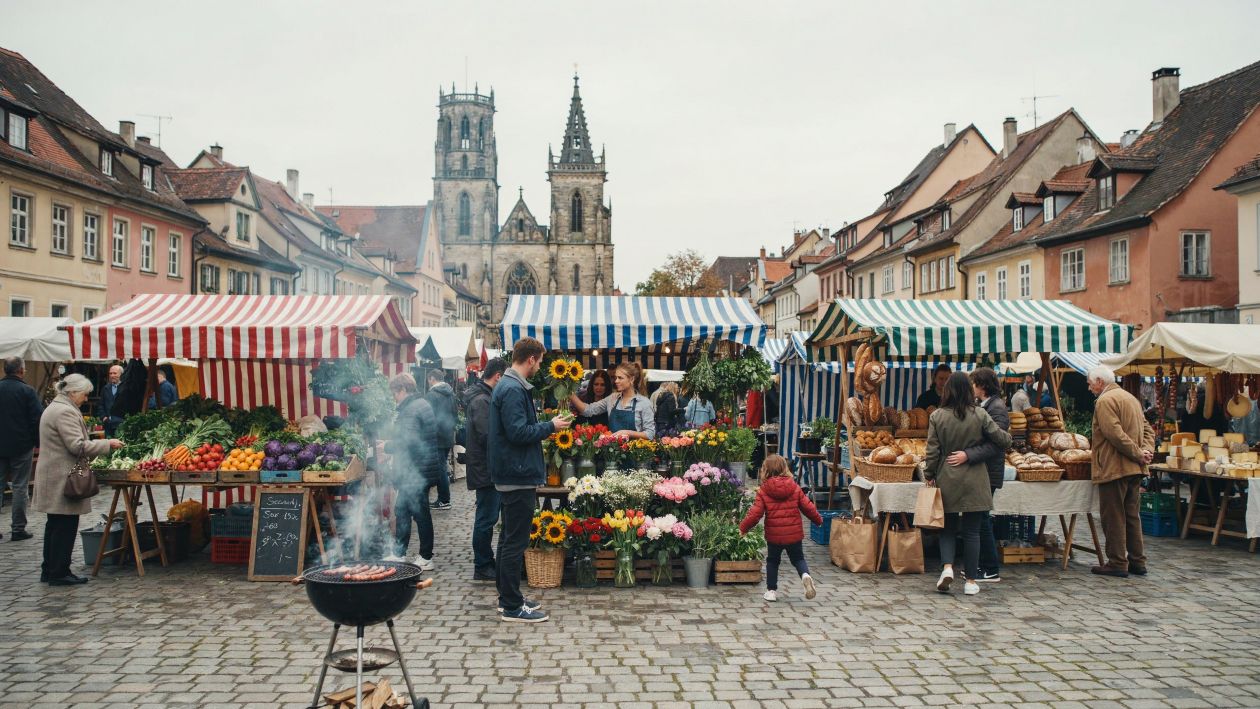
Germany’s regional weekly markets represent deep-rooted community traditions, culinary heritage, and sustainable commerce across the nation. Berlin, Hamburg, Erfurt, Coburg, and Freiburg host these remarkable community events. The German National Tourist Board incorporates these venues into its 2024 global marketing strategies. However, British travellers accessing these sites face increasingly complex aviation networks and stringent post-Brexit border regulations. Flight delays and accommodation bottlenecks threaten to disrupt authentic cultural holidays for thousands of UK families. This report investigates the intersection of gastronomy, aviation infrastructure, and passenger transit utility.
Erfurt and Thuringian market infrastructure
Definition: Erfurt St Mary’s Cathedral Market is a central German trading hub operating six days weekly.
Shoppers browse vibrant stalls beneath the iconic St Mary’s Cathedral. Local vendors sell organic products, fresh plants, and baked goods. The famous Thuringian bratwurst remains a central culinary highlight. Vendors grill this traditional sausage fresh over hot charcoal. Thuringia promotes a distinct travel philosophy blending nature and culture. The region heavily markets itself as a land of short distances. Sustainable cultural tourism in Germany thrives in these provincial centres. Tourists avoid mass tourism routes by visiting authentic regional markets.
Accessing Erfurt requires careful aviation and railway transit planning. Most UK travellers fly into Frankfurt Airport via British Airways. Deutsche Bahn operates connecting intercity express trains to Thuringia. Industrial action by railway unions occasionally disrupts these transit corridors. The Federal Ministry for Digital and Transport monitors network resilience.
Advertisement
Advertisement
Hamburg Isemarkt and northern transit
Definition: The Isemarkt is an open-air market stretching nearly one kilometre beneath an elevated railway line.
Hamburg features one of Europe’s longest continuous open-air markets. The Isemarkt operates every Tuesday and Friday in Eppendorf. Approximately 200 exhibitors sell exclusive goods beneath the subway tracks. Around 6,000 visitors browse fresh produce and regional delicacies here. The market generates a distinct and authentic local Hamburg feeling. This setup decentralises urban tourism beyond traditional harbour attractions.
Advertisement
Advertisement
Northern Germany relies heavily on historical maritime trade routes. Labskaus represents a historic sailor’s meal beloved by local residents. This dish combines salted corned beef, potatoes, and pickled herring. Fischbrötchen serve as the ultimate crusty northern street food snack. Vendors fill these rolls with Bismarck herring and fresh onions.
Hamburg Airport manages significant volumes of inbound British passenger traffic. The German civil aviation authority regulates local terminal capacity. Airspace constraints occasionally cause delays for incoming UK flights. EU regulations mandate clear rerouting obligations during such disruptions.
Coburg and Bavarian transport corridors
Definition: Coburg historic market square is a northern Bavarian trading venue operating Wednesdays and Saturdays.
Coburg welcomes visitors to its beautiful historic market square. Vendors supply fresh regional produce to locals and international tourists. The square is famous for the traditional Coburger bratwurst. Cooks traditionally grill this local delicacy over dried pinecones. Locals measure raw sausages against the historic Bratwurstmännle statue.
Bavarian food is hearty, rustic, and incredibly meat-centric. Schweinshaxe is a massive roasted pork knuckle with crackling skin. Chefs serve it with dark beer gravy and potato dumplings. Weißwurst combines minced veal, back bacon, parsley, and cardamom. Tradition dictates eating Weißwurst before noon with sweet mustard.
Munich Airport serves as the primary aviation gateway for Bavaria. Lufthansa operates multiple daily connections from London Heathrow. Winter weather frequently impacts Alpine regional transport networks.
Advertisement
Advertisement
Freiburg Münstermarkt and border logistics
Definition: Münstermarkt is a historic food market set around the Freiburg Minster in southwestern Germany.
Freiburg sits gracefully on the edge of the Black Forest. The bustling Münstermarkt operates against the historic cathedral backdrop. Shoppers purchase colourful flowers and fresh local agricultural produce. The primary attraction remains the famous Lange Rote. Introduced in 1949, this crisp bratwurst dominates local street food. Stalls even offer vegetarian tofu variants for modern consumers.
Swabian cuisine characterises this southwestern corner of the country. Käsespätzle layers irregular handmade egg noodles with pungent mountain cheeses. Cooks top this comfort food with crispy caramelised fried onions. Maultaschen are large pasta pockets filled with savoury minced meat.
Reaching Freiburg requires navigating the unique EuroAirport Basel Mulhouse Freiburg. This tri-national airport straddles the French and Swiss borders. British tourists face complex immigration checks upon arrival here. The Schengen area strictly enforces a rolling 90-day visitation limit. Overstay liabilities include severe financial fines and future entry bans.
Berlin organic markets and aviation
Definition: Kollwitzplatz organic market is a sustainable eco-market operating Thursdays in the trendy Prenzlauer Berg district.
Berlin hosts an exceptional organic market at Kollwitzplatz every Thursday. Local farmers bring artisanal breads, cheeses, and seasonal treats. This eco-market has operated successfully since 1996 in East Berlin. It forms an integral pillar of neighbourhood cultural life. The market draws tourists seeking a laid-back, community-driven atmosphere.
Advertisement
Advertisement
The Berlin culinary scene mixes Prussian history and street food. Currywurst features a steamed and fried pork sausage. Vendors slice it and apply ketchup mixed with curry powder. Königsberger Klopse are tender meatballs cooked in creamy white sauce.
Berlin Brandenburg Airport handles vast volumes of British tourist traffic. The facility experienced significant operational bottlenecks during recent summer peaks. Airlines maintain strict duty of care obligations during terminal delays. Passengers must receive food vouchers and adequate hotel accommodation.
Hesse and western regional infrastructure
Definition: Western German culinary heritage features balanced sweet and sour flavour profiles and local wine pairings.
Western German states offer incredibly distinct and complex regional flavours. Sauerbraten represents a highly celebrated national culinary achievement. Chefs marinate beef in vinegar, wine, and aromatic spices. They slow-roast the meat to achieve ultimate tenderness. Frankfurter Grüne Soße originates directly from the Frankfurt region. This cold sauce uses exactly seven specific fresh herbs.
Frankfurt Airport operates as Europe’s premier commercial aviation hub. Flight connections facilitate immediate access to these historic market squares. Air traffic controllers actively manage congested airspace above the Rhineland. The Federal Ministry of Interior oversees strict border security protocols.
Passenger rights and airline liabilities
Definition: Retained EU regulations dictate airline responsibilities regarding flight delays, cancellations, and comprehensive passenger compensation frameworks.
Advertisement
Advertisement
The UK Civil Aviation Authority monitors international flight performance. Carriers hold strict liabilities for delays exceeding three hours. Passengers can claim compensation under established legal frameworks. Airlines must provide alternative rerouting options during severe disruptions. The duty of care remains an absolute legal requirement. Aviation authorities routinely audit carrier compliance with these consumer laws.
EC261 Compensation Framework
| Flight Distance | Delay Duration | Financial Compensation | Rerouting Liability |
| Under 1,500 km | Over 3 hours | 220 pounds | Immediate obligation |
| 1,500 to 3,500 km | Over 3 hours | 350 pounds | Immediate obligation |
| Over 3,500 km | Over 4 hours | 520 pounds | Immediate obligation |
Border systems and immigration updates
Definition: The EU Entry/Exit System is a biometric border database tracking third-country nationals entering the Schengen area.
British passport holders face new realities at European external borders. The upcoming Entry/Exit System introduces mandatory biometric facial scanning. Tourists must register fingerprints at the first point of entry. Wait times at border control will inevitably increase initially. Sovereign ministries are deploying additional personnel to mitigate transit delays. Legal repercussions for overstaying visas are becoming increasingly severe. The UK Foreign Office advises verifying strict passport validity rules. Passports must be under ten years old upon entry. They must remain valid for three months beyond departure dates.
Accommodation and regional transit bottlenecks
Definition: Infrastructure capacity constraints affecting hotel availability and local transport networks during peak European summer seasons.
Historic market towns in Germany face acute accommodation shortages. Smaller municipalities lack the vast hotel inventory of major capitals. Seasonal demand drives up nightly rates across regional tourism corridors. Local authorities are limiting short-term rentals to protect local housing. The UN Tourism agency warns against unchecked peak seasonal overcrowding.
Regional Transit Gateways
| Market Destination | Primary Hub | Approximate Distance | Transit Operator |
| Erfurt | Frankfurt Airport | 260 kilometres | Deutsche Bahn (ICE) |
| Hamburg | Hamburg Airport | 10 kilometres | S-Bahn Urban Rail |
| Coburg | Munich Airport | 200 kilometres | Regional Express (RE) |
| Freiburg | EuroAirport Basel | 70 kilometres | Regional Bus Services |
| Berlin | Brandenburg Airport | 25 kilometres | Airport Express Train |
Conclusion on sustainable cultural tourism
The German National Tourist Board actively supports these regional venues. The board officially promotes a dedicated Culinary Germany campaign. Officials will highlight traditional German regional dishes to global audiences. This aligns perfectly with modern consumer demands for authentic experiences. Tourists increasingly reject manufactured commercial attractions for genuine local culture. Authentic German culinary heritage requires sustainable infrastructure to survive. British tourists must navigate aviation logistics and strict border controls. Comprehensive travel preparation ensures a seamless and culturally enriching journey. Ultimately, Germany’s regional weekly markets represent deep-rooted community traditions, culinary heritage, and sustainable commerce.
Advertisement
