
Visiting Iceland Now? What Reykjanes’ New Volcano Rules Mean for Flights, Grindavík, and Blue Lagoon Access

Published
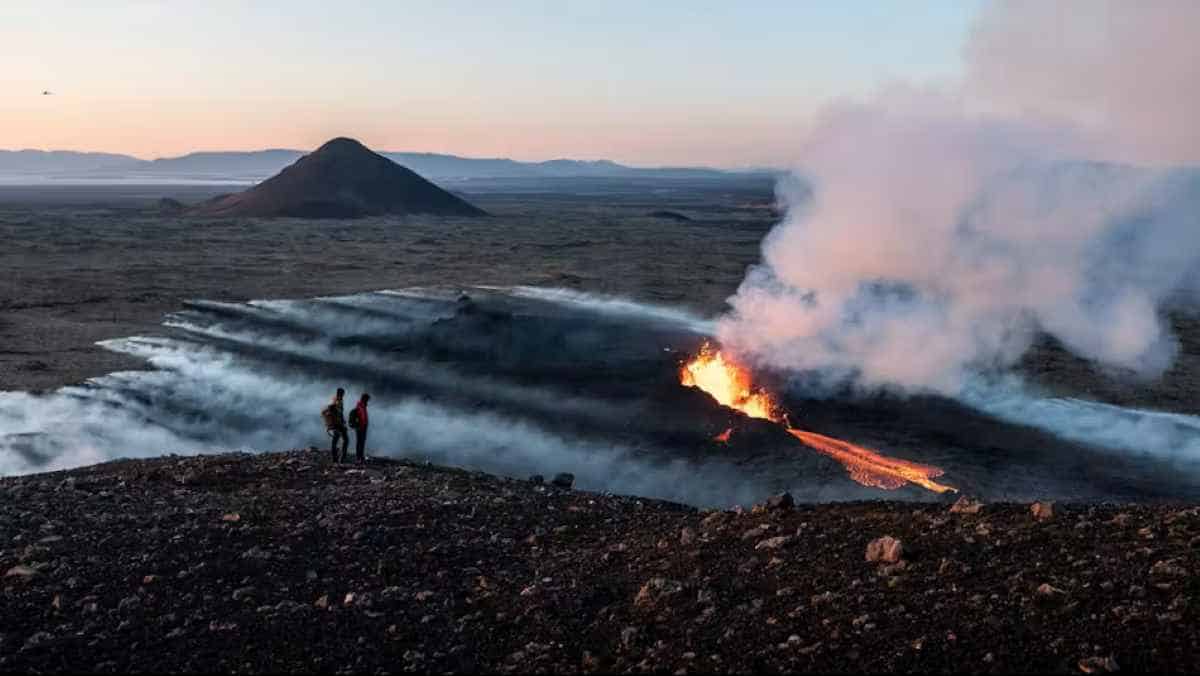
Iceland’s Reykjanes Peninsula and Grindavík are still watched with interest as volcanic eruptions keep affecting the conditions for travel in south-west Iceland. The latest official news does not provide any evidence that the Icelandic Tourist Board launched an automated “Volcano Capacity Caps” system on 1 October 2026 or that tourist gates are automatically controlled through live sulphur dioxide and micro-tremor sensors. However, what is true is essential. According to the Icelandic Meteorological Office, on 30 September, ground uplift was still occurring in Svartsengi, with four centimetres of uplift measured in the last three months. Though seismicity levels have been relatively low, the scientists’ main hypothesis concerning the cause of these changes is the intrusion of new magma towards the Sundhnúkur crater row. The volcanic system is still in alert level 2, which means significantly increased activity. From a visitor perspective, the situation is more complicated than the viral news suggests, although the information provided above is still relevant.
Reykjanes Remains a Major Iceland Tourism Destination
Reykjanes is one of Iceland’s most accessible volcanic regions, located close to Keflavík International Airport and within reach of Reykjavík.
Advertisement
Advertisement
The peninsula combines lava landscapes, geothermal areas, coastal scenery and fishing communities. Grindavík, the Blue Lagoon, Reykjanesviti lighthouse, Gunnuhver geothermal area and the Bridge Between Continents are among the attractions associated with the wider region.
This proximity makes Reykjanes particularly important for travellers arriving or departing through Keflavík. A visitor with a spare day can explore parts of the peninsula before continuing towards Reykjavík, subject to current road, weather and safety conditions.
Advertisement
Advertisement
The volcanic landscape is also a major reason international visitors include the area in Iceland itineraries. Recent eruptions have increased global interest in the peninsula, creating a strong connection between Iceland tourism and volcano-related travel.
The Claimed October Tourism Quota Is Not Confirmed
The supplied claim that the Icelandic Tourist Board introduced an automated visitor-throttling quota system across Reykjanes on 1 October 2026 cannot currently be substantiated through the official sources reviewed.
Advertisement
Advertisement
There is no verified evidence of a nationwide or peninsula-wide system called “Volcano Capacity Caps”. There is also no confirmed official announcement describing an algorithm that automatically links tourist entry to hourly seismic and gas-emission readings.
The same applies to the reported “Green Clearance” and “Dynamic Lock” entry system.
Iceland does use extensive geological monitoring, and authorities can close areas when hazards increase. But that is materially different from confirming that visitors are being admitted or rejected through an AI-controlled tourist quota system.
For a tourism news story, that distinction matters.
Volcanic Monitoring Is Real and Continuous
The underlying science behind the story is genuine.
The Icelandic Meteorological Office continuously monitors seismic activity, ground deformation and volcanic hazards. Its latest Reykjanes assessment says uplift at Svartsengi is continuing and that magma accumulation remains active beneath the area. Scientists cannot predict precisely when another eruption will occur.
Advertisement
Advertisement
Gas monitoring is also an established part of Iceland’s volcanic safety system. The Icelandic Meteorological Office monitors gases including carbon dioxide, sulphur dioxide and hydrogen sulphide because volcanic systems can release concentrations that pose health risks.
For tourists, this means volcanic conditions should never be assessed solely by looking at whether smoke or lava is visible. Volcanic gases can be difficult to detect without appropriate instruments, and conditions can change rapidly.
Sundhnúksgígar Access Remains Restricted
The current visitor guidance for the Sundhnúksgígar eruption area is particularly important.
Visit Reykjanes states that the eruption site is closed to public access and that no hiking trails or parking areas have been established for the site while it remains closed. Visitors are directed towards updated information from authorities and SafeTravel.
That directly contradicts the idea that tourists are routinely being processed through new automated gates to enter the active volcanic area.
Visitors can still experience the broader Reykjanes region, but an open peninsula does not mean every volcanic site is open.
Advertisement
Advertisement
Grindavík itself reopened to the public in October 2024 following safety assessments and protective measures. Conditions around the town and surrounding volcanic zones remain subject to continuing risk assessments.
Volcano Tourism Requires More Planning in 2026
Travellers heading to Reykjanes should check SafeTravel and the Icelandic Meteorological Office immediately before departure.
SafeTravel, operated by ICE-SAR, provides current information on conditions, safety alerts and Reykjanes volcanic activity. Weather and road conditions can change quickly, making advance route planning especially important for independent travellers.
Hikers should also expect difficult terrain around volcanic landscapes. Lava fields, loose gravel, uneven ground and steep sections can make apparently short routes considerably more demanding.
There is no substitute for following an official closure.
Keflavík Makes Reykjanes Easy to Add to an Itinerary
Keflavík International Airport is the main international airport in Iceland for those planning to visit Iceland and serves as an ideal starting point for exploring Reykjanes. It is possible to pair Reykjanes with a visit to Reykjavik, the Golden Circle or any other part of south-west Iceland, based on road and weather conditions. The Blue Lagoon is still one of the main tourist attractions in the area; however, it is wise to check whether it is open. The key message to those who wish to explore the volcanic landscapes of Reykjanes should be that it makes sense to see the area as a natural habitat that is under observation, and not as a place of guaranteed access. The latest findings prove that there is a region with ongoing magma buildup and increased volcanic risk, not the AI tourism quota revolution.
Advertisement
