
Mexico Travel Sees Sharp Aviation Tourism Slump Despite Remarkable Growth in Visitor Spending

Published
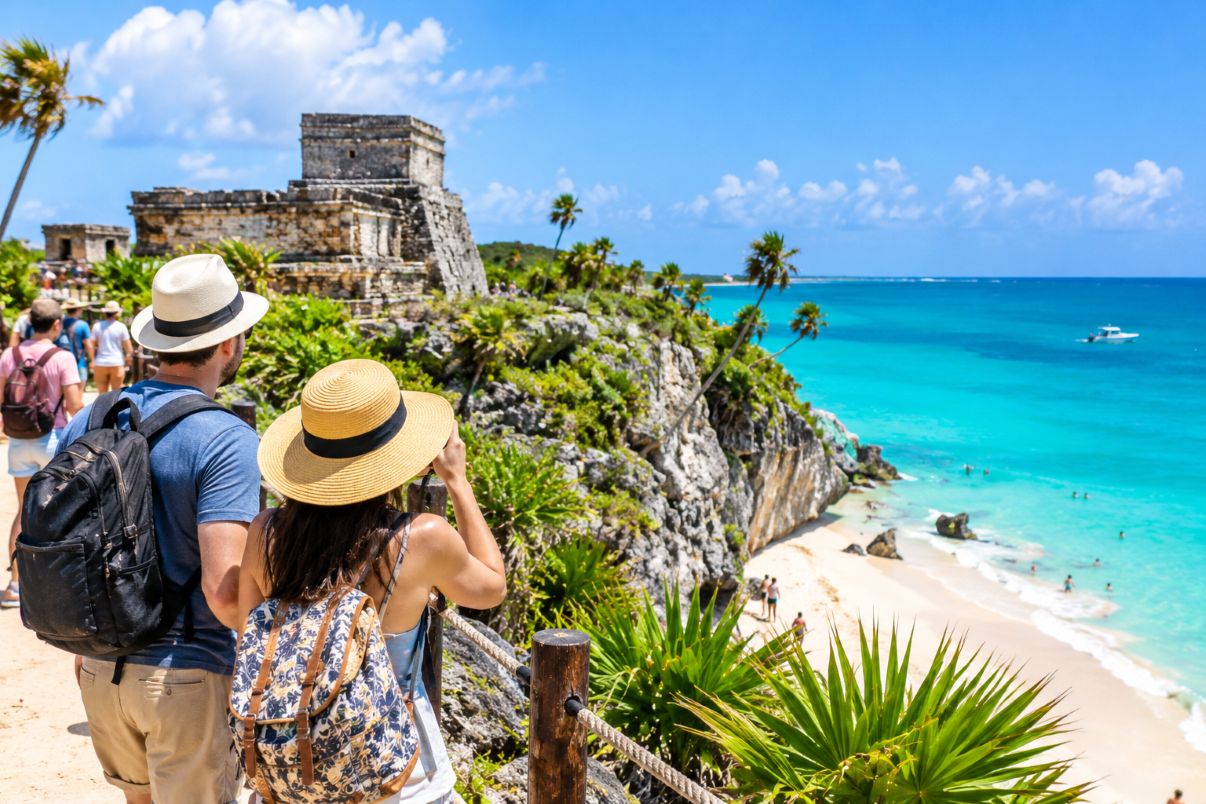
Mexico’s international tourism industry is facing a striking contrast as arrivals by air declined 6.5% in August 2026, even while visitors spent more money during their stays. Official figures from the National Institute of Statistics and Geography (INEGI) show that approximately 1.40 million international tourists entered Mexico by air, reflecting weaker demand compared with August 2025. However, international visitor expenditure increased by 7%, highlighting the growing importance of spending per traveller. The development raises important questions for destinations such as Cancún, Puerto Vallarta, Los Cabos and Mexico City, where international tourism supports hotels, restaurants, transport providers and local businesses.
Mexico’s International Air Arrivals Record Significant Decline in August 2026
Mexico welcomed approximately 1.40 million international tourists by air during August 2026, representing a 6.5% reduction compared with the corresponding month of 2025.
Advertisement
Advertisement
The figures were published by INEGI on 14 October 2026 through its International Traveller Survey.
The decline forms part of a wider period of weakness in international air tourism, with August reportedly marking the seventh consecutive month of annual reductions.
Advertisement
Advertisement
However, the broader tourism picture was more complex.
Mexico recorded 7,985,700 international traveller arrivals across different entry categories, representing an increase of 1.3%.
Advertisement
Advertisement
Of these, 3,768,784 were international tourists staying at least one night, a decline of 0.5%.
The remaining 4,216,916 were same-day visitors.
These distinctions demonstrate why total border crossings and international air tourism cannot be treated as equivalent indicators.
Mexico Travel Statistics Reveal Contrasting Trends in Visitor Numbers and Spending
Despite fewer international air arrivals, Mexico recorded stronger visitor expenditure.
International visitors spent approximately US$2.41 billion during August 2026, representing a 7% increase compared with August 2025.
Average expenditure among tourists arriving by air reached US$1,269.60, an increase of 15.2%.
Advertisement
Advertisement
This contrast suggests that spending patterns were changing even as the number of arriving air tourists declined.
Higher expenditure can support accommodation providers, restaurants, transport businesses and tourism attractions.
However, rising average spending does not necessarily compensate every tourism business for reduced visitor volumes.
Hotels and operators dependent on large numbers of international guests may still experience commercial pressure.
The figures therefore highlight the importance of examining tourism revenue alongside visitor arrivals.
Seven Consecutive Months of Falling Air Arrivals Raise Concerns for Mexico Tourism
Mexico’s August performance marked the seventh consecutive monthly decline in international tourist arrivals by air, according to reporting based on INEGI statistics.
Advertisement
Advertisement
The negative trend began in February 2026 and continued through the summer travel period.
August’s 6.5% reduction followed annual declines of 8.2% in April, 7.5% in May, 5.3% in June and 5.7% in July.
This sustained weakness raises questions about demand in an important segment of Mexico’s international tourism market.
However, the figures do not establish that every destination or hotel experienced falling bookings.
Tourism performance can vary significantly between regions, travel seasons and visitor markets.
The latest data instead highlight a national trend that requires closer examination.
Advertisement
Advertisement
Cancún and Riviera Maya Remain Important Destinations Amid Changing Tourism Conditions
Cancún and the Riviera Maya remain among Mexico’s best-known international holiday destinations, attracting visitors to Caribbean beaches, resorts, cenotes and archaeological attractions.
These destinations depend heavily on international air connections, making national aviation tourism trends relevant to their wider business environment.
However, INEGI’s national August survey does not establish that Cancún or the Riviera Maya experienced an identical 6.5% reduction.
Visitors planning Caribbean holidays should consider seasonal weather, accommodation costs and local beach conditions.
Sargassum seaweed can affect some coastal areas, particularly during warmer months.
Travellers should consult local tourism authorities and accommodation providers before booking beachfront activities.
Advertisement
Advertisement
Puerto Vallarta and Los Cabos Highlight Mexico’s Diverse Pacific Coast Tourism Appeal
Puerto Vallarta and Los Cabos offer alternative coastal experiences for travellers considering Mexican holidays.
Puerto Vallarta combines Pacific beaches, cultural attractions, restaurants and excursions around Banderas Bay.
Los Cabos is known for coastal scenery, luxury resorts, marine activities and seasonal whale watching.
Both destinations attract international holidaymakers seeking beach relaxation and outdoor experiences.
However, national arrival statistics cannot establish how either destination performed individually during August.
Visitors should compare flight availability, accommodation prices and local transport arrangements before departure.
Advertisement
Advertisement
Seasonal weather conditions are also important, particularly during the Pacific hurricane season.
Checking official travel advice and destination-specific conditions can help travellers make informed decisions.
United States Remains a Crucial Market for Mexico’s International Tourism Industry
American travellers continue to represent an important source of international tourism demand.
Reporting based on the August 2026 survey indicates that visitors from the United States accounted for approximately 67.1% of Mexico’s non-border international tourist arrivals.
South America and the Caribbean represented another 13.8%, while Canada contributed approximately 6.8%.
European travellers accounted for 5.2%, with Central America contributing a similar proportion.
Advertisement
Advertisement
These figures illustrate Mexico’s reliance on regional tourism markets, particularly North America.
However, they do not establish that American visitors alone caused the decline in international air arrivals.
Determining the reasons for weaker aviation tourism would require additional evidence covering fares, capacity, consumer demand and economic conditions.
Mexico’s Proposed 2027 Tourist Fee Increase Could Add Pressure to Future Travel Costs
Mexico’s proposed adjustment to its non-resident visitor fee has introduced another consideration for international travellers.
The proposed increase would raise the fee from MXN 983 to MXN 1,158, representing approximately 17.8%.
As reported in the original coverage, the proposal had received approval from the lower house of Congress but still required further legislative consideration.
Advertisement
Advertisement
It should therefore not be treated as an enacted fee as of 16 October 2026.
For eligible international air passengers, the existing charge is generally incorporated into ticket prices.
Travellers should review the complete airfare, including government charges, before purchasing tickets.
The final 2027 fee will depend on the legislative process and official implementation rules.
Why Rising Tourism Revenue Matters Despite Mexico’s Falling Air Arrivals
Mexico’s tourism statistics demonstrate why visitor spending and arrival numbers must be evaluated separately.
Total international visitor expenditure increased to approximately US$2.41 billion in August, even though international tourist arrivals by air declined.
Advertisement
Advertisement
Spending by international tourists who stayed overnight reached approximately US$2.16 billion, representing an annual increase of 8.1%.
This indicates that tourism revenue remained resilient despite weaker visitor numbers in important categories.
However, higher average expenditure does not automatically translate into stronger profitability across the hospitality sector.
Businesses serving high-spending travellers may experience different conditions from operators dependent on larger visitor volumes.
The contrasting figures underline the complexity of Mexico’s tourism performance.
What Travellers Should Know Before Planning a Mexico Holiday
International visitors should continue to check flight availability, accommodation prices and entry requirements before travelling.
Advertisement
Advertisement
The decline in air arrivals does not establish that flights have been cancelled nationwide or that tourist attractions have closed.
Travellers visiting Cancún and the Riviera Maya should monitor Caribbean weather and beach conditions.
Visitors heading to Puerto Vallarta or Los Cabos should consider Pacific coastal weather and seasonal marine activities.
Mexico City offers a different experience through museums, gastronomy, architecture and cultural attractions.
Travellers should also verify government fees, passport requirements and official travel advice.
Comparing complete travel costs across several dates may help identify suitable options, although falling arrival numbers do not guarantee cheaper holidays.
Advertisement
Advertisement
What Happens Next for Mexico’s Tourism Industry?
INEGI has scheduled its next International Traveller Survey release for 12 November 2026.
The forthcoming report is expected to provide September’s figures, offering further insight into whether the decline in international air tourism continued.
The proposed 2027 non-resident visitor fee is another development requiring attention.
For tourism businesses, the main questions concern future arrival volumes, visitor spending and the distribution of demand across destinations.
The August results provide evidence of weaker international air tourism alongside stronger overall visitor expenditure.
Further official data will be necessary to determine whether these contrasting trends continue during the final months of 2026.
Conclusion: Mexico’s Tourism Outlook Depends on Recovery in Air Arrivals and Sustained Visitor Spending
Mexico’s August 2026 tourism figures reveal a challenging but complex picture for the country’s travel industry. International air arrivals declined by 6.5%, yet total visitor spending increased by 7%, demonstrating that fewer arrivals do not necessarily mean lower tourism receipts. For destinations including Cancún, Puerto Vallarta, Los Cabos and Mexico City, maintaining international demand remains important. Travellers can continue exploring Mexico’s diverse attractions while monitoring prices, entry requirements and local conditions. The next official statistics will help clarify whether air tourism is recovering and whether stronger spending can continue supporting the country’s hospitality economy.
Advertisement
