

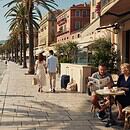
Image generated with Ai
European Travel is taking on a more thoughtful meaning in Italy as travellers increasingly seek quality, comfort and cultural depth. Across Italian cities, villages and regions, slower journeys allow visitors to spend longer exploring local food, heritage and everyday traditions. This approach works through fewer destination changes, convenient accommodation, practical rail connections and carefully selected experiences. It can reduce travel fatigue, repeated transfer costs and pressure from overcrowded itineraries. Italy recorded 466.2 million nights in official tourist accommodation during 2024.
This marked a 4.2% increase from 2023 and a 6.7% rise from 2019. The average recorded stay reached 3.34 nights. These figures show strong tourism demand, although they do not independently prove a nationwide shift towards slower holidays. Nevertheless, Italy demonstrates how European Travel can become more rewarding when visitors replace rushed sightseeing with thoughtful planning and meaningful regional discovery.
Italy combines celebrated cities with highly distinctive regions. Rome, Florence, Milan and Venice attract global attention. Yet the country also includes mountain communities, rural landscapes, coastal towns and historic provincial centres. Each region offers different food, architecture, language influences and daily customs. Consequently, European Travel becomes richer when visitors move beyond the most recognised landmarks. Emilia-Romagna, Piedmont, Umbria, Puglia and Sicily can each support an entire journey.
Italy’s official tourism portal promotes all 20 regions rather than presenting one standard experience. This national diversity allows travellers to match destinations with personal interests. Art enthusiasts can explore historic cities. Walkers can follow mountain or pilgrimage routes. Food lovers can study regional produce and cooking traditions. Meanwhile, coastal travellers can choose between several different seas. European Travel works best when such choices reflect genuine curiosity rather than online popularity.
Advertisement
Advertisement
Slow travel does not require travellers to remain in one location for several weeks. Instead, it encourages realistic schedules and fewer unnecessary transfers. A five-night stay can provide greater value than three one-night stops. Visitors gain time for neighbourhood walks, regional meals and spontaneous discoveries. Moreover, they avoid repeated packing, checking out and finding new accommodation. European Travel then feels calmer, clearer and more personal.
The financial case also deserves attention. Every transfer can involve tickets, station journeys, luggage storage and missed meal times. These expenses often remain hidden during initial planning. A longer stay can reduce those costs while improving local understanding. Travellers can revisit a favourite café or explore beyond a historic centre. Therefore, slower European Travel protects both time and attention. Those resources often matter more than another landmark photograph.
Italy’s record tourism volumes show both demand and concentration. Istat counted 466.2 million overnight stays during 2024. International visitors generated 54.5% of that total. Italian residents produced the remaining 45.5%. This creates an approximate ratio of 1.2 foreign nights for every domestic night. The figures demonstrate Italy’s international appeal. However, they also highlight the need for careful European Travel planning during crowded periods.
Summer creates particularly strong pressure. Between June and September, Italy recorded 59.3% of resident nights during 2024. The same period attracted 54.9% of international nights. Therefore, more than half of annual demand gathered within four months. Travellers who can visit during spring or autumn may find wider accommodation choice. Still, they must examine regional weather and opening schedules. European Travel decisions should follow local conditions rather than simple seasonal assumptions.
Advertisement
Advertisement
Italy does not experience one uniform tourist season. Alpine areas, cultural cities and Mediterranean islands follow different patterns. Winter supports skiing in northern regions. Spring suits many walking routes and historic centres. Summer strengthens coastal demand but can bring intense heat. Autumn supports harvest experiences and urban exploration. Consequently, travellers should research individual destinations before booking European Travel arrangements.
European demand also continues growing. Eurostat recorded nearly 3.1 billion EU accommodation nights during 2025. That represented a 2.2% annual increase, equal to 66.4 million additional nights. During early 2026, demand remained strong. EU accommodation establishments recorded 471.1 million nights during the first quarter. Italy produced the largest absolute increase, adding five million nights. Thoughtful European Travel planning now matters because competition for desirable dates remains substantial.
A successful itinerary needs several connected decisions. Price alone cannot reveal the true value of accommodation, transport or activities. Travellers should calculate the time and effort attached to every option. European Travel becomes more rewarding when bookings support comfort, cultural understanding and flexibility.
These principles create an organised framework without removing spontaneity. They also prevent small logistical problems from dominating the holiday. Therefore, careful European Travel planning should provide freedom rather than create a rigid daily timetable.
Premium comfort often begins with location. A modest central hotel may provide greater value than a luxurious property outside town. The central option can reduce commuting, taxi costs and physical exhaustion. Likewise, a direct train can outperform a cheaper indirect journey. European Travel should measure comfort through saved time, reliable access and better rest. Decorative features matter less when poor logistics consume each day.
Service quality also deserves thoughtful evaluation. Helpful hosts can explain transport, restaurant customs and neighbourhood conditions. Professional guides can add historical context that visitors may otherwise miss. However, travellers should examine credentials and recent official information. Higher prices never guarantee better knowledge. Premium European Travel should purchase genuine expertise, convenience and security. It should never become an exercise in displaying status.
Many cheap options provide excellent value. However, the lowest headline price can hide additional expenses. The following comparison shows how European Travel choices can influence comfort and overall cost.Travel decision Cheapest apparent choice More thoughtful alternative Potential benefit Accommodation Distant room with low nightly rate Central room near planned activities Less commuting and easier evenings Rail journey Several separate connections Direct service at a suitable time Lower connection risk Flight Basic fare from a distant airport Inclusive fare using a closer airport Fewer hidden transport costs Dining Random restaurant beside a landmark Researched regional establishment Stronger local relevance Sightseeing Maximum attractions every day Several carefully selected visits Better concentration and less fatigue Shopping Numerous mass-produced souvenirs One locally produced item Greater meaning and reduced waste Scheduling Peak summer by default Suitable spring or autumn dates Wider choice and calmer visits
This table does not make expensive options automatically superior. Instead, it encourages travellers to calculate the entire experience. European Travel gains quality when each decision protects time, energy or cultural value.
Italy’s rail system connects major cities and many regional centres. The official national tourism portal cites more than 300 daily connections from Italian railway companies. High-speed services can connect principal urban destinations efficiently. Regional trains can then reach smaller cities and surrounding areas. Therefore, rail can support European Travel without repeated airport procedures. Travellers should still confirm schedules, ticket conditions and validation requirements.
Rail journeys also carry legal protections within the European Union. A delay between 60 and 119 minutes can qualify for 25% compensation. Delays reaching 120 minutes can qualify for 50%, subject to applicable conditions. Passengers may receive refreshments after qualifying delays. Overnight disruption can also create accommodation rights where physically possible. European Travel remains unpredictable, so passengers should retain tickets, booking records and receipts.
A short flight rarely consumes only the scheduled flight time. Travellers must reach the airport, clear security and wait for boarding. They must then collect luggage and travel into another city. Rail often links central stations directly. This difference can make European Travel by train more practical across suitable distances. However, travellers should compare complete journey times rather than follow one transport rule.
Flights remain useful for longer continental distances or island connections. Ferries can also connect coastal regions while creating a distinctive journey. Car hire may suit rural areas with limited public transport. Yet drivers must consider tolls, parking, insurance and restricted urban zones. Effective European Travel combines transport methods according to geography. It avoids treating trains, flights or cars as universally superior.
“Living like a local” can become a misleading promise. Visitors cannot reproduce daily resident life during a short holiday. However, they can travel with greater awareness. They can learn local etiquette, use neighbourhood businesses and respect residential routines. European Travel becomes more authentic through observation and courtesy. It does not become authentic through invading private spaces or seeking supposedly secret locations.
Travellers should ask permission before photographing people. They should control noise inside shared buildings and historic neighbourhoods. They should also respect marked trails, religious spaces and local waste rules. These actions cost nothing, yet they improve community relationships. Authentic European Travel requires humility because destinations remain living places. Their streets, markets and transport systems serve residents before they entertain visitors.
Italian cuisine changes dramatically between regions. Bologna’s culinary identity differs from Naples, Palermo or Turin. Ingredients, pasta shapes, preparation methods and meal patterns reflect local histories. Therefore, European Travel through Italy should not treat national cuisine as one fixed menu. A regional market or family-operated restaurant can explain more than a generic tourist menu.
Travellers should examine current menus and transparent prices before sitting down. They should also understand service charges and local tipping practices. Lunch may provide strong value in some destinations. Nevertheless, current restaurant information matters more than general advice. Food-led European Travel should favour regional relevance, good hygiene and responsible service. Social media popularity alone cannot guarantee a worthwhile meal.
Italy’s art and architecture can overwhelm travellers. Rome alone contains enough history for several journeys. Florence, Venice, Naples and smaller cities add further layers. Trying to see everything often weakens understanding. European Travel becomes more meaningful when visitors select fewer museums and monuments. They can then study the historical context before arriving.
Qualified guides can explain political, religious and artistic connections. Audio guides and official museum materials can also support independent visitors. Early reservations may reduce uncertainty at heavily visited attractions. However, travellers should preserve unscheduled time around major cultural visits. Meaningful European Travel needs space for reflection. Constant movement can turn exceptional heritage into an exhausting sequence of interiors.
Italy’s villages offer architecture, landscapes and living traditions beyond metropolitan centres. Yet smaller places may have limited transport, shorter opening hours and fewer accommodation choices. Travellers should research those conditions carefully. They should never assume that every village provides constant visitor services. European Travel in rural Italy rewards preparation because local rhythms often differ from urban schedules.
Walking routes can connect visitors with landscapes and historic communities. The Via Francigena provides one important example across several Italian regions. Other trails cross mountain, coastal and agricultural areas. However, travellers must check weather, route difficulty and seasonal access. Rural European Travel also requires suitable footwear, water and emergency planning. Scenic surroundings do not remove practical risks.
Italy belongs to the Schengen Area, which currently contains 29 countries. These include 25 EU members and four non-EU participants. Iceland, Liechtenstein, Norway and Switzerland form the non-EU group. Ireland follows separate entry arrangements. Therefore, European Travel documentation depends on nationality, destination and residence status. Travellers should avoid relying on old blogs or informal social posts.
Many eligible visitors can spend up to 90 days within any rolling 180-day period. That allowance applies across the entire Schengen Area. It does not restart when travellers cross an internal border. Other nationalities require a short-stay visa before departure. Passport rules also apply. Since requirements can change, European Travel planning should always include a final official verification before booking and departure.
EU rules provide protections for qualifying air, rail, bus and maritime journeys. Exact rights depend on the route, operator and disruption. Air passengers may receive care during certain delays. Some travellers can also claim compensation after reaching their destination three hours late. Extraordinary circumstances can remove that entitlement. Therefore, European Travel insurance should complement legal rights rather than replace careful planning.
Travellers should keep boarding passes, booking confirmations and itemised receipts. They should request written disruption information whenever possible. Claims should follow the operator’s official process first. National enforcement bodies can provide further direction when disputes continue. European Travel problems become easier to manage when passengers document events immediately. Memory alone rarely provides enough evidence for a disputed claim.
Italy demonstrates why slower journeys can deliver stronger value. Its 466.2 million annual accommodation nights reveal enormous demand. International visitors already create more nights than domestic travellers. Summer also concentrates over half of yearly stays. These ratios show why timing and destination selection matter. European Travel should respond through longer stays, regional dispersal and more realistic schedules.
The strongest journey does not collect the most landmarks. It creates enough time to understand places and people. Travellers should pay for useful comfort, reliable transport and informed interpretation. They should also protect local communities through respectful behaviour. Ultimately, European Travel becomes richer when quality replaces speed. Italy provides a powerful starting point, but the principle applies across the continent.
Advertisement
Tags: authentic Italian experiences, cultural tourism, European holidays, Italy Rail Travel, Italy tourism data
Advertisement
Advertisement













Friday, September 4, 2026
Friday, September 4, 2026

Friday, September 4, 2026

Friday, September 4, 2026

Thursday, September 3, 2026

Wednesday, September 2, 2026

Friday, September 4, 2026
Friday, September 4, 2026


