
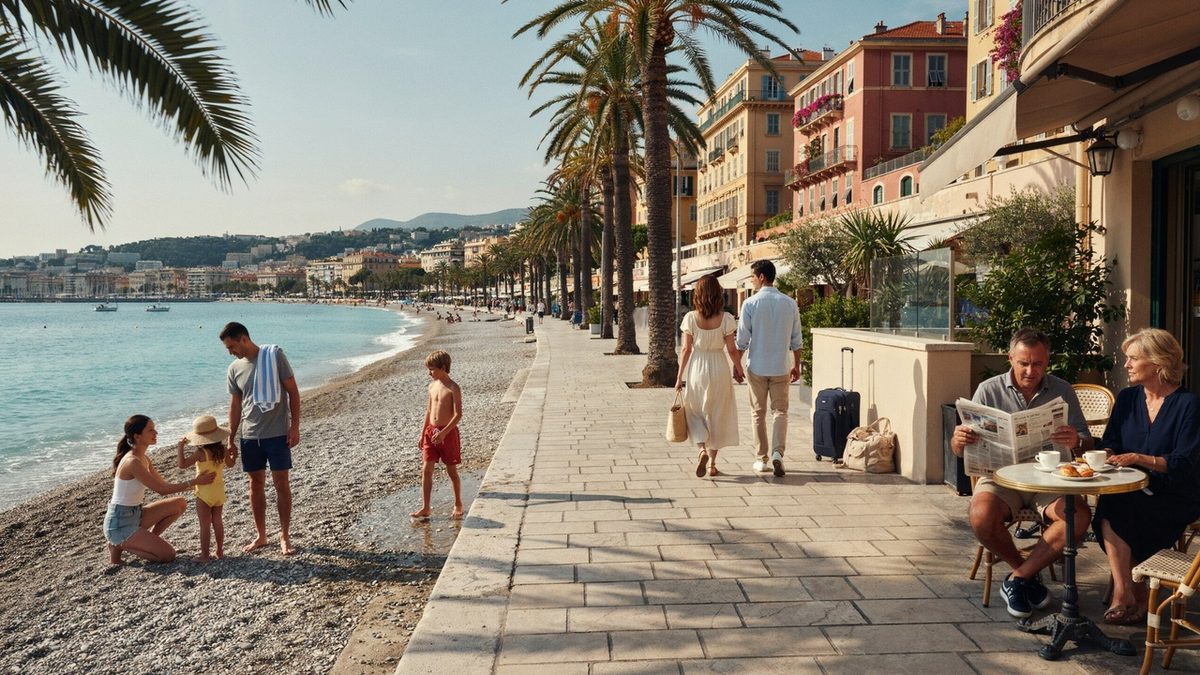
Nice, Mallorca and more destinations are letting travellers keep summer going well into autumn. Better weather, lower prices and easier escapes could make September and October the new holiday sweet spot. Summer isn’t over for travellers. Top destinations can stretch holidays into autumn, keeping sunshine alive while prices fall. Here are the places where summer stays on well into September and October.
Nice, Mallorca and more destinations are letting travellers keep summer going well into autumn. Instead of ending holidays in August, travellers can now chase sunshine into September and October. Nice offers Riviera charm, while Mallorca keeps its beaches and Mediterranean appeal alive. More destinations are also joining the shift towards longer seasonal escapes. Importantly, autumn can bring fewer crowds, changing prices and a more relaxed travel experience.
Meanwhile, stronger shoulder-season demand is reshaping holiday planning across Europe and beyond. As a result, travellers have more opportunities to keep summer going without following the traditional calendar. The biggest surprise? The best autumn escape is not always the hottest.
The end of August no longer has to mean the end of summer travel.
Advertisement
Advertisement
For travellers reluctant to return to routine, September and October are emerging as a compelling extension of the traditional holiday season. The weather can remain warm, accommodation can become cheaper and some destinations become considerably easier to enjoy once the largest summer crowds have disappeared.
New research from Holafly highlights where that combination works best in 2026. Its Post-Holiday Blues Index 2026 assessed 50 destinations across Europe, North Africa and the Americas, looking at several factors linked to the post-summer travel experience.
The ranking considers how much summer weather destinations retain during September and October, changes in flight and accommodation prices, traveller demand and the accessibility of destinations after the traditional peak season.
The result is revealing. The destination offering the strongest overall proposition is not Cape Verde, despite its exceptional autumn warmth. Instead, Nice and the French Riviera take the top position.
Advertisement
Advertisement
Nice leads Holafly’s ranking with a score of 68.6, narrowly ahead of Mallorca at 66.1 and Antalya at 65.5.
The French Riviera’s appeal is not based purely on temperature. September and October temperatures retain approximately 83.8% of summer levels, according to the research.
That is lower than several warmer destinations. However, Nice benefits from a combination of falling prices, continued accessibility and increasing interest from travellers.
Search interest for Nice has risen 41% year on year, according to Holafly, representing the strongest growth among destinations in its European sample.
At the same time, flight prices fall by 44.4% after the summer peak.
That combination helps explain why Nice performs so strongly. Travellers can still find a recognisably Mediterranean holiday environment while potentially paying substantially less for flights than during the height of summer.
For travellers who value restaurants, beaches, coastal scenery and city attractions as much as extreme heat, the French Riviera therefore presents a particularly balanced autumn option.
Mallorca ranks second with 66.1 points, reinforcing the Balearic island’s position as a major European leisure destination beyond the traditional July and August rush.
The island offers a familiar summer proposition, but autumn can bring a different rhythm. With peak crowds easing, travellers can experience beaches, resorts and inland areas without necessarily facing the same intensity of demand found during the height of summer.
Antalya ranks third at 65.5 points.
Turkey’s Mediterranean coast is particularly well positioned for travellers seeking warmth later in the year. Antalya combines a long warm-weather season with an extensive tourism infrastructure, making it suitable for both resort holidays and wider regional exploration.
The ranking suggests that travellers do not necessarily need to travel to the world’s hottest destinations to extend summer. A destination with good connectivity, reasonable pricing and dependable weather can provide a more practical overall holiday.
For travellers whose priority is simply to find sunshine and heat, Cape Verde stands out.
It ranks fourth overall with 65.0 points, but its weather statistics are particularly striking.
Holafly’s analysis found that September and October temperatures in Cape Verde average 106% of summer levels. In other words, autumn can actually be warmer than the June-to-August period used as the summer benchmark.
That makes the Atlantic archipelago one of the clearest options for travellers who are not ready to give up hot-weather holidays.
There is, however, a financial trade-off.
Cape Verde records the smallest overall off-season price reduction among the 25 destinations analysed in that part of the study. Accommodation prices fall by just 10.3%, while flight prices decline by 18.8%.
So, while the destination delivers stronger autumn warmth, travellers should not assume that waiting until September or October will automatically produce major savings.
That distinction matters. The best destination for weather is not necessarily the best destination for value.
Madeira ranks fifth with 61.9 points, supported by temperatures retaining approximately 96.8% of summer levels.
The Portuguese island has increasingly positioned itself as a year-round destination rather than a conventional summer-only escape.
Its mild climate, dramatic landscapes and outdoor attractions make it particularly relevant to shoulder-season travellers. September and October can provide favourable conditions for exploring beyond the coastline, including hiking routes, viewpoints and the island’s mountainous interior.
Madeira therefore fits an increasingly important travel trend: destinations where the holiday experience is not dependent entirely on beach weather.
The next positions show that classic European holiday destinations still have plenty to offer after August.
Naples and the Amalfi Coast rank sixth with 60.9 points, followed by Málaga at 60.7.
The appeal of both regions extends well beyond temperatures.
In southern Italy, autumn can offer travellers the opportunity to experience the Amalfi Coast, Naples and surrounding attractions after the busiest period of the season.
Málaga, meanwhile, benefits from its position on Spain’s Costa del Sol and from being a city destination as well as a beach gateway. That gives travellers more options if weather conditions vary.
Hurghada ranks eighth at 60.1, while Sicily scores 57.7 and Valencia 57.5, completing the top 10.
The wider pattern is significant. Autumn travel is increasingly about the total holiday proposition rather than a single metric such as temperature.
Some famous summer destinations perform surprisingly poorly when accessibility is included.
Corfu scores 37.3, Dubrovnik 37.8, and Santorini/Mykonos 40.4, placing them near the bottom of Holafly’s ranking.
This does not mean these destinations suddenly become unattractive in September or October.
Instead, the research highlights a practical problem: getting there can become considerably harder once the summer peak ends.
Corfu, Dubrovnik and the Greek islands can retain substantial warmth into early autumn. However, direct routes and scheduled airline capacity can fall sharply after the peak season.
The effect is particularly pronounced for Santorini and Mykonos.
Across the four source markets analysed by Holafly, direct routes to the islands fall from eight during summer to just three in September and October.
That creates an important lesson for travellers planning shoulder-season holidays.
Warm weather alone is not enough.
A destination may offer excellent beaches and pleasant temperatures, but if direct flights disappear or schedules become inconvenient, the overall value of the trip can deteriorate.
The Holafly findings arrive as European travellers increasingly look beyond the conventional summer window.
According to the European Travel Commission, 81% of Europeans plan to travel between June and November 2026.
The organisation has also identified growing interest in shoulder-season travel as consumers seek better value and alternatives to the busiest periods.
That shift has implications across the tourism industry.
Hotels, airlines, destination management organisations and tourism businesses are increasingly looking at September and October as important demand periods rather than simply the beginning of the low season.
For travellers, the change can create more choice.
Instead of treating August as the final opportunity for a summer holiday, consumers can consider a wider window and compare destinations based on weather, air connectivity, accommodation costs and demand.
The research also offers a useful framework for choosing an autumn destination.
First, check flight schedules rather than relying on summer availability. A route operating several times a week in August may be reduced or withdrawn in October.
Second, compare the entire trip cost. A cheaper hotel does not necessarily mean a cheaper holiday if flights become significantly more expensive or less convenient.
Third, look beyond temperature. A destination retaining 85% of its summer warmth may provide a better overall experience than a much hotter location with limited connectivity and smaller savings.
Finally, consider what you actually want from the trip. Beach-focused travellers may prioritise Cape Verde, Antalya or Hurghada, while travellers seeking culture, food and city experiences could find Nice, Naples, Málaga, Sicily or Valencia more versatile.
The cause is clear: travellers increasingly want summer experiences without August crowds and peak-season costs. The answer is autumn travel, with Nice, Mallorca and more destinations keeping sunshine, beaches and holiday energy alive beyond summer. The reason is a powerful mix of lingering warmth, changing prices, demand and transport access. Nice stands out because it combines pleasant September and October conditions with falling flight prices and strong traveller interest. Mallorca also remains a compelling Mediterranean choice, while destinations such as Cape Verde offer even warmer autumn weather. However, travellers must check flight schedules before booking. Some seasonal routes disappear after summer. Therefore, keeping summer going into autumn can deliver better value and comfort, but choosing the right destination requires careful planning.
The reason summer travel is stretching into autumn is simple: travellers want sunshine without peak-season pressure. The answer is a wider choice of destinations, from Nice and Mallorca to Antalya, Cape Verde and Madeira. The cause is a combination of changing travel habits, price sensitivity, improving shoulder-season demand and continued warm weather. However, flight connectivity remains critical. Nice leads because it balances weather, demand and affordability, while Cape Verde offers stronger autumn heat but smaller savings. Conversely, Corfu, Dubrovnik and Santorini/Mykonos show how reduced direct services can weaken an otherwise attractive destination. Therefore, autumn holidays can deliver summer-like experiences, but smart planning remains essential.
“Summer travel is no longer confined to July and August. The growing strength of shoulder-season destinations shows that travellers are becoming smarter about when and where they spend their holiday budgets. Nice leading this ranking is particularly interesting because it proves that a successful autumn destination does not have to be the hottest. A combination of weather, connectivity, pricing and traveller interest can be more influential. At the same time, Cape Verde demonstrates the continuing demand for guaranteed warmth. For the travel industry, these trends create an important opportunity to extend demand beyond the traditional peak and give travellers more choice, flexibility and value.” — Anup Kumar Keshan, Founder and Editor-in-Chief, Travel And Tour World
Summer may be winding down on the calendar, but the holiday season is far from finished. The Holafly Post-Holiday Blues Index 2026 shows that September and October can offer a compelling continuation of summer, particularly in destinations that combine warm weather with strong connectivity and better value. Nice and the French Riviera take the top position because they offer a balanced proposition rather than simply extreme heat. Mallorca, Antalya, Cape Verde and Madeira also stand out, although their strengths differ. Cape Verde delivers the most impressive autumn temperatures, while Nice benefits from a major fall in flight prices. Meanwhile, Corfu, Dubrovnik and Santorini/Mykonos demonstrate the importance of post-summer air links. Ultimately, the research points to a changing travel calendar. As shoulder-season demand grows, travellers have more opportunities to chase sunshine, avoid peak crowds and potentially reduce costs. Autumn is increasingly becoming a holiday season worth planning, not merely an afterthought.
Nice, Mallorca and more destinations are changing how travellers think about the end of summer. Instead of treating August as the final chance for a classic holiday, travellers can keep summer going well into autumn. September and October increasingly offer a useful combination of warm weather, fewer peak-season crowds and potentially lower travel costs. Nice leads the way by balancing Mediterranean conditions, accessibility and pricing, while Mallorca continues to attract travellers seeking beaches and a familiar summer atmosphere.
Other destinations offer different advantages, particularly for travellers prioritising stronger autumn warmth. However, the equation is not simply about temperature. Flight availability, accommodation prices and seasonal demand can make or break an autumn escape. Consequently, travellers should compare the complete journey before booking. The wider trend is unmistakable: autumn is becoming more than an extension of summer. For many travellers, it is becoming the smarter time to take the holiday they thought they had already missed.
The strongest message from the ranking is that the traditional summer season is becoming less rigid.
Travellers now have more reasons to move holidays into September and October, from lower flight prices and reduced crowds to continued sunshine and growing transport availability.
Nice demonstrates the broader trend particularly well. It does not need the highest temperatures to win. Instead, it succeeds because it combines a warm-weather experience with a significant fall in flight prices and rising traveller interest.
Cape Verde demonstrates the other side of the equation. It delivers exceptional warmth, but the financial savings are more limited.
Meanwhile, Corfu, Dubrovnik and Santorini/Mykonos show why transport connectivity can determine whether a destination remains practical after peak season.
For the travel industry, that means autumn is no longer simply what happens after summer.
It is becoming a season in its own right.
Advertisement
Advertisement
Advertisement













Friday, September 4, 2026

Friday, September 4, 2026

Friday, September 4, 2026

Friday, September 4, 2026

Thursday, September 3, 2026

Wednesday, September 2, 2026

Friday, September 4, 2026

Friday, September 4, 2026


