
Japan’s New Luxury Travel Story Begins With Kyoto’s Quiet Retreats and Private Bullet Trains

Published
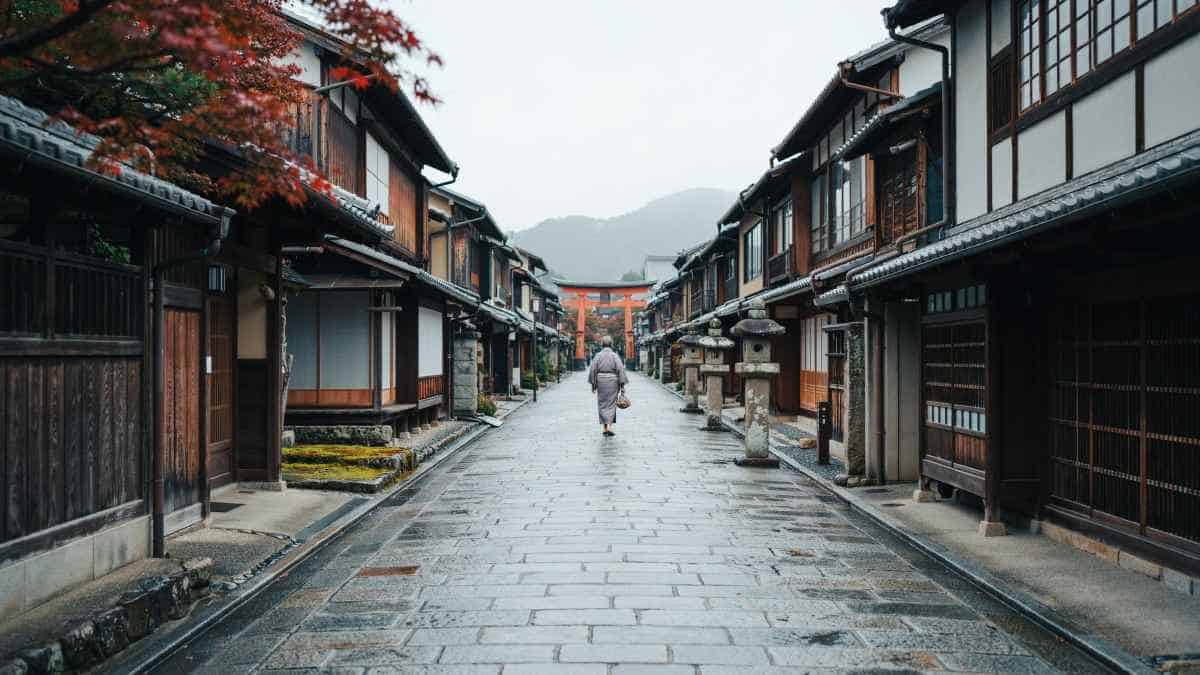
Image generated with Ai
Luxury travel in Japan is about discovering innovative ways to add value to the concept of privacy. In Kyoto, historic machiya dwellings and a well-conceived Zen experience provide an alternative to the elaborate interior design of hotels. In what is known to be the busiest railway line in the country, a top-of-the-line private cabin experience has been launched by Central Japan Railway Company, giving travellers more options and greater control in travelling to other cities. These two innovations represent a much broader movement in the luxury travel sector wherein the quality of experience of the traveller can be measured in terms of personal space, culture, and uninterrupted travel.
Kyoto’s Machiya Stays Offer a More Personal Kind of Luxury
Kyoto’s traditional wooden townhouses, known as machiya, are gaining renewed relevance for travellers seeking a more intimate stay. These properties offer a different atmosphere from large international hotels, with timber architecture, tatami rooms, private courtyards and design shaped by the city’s historic residential culture.
The appeal is not simply nostalgia. A machiya stay can give visitors a stronger connection to Kyoto’s neighbourhoods, where small streets, local shops, temples and traditional craft businesses remain part of everyday life.
The official Kyoto tourism guide recognises machiya as a distinct accommodation category, with some renovated townhouses offering cultural activities such as calligraphy and kimono experiences.
Advertisement
Advertisement
For luxury travellers, the most compelling proposition is the possibility of occupying a private residence rather than sharing the rhythms of a large hotel. Garden views, carefully prepared meals and tailored cultural arrangements can make the accommodation itself a central part of the trip.
However, private monk-led meditation is not a standard feature across machiya properties. Such experiences are generally arranged through specific temples or specialist operators and should be confirmed individually.
Advertisement
Advertisement
Zen Meditation Gives Kyoto’s Luxury Experience Greater Depth
Kyoto’s relationship with Zen is not a new tourism invention. The city has long been associated with Rinzai Zen temples, traditional gardens and practices that place attention on simplicity and discipline.
What is changing is how visitors can access these traditions.
Advertisement
Advertisement
At Shunkoin Temple, the Japan National Tourism Organization describes a private Zen experience in which guests enter a historic temple space for guided meditation led by the abbot. The programme also includes garden viewing and a tea ceremony.
In Kyoto Prefecture’s Kameoka area, another official tourism-listed experience at Shinpuku-ji Temple offers a private meditation session with a Buddhist monk, limited to small groups and requiring advance booking.
These examples show how spiritual and cultural experiences can become part of a premium itinerary without being reduced to hotel entertainment.
For visitors, the value lies in time, guidance and a setting that carries meaning. For Kyoto, it offers a way to distribute visitor interest beyond the most crowded landmarks and towards deeper cultural engagement.
Advertisement
Advertisement
JR Central’s Supreme Class Makes Privacy a Rail Experience
Japan’s luxury travel proposition took a significant step on 1 October 2026, when Central Japan Railway Company launched Supreme Class on selected Tokaido and Sanyo Shinkansen services.
The new product includes fully private cabins on certain N700S trainsets. The cabins are positioned above the existing Green Car category and are designed for passengers who want a more personal environment for work, rest or travel.
Two cabin formats are available. Car 7 accommodates up to two passengers, while Car 10 is designed for one guest. Each cabin has an electronic-lock door, reclining seating and dedicated Wi-Fi.
Passengers can adjust lighting, airflow, seat settings and audio through an in-cabin tablet. Car 7 also includes a sofa, while both formats provide a large table and charging facilities.
The launch gives travellers a new premium option on routes linking Tokyo, Nagoya, Kyoto and Shin-Osaka, with selected services extending further west.
A Private Cabin at High Speed
The new service is not simply a more spacious seat. It changes the relationship between the passenger and the train environment.
Advertisement
Advertisement
Electronic locks provide controlled access, while dedicated Wi-Fi and adjustable settings support passengers who want to work or relax without sharing the same immediate space with other travellers.
The service also includes a welcome beverage and confection, with additional products available through mobile ordering.
JR Central’s published regular-season Smart EX fare for the Tokyo–Shin-Osaka journey is ¥60,790 per person for the two-person cabin and ¥42,390 for the single-occupancy cabin. Prices vary by booking conditions and season.
The cabins are available only on selected trains, and reservations are handled through the official online booking service. Travellers should check availability before planning a journey around the product.
The Golden Route Gains a More Exclusive Dimension
This train route is integral to the main travel route in Japan, connecting Tokyo to Nagoya, Kyoto and Osaka. It has already provided high-speed transport that facilitates visits to multiple destinations; now the new cabin experience takes it a step further. The attraction for the higher-end travellers is the opportunity to travel through major destinations while maintaining privacy and comfort. The visitor could spend the morning in Tokyo and travel through to Kyoto in the private cabin before continuing towards Osaka, without taking domestic flights. Kyoto provides private experiences in its temples, and the new cabin experience of the railways fulfils different purposes but the same common purpose. Both these experiences make it more personalised, either by allowing one to enjoy the experience in the private environment of the temple or by giving the traveller control over his own private space during his travels.
Advertisement
