

Cuba Pairs Up with America and More to Confront Smuggling Across Air Travel Routes

Published
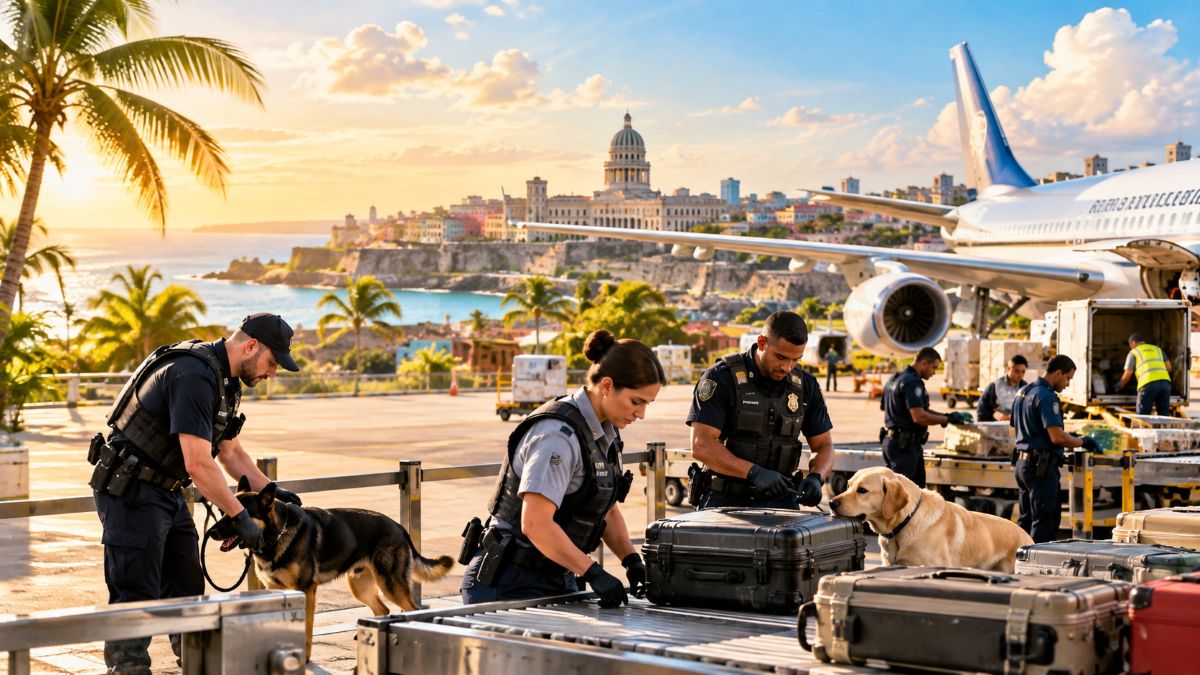
Federal law enforcement authorities stationed across critical entry terminals throughout the United States have intensified vigilance over international aviation routes following the interception of smuggled wildlife concealed on commercial passenger flights arriving from the Caribbean. The development comes as border management agencies intensify collaboration with regional transport hubs to address covert transit corridors that exploit heavy leisure traffic between island transit points and continental hubs. A significant enforcement action unfolded at Miami International Airport when an arriving traveller attempted to bypass formal agricultural and biological quarantine barriers, carrying live avifauna in purpose-built personal compartments designed to escape physical scrutiny.
The interception reflects a broader operational realignment by border inspection authorities who monitor commercial aviation corridors linking Havana with southern Florida. Federal inspectors are deploying refined observational techniques alongside biometric and baggage profiling systems to identify ecological contraband before specimens enter domestic habitats. By scrutinising irregularities in flight passenger declarations and conducting focused behavioural screenings within primary reception halls, biosecurity teams aim to disrupt the illicit acquisition, transit, and trade of vulnerable fauna, thereby reinforcing biosecurity safeguards and international ecological covenants governing species movement across sensitive transnational borders.
Advertisement
Advertisement
Border Interceptions and Elevated Airport Surveillance Protocols
Customs screening at major international gateways relies on multi-layered verification protocols combining advanced paperwork analysis with physical assessments in secure customs enclosures. When commercial aircraft conclude transit from Caribbean airfields, arriving travellers must declare biological products, flora, and live fauna under strict agricultural statutes designed to protect native biomes from foreign pathogens and unsanctioned trade. During the recent processing of a commercial passenger flight connecting Havana to southern Florida, customs officers observed marked deviations between formal declarations and physical presentation. The traveller stated possession of ordinary personal luggage whilst explicitly signing documentation that denied the transport of living specimens or agricultural items.
Behavioural indicators and structural irregularities in the traveller’s attire prompted transfer to secondary inspection facilities where law enforcement personnel execute thorough examinations away from public corridors. Officers detected an irregular protrusion beneath the individual’s clothing, revealing a specialised transport method engineered to circumvent ordinary walkthrough detectors. Six taped plastic cylinders had been inserted into custom-stitched fabric pockets lining the undergarments, with each receptacle fitted with breathable mesh screens at the aperture to allow ventilation during the multi-hour journey. Inside these makeshift containers, officers retrieved ten living avian specimens transported without requisite biosecurity ventilation, veterinary documentation, or clearance protocols.
Advertisement
Advertisement
Intercepted Avian Species and Biosecurity Vulnerabilities
The transport of live birds inside commercial aircraft cabins bypasses mandatory sanitary controls, creating acute biosecurity vulnerabilities alongside grave welfare concerns for the enclosed creatures. The recovered specimens were catalogued by wildlife forensic examiners as eight yellow-faced grassquits and two blue grosbeaks, species native to open shrublands and forested environments across the Americas. Bypassing mandatory avian quarantine protocols exposes domestic poultry populations and native wild birds to transmissible pathogens, including avian influenza variants and exotic Newcastle disease, which historically present catastrophic economic and ecological consequences when introduced through unsanctioned transit lines.
| Species Name | Native Geographic Range | Primary Legal Protection Framework | Identified Smuggling Risk Factor |
| Yellow-Faced Grassquit (Tiaris olivaceus) | Greater Antilles, Central America, Northern South America | Standard Import Sanitation Protocols and Lacey Act Provisions | High demand within regional caged-bird breeding markets |
| Blue Grosbeak (Passerina caerulea) | North America, Central America, Migratory Wintering Grounds | Migratory Bird Treaty Act of 1918 and Federal Lacey Act | Targeted capture for distinctive plumage and melodic song |
The presence of the blue grosbeak carries heightened legal gravity due to its protection under the Migratory Bird Treaty Act of 1918, which strictly prohibits the taking, possession, transportation, and sale of designated migratory songbirds across national boundaries without explicit permits. These songbirds frequently become targets for clandestine trade owing to their vivid appearance and melodic vocalisation, sustaining an underground collector trade that incentives hazardous transit methods. Transporting avifauna within restricted, unventilated apparel results in elevated mortality rates among seized specimens, compelling judicial authorities to treat clandestine biological transport as serious environmental criminality.
Advertisement
Advertisement
Legal Accountability and Judicial Enforcement Frameworks
Judicial mechanisms addressing cross-border fauna trafficking combine agricultural biosecurity statutes with federal criminal laws penalising false declarations made to border authorities. The suspect, identified as an individual maintaining lawful permanent resident status within the United States, faced immediate detention following the invocation of procedural rights during preliminary questioning. Federal investigators lodged formal wildlife smuggling charges, underscoring the defendant’s deliberate evasion of formal import declarations and failure to solicit necessary import certifications from the United States Fish and Wildlife Service prior to embarkation.
Following formal indictment, proceedings advanced to the United States District Court for the Southern District of Florida, where magistrates established bail conditions and structured future court appearances. Judicial authorities approved release under a twenty-five thousand dollar personal surety bond, attaching stringent movement restrictions pending a formal arraignment scheduled for late October. The ongoing judicial management of the case highlights a persistent effort by prosecutors to enforce federal statutes vigorously, demonstrating to illicit wildlife networks that commercial passenger aviation cannot serve as an unpoliced conduit for high-value ecological specimens.
Advertisement
Advertisement
Cross-Jurisdictional Aviation Oversight and Biosecurity Measures
Aviation terminals handle millions of international transit passengers annually, presenting continuous biosecurity screening hurdles for customs staff working alongside transport safety personnel. Stemming the flow of illicit ecological trade requires systematic integration between airline check-in monitoring, departure-gate oversight in origin jurisdictions, and destination arrivals screening. Collaborative training initiatives now focus on recognising non-verbal tension cues, unconventional passenger attire chosen to mask internal physical concealment, and patterns within ticketing manifests that frequently correspond with biological trafficking operations across regional routes.
Enforcement agencies work in parallel with environmental conservation bodies to ensure that seized avian specimens receive immediate clinical stabilisation and supportive care inside specialised quarantine facilities. Forensic experts record genetic profiles and health markers from recovered specimens, establishing data trails that aid investigators in mapping specific capture hubs and commercial conduits. By tightening these investigative loops across the Americas, wildlife enforcement divisions seek to render commercial air transit unviable for international smuggling enterprises, protecting delicate avian populations while preserving the regulatory integrity of international air transit networks.
Frequently Asked Questions
What avian species were discovered during the customs interception at the airport?
Customs and border officials identified eight yellow-faced grassquits and two blue grosbeaks concealed in plastic cylinders within the passenger’s undergarments.
Advertisement
Advertisement
Why is transporting the blue grosbeak considered a serious legal violation?
The blue grosbeak is protected under the Migratory Bird Treaty Act of 1918, making its capture, transport, and commercial handling strictly illegal without federal permits.
How were the live specimens kept alive during the passenger flight?
The birds were placed inside six taped plastic containers modified with mesh covers over the openings to allow limited airflow during transit.
What specific federal charges were filed against the arriving passenger?
The individual was formally charged with smuggling wildlife, failing to declare biological cargo, and evading Fish and Wildlife Service clearance requirements.
Advertisement
Advertisement
What initial judicial determinations were established during the federal court appearance?
The court set a twenty-five thousand dollar personal surety bond permitting conditional release prior to a scheduled formal arraignment later in October.
How does clandestine animal transit impact domestic agricultural and ecological security?
Uninspected biological specimens can introduce hazardous avian diseases and parasites into domestic ecosystems and commercial poultry supplies without quarantine safeguards.
What investigative procedures led officers to discover the concealed containers?
Officers identified visible physical bulges, noted nervous behaviour, and flagged false declarations on customs documentation during primary and secondary arrival checks.
Advertisement
Advertisement
Which agencies maintain primary regulatory authority over arriving foreign wildlife?
United States Customs and Border Protection operates alongside the United States Fish and Wildlife Service to inspect, verify, and clear all arriving fauna.
What penalties generally apply to international wildlife smuggling convictions?
Penalties include substantial financial fines, prolonged forfeiture of transit privileges, legal probation, and multi-year custodial sentences in federal correctional facilities.
Where are recovered live specimens placed following confiscation by border authorities?
Intercepted birds are transferred directly to state-approved veterinary or wildlife quarantine installations for health evaluation, treatment, and ongoing care.
Advertisement
