

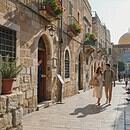
Image generated with Ai
Azerbaijan’s tourism sector has expanded strongly in early 2026 due to rising travel demand from Western Europe, improved air connectivity, and easier entry processes. The United Kingdom, Germany, Italy, France, Spain and the Netherlands have collectively driven this growth, pushing visitor numbers beyond thirty thousand in just four months. Increased interest in cultural tourism, short city breaks in Baku, and diversified travel experiences across the Caucasus region has further strengthened arrivals from these key European markets, making Azerbaijan an increasingly attractive alternative destination for European travellers.
Azerbaijan has recorded a significant rise in inbound tourism from Western Europe in the first four months of 2026, reflecting renewed travel demand and stronger connectivity with key European markets. Official tourism data indicates that more than 30,000 visitors arrived from Western European countries between January and April 2026. This marks a notable 15.5 percent increase compared with the same period in 2025.
Advertisement
The upward trend highlights Azerbaijan’s growing appeal as a cultural, leisure, and business travel destination in the wider Caucasus region. Improved air links, simplified entry procedures, and diversified tourism offerings have contributed to this steady increase. The country continues to position itself as a bridge between Europe and Asia, attracting both short-stay city travellers and long-haul explorers seeking new destinations beyond traditional European circuits.
The increase in Western European arrivals reflects a clear recovery and expansion in outbound travel from major European markets. Based on the reported growth rate, approximately 26,000 visitors from Western Europe travelled to Azerbaijan during the first four months of 2025. The rise to over 30,000 in 2026 demonstrates a consistent upward trajectory in tourism flows.
Advertisement
Advertisement
This growth is closely aligned with broader European travel patterns, where demand for culturally rich, affordable, and less crowded destinations has increased. Azerbaijan has benefited from this shift, offering a mix of heritage sites, modern architecture, coastal tourism along the Caspian Sea, and mountain-based experiences in regions such as Gabala and Shahdag.
The increase also reflects the country’s ongoing investment in tourism infrastructure, including hospitality expansion, airport capacity improvements, and enhanced transport connectivity linking Baku with major European hubs.
Tourism performance in April 2026 highlights particularly strong monthly growth. Visitor arrivals from Western Europe exceeded 8,800 in a single month, marking a 28.5 percent increase compared with March 2026. This sharp rise suggests accelerating seasonal demand heading into the spring travel period, traditionally a peak season for cultural and leisure tourism.
Spring conditions in Azerbaijan, combined with international marketing efforts and improved flight schedules, have likely contributed to this monthly surge. Travellers increasingly choose Azerbaijan for short breaks, combining city tourism in Baku with excursions to historical and natural attractions across the country.
Advertisement
Advertisement
The strong April performance also indicates that Azerbaijan is gaining traction as a repeat-visit destination rather than a one-time emerging market. The increase in frequency of visits from Western European travellers suggests stronger destination awareness and improved perception of safety, accessibility, and value for money.
Western European tourism flows to Azerbaijan remain concentrated in key source markets, which collectively dominate visitor arrivals in April 2026. The leading contributors include the United Kingdom with 7,416 visitors, Germany with 7,045 visitors, Italy with 4,314 visitors, France with 1,891 visitors, alongside Spain and the Netherlands as additional strong-performing markets.
The United Kingdom continues to stand out as one of the strongest outbound markets for Azerbaijan, driven by a combination of leisure travel demand and established air connectivity. German travellers also represent a major segment, supported by consistent interest in cultural tourism and structured city-break itineraries focused on Baku and surrounding regions.
Italy and Spain have shown rising outbound travel momentum, with increasing interest in alternative destinations outside mainstream Western Europe. Azerbaijan’s architectural contrast, historical depth, and evolving hospitality sector have contributed to this upward trend.
The Netherlands also plays a steady role in driving demand, particularly for short-haul cultural escapes and mid-range travel experiences that combine affordability with novelty. Together, these markets highlight a diversified Western European base supporting Azerbaijan’s expanding tourism footprint.
France adds further depth to the regional mix, contributing a stable flow of culturally oriented travellers drawn to Azerbaijan’s heritage sites and urban experiences. Combined, these source markets reflect a balanced and growing European demand structure.
The continued growth in Western European arrivals underscores Azerbaijan’s rising profile as a tourism hub in the Eurasian region. The country has been actively promoting itself as a year-round destination, offering winter sports in the Caucasus mountains, summer coastal tourism along the Caspian Sea, and cultural exploration in historic cities.
Baku remains the primary entry point for international visitors and serves as a central tourism gateway. Its modern skyline, UNESCO-listed Old City, and expanding hospitality sector continue to attract both first-time and returning travellers.
Beyond the capital, destinations such as Gabala, Sheki, and Ganja are gaining popularity among international tourists seeking nature-based experiences, mountain landscapes, and heritage-rich environments. These regions are increasingly being integrated into international tour itineraries targeting European travellers.
Improved air connectivity between Western Europe and Azerbaijan has played a crucial role in supporting tourism expansion. Baku’s international airport continues to strengthen its network of direct and connecting flights with major European cities.
Increased flight frequencies, along with competitive fare structures, have significantly enhanced accessibility for short-break travellers. This has particularly benefited urban travellers from Germany, the United Kingdom, Spain, and Italy, where weekend and mid-week travel demand continues to grow.
Enhanced visa facilitation measures, including streamlined electronic visa systems, have also contributed to improved travel convenience. These measures have reduced administrative barriers and encouraged spontaneous travel decisions among European tourists.
Azerbaijan’s tourism strategy has focused on diversification, infrastructure expansion, and global positioning. Investments in hospitality development, transport connectivity, and destination marketing have strengthened the country’s ability to handle rising visitor volumes.
The country has also placed emphasis on cultural tourism and event-based travel, hosting international exhibitions, sports events, and festivals that attract European audiences. This approach supports broader efforts to diversify tourism beyond traditional seasonal peaks.
Sustainability and regional tourism development are also gaining importance, with initiatives aimed at distributing tourist flows beyond Baku into rural and mountainous regions. This helps balance visitor concentration while supporting local economic development across multiple areas.
The steady increase in Western European arrivals during early 2026 suggests sustained momentum for Azerbaijan’s tourism sector. If current trends continue, full-year arrivals from these markets are expected to maintain positive growth, supported by seasonal travel peaks and expanding airline networks.
Rising awareness of Azerbaijan as a culturally rich, accessible, and value-driven destination is expected to further strengthen its position in the European outbound tourism market. The combination of heritage attractions, modern urban experiences, and natural landscapes continues to shape its appeal.
As competition intensifies among emerging destinations across Eurasia, Azerbaijan’s continued focus on infrastructure, connectivity, and destination branding will remain essential for sustaining long-term tourism growth.
Advertisement
Advertisement
Advertisement













Sunday, September 6, 2026

Sunday, September 6, 2026

Sunday, September 6, 2026

Sunday, September 6, 2026
Saturday, September 5, 2026
Saturday, September 5, 2026

Sunday, September 6, 2026

Sunday, September 6, 2026



