
Amtrak and Brightline Reveal Why High-Speed Rail in America Remains a Costly Travel Gamble

Published
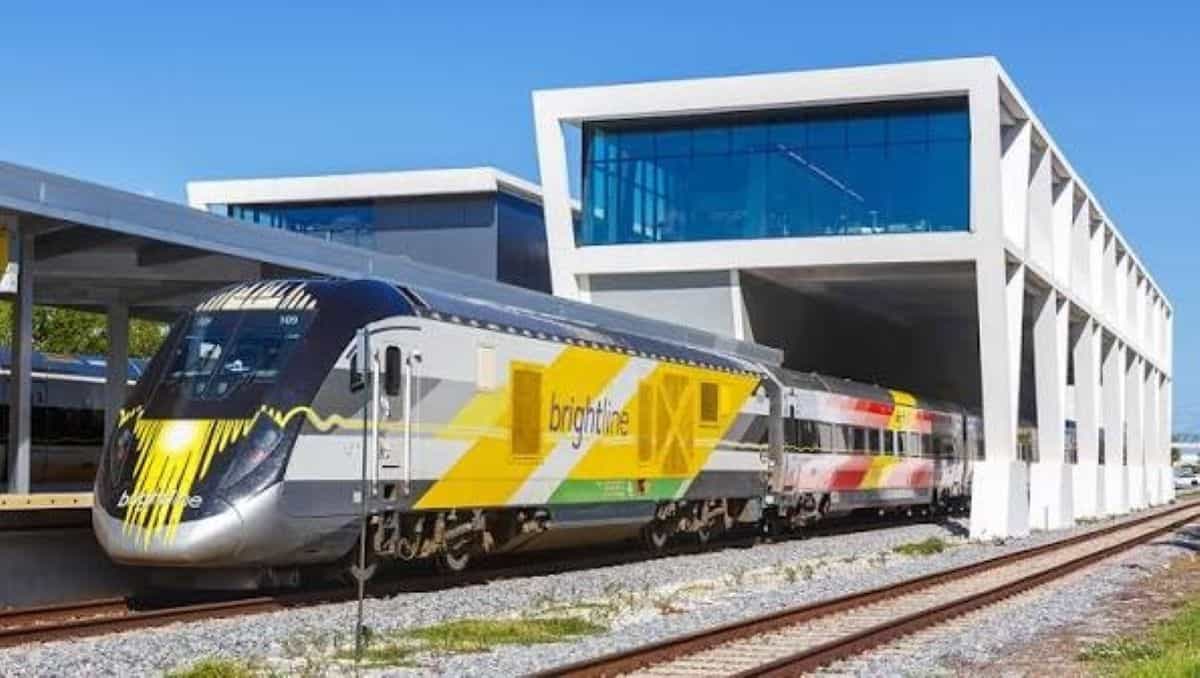
America once built railways that transformed a continent, yet it still lacks a nationwide high-speed passenger network comparable with Europe, Japan or China. The latest Brightline financial restructuring has renewed questions about whether private capital can carry the burden alone. Its Florida service continues operating, while Brightline West remains planned as a 218-mile Las Vegas–Southern California high-speed railway. At the same time, California’s much larger public project faces funding and construction challenges. For travellers, the issue extends beyond train speeds. It concerns journey times, airport congestion, car dependence, tourism access and the future shape of American intercity travel.
The United States has improved its rail offering, particularly through Amtrak’s NextGen Acela, which entered service in 2025. However, much of the network still operates well below global high-speed standards. The structural obstacles remain substantial, including fragmented funding, expensive construction, dispersed cities, limited dedicated track and uncertain ridership forecasts.
America Built Roads Faster Than Rail
The American transport system reflects decades of policy choices rather than a simple dislike of trains. After the Second World War, the federal government made highways a central national investment priority. The Federal-Aid Highway Act of 1956 established a nationwide Interstate programme with a 90% federal construction share.
That decision created a powerful travel ecosystem around cars, trucks, suburban development and road infrastructure. The Highway Trust Fund also established a dedicated mechanism for financing the road network. By comparison, passenger rail never received an equivalent national funding structure.
Advertisement
Advertisement
The distinction matters today. Building high-speed rail requires enormous upfront investment before passengers can buy their first ticket. Tracks, bridges, tunnels, signalling, electrification, stations and land acquisition all require capital years before revenue begins.
Highways faced similar costs, but the federal government established a national programme capable of absorbing much of that burden. American high-speed rail has largely developed through fragmented federal, state and private initiatives.
Advertisement
Advertisement
| Transport System | Major US Funding Model | National Approach | Traveller Outcome |
|---|---|---|---|
| Interstate highways | Federal and state funding | Strong national framework | Extensive nationwide road access |
| Commercial aviation | Private airlines with public infrastructure | National air-traffic system | Fast long-distance connectivity |
| Conventional passenger rail | Amtrak, federal and state support | Mixed regional model | Uneven service and speeds |
| High-speed rail | Federal, state and private investment | Fragmented | Limited operational network |
| Urban transit | Federal, state and local funding | Metropolitan focus | Stronger within major cities |
This history helps explain why high-speed rail in America cannot simply replicate the European or Japanese model. The challenge is not only technology. It is institutional design.
Geography Makes the Business Case Harder
American geography creates another obstacle. Europe and Japan contain dense clusters of large cities where rail can compete effectively against aviation and road travel.
Advertisement
Advertisement
The most commercially attractive American corridors are therefore not necessarily the longest ones. Routes linking major metropolitan areas within roughly a few hundred miles can provide the strongest proposition.
The Northeast Corridor illustrates that potential. Boston, New York, Philadelphia and Washington sit within a heavily populated urban chain. Amtrak’s FY2025 figures show more than 15.17 million trips on the Northeast Corridor spine, including 3.15 million Acela passengers and 12.02 million Northeast Regional passengers.
That demand demonstrates an important principle. Rail does not need to replace aviation across the entire country to become commercially valuable. It needs to dominate carefully selected corridors where station-to-station travel competes effectively with airports and motorways.
| Corridor Characteristic | High-Speed Rail Advantage |
|---|---|
| 200–400 mile journey | Strong potential |
| Dense metropolitan populations | Higher passenger demand |
| Congested highways | Greater competitive advantage |
| Busy airports | More attractive alternative |
| Frequent business travel | Strong premium demand |
| Limited urban density | Weaker economics |
| Very long-distance journeys | Aviation often remains faster |
The problem is that America has fewer naturally compact city clusters than Western Europe. That makes route selection particularly important.
Advertisement
Advertisement
Brightline Shows Both Promise And Risk
Brightline’s Florida experiment became one of the most closely watched private passenger rail projects in the country. Its Miami–Orlando service demonstrated that Americans will use premium intercity rail when stations, frequencies and journey times fit their travel patterns.
Yet the company’s recent financial restructuring has exposed the difficulty of funding large rail systems primarily through private debt.
Brightline announced in September 2026 that certain affiliated entities had entered a restructuring agreement. The company secured $490 million in new financing commitments, while stating that Miami–Orlando operations would remain unaffected. Ridership and revenue through August had both risen 14% year on year.
The distinction is important for travellers. The bankruptcy proceedings involve affiliated entities rather than the operating company running Florida passenger services. Therefore, the restructuring does not mean that Miami, Fort Lauderdale, West Palm Beach or Orlando services have suddenly disappeared.
It does, however, expose a broader commercial problem. Strong ridership growth does not automatically translate into enough cash flow to support the enormous debt required to build intercity rail.
| Brightline Florida Indicator | Latest Reported Position |
|---|---|
| Miami–Orlando service | Operating |
| 2026 year-to-date ridership growth | 14% |
| 2026 year-to-date revenue growth | 14% |
| New restructuring capital | $490 million |
| Florida operating service | Not included in bankruptcy |
| Planned expansion | Tampa and additional stations |
For the American rail industry, this distinction may become increasingly important. Passenger demand can be healthy while the financing structure remains unsustainable.
Advertisement
Advertisement
Brightline West Could Change The Equation
Brightline West represents a different proposition. The planned 218-mile route between Las Vegas and Rancho Cucamonga is designed for trains capable of reaching approximately 200 mph.
The project aims to make the journey in about two hours. It will run largely along the Interstate 15 corridor and connect with Southern California’s Metrolink network at Rancho Cucamonga.
The US Department of Transportation approved $2.5 billion in private activity bond authority for the project in 2024. The project was estimated at about $12 billion and was designed as an all-electric railway.
Brightline West is strategically significant because it targets a corridor where the alternatives are imperfect. Las Vegas attracts enormous tourism volumes, while Southern California suffers from severe road congestion and large distances between population centres.
For leisure travellers, the proposition is straightforward. A reliable two-hour rail journey from Las Vegas towards the Los Angeles region could remove much of the uncertainty associated with driving.
The project could also demonstrate whether private investment works better when a route has unusually strong leisure demand and an existing highway corridor.
Advertisement
Advertisement
California Has A Different Problem
California’s public high-speed rail programme demonstrates the opposite side of the American challenge. Its proposed Phase 1 would connect San Francisco with Los Angeles/Anaheim while linking major Central Valley communities.
The Authority’s revised 2026 business plan places the Phase 1 capital cost at approximately $126.3 billion using its latest year-of-expenditure estimate. It also reports nearly $14.8 billion in expenditures through the end of 2025 within the detailed cost assessment.
Those figures illustrate why American high-speed rail requires patient public investment. California is constructing a complex new railway across a difficult urban and geographic environment.
The state has also changed its funding strategy. It removed around $4 billion in federal funding assumptions after federal grant terminations and now relies more heavily on state resources. California says federal funding represents less than 10% of the programme’s current budget.
At the same time, the programme has generated significant economic activity. California reports more than 132,000 job-years of employment, $10.5 billion in labour income and $26.9 billion in economic output from July 2006 through March 2026.
This creates a more complicated picture than simply labelling the project a failure. The railway has not yet delivered the passenger service originally envisioned, but construction itself has generated measurable economic activity.
Advertisement
Advertisement
Acela Proves Demand Already Exists
America’s high-speed rail story also cannot be judged solely by projects under construction. The Northeast Corridor already provides the country’s strongest evidence that faster rail can attract substantial demand.
NextGen Acela entered service in August 2025. Amtrak reported nearly 1.5 million customer trips during its first year, alongside more than 1.1 million miles operated and more than 3,300 frequencies.
The trains can reach speeds of up to 160 mph. However, infrastructure constraints mean they cannot maintain that speed for most of their journeys.
That distinction is crucial. A fast train is not necessarily a high-speed railway. True high-speed service depends on dedicated infrastructure, signalling, track geometry, electrification and sufficient route capacity.
For travellers, the practical difference appears in total journey time rather than the maximum number displayed on the train’s specification sheet.
Why Private Money Cannot Solve Everything
The financial structure of high-speed rail creates a fundamental mismatch. Investors want predictable returns, while governments also value benefits that do not appear directly on a railway’s balance sheet.
Advertisement
Advertisement
A faster railway can reduce highway congestion, improve regional accessibility and support development around stations. It can also provide an alternative to short-haul flights and reduce transport emissions.
Those benefits extend beyond the passengers buying tickets. Consequently, governments often support rail infrastructure even when fares cannot recover the entire investment.
The Government Accountability Office has repeatedly identified ridership, construction costs, funding and public benefits as central factors affecting high-speed rail viability. It has also noted that dense corridors tend to offer stronger economics.
This explains why expecting private capital to finance an entire national network is unrealistic. Private operators can potentially build profitable corridors, but national connectivity requires a broader public policy framework.
Europe And Japan Offer A Different Model
The contrast with Europe is striking. Eurostat reported that EU railways carried 8.7 billion passenger trips in 2024, generating 444.5 billion passenger-kilometres.
France and Germany alone accounted for more than 216 billion passenger-kilometres. Italy added another 55.9 billion.
Advertisement
Advertisement
The lesson is not that America needs to copy Europe kilometre for kilometre. Instead, it demonstrates the power of sustained investment, integrated networks and multiple interconnected corridors.
Japan offers an even stronger example. Its Shinkansen system operates within a country where major population centres are connected by frequent high-speed services.
America lacks the same population geography. However, that does not eliminate the opportunity for high-speed rail. It means the United States needs a corridor-based strategy rather than a blanket national network.
| Market | Dominant Strength | Lesson For America |
|---|---|---|
| Japan | Dense urban corridors | Frequency creates habitual demand |
| France | National high-speed network | Central planning enables connectivity |
| Germany | Integrated rail network | High-speed rail works best with regional links |
| Italy | Major city corridors | Medium-distance rail can compete strongly |
| United States | Large metropolitan clusters | Targeted corridors offer the best opportunity |
What It Means For Travellers
For travellers, the biggest opportunity lies in corridors where rail can eliminate the hidden costs of flying.
A train can place passengers directly in central business districts. It can also avoid airport transfers, security queues and lengthy check-in processes.
However, travellers should not assume that every American train labelled “high-speed” delivers European-style speeds. Route infrastructure matters as much as rolling stock.
Advertisement
Advertisement
The practical comparison should therefore consider total door-to-door journey time, station location, frequency, reliability and ticket price.
| Traveller Need | Rail Advantage | Current US Limitation |
|---|---|---|
| City-centre access | Strong | Network remains limited |
| Airport avoidance | Strong | Few true HSR corridors |
| Scenic travel | Strong | Long-distance services can be slow |
| Business travel | Strong on dense corridors | Limited frequency outside Northeast |
| Leisure travel | Strong on suitable city pairs | Few dedicated lines |
| Sustainable travel | Potentially strong | Electrification remains limited |
| Reliability | Potentially high | Shared freight tracks create constraints |
The expansion of Brightline West could therefore become significant beyond Nevada and California. If travellers embrace the service, other states may gain stronger evidence that carefully selected rail corridors can compete with cars and aircraft.
America Needs A New Rail Strategy
The United States does not lack demand for rail travel. Amtrak’s latest figures demonstrate substantial passenger volumes, while Brightline’s Florida service continues to report double-digit annual growth.
The deeper problem is that America has never created a sustained national high-speed rail framework comparable with its highway system. Funding has remained fragmented, construction costs have escalated, and political priorities have changed repeatedly.
California’s experience shows the risks of large public projects without stable long-term funding. Brightline’s restructuring shows the risks of placing too much financial pressure on private capital.
The emerging answer may therefore sit between the two models. Public investment can build the infrastructure, while private operators can compete for passengers and develop commercially attractive services.
Advertisement
Advertisement
For travellers, that could eventually produce faster journeys without requiring every American route to become a 200 mph railway.
The immediate future will depend on a small number of strategic corridors. Las Vegas–Southern California, the Northeast Corridor and California’s developing network will provide important tests. If these projects demonstrate reliable demand and controlled costs, America’s rail map could gradually change.
The most important question is no longer whether Americans want faster trains. Passenger numbers already suggest that they do. The harder question is whether the country can create the long-term funding, infrastructure and policy certainty needed to make high-speed rail commercially and operationally viable.
For tourism, the stakes are significant. Better rail links could redistribute visitors beyond gateway cities, connect secondary destinations and reduce pressure on congested airports and highways. America’s rail revival therefore remains possible, but it will require the country to treat passenger rail as national infrastructure rather than an isolated commercial experiment.
Advertisement
