

Greece Battles Italy and France as Kimolos Elephant Rock Sparks Fierce New Mediterranean Tourism Race in 2026

Published
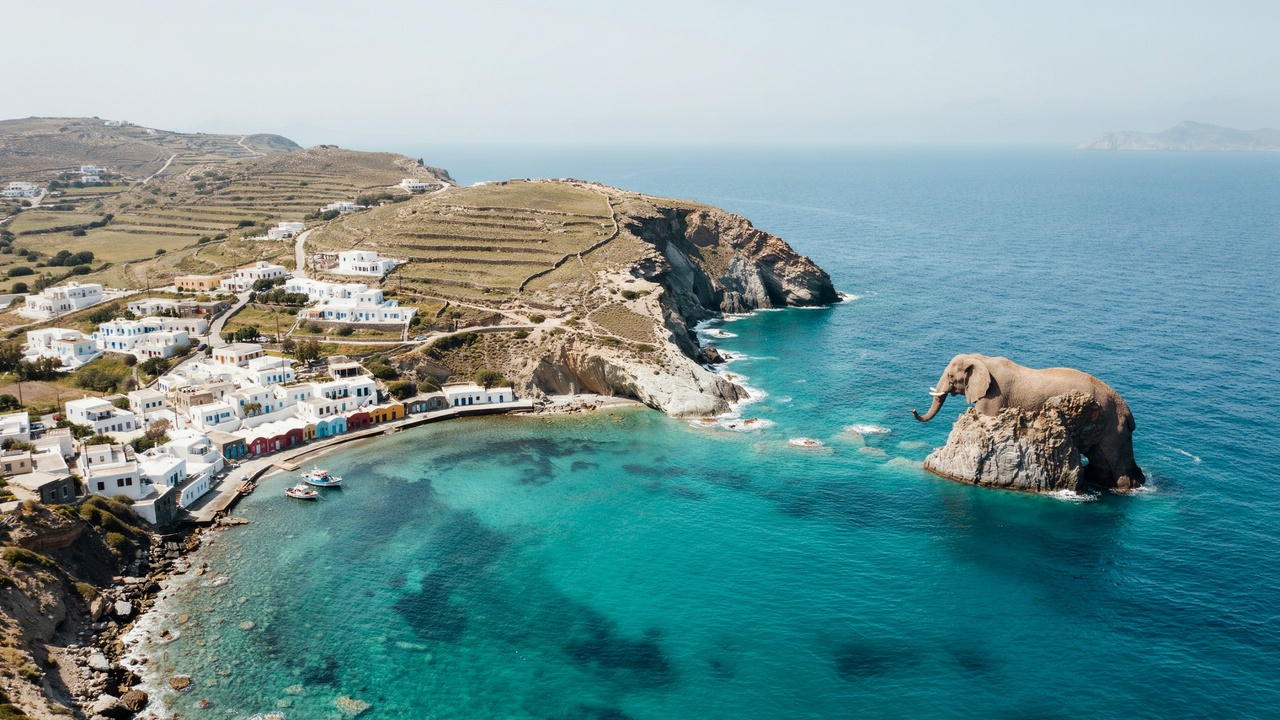
Greece Battles Italy and France as Kimolos Elephant Rock Sparks Fierce New Mediterranean Tourism Race.Greece is strengthening its position in the Mediterranean tourism race as Kimolos gains attention for its striking Elephant Rock and volcanic coastal scenery. With Italy and France also competing for travellers seeking dramatic landscapes, island escapes and authentic cultural experiences, Kimolos offers Greece a fresh advantage. The island’s natural formations, traditional fishing shelters, clear Aegean waters and connection with nearby Milos could help attract visitors looking beyond overcrowded destinations while supporting local businesses and wider regional tourism growth.
Kimolos, a small volcanic island in Greece’s western Cyclades, has an unusual tourism asset hiding along its coast. Around the fishing settlements of Rema and Goupa, erosion has sculpted the shoreline into a formation that, from a particular angle, resembles an elephant extending its trunk towards the Aegean Sea.
Advertisement
Advertisement
The original report published on 6 October 2026 presents the formation alongside Kimolos’ volcanic coastline and traditional syrmata boat shelters. But viewed through a travel-economy lens, the story is considerably larger.
Kimolos already possesses many of the characteristics now sought by travellers looking beyond Greece’s heavily visited island destinations: unusual geology, traditional settlements, walking trails, clear water, small-scale experiences and a recognisable local identity.
Advertisement
Advertisement
Greece’s official tourism portal describes Kimolos as a volcanic island with an exceptional variety of rock formations and identifies its geological landscape as one of the destination’s defining attractions.
That means Elephant Rock does not need to stand alone. It can become part of a broader Kimolos geotourism experience.
Advertisement
Advertisement
Why This Matters for Greece’s Tourism Economy
The timing is important.
According to final data from the Bank of Greece, travel receipts reached €23.63 billion in 2025, increasing 9.4% from 2024. Non-resident inbound traveller flows increased 6.4%, while average expenditure per trip rose to €545.50. Significantly for Kimolos, the Southern Aegean generated Greece’s largest share of both travel receipts and overnight stays.
Advertisement
Advertisement
The momentum has continued into 2026. During January-July, Greece generated approximately €13.52 billion in travel receipts, 12% above the corresponding period of 2025.
Kimolos therefore sits inside one of Greece’s most commercially important tourism regions.
The economic opportunity comes from persuading travellers already interested in the Cyclades to add a smaller island to their itinerary. Every additional overnight stay can potentially support accommodation providers, restaurants, cafés, ferries, boat operators, guides, food producers and other locally owned businesses.
Elephant Rock can help provide another reason to make that journey.
Advertisement
Advertisement
UK, Germany, Italy, France and US Are Directly Connected to the Bigger Story
Five international markets are especially relevant when examining the economic opportunity.
| Country | 2025 Greece tourism indicator | Why it matters to Kimolos |
|---|---|---|
| Germany | €3.78bn travel receipts | One of Greece’s largest inbound tourism economies |
| United Kingdom | €3.74bn travel receipts | Rapidly growing high-value source market |
| United States | €1.74bn travel receipts | Important long-haul, higher-spending market |
| France | €1.33bn travel receipts | Major European leisure market |
| Italy | €1.29bn travel receipts | Important Mediterranean source market |
These are Greece-wide figures, not Kimolos-specific visitor statistics, so it would be inaccurate to claim that these countries directly generated those amounts for Kimolos. They do, however, identify the international markets with substantial economic relevance to Greek tourism.
The 2026 figures make Italy and Britain particularly interesting. Between January and July, receipts from Italian visitors increased 31.6% year-on-year to €828.1 million, while UK receipts increased 23.3% to €2.09 billion.
This creates a credible new editorial angle: can Greece use small natural attractions such as Kimolos’ Elephant Rock to distribute international visitor spending beyond its headline islands?
Kimolos Could Benefit From Greece’s Shift Towards Experience-Led Travel
Visitors no longer need a monumental attraction to justify travelling somewhere.
A dramatic geological formation, hiking route, fishing settlement or photogenic coastline can become the centre of a highly shareable travel experience.
Advertisement
Advertisement
Kimolos is particularly well positioned for this model because Elephant Rock is only one component of its natural landscape.
Visit Greece identifies seven principal marked hiking routes covering approximately 35 kilometres. The island also features Skiadi, an enormous mushroom-like geological formation, archaeological landscapes, volcanic rocks and routes overlooking the Aegean.
That allows Kimolos to be marketed around something more valuable than one photograph:
geology + hiking + traditional culture + beaches + gastronomy + island hopping.
Such combinations potentially encourage longer stays and wider visitor spending.
Rema and Goupa Add Cultural Value to the Geological Story
The coastline around Rema and Goupa gives the attraction another important tourism dimension.
Advertisement
Advertisement
The Municipality of Kimolos describes Rema as a natural pool beside Goupa, surrounded by rocks, small islands and syrmata. These are caves cut into soft rock where boats traditionally could be pulled in during winter.
Goupa is also officially promoted as a picturesque fishing settlement characterised by these distinctive shelters.
This matters economically because visitors are not simply encountering a strangely shaped rock.
They encounter living Cycladic maritime heritage.
That creates opportunities for guided walking, photography, cultural interpretation, small boat excursions and locally based food experiences. It also differentiates Kimolos from destinations competing predominantly around beaches.
Milos Could Become Kimolos’ Tourism Gateway
Another powerful angle involves neighbouring Milos.
Advertisement
Advertisement
Kimolos does not have its own commercial airport. Visit Greece recommends reaching the island by flying from Athens to Milos — approximately 40 minutes — before taking a ferry to Kimolos, listed at roughly one hour.
The Municipality of Kimolos additionally states that travellers can reach the island by ferry or high-speed vessel, including connections from Piraeus, Crete and other Cycladic islands, or travel by air through Milos.
This creates the possibility of a Milos-Kimolos twin-island geotourism itinerary.
Milos already has internationally recognisable geological scenery, including Sarakiniko and Kleftiko. Visit Greece describes more than 70 beaches around Milos and highlights the island’s landscapes created through volcanic activity, wind and Aegean erosion. Visit Greece
Kimolos can complement rather than compete with that reputation.
A traveller could experience Milos’ famous white volcanic coastline before moving to quieter Kimolos for Elephant Rock, Skiadi, Goupa, hiking and traditional island life.
Advertisement
Advertisement
Elephant Rock Could Help Spread Tourism Spending
This is where the story becomes economically significant.
Major Greek destinations can capture enormous visitor demand, while smaller islands need recognisable experiences capable of drawing travellers beyond established tourism circuits.
Natural landmarks can perform that role without requiring construction of another major resort or artificial attraction.
Kimolos already possesses the raw material.
Official Greek tourism information highlights its volcanic landscape, geological formations, turquoise waters, walking opportunities and traditional Cycladic character.
If those resources encourage even a portion of travellers visiting Milos or other Cycladic destinations to spend additional time on Kimolos, expenditure can move into businesses operating within a much smaller island economy.
Advertisement
Advertisement
That is the stronger tourism story behind Elephant Rock.
It represents how micro-attractions can potentially generate macro-level destination visibility.
Sustainable Tourism Must Come Before Viral Tourism
There is nevertheless an important warning.
Transforming a fragile geological site into a social-media attraction without visitor management could create the opposite outcome.
Kimolos’ advantage lies precisely in its relatively unspoilt character.
Promotion therefore needs to emphasise observation, walking, responsible boating and respect for geological and cultural heritage rather than uncontrolled access to sensitive formations.
Advertisement
Advertisement
This also creates an opportunity for Greece to position Kimolos within the growing market for slower, nature-led island tourism rather than attempting to recreate the high-volume tourism model associated with better-known Mediterranean destinations.
For a small island, economic success does not necessarily mean attracting the maximum possible number of visitors.
It can mean attracting travellers who stay longer, explore more places and spend across more locally owned businesses.
A Tiny Greek Landmark With a Much Bigger Tourism Story
Elephant Rock provides Kimolos with something destinations increasingly compete to obtain: a naturally distinctive image capable of instantly communicating a sense of place.
But the real opportunity stretches beyond the elephant silhouette.
Kimolos can combine the formation with Goupa’s syrmata, Skiadi, volcanic landscapes, hiking, traditional architecture, beaches and neighbouring Milos to build an identifiable geotourism and slow-island travel proposition.
Advertisement
Advertisement
And Greece already has the international demand needed to support it.
With Britain, Germany, Italy, France and the United States contributing billions of euros to Greece’s wider visitor economy, the strategic question is increasingly about where that spending travels once visitors arrive.
For Kimolos, one elephant-shaped piece of volcanic coastline could help put one of Greece’s quieter islands onto considerably more international itineraries.
Greece Battles Italy and France as Kimolos Elephant Rock Sparks Fierce New Mediterranean Tourism Race.Kimolos’ Elephant Rock shows how a small natural landmark can become part of a much bigger Mediterranean tourism competition. As Greece faces strong rivals such as Italy and France, distinctive islands with geological attractions and authentic communities can help diversify visitor demand. Kimolos has the potential to benefit accommodation providers, restaurants, ferry operators, guides and local businesses while encouraging slower and more sustainable travel. Its success will depend on responsible promotion that protects the landscape while turning international curiosity into meaningful tourism spending.
Advertisement
