
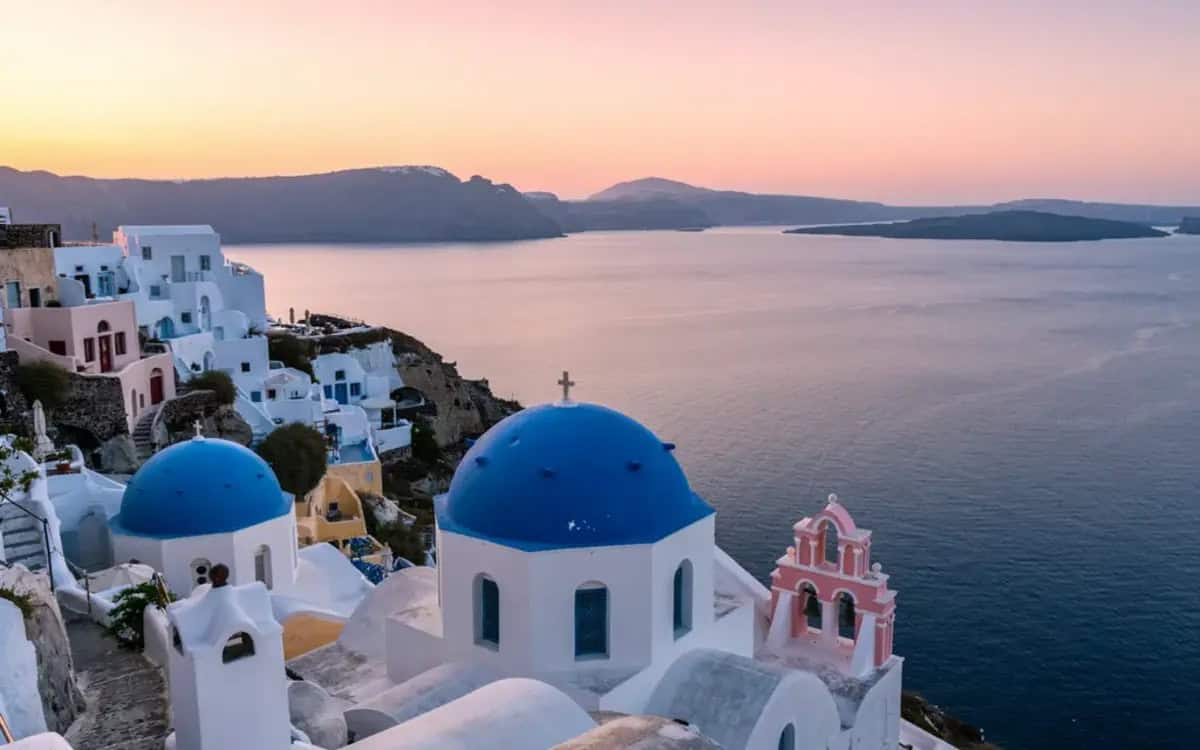
Image generated with Ai
Aegean tourism confronts new challenges as Greece and Turkey clash over marine park projects, sparking tensions at sea.
The Aegean tourism sector is at risk of entering into a new phase of uncertainty as Greece and Türkiye enter into a confrontation of interests on marine park expansion, maritime boundaries and environmental protection. The dispute has placed one of the Mediterranean’s most popular tourism regions in the spotlight, with the possibility of future management of shared waters which underpin island tourism, coastal economies, cruise shipping and marine activities under threat.
The Aegean Sea has long been a major attraction for international travellers due to its combination of historic sites, island destinations, crystal-clear waters, coastal resorts, and cultural experiences. However, the latest disagreement between Greece and Türkiye has highlighted the complex relationship between environmental conservation efforts and long-standing maritime disputes.
While both countries have promoted the importance of protecting marine ecosystems, disagreements over the location and authority of protected areas have created fresh diplomatic pressure in a region where tourism depends heavily on stability and cooperation.
Advertisement
Advertisement
The latest tensions began after Türkiye announced the establishment of two marine protected areas in the northeastern Aegean Sea and the eastern Mediterranean on August 15. The decision was presented as part of efforts to protect marine biodiversity, preserve natural habitats, and support sustainable environmental management.
The newly designated areas were intended to strengthen conservation efforts in important marine ecosystems. However, the announcement immediately attracted attention because parts of the areas are located in waters where maritime boundaries between Greece and Türkiye remain disputed.
The move followed Greece’s earlier decision in July 2025 to establish marine parks in parts of the Aegean Sea and other maritime areas. Greece described its initiative as an environmental protection measure designed to safeguard marine life and promote sustainable use of ocean resources.
Türkiye had previously raised objections to Greece’s plans, arguing that unilateral actions in areas affected by unresolved maritime issues could create additional complications. After months of disagreement, Türkiye moved forward with its own marine park designations.
Advertisement
Advertisement
The developments have transformed environmental policy into another point of tension between the two neighbouring countries.
At the centre of the disagreement is the wider dispute over maritime boundaries in the Aegean Sea. Greece and Türkiye have different interpretations of territorial waters, continental shelf rights, and maritime jurisdiction.
Greece argues that some of Türkiye’s newly announced marine park areas extend beyond the maritime limits currently applied by both countries. Athens has stated that certain zones overlap with areas where it claims rights related to the continental shelf.
The issue is connected to the broader debate over territorial waters. Greece maintains that international maritime law allows countries to extend territorial waters up to 12 nautical miles from the baseline. Türkiye has opposed such expansion in the Aegean Sea, warning that it could create serious consequences for bilateral relations.
The disagreement reflects decades of complex negotiations and unresolved issues surrounding maritime rights.
For the tourism sector, the dispute creates concerns because the Aegean Sea is not only a political region but also a major economic zone. Thousands of businesses depend on the movement of visitors, vessels, and tourism services across these waters.
The Aegean region remains one of the most important tourism destinations in the Mediterranean. Millions of visitors travel each year to explore Greek islands, Turkish coastal resorts, archaeological attractions, beaches, and marine experiences.
Tourism activities across the region include cruise travel, island connections, sailing, yacht tourism, diving, fishing experiences, and eco-tourism programmes. These industries rely on predictable maritime conditions and strong regional cooperation.
Any prolonged dispute between Greece and Türkiye could create challenges for tourism planning, particularly for businesses involved in long-term investments, coastal development, and sustainable tourism projects.
However, marine conservation initiatives also offer opportunities for tourism growth. Properly managed marine parks can attract visitors interested in nature-based experiences, wildlife observation, underwater exploration, and environmentally responsible travel.
The challenge remains ensuring that conservation measures support tourism development without increasing political disagreements.
The current marine park dispute is connected to a much longer history of disagreements between Greece and Türkiye. The Aegean Sea has been a sensitive region due to its geography, with numerous Greek islands located close to Türkiye’s coastline.
Historical developments following the decline of the Ottoman Empire shaped modern borders and political relations in the region. Greece gradually gained control over many Aegean islands after becoming independent in the 19th century.
The modern territorial framework was established through the 1923 Treaty of Lausanne, which confirmed Türkiye’s control over Istanbul and the Anatolian Peninsula while recognising most Aegean islands as Greek territory.
The agreement continues to influence discussions about maritime rights today. Both countries maintain different positions on issues related to sea boundaries, airspace, and resource access.
The marine park dispute has therefore become part of a broader pattern of disagreements that continue to affect regional relations.
Across the world, marine conservation has become an important part of tourism development strategies. Countries are increasingly creating protected areas to preserve marine ecosystems while promoting sustainable tourism.
The Aegean Sea has significant environmental value, including diverse marine habitats and coastal ecosystems. Marine parks could help protect biodiversity while creating new opportunities for responsible tourism.
Activities such as Pre-cruise, underwater tourism, marine education programmes, and nature-based travel experiences could benefit from stronger conservation measures.
However, when protected areas are announced in politically sensitive regions, environmental decisions can become connected with territorial questions.
The Greece-Türkiye dispute demonstrates the challenge of balancing environmental goals with diplomatic considerations. Both countries are seeking to protect marine resources while also defending their national interests.
The latest marine park disagreement represents another challenge for the Aegean region, where tourism, history, environment, and geopolitics are closely connected.
Despite rising tensions, the Aegean Sea continues to remain a major attraction for global travellers. Its beaches, islands, heritage sites, and marine landscapes continue to support a powerful tourism economy.
The future of Aegean tourism will depend on whether Greece and Türkiye can manage disagreements through dialogue and cooperation. Protecting marine ecosystems while maintaining regional stability will be essential for ensuring continued tourism growth.
Aegean Tourism is entering a new phase as Greece and Türkiye clash over controversial marine park expansion plans, with the dispute over protected waters and maritime boundaries raising concerns for regional tourism cooperation, coastal economies, and future travel development.
As both countries move forward with their environmental policies, the Aegean Sea remains a symbol of both shared natural heritage and complex political challenges. The decisions made today could shape the future of tourism, conservation, and cooperation across one of the Mediterranean’s most important regions.
Advertisement
Tags: Aegean tourism, Greece Türkiye relations, Marine Park Expansion, Maritime Dispute, Mediterranean Travel
Advertisement
Advertisement













Friday, September 4, 2026

Friday, September 4, 2026

Friday, September 4, 2026

Friday, September 4, 2026

Thursday, September 3, 2026

Wednesday, September 2, 2026

Friday, September 4, 2026

Friday, September 4, 2026


