
Chicago APTA Tests Smarter Transit for Convention Travel in 2026

Published
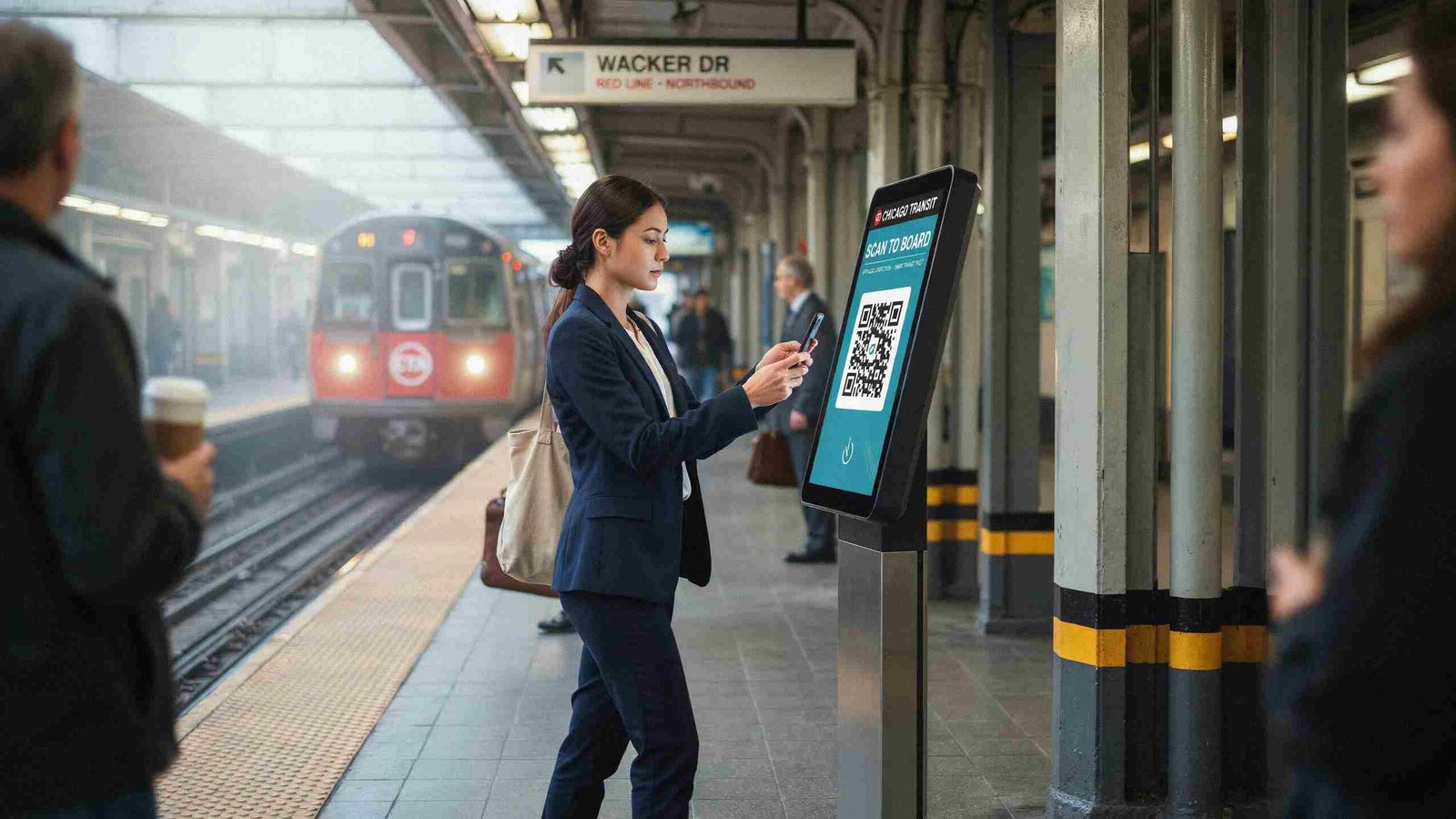
Image generated with Ai
Chicago will become the focal point of urban transit of the future since this will be the venue for the APTA 2026, which will bring thousands of specialists and professionals in the field of technology and mobility to Chicago between 4th and 7th October. At a critical juncture, where Chicago is redefining its regional transport infrastructure and trying to become one of the best convention destinations in the nation, topics ranging from artificial intelligence to integrated fare systems to green fleets and passenger management systems will be among those discussed at APTA 2026.
This has become so due to the decision to utilize the same transport system which has been talked about in the conference discussions.
Thus, for the Chicago tourism industry, this week will end up being an instance showing just how important public transport has become in competing for conferences and business visitors from abroad.
What Others Are Missing About APTA 2026
Most attention surrounding APTA 2026 naturally focuses on buses, trains, hydrogen propulsion, artificial intelligence and infrastructure.
Advertisement
Advertisement
The overlooked angle is event mobility.
APTA expects more than 12,000 people from across the transport sector to participate in its Chicago gathering. The event is taking place at McCormick Place, which Choose Chicago describes as the largest convention centre in the Western Hemisphere. It contains more than 2.6 million square feet of exhibition space and receives approximately three million visitors annually.
Advertisement
Advertisement
That scale changes the story.
Convention centres do not function independently.
Advertisement
Advertisement
Their competitiveness depends on airports, trains, buses, hotels, pedestrian connections and increasingly digital passenger information.
A conference attracting thousands of delegates therefore becomes a temporary urban transport surge.
That matters particularly when those delegates specialise in transport.
APTA 2026 effectively places Chicago’s passenger network in front of some of the people best qualified to judge it.
Advertisement
Advertisement
Chicago Is Already One Of America’s Biggest Convention Machines
Chicago enters the conference with substantial momentum in meetings and events.
McCormick Place hosts more than 200 business events and trade shows every year, according to Choose Chicago.
The wider campus contains nearly 3,000 hotel rooms and sits close to the South Loop, downtown attractions, restaurants, museums and entertainment districts.
This means public transport contributes indirectly to Chicago’s ability to convert a conference delegate into a wider visitor.
Delegates do not necessarily remain inside convention halls.
They eat in restaurants.
Advertisement
Advertisement
They visit attractions.
They extend business trips.
They explore neighbourhoods.
They may return later for leisure.
Every additional part of the city that can be reached easily increases the practical value of the destination.
That is why the technology being discussed at APTA should interest tourism organisations, hotels and meeting planners as much as transport authorities.
Advertisement
Advertisement
APTA Arrives During A Powerful Chicago Tourism Cycle
Chicago’s visitor economy provides important context.
The city welcomed 56.8 million visitors during 2025, according to Choose Chicago.
Those travellers generated a record $21.5 billion in spending.
The city’s hotel industry also recorded approximately $2.9 billion in revenue, while leisure hotel demand reached a record 8.2 million room nights.
Convention travel remains a significant part of that ecosystem.
Choose Chicago reported that 12 major conventions set attendance records during 2025.
Advertisement
Advertisement
Its sales operation also secured 65 future citywide conventions representing roughly 2.8 million future room nights.
Those figures reveal why transport performance deserves greater attention from the travel industry.
Millions of additional hotel nights require millions of journeys.
Every convention delegate arriving at an airport needs a route into the city.
Every visitor staying outside the immediate convention district needs mobility.
Every evening restaurant reservation, theatre visit or neighbourhood excursion adds another journey.
Advertisement
Advertisement
Transport is therefore not simply infrastructure supporting tourism.
It is part of the tourism experience itself.
APTA Is Testing The Same Seamless Journey It Is Promoting
One of the most important subjects at APTA 2026 is the development of connected regional networks.
Technology companies are demonstrating unified fare systems and shared data platforms intended to connect urban and suburban transport more effectively.
For a local commuter, regional integration can make everyday travel easier.
For a visitor, it can determine whether the system feels usable at all.
Advertisement
Advertisement
Visitors generally do not arrive with detailed knowledge of agency boundaries.
They do not necessarily understand which authority operates a particular train, bus or suburban service.
Their expectation is much simpler.
They want to know:
- where to board;
- how much the journey costs;
- how to pay;
- where to transfer;
- when they will arrive.
Every additional layer of complexity can discourage public transport use.
That makes integrated fares and shared passenger information particularly relevant for tourism.
Advertisement
Advertisement
A city’s transport system may consist of several agencies administratively.
To a traveller, it should ideally feel like one network.
Chicago Has Just Changed The Rules Of Regional Transit
The timing of APTA 2026 is particularly striking because the Chicago region is entering a new transport governance era.
The Northern Illinois Transit Authority began operating on 1 September 2026, immediately before the APTA gathering.
NITA is responsible for coordinating regional planning, funding and other transport functions involving CTA, Metra and Pace.
This means APTA has arrived just weeks into one of the biggest institutional changes in Chicago-area transit.
Advertisement
Advertisement
The implications for visitor travel could become important.
Chicago’s tourism geography extends well beyond one transport operator.
Visitors use urban rail.
They ride buses.
They travel towards suburban areas.
They connect with airports.
Advertisement
Advertisement
They attend events across the metropolitan region.
A more coordinated system therefore has the potential to reduce barriers between different parts of the visitor journey.
This is still an evolving reform rather than a finished passenger transformation.
But the direction is significant.
Regional Transfers Could Become A Hidden Tourism Advantage
One of the clearest signs of that direction comes from NITA’s work on transport connections.
A regional service coordination study examined more than 140,000 scheduled connections at over 60 locations served by CTA, Metra and Pace.
Advertisement
Advertisement
The analysis looked particularly at transfer opportunities within approximately three to 15 minutes.
For tourism, those numbers matter more than they may appear.
Transfer time can decide whether a visitor attempts a journey.
Long or uncertain connections create perceived distance.
Reliable connections compress a city.
A hotel located farther from a convention centre becomes more practical.
Advertisement
Advertisement
A neighbourhood outside the traditional visitor core becomes easier to explore.
A suburban attraction becomes more accessible without a car.
Better transfers can therefore influence where visitors stay and where they spend.
NITA plans to develop regional service standards before broader regionwide service planning later in the decade.
That makes Chicago an important place to watch.
A Convention Can Expose Weak Transport Faster Than Almost Anything Else
Major events create unusual demand patterns.
Advertisement
Advertisement
Thousands of passengers may arrive simultaneously.
Conference sessions finish at predictable times.
Large groups leave exhibition halls together.
Airport demand increases around opening and closing dates.
Restaurants and entertainment districts experience evening peaks.
A transport network that performs comfortably during normal conditions can behave differently when concentrated visitor demand appears.
Advertisement
Advertisement
That is why APTA 2026 is useful as a practical case study.
The event does not replicate the passenger volume of Chicago’s largest sporting or cultural gatherings.
But it brings a concentrated audience with unusually high expectations for transport performance.
APTA itself identifies operational resilience as one of the major themes of the 2026 exhibition.
Chicago therefore faces an interesting situation.
The city is hosting a conference about resilient transportation while its own transportation ecosystem helps sustain the conference.
Advertisement
Advertisement
McCormick Place Makes Transit Part Of The Convention Product
McCormick Place’s scale explains why this relationship matters.
The venue offers 2.6 million square feet of exhibit space across a vast convention campus.
The surrounding district contains hotels, dining, event venues and access to downtown Chicago.
Approximately three million people visit McCormick Place annually.
At that scale, transportation becomes part of venue performance.
Meeting planners increasingly assess more than exhibition halls.
Advertisement
Advertisement
They consider airport accessibility.
Hotel supply matters.
Walkability matters.
Transport capacity matters.
The ease with which delegates can reach restaurants, entertainment and cultural districts matters.
Destinations therefore compete partly on the quality of the entire movement ecosystem surrounding their convention infrastructure.
Advertisement
Advertisement
Chicago’s advantage is not merely that McCormick Place is enormous.
Its broader opportunity comes from connecting that venue more efficiently with the rest of the destination.
Chicago’s Convention Pipeline Makes The Question More Urgent
The city is not dealing with a temporary conference boom.
Choose Chicago says it secured 65 future citywide conventions and approximately 2.8 million future room nights following record sales activity.
Twelve major conventions also achieved attendance records in Chicago during 2025.
This future pipeline creates substantial transport demand.
Advertisement
Advertisement
A destination winning conferences today is effectively booking passenger movements years in advance.
Every future event translates into airport arrivals, hotel transfers, public transport journeys, ride-hailing activity and pedestrian movement.
Convention sales therefore carry an infrastructure consequence.
The stronger the events calendar becomes, the greater the value of predictable and integrated urban mobility.
That changes how destination planners should interpret transit investment.
Transport infrastructure is not solely about resident commuting.
Advertisement
Advertisement
It can also support the revenue-generating capacity of the meetings economy.
APTA’s Artificial Intelligence Story Has A Convention Dimension
Artificial intelligence is another major focus in Chicago.
APTA says exhibitors are demonstrating AI applications such as predictive rail maintenance and real-time bus demand planning.
These technologies could have particularly interesting applications around large events.
Event travel is inherently predictable in some respects.
Organisers know how many attendees are registered.
Advertisement
Advertisement
Venues know when major sessions finish.
Airlines know passenger schedules.
Hotels know occupancy.
Transport operators know service capacity.
The challenge is connecting demand information with operational decisions.
Real-time planning tools potentially give operators better ability to respond when unusual demand develops.
Advertisement
Advertisement
The tourism relevance is straightforward.
Visitors rarely care how a transport authority predicted demand.
They care whether enough service appeared when they needed it.
The Next Competition Between Convention Cities Could Be About Friction
Chicago competes with other major US cities for conventions.
Traditionally, destinations compete using familiar assets:
hotel inventory;
Advertisement
Advertisement
air connectivity;
meeting space;
restaurants;
attractions;
cost;
destination appeal.
Advertisement
Advertisement
Another factor is becoming increasingly important: mobility friction.
How many steps are required between the airport and hotel?
How complicated is public transport payment?
How easy is it to understand routes?
Can delegates travel independently after conference sessions?
How reliably can several thousand people leave a venue?
Advertisement
Advertisement
How accessible is the system for travellers with different mobility needs?
Cities that reduce those barriers create a stronger visitor proposition.
The attraction may get the traveller interested.
Friction often determines whether the experience feels easy.
The Red Line Extension Adds A Bigger Destination Development Story
Chicago’s transit story extends beyond convention districts.
The CTA officially broke ground in April 2026 on its historic Red Line Extension.
Advertisement
Advertisement
The project will extend the route 5.5 miles from 95th Street to 130th Street, adding four fully accessible stations near 103rd Street, 111th Street, Michigan Avenue and 130th Street.
CTA says the extension could save passengers travelling from the future 130th Street station towards the Loop as much as 30 minutes.
Construction is expected to continue through 2030.
The significance for tourism lies in geography.
Transport investment changes which areas of a city feel accessible.
Improved accessibility can eventually support restaurants, cultural assets, local businesses and visitor activity beyond established tourism districts.
Advertisement
Advertisement
That does not mean every new transit station automatically becomes a tourism hub.
But connectivity is often the prerequisite for economic dispersion.
The Workforce Story Is Another Overlooked Part Of APTA 2026
There is another important development occurring inside the exhibition.
APTA is holding a free Transit Industry Job Fair on 5 October at McCormick Place.
The programme connects students and early-career professionals with transit employers offering jobs and internships.
Activities include mock interviews, résumé challenges, networking and potential on-site interviews.
Advertisement
Advertisement
This workforce dimension matters because advanced transport systems require more than advanced hardware.
Agencies need engineers.
Data specialists.
Vehicle technicians.
Infrastructure professionals.
Cybersecurity experts.
Advertisement
Advertisement
Operations planners.
Maintenance workers.
Managers.
The industry can only deploy AI, electrification and integrated transport systems if it can recruit people capable of running them.
For tourism cities, workforce shortages in transportation can eventually become service problems.
That makes human capital part of destination resilience.
Advertisement
Advertisement
APTA 2026 By The Numbers
| Indicator | Verified Figure | Travel Significance |
|---|---|---|
| Expected APTA 2026 participation | 12,000+ | Creates concentrated convention and transport demand |
| US public transport industry | $102 billion | Shows scale of investment influencing future mobility |
| McCormick Place exhibition space | 2.6 million sq ft | Supports some of America’s largest conventions |
| McCormick Place annual visitors | About 3 million | Demonstrates year-round event mobility demand |
| Chicago visitors in 2025 | 56.8 million | Shows scale of destination movement |
| Visitor spending in 2025 | $21.5 billion | Connects mobility to economic performance |
| Future citywide conventions secured | 65 | Creates future transport demand |
| Future room nights secured | About 2.8 million | Indicates scale of upcoming visitor flows |
| Red Line Extension | 5.5 miles | Expands Chicago’s rail geography |
| New Red Line stations | Four | Creates additional multimodal access |
| Potential RLE journey saving | Up to 30 minutes | Demonstrates value of reduced mobility friction |
Sources: APTA, Chicago Transit Authority and Choose Chicago.
What Travel Companies Should Take From Chicago
The biggest lesson from APTA 2026 is that transport technology should no longer sit outside tourism strategy.
Convention bureaux need to understand transit.
Hotels need to understand transport access.
Event organisers need to understand passenger peaks.
Tourism boards need to consider whether visitors can realistically reach the places they promote.
Advertisement
Advertisement
And transport agencies need to recognise that visitors behave differently from daily commuters.
They may have luggage.
They may not speak the local language.
They may not understand fare systems.
They may be unfamiliar with station geography.
Their tolerance for complicated transfers can be much lower.
Advertisement
Advertisement
A transport system optimised only for frequent users can therefore still feel difficult to visitors.
The best destination systems must work for both.
What Travellers Should Know
APTA 2026 does not mean Chicago’s transport network is suddenly becoming one unified futuristic system this week.
Many initiatives remain under development.
The Red Line Extension will take years.
Regional governance reform is still new.
Advertisement
Advertisement
Artificial intelligence and fleet technologies displayed at the expo will mature at different speeds.
But travellers are visiting Chicago during an unusually important transport transition.
The city is simultaneously hosting one of public transportation’s biggest gatherings, pursuing regional coordination, building a major rail extension and expanding its convention pipeline.
That overlap makes Chicago especially significant in 2026.
Editorial Perspective: The Real Competition Is No Longer Just For Visitors
Travel analytics suggest a broader conclusion.
Destinations have historically measured success through visitor totals, hotel demand, airport traffic and spending.
Advertisement
Advertisement
Those indicators remain essential.
But they reveal only part of the visitor experience.
Cities should increasingly examine another group of metrics:
airport-to-hotel travel time, convention-to-hotel journey reliability, public transport adoption by visitors, average transfer time, payment simplicity, evening service availability and visitor movement outside core tourism areas.
Those indicators reveal how efficiently tourism demand moves through a destination.
Chicago’s 56.8 million visitors, $21.5 billion in spending, huge convention pipeline and three-million-visitor McCormick Place create an ideal environment in which to analyse that relationship.
Advertisement
Advertisement
APTA 2026 sharpens the question.
America’s transport industry is gathering to discuss how future mobility should work.
Chicago now has an opportunity to demonstrate what that future could mean for travel.
The Bottom Line
With the hosting of APTA 2026, Chicago would put itself on the map when it comes to discussions on how to make transport faster. It will make the attendees understand how the use of artificial intelligence, fare integration, green fleets and cooperation can help make traveling easier. With its better transportation system, Chicago would be able to attract more tourists, big events, business trips and good transport at the same time with fewer problems when traveling. Such constant development shows the importance of mobility to the competitiveness of the destination. This can be an example for other American cities.
Advertisement
