
Santorini and More Drive Europe’s Micro-Port Cruise Revolution With Strict Visitor Caps

Published
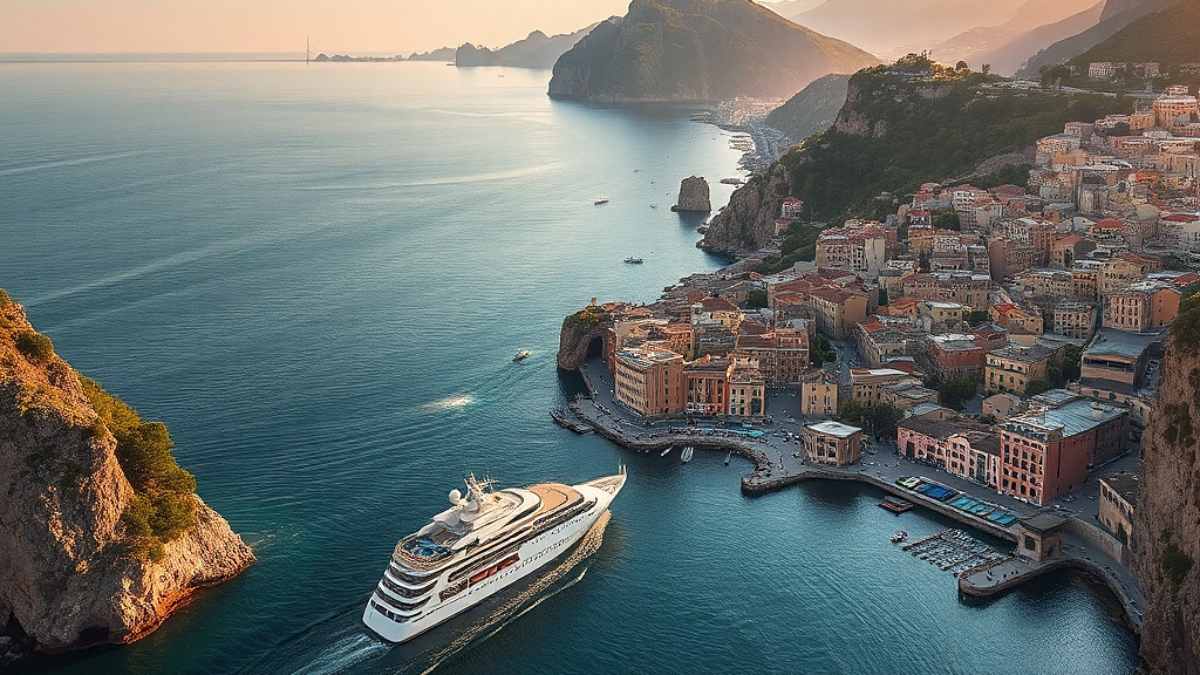
Image generated with Ai
Throughout the coasts of Europe, cruise traffic is now creating undue pressure on historic sites that are structurally delicate. Metropolitan cities have set up strict controls that have unintentionally driven large ships to secondary ports that have fewer than fifteen thousand people. Vulnerable ports have thus implemented tough micro-port cruise limits, absolute ceiling on visitors, and limits on berths to preserve their heritage. The following study focuses on the small ports of Europe, who resist uncontrolled increase in their number. Through carrying capacity, digital hinterlands, and shore power, these historic destinations create an efficient framework for their survival.
The Micro-Port Blueprint: Balancing Record Cruise Demand with Fragile Heritage
Executive Overview: The 2026 Maritime Influx and Micro-Port Carrying Capacities
The European maritime cruise sector has reached historic highs in passenger volumes and vessel deployments, driven by post-pandemic fleet expansion and geopolitical itinerary shifts across the Mediterranean and Atlantic seaboards. However, as premier maritime gateways such as Venice, Barcelona, Palma de Mallorca, and Dubrovnik implement aggressive defensive measures—ranging from inner-lagoon vessel bans and peak disembarkation taxes to strict quay restrictions—cruise line operators have progressively redirected significant tonnage into secondary and tertiary harbours. This operational displacement has produced an unprecedented crisis for Europe’s micro-ports, defined as historic coastal municipalities, island settlements, and fjord communities whose year-round populations rarely exceed 15,000 residents.
Advertisement
Advertisement
In these smaller settings, the physical and social impacts of cruise tourism are magnified. Unlike major metropolitan centres possessing multi-modal transit networks, wide boulevards, and extensive municipal services, a micro-destination features narrow pedestrian passages, fragile historic architecture, and utility networks built solely for small residential communities. When a modern vessel carrying 3,000 to 5,000 passengers disembarks into a village of several hundred or a few thousand residents, the immediate visitor influx temporarily overwhelms the local population.
The resulting friction encompasses severely congested pedestrian corridors, accelerated structural wear on ancient stone quays, atmospheric degradation from ship auxiliary engines operating in enclosed valleys, and the displacement of essential civic life. In response, municipal councils and local harbour authorities have moved away from passive acceptance of international cruise deployment schedules. Local administrations are actively reasserting their regulatory autonomy through statutory carrying capacity regulations, mandated investments in compact shore-power retrofits, structured hinterland dispersal programmes, and policy initiatives that favour overnight economic yield over short-stay visitor volumes.
Advertisement
Advertisement
The End of Uncapped Growth: Enforcing Berthing Caps and Daily Passenger Quotas
The primary regulatory mechanism deployed by Europe’s smallest historic harbours is the adoption of strict daily passenger caps and berthing quotas. For decades, port development was guided by gross registered tonnage metrics and maximizing per-passenger landing fees. Today, municipal leaders treat historical carrying capacity as a non-negotiable limit to ensure urban preservation and maintain resident quality of life.
| Destination & Local Authority | Permanent Population | Unregulated Peak Arrivals | Statutory Passenger Cap & Operational Mechanism | Primary Policy & Legal Instruments |
| Geiranger, Norway (Stranda Port Authority KF) | ~250 residents | Up to 10,000 passengers daily | 6,000 passengers/day across Geiranger and Hellesylt; scheduled calls reduced to 133 by 2026 | NMA Environmental Safety Regulation No. 488; UNESCO Carrying Capacity Mandate |
| Visby, Sweden (Region Gotland / CMP) | ~24,000 (Municipality); ~4,000 (Old Town) | Over 7,000 passengers concurrently | Strict two-ship simultaneous limit; quayside staging restricted to 20 coaches | Region Gotland Terminal Lease Covenants; UNESCO Spatial Monitoring Framework |
| Cavtat / Dubrovnik, Croatia (Dubrovnik Port Authority / Konavle) | Cavtat: ~2,150; Dubrovnik Core: ~1,500 | Exceeded 10,000 passengers concurrently | 4,000 concurrent visitors in historic core; max 2 ships / 5,000 passengers daily | Dubrovnik “Respect the City” Strategy; Konavle Municipal Mooring Decrees |
| Santorini Caldera, Greece (Municipal Port Fund of Thira) | ~15,500 island residents | 15,000–18,000 passengers daily | 8,000 passengers/day allocated via digital berth management | Law 5122/2024; Peak €20 Disembarkation Sustainability Levy |
| Ísafjörður & Akureyri, Iceland (Associated Icelandic Ports) | Ísafjörður: ~2,700; Akureyri: ~19,000 | Over 8,000 passengers daily | Ísafjörður: 5,000 optimal / 7,000 max cap; Akureyri: staggered arrival controls | Icelandic Municipal Environmental Strategy; Harbour Carrying Capacity Rules |
Geiranger: Environmental Quotas and Zero-Emission Mandates
Geiranger, positioned at the inland head of the UNESCO-inscribed Geirangerfjord, exemplifies the challenge of balancing physical preservation with global tourism interest. With a resident community of approximately 250 citizens, the village experienced summer peak seasons where multiple cruise liners delivered upwards of 800,000 visitors annually, producing acute vehicle congestion and severe air quality concerns in the narrow mountain basin.
Advertisement
Advertisement
To protect the fjord’s ecological and structural integrity, the Stranda Port Authority KF established a binding carrying capacity ceiling of 6,000 cruise passengers per calendar day, shared between Geiranger and the adjacent village of Hellesylt. Working alongside these limits, the Norwegian Maritime Authority enforced Regulation No. 488, which introduced stringent environmental standards. The regulation requires compliance with Tier III nitrogen oxide emissions, mandates the use of low-sulfur fuels matching emission control area standards, and bans the dumping of scrubber wastewater and sewage into protected waters.
The port authority also requires calling vessels to utilize the Seawalk—an articulated, floating pier system that minimizes benthic ecosystem disturbance while managing visitor flow—and has steadily reduced vessel visits from 176 calls in 2024 to 133 calls in 2026. These operational caps are reinforced by national legislation enacted by the Norwegian Storting, which requires all tourist vessels and ferries operating in the World Heritage fjords to be zero-emission by 2026, creating the world’s most demanding environmental entry standard for passenger shipping.
Advertisement
Advertisement
Visby: Preserving Medieval Fortifications Through Simultaneous Call Caps
On the Swedish island of Gotland, the Hanseatic walled town of Visby features an exceptionally preserved medieval defensive circuit and historic street network. Following the development of a dedicated cruise berth financed by Region Gotland and operated under concession by Copenhagen Malmö Port (CMP), the island acquired the technical ability to receive modern passenger vessels.
However, local authorities recognized that an unregulated influx of passengers through Visby’s historic limestone gates would accelerate physical erosion and displace residents from public spaces. Region Gotland incorporated strict operational conditions into its harbour concession, establishing an absolute cap of two cruise vessels berthed simultaneously and limiting quayside staging capacity to 20 passenger coaches.
By coordinating vessel arrival slots, monitoring visitor foot traffic using spatio-temporal tracking, and directing pedestrian movement along established corridors toward the historic centre, the port ensures passenger disembarkation matches the carrying capacity of Visby’s medieval core.
Cavtat and the Dubrovnik Hinterland: Defending Regional Satellite Harbours
In the southern Adriatic, the City of Dubrovnik introduced its “Respect the City” governance initiative, establishing an urban threshold of 4,000 simultaneous visitors inside its historic walls and capping cruise traffic at two vessels and 5,000 passengers per day. While this policy succeeded in reducing peak overcrowding within the old city, cruise operators quickly looked to absorb displaced capacity by tendering passengers into smaller nearby harbours across the Konavle coastal region.
Advertisement
Advertisement
Cavtat, a heritage settlement of roughly 2,150 residents situated 20 kilometres south of Dubrovnik, faced immediate pressure from these diverted passenger flows. To preserve its historic character, the Municipality of Konavle and the Dubrovnik Port Authority established coordinated maritime controls. Cavtat restricted commercial use of its 16-berth public harbour, reserving waterfront facilities for local transit while directing larger cruise vessels to designated offshore anchorages with strict tender quotas. This coordinated regional strategy prevents mass disembarkations from overwhelming the town’s seaside promenade and waterfront businesses.
Spatial De-Concentration Models: Dispersing Shore Excursions into Regional Hinterlands
Beyond setting numeric visitor ceilings, micro-ports are developing spatial de-concentration strategies to address passenger crowding around harbour perimeters. When thousands of passengers disembark simultaneously, they tend to cluster within walking distance of the tender dock, concentrating commercial activity in a few central squares while leaving surrounding areas unvisited. Small historic cities are countering this pattern by creating structured dispersal routes that direct arriving visitors into surrounding valleys, cultural trails, and artisan networks.
Integrated Visitor Dispersal Framework in Historic Micro-Ports
- Quayside Disembarkation
- Digital Itinerary Platforms
- Real-time crowd-flow management
- Visitor distribution across attractions
- Dedicated Vertical Corridors
- Cableways
- Upland hiking trails
- Low-Emission Regional Transit
- Direct routes to rural valleys
- Sustainable connections beyond port areas
Rather than letting tour groups navigate historic centres entirely on their own, local authorities and destination management organisations are building integrated dispersal systems. Arriving passengers are divided across multiple excursion channels at the quayside, utilizing digital wayfinding applications, timed entry slots for sensitive monuments, and low-emission regional transit. This approach spreads visitor foot traffic across a wider geographic area, easing congestion in sensitive historic centres while distributing economic activity more evenly across regional communities.
Honfleur: Channelling Estuary Passenger Crowds into Rural Normandy
In northern France, the ancient maritime town of Honfleur features the Vieux Bassin, a 17th-century inner harbour bordered by tightly packed timber and slate townhouses. With cruise operations in the Seine Estuary managed under the HAROPA port network, Honfleur handles significant passenger volumes from vessels docking locally or calling at nearby Le Havre. To safeguard its fragile waterfront, the municipality and regional tourism planners created structured hinterland transit programs.
Under this framework, shore excursion operators coordinate with local transport authorities to route motor coaches directly away from the historic harbour upon passenger disembarkation. Visitors are guided along the rural Calvados cider route, through cheese-producing villages across the Pays d’Auge, and into regional artisan communities. By linking maritime arrivals with regional culinary and agricultural trails, Honfleur protects the Vieux Bassin from pedestrian bottlenecks during peak midday hours while distributing tourist spending throughout rural Normandy.
Kotor: Digital Dispersal and Vertical Transport Beyond Stari Grad
In Montenegro, the fortified town of Kotor is situated on a narrow coastal strip between the Bay of Kotor and the steep limestone cliffs of Mount Lovćen. The UNESCO-listed medieval centre (Stari Grad), home to fewer than 13,500 urban residents, experienced recurring bottlenecks at the 16th-century Sea Gate and Arms Square whenever multiple cruise ships called simultaneously.
Advertisement
Advertisement
To address these spatial bottlenecks, the municipality supported the development of an infrastructure-led dispersal network. A central element is the Kotor-Lovćen Cable Car, which connects the coastal base station at Dub with the Kuk plateau on Mount Lovćen at an elevation of 1,348 metres. Covering a route of approximately four kilometres in 11 minutes, the cable car’s 48 gondolas can transport up to 1,000 passengers per hour, lifting cruise visitors directly from sea level into Lovćen National Park.
Simultaneously, municipal authorities promote hiking routes along the Vrmac ridge, where network trails connect Austro-Hungarian fortifications with traditional hillside hamlets. By offering appealing vertical and upland alternatives to the walled town below, Kotor diverts foot traffic away from sensitive medieval alleys while creating new economic opportunities for upland businesses.
Engineering the Green Micro-Port: Compact Shore-Power and Grid Retrofits
As small ports implement passenger caps and dispersal routes, they also face the urgent challenge of reducing environmental impacts from docked vessels. Conventional cruise ships rely on auxiliary diesel generators while in port to power hotel services, air conditioning, and safety systems, releasing sulfur dioxide, nitrogen oxides, and fine particulate matter into surrounding harbours. In confined fjords and sheltered bays, these emissions can settle over historic centres, creating distinct environmental and public health concerns.
Under the European Union’s Alternative Fuels Infrastructure Regulation (AFIR), major maritime ports across the Trans-European Transport Network (TEN-T) must provide shore-side electricity by 2030. However, smaller historic harbours are not waiting for regional mandates, investing in cold-ironing green engineering to cut emissions immediately. Implementing these installations in historic micro-ports presents complex technical challenges: connecting a 16-megawatt cruise vessel requires as much power as an entire small town, threatening to overload localized rural utility grids.
| Harbour Location & Local Authority | Coastal Topography | Local Utility Grid Limitations | Cold-Ironing Engineering Solutions | Technical Compliance & Operating Standards |
| Flåm, Norway (Port of Flåm / Aurland) | Confined fjord basin surrounded by steep mountains | Limited rural distribution grid; high seasonal residential heating demand | High-voltage shore connection (HVSC) linked directly to regional hydroelectric stations | 16 MVA output capacity; fully compliant with IEC/ISO/IEEE 80005-1 standards |
| Kirkwall, Orkney, UK (Orkney Islands Council) | Exposed sub-Arctic archipelago sound | Island grid bottlenecks; network limits on exporting surplus renewable power | Hatston Pier electrification supported by battery storage fed by local wind/tidal power | Tiered shore-power connections for regional ferries and visiting cruise vessels |
| Geiranger, Norway (Stranda Port Authority) | Deep glacial fjord inlet with steep terrain | Geographically isolated valley; limited high-voltage transmission lines | Electrified Seawalk pier; floating pontoon battery charging systems for passenger tenders | Mandatory connection for Tier III vessels; zero-emission operational mandate |
Flåm: Overcoming Fjord Grid Bottlenecks with High-Voltage Cold Ironing
The Norwegian village of Flåm sits at the innermost point of the Aurlandsfjord, where it serves as a central hub for visitors to the Flåm Railway and surrounding fjords. The geography of the deep fjord basin traps vessel exhaust, creating localized air quality concerns during peak summer months. However, drawing up to 16 megawatts of continuous power from the local rural electricity grid threatened to disrupt residential power supplies throughout the Aurland valley.
To resolve these grid constraints, the Port of Flåm partnered with regional utility companies and the national energy agency Enova SF to build a dedicated high-voltage shore connection. Engineers connected the port facility directly into the regional high-voltage hydroelectric transmission system, installing a specialized substation equipped with dual-frequency converters capable of delivering power at both 50 Hz and 60 Hz. This system enables docked cruise liners to shut down auxiliary diesel engines completely, reducing quayside carbon and particulate emissions to near-zero and providing an engineering model for other remote fjord ports.
Advertisement
Advertisement
Kirkwall and the Orkney Archipelago: Island Micro-Grids and Pier Upgrades
In the Northern Isles of Scotland, the administrative centre of Kirkwall handles significant cruise activity, receiving more than 200 vessel visits during peak summer seasons. The Orkney archipelago produces over 100% of its net electricity needs from local wind, solar, and marine energy installations, but transferring large volumes of power to maritime berths posed serious technical challenges for the island’s subsea transmission connections.
Through the Orkney Harbours Masterplan, the Orkney Islands Council Harbour Authority designed an integrated micro-grid solution centered on the Hatston Pier deep-water facility. Rather than placing unpredictable peak loads directly on the island grid, the harbour authority integrated high-capacity battery energy storage systems alongside the marine connections. These storage units charge continuously from local community wind and tidal generators, buffering the energy needed to power berthed vessels without destabilizing Orkney’s electrical infrastructure.
The Micro-Destination Night Economy: Transforming Day Trippers into High-Yield Overnight Visitors
A long-standing economic concern for small cruise ports is the imbalance between the physical impact of visitors and the local revenue they generate. Conventional day-tripping passengers typically eat their main meals and sleep aboard their ships, spending modest amounts on low-cost souvenirs while local municipalities cover the costs of crowd management, waste processing, and infrastructure upkeep. To build a more sustainable economic base, pioneering historic ports are prioritizing evening economy night-tourism and late-stay itineraries.
| Destination & Maritime Setting | Harbour Infrastructure Strategy | Day-Tripper Economic Profile | Targeted Evening Economy Focus | Heritage Conservation Benefits |
| Sanary-sur-Mer, France (Provençal fishing harbour) | Sheltered bay anchorage; tender service to traditional quayside | Low per-passenger spend concentrated in small souvenir stalls | Overnight port calls encourage dining at local seafood bistros and visits to evening markets | Reduces morning crowd peaks; prevents large tour coach traffic on narrow village streets |
| Rovinj, Croatia (Venetian historic peninsula) | Lučka uprava Rovinj; tender arrivals at the Valdibora basin | Midday crowd surges causing foot traffic bottlenecks in historic church quarters | Late-night dockings capture premium spending on Istrian culinary and wine offerings | Mitigates midday pedestrian congestion; distributes economic benefits to local restaurateurs |
Sanary-sur-Mer: Boutique Overnight Mooring and Provençal Gastronomy
On the Mediterranean coast of France’s Var department, the town of Sanary-sur-Mer has preserved its traditional harbour by deliberately declining to build infrastructure for mega-cruise vessels. Instead, the municipal council focuses entirely on attracting smaller boutique ships and luxury expedition vessels.
Working with high-end cruise operators, Sanary-sur-Mer encourages itineraries featuring late-night departures or overnight stays in the bay. Because these smaller vessels carry only a few hundred passengers, guests can disembark directly into the village without overwhelming local streets. Visitors patronize family-run seafood restaurants, visit local wine bars, and browse evening artisan markets along the waterfront, delivering substantial per-passenger economic returns while avoiding the congestion of daytime mass tourism.
Rovinj: Late-Departure Berthing and Venetian Heritage Spend
Across the Adriatic on Croatia’s Istrian peninsula, the historic town of Rovinj follows a similar value-focused maritime policy. The local harbour authority (Lučka uprava Rovinj) maintains strict rules governing the Valdibora mooring basin, excluding mega-liners and limiting calls to small luxury vessels and motor yachts.
Advertisement
Advertisement
The municipality coordinates with premium operators to prioritize itineraries that keep vessels in port past 23:00. This scheduling encourages visitors to spend their evenings ashore in the town’s historic Venetian quarter, dining at local establishments featuring regional Istrian produce, olive oils, and truffles. This approach captures significant culinary and retail spend while keeping daytime foot traffic well within sustainable carrying capacities.
Resident Sovereignty: Community Governance and Municipal Pier Vetoes
The shift toward sustainable destination management is accompanied by a broader structural development: local communities are using direct legislative powers and municipal vetoes to reshape cruise tourism policy. Port infrastructure decisions were once dominated by national transport ministries and multinational cruise operators, but municipal councils and citizen voting initiatives are now asserting decisive community-led tourism governance.
Evolution of Municipal Port Governance Models
- Centralised Commercial Model
- National transport planning
- ↓
- High passenger-volume targets
- ↓
- Unilateral berth expansions
- Transition to Civic Oversight
- ↓
- Civic Carrying Capacity Model
- Municipal council veto powers
- ↓
- Voter-approved passenger limits
- ↓
- Earmarked sustainability fees
This governance transition reflects a widespread shift in how communities value maritime tourism. Historic coastal towns are rejecting the assumption that their harbours must adapt to growing vessel dimensions. Instead, municipal leaders and citizen assemblies are establishing binding legal covenants, environmental standards, and local referendums that require commercial operators to adapt to local carrying capacities or forfeit access.
Santorini and the Cyclades: Municipal Resistance and Disembarkation Levies
The volcanic island of Santorini has long served as a prominent example of overtourism pressures in the Mediterranean. With a resident population of approximately 15,500, the island received more than 3.4 million annual visitors at its peak, driven by over 700 cruise vessel calls that frequently brought up to 18,000 day passengers into the cliffside villages of Fira and Oia. The volume of visitors placed severe strain on local infrastructure, requiring substantial municipal spending on water desalination, waste management, and emergency services.
In response to sustained resident concern, the Hellenic Republic and the Municipal Port Fund of Thira instituted a comprehensive regulatory framework. The central component is a firm daily limit of 8,000 cruise passengers, managed through a digital berth reservation platform that allocates slots based on full ship occupancy. This cap is supported by Law 5122/2024, which introduced a targeted disembarkation fee charging €20 per passenger during the peak summer season running from June to September.
A significant portion of the fee revenue is returned directly to the municipality to support local public services and fund long-term infrastructure projects, including plans for a secondary port facility near Monolithos to relieve pressure on the central caldera. These regulatory measures have led cruise lines to adjust their schedules, reducing booked vessel calls from 728 in 2025 to 595 in 2026—an 18% decline that realigns cruise traffic with the island’s operational limits.
Advertisement
Advertisement
Bar Harbor, Akureyri, and the Legal Rise of Voter-Led Passenger Caps
A prominent global benchmark for voter-led port management was established in Bar Harbor, Maine—a historic town bordering Acadia National Park whose legal experience has influenced secondary destinations across Europe. Through a municipal ballot initiative, Bar Harbor residents amended their town charter to limit cruise passenger disembarkations to 1,000 individuals per day. Despite legal challenges from business associations and cruise line representatives alleging violations of federal commerce provisions, the United States Court of Appeals for the First Circuit upheld the town’s authority, establishing a legal precedent for voter-approved carrying capacity caps.
Similar grassroots policies are emerging across northern Europe. In the Icelandic micro-ports of Ísafjörður and Akureyri, municipal assemblies have moved to restrict unlimited vessel arrivals. Ísafjörður established an official carrying capacity target of 5,000 passengers per day (with an absolute ceiling of 7,000), while Akureyri introduced coordinated scheduling rules to prevent simultaneous mega-ship calls. These policies prioritize the stability of municipal services, roads, and emergency facilities over short-term passenger numbers.
Executive Takeaways: Strategic Imperatives for Global Cruise Operators
The regulatory measures introduced across Europe’s historic micro-ports point to lasting structural changes in maritime tourism. Cruise lines, itinerary planners, and port authorities must adjust to several core operational requirements:
- Dynamic Berth Management Systems: Cruise operators can no longer rely on uncoordinated, open-access berth scheduling. Port authorities are increasingly adopting digital reservation systems that award slots based on environmental performance, smaller vessel sizes, and adherence to municipal visitor ceilings.
- Environmental Compliance as a Condition of Entry: With zero-emission rules coming into force in sensitive areas like Norway’s World Heritage fjords and EU AFIR shore-power standards expanding toward 2030, ships lacking cold-ironing hookups or clean fuel systems will face exclusion from Europe’s most sensitive micro-ports.
- Investment in Regional Hinterland Excursions: Shore excursion operators must partner with local tourism bodies to design itineraries that disperse passengers into surrounding regions, reducing foot traffic in historic town centres while sharing economic benefits with rural businesses.
- Prioritizing Visitor Value Over Passenger Volume: Port pricing structures, disembarkation fees, and municipal tariffs are reshaping the economics of mass cruise tourism. Cruise lines must adapt by deploying itineraries that feature longer stays, late departures, and boutique overnight calls that contribute to local restaurants and shops while preventing midday crowding.
These integrated policies demonstrate that carrying capacity caps do not mean the end of cruise tourism. Instead, they provide a framework for its long-term sustainability—protecting Europe’s historic coastal towns so they remain preserved, living communities for future generations.
Conclusion
There is an unparalleled structural shift within the maritime industry, owing to the claims of small coastal towns regarding municipal control over unmanageable passenger numbers. These historic towns cannot possibly sustain large passenger numbers during the day without seriously jeopardizing their physical sustainability and well-being of their inhabitants. Through setting cruise caps on micro-ports, building shore power on a smaller scale, sending excursions into nearby valleys, and turning towards upscale dinners at night, the European coastal towns have set an example of how to survive. The cooperation between cruise companies and port authorities is crucial in conjunction with local councils. Only through respecting carrying capacity of these territories it is possible to thrive.
Advertisement
