
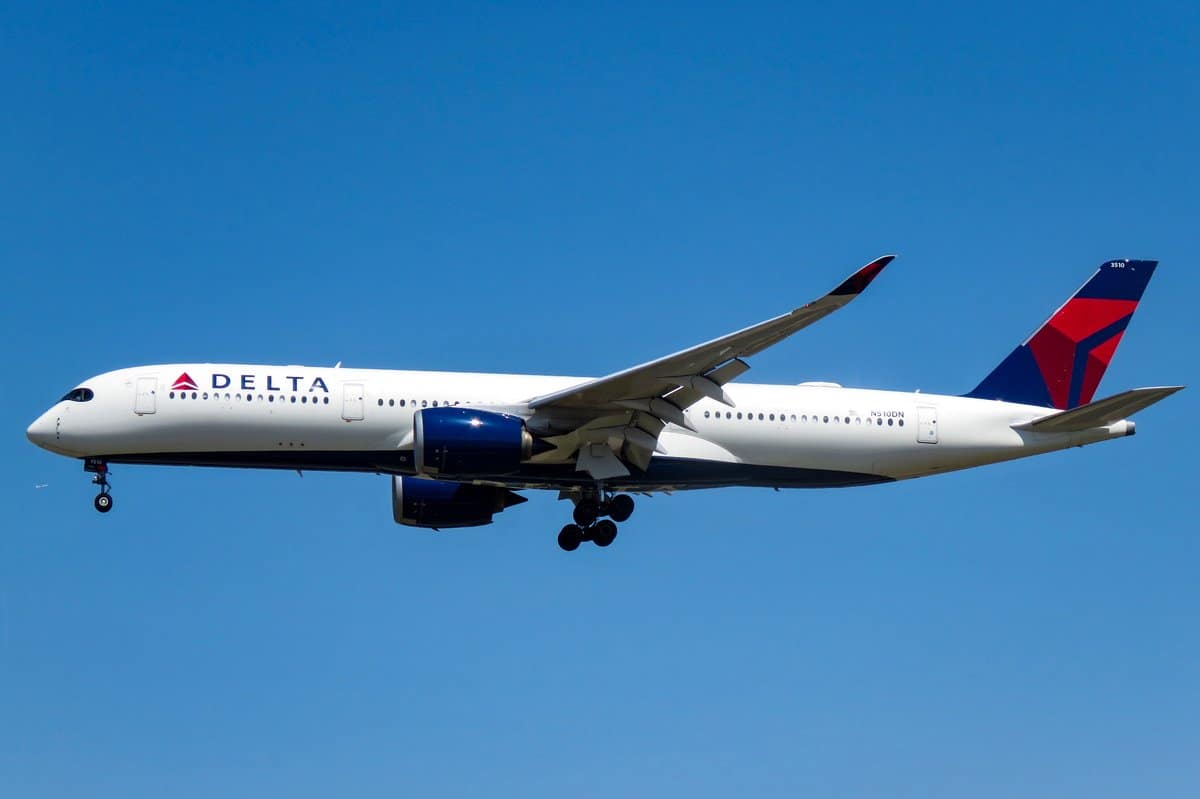
Image generated with Ai
Delta Air Lines Flight DL1336, a Boeing 757-232 from Norfolk to Atlanta, took an unexpected turn on August 4 when the flight diverted to Columbia Metropolitan Airport, United States. Delta Air Lines Flight DL1336 had been travelling from Norfolk to Atlanta, but the Boeing 757-232 did not follow the planned route directly. Instead, the aircraft diverted to Columbia Metropolitan Airport before continuing towards Atlanta. The reason remains unconfirmed, adding another layer of uncertainty to the incident. Meanwhile, Travel And Tour World urges readers to follow the entire story for the latest details, verified flight information, diversion developments, and answers surrounding the Delta Air Lines flight.
Delta Air Lines Flight DL1336 was scheduled to connect Norfolk International Airport with Hartsfield-Jackson Atlanta International Airport on August 4, 2026, using a Boeing 757-232 registered N697DL, but the aircraft did not follow its planned routing all the way to Atlanta and instead diverted to Columbia Metropolitan Airport. The unexpected change meant that passengers travelling from Norfolk towards Atlanta faced a disrupted journey, although the aircraft later continued towards its scheduled destination.
Advertisement
Available flight records show that the diversion was temporary rather than a cancellation or termination of the journey, because the aircraft subsequently departed Columbia for Atlanta and completed the remaining sector. This distinction is important because a diversion does not necessarily mean that a flight has been cancelled, and in this case, DL1336 eventually resumed its journey after the unplanned stop.
The precise reason behind the diversion remains unclear from publicly available information, and there is currently no verified evidence establishing weather, a technical problem, a medical emergency or air-traffic restrictions as the definitive cause of the incident. Consequently, any report that identifies one particular factor as the confirmed reason would go beyond the evidence currently available.
Advertisement
Advertisement
Columbia Metropolitan Airport can serve as a practical diversion location for flights operating across the southeastern United States, particularly when an aircraft needs to land somewhere other than its planned destination and later continue its journey. However, the choice of Columbia does not by itself reveal why DL1336 diverted there, so the airport’s role should be understood as the recorded diversion point rather than proof of a particular operational problem.

Image generated with Ai
After diverting to Columbia Metropolitan Airport, the Boeing 757-232 remained there before continuing towards Atlanta, demonstrating that the aircraft and its passengers were ultimately able to resume the planned journey rather than ending the flight at the diversion airport. Flight-tracking records indicate that the aircraft departed Columbia at approximately 2:29 p.m. EDT and subsequently reached Atlanta at around 3:07 p.m., before arriving at its gate at approximately 3:19 p.m.
The additional stop nevertheless changed the expected travel experience for passengers who had booked a direct Norfolk-to-Atlanta service, because the journey involved an unplanned airport visit and additional time before reaching the original destination. The available records therefore point to operational disruption rather than a permanent route change, with Atlanta remaining the final destination for the flight.
The aircraft associated with the August 4 operation was N697DL, a Boeing 757-232 operated by Delta Air Lines, and the aircraft type is significant because the Boeing 757 is a narrow-body aircraft widely used for medium-haul routes within the United States. The registration provides an additional identifying detail for the flight and helps distinguish this particular operation from other Delta services using the same flight number on different dates.
Flight-tracking information also shows N697DL operating Delta services previously, supporting the identification of the aircraft involved in the August 4 diversion. While aircraft registration data can help establish which airframe operated a flight, it does not independently explain why a diversion occurred, meaning the aircraft’s identity should not be confused with evidence about the incident’s cause.
Yes, the flight eventually continued from Columbia Metropolitan Airport to Atlanta, meaning the diversion did not become the final destination for DL1336 and the original journey was ultimately completed. Records showing the subsequent Columbia-to-Atlanta movement provide clear evidence that the aircraft resumed its operation after the diversion and reached the Atlanta area later that afternoon.
For passengers, however, reaching the scheduled destination does not remove the impact of the disruption, because a diversion can introduce additional waiting time, uncertainty and changes to onward travel arrangements. The available information does not indicate that DL1336 was permanently cancelled after landing at Columbia, and the subsequent flight to Atlanta instead shows that the airline was able to continue the operation.
At present, the most responsible conclusion is that the diversion is confirmed, while its exact cause is not based on the publicly available records reviewed for this report. No verified explanation located in the available flight information conclusively attributes the diversion to a mechanical issue, severe weather, a passenger medical emergency, airport congestion or another specific circumstance.
That uncertainty matters because flight diversions can happen for many different operational reasons, and the decision to divert is ultimately made with safety and operational considerations in mind. Until Delta Air Lines, the Federal Aviation Administration or another authoritative aviation source provides a specific explanation for DL1336, the cause should therefore remain described as unconfirmed rather than presented as fact.
The DL1336 incident highlights how quickly an apparently routine domestic flight can change course when operational circumstances require an aircraft to use an alternative airport, even when the original destination remains accessible later. Passengers experienced an unexpected stop at Columbia Metropolitan Airport before the Boeing 757-232 continued to Atlanta, creating a longer and less predictable journey than originally planned.
The incident also demonstrates why a diversion should not automatically be interpreted as evidence of an emergency or serious aircraft problem, because airlines and flight crews can divert for numerous reasons that are not publicly disclosed immediately. In this case, the available evidence establishes the route change and subsequent continuation, while leaving the specific cause unresolved.
Delta Air Lines Flight DL1336, operating from Norfolk to Atlanta on August 4, 2026, diverted to Columbia Metropolitan Airport while using a Boeing 757-232 registered N697DL, before later continuing to Atlanta. The diversion was therefore a genuine interruption to the planned route, but it did not prevent the aircraft from eventually reaching its scheduled destination.
The most important unanswered question remains the reason for the diversion, because publicly available flight information does not establish a confirmed cause. Until an official explanation emerges, the incident is best reported as an unexpected diversion from Norfolk to Columbia followed by a continuation to Atlanta, rather than attributing it to an unverified technical, medical or weather-related problem.
Advertisement
Advertisement
Advertisement













Friday, September 4, 2026
Friday, September 4, 2026

Friday, September 4, 2026

Friday, September 4, 2026

Thursday, September 3, 2026

Wednesday, September 2, 2026

Friday, September 4, 2026

Friday, September 4, 2026


