
Spain Follows France And Greece Through Grim European Aviation Network Traffic 2026 Chaos as EUROCONTROL Delays Trap Frantic Travellers

Published
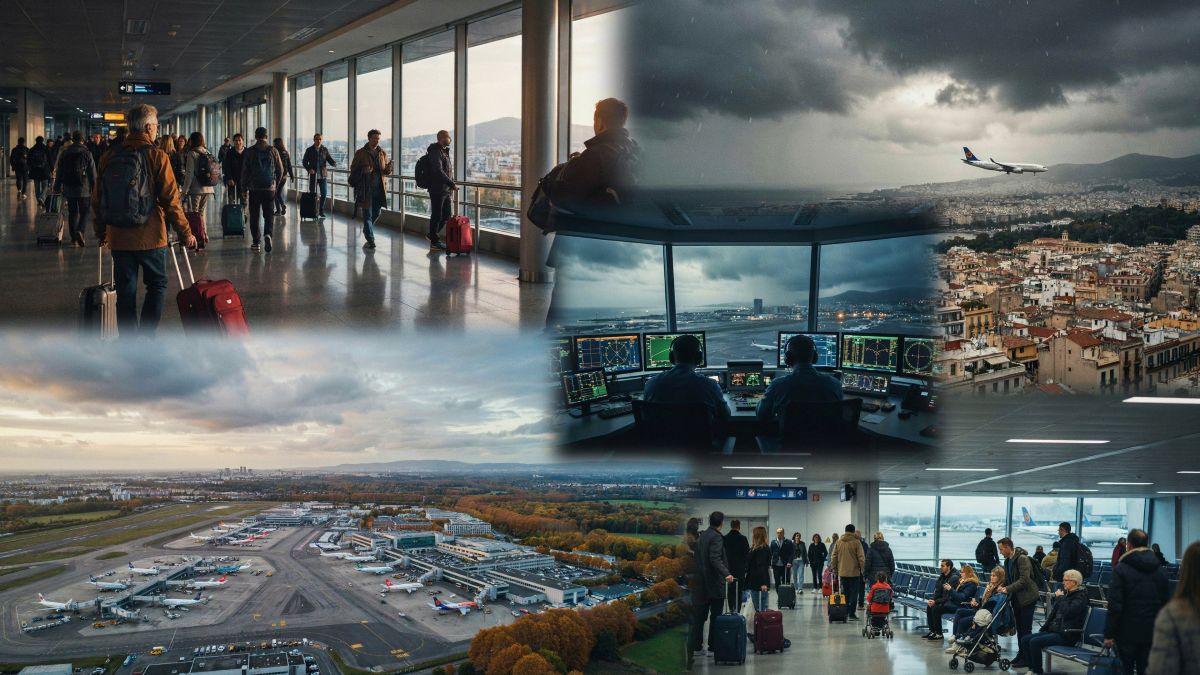
Spain follows France and Greece into crippling European aviation network traffic 2026 congestion. This regional airspace friction is leaving many helpless travellers trapped in unprecedented airport chaos. Average daily flights decreased to exactly 33,491 during this autumn transition. This seasonal shift drastically reduces the sheer volume of intra-European holiday routes. Data from EUROCONTROL officially confirms these changing operational realities for international passengers. Airlines are now heavily modifying their operational schedules across the continent.
Examining Air Traffic Flow Management Delays
Air Traffic Flow Management delays showed surprising improvements. Overall EUROCONTROL ATFM flight delays dropped by 9 percent. The network averaged 2.5 minutes of delay per flight. This figure splits into distinct operational categories. En-route delays accounted for 1.6 minutes per flight. Airport-specific delays contributed 0.9 minutes per flight.
These metrics demonstrate robust systemic recovery efforts. Air navigation service providers are actively mitigating congestion. Representatives from UN Tourism note the importance of these improvements. Smooth traffic flow remains vital for the wider tourism economy. Minor delays can severely disrupt complex airline routing systems.
The concentration of these delays is highly localised. Certain member states bear the brunt of airspace congestion. The most constrained states generated 60 percent of total network delays. Spain accounted for 26 percent of this total. France followed closely, contributing 23 percent to the delay burden. Greece generated 11 percent of the total network delays.
Advertisement
Advertisement
Analysing European airspace capacity constraints
The aforementioned 60 percent share represents a notable improvement. It marks a sharp 10 percentage point drop from previous weeks. European airspace capacity constraints are slowly easing. Seasonal traffic reductions naturally alleviate systemic pressure. However, specific control centres still face overwhelming operational demands.
The Barcelona Area Control Centre experienced the highest en-route delays. Flights traversing this sector faced 2.64 minutes of delay each. Capacity constraints primarily drove these regional disruptions. Severe adverse weather impacts exacerbated the situation heavily.
Advertisement
Advertisement
Meteorological disruptions peaked significantly on Monday, October 5. Thunderstorms forced controllers to drastically reduce sector capacities. Aircraft were subsequently placed in extensive holding patterns. The Marseille Area Control Centre recorded the second-highest delays. Flights here suffered an average delay of 2.49 minutes.
Mediterranean Airspace Operational Challenges
The Makedonia Area Control Centre also reported elevated figures. It recorded delays averaging 1.17 minutes per flight. These three centres manage critical Mediterranean holiday routes. Their performance directly impacts millions of international travellers. Officials from the European Travel Commission monitor these metrics closely.
Advertisement
Advertisement
Data from flag-carrier airline corporate offices confirms the downstream effects. Delayed flights mandate expensive crew schedule adjustments. Late arrivals often trigger stringent nighttime curfew restrictions. Passengers consequently miss critical connecting flights at major hubs.
Investigating Airport Specific Arrival Delays
En-route bottlenecks only tell half the story. Significant friction occurs during the final approach phases. Tel Aviv recorded the highest arrival delay in the network. Arriving aircraft faced an astonishing 6.90 minutes of delay each. Security protocols and airspace restrictions likely heavily influenced this.
Athens followed with exceptionally high arrival delays. Flights landing there experienced 6.38 minutes of ATFM delay. The Greek aviation authority attributes this to residual summer congestion. High volumes of tourist traffic often overwhelm regional infrastructure.
London Gatwick arrival delays remain a critical industry focal point. Aircraft arriving at Gatwick averaged 5.07 minutes of delay. Gatwick operates the busiest single-use runway globally. Minor disruptions quickly cascade into massive scheduling failures. Representatives from VisitBritain acknowledge these infrastructure limitations.
Advertisement
Advertisement
Tracking low-cost carrier daily flights
Aircraft operator performance metrics remain highly consistent. EUROCONTROL has not published the specific Week 41 operator breakdown yet. However, intelligence portal data from September establishes clear trends. The top five operators dominate the European network entirely.
The Ryanair Group maintains absolute market dominance. The Irish carrier averages approximately 3,600 daily flights. This massive volume dwarfs all competing airline groups. The easyJet Group secures the second position comfortably. They operate roughly 1,800 daily flights across the network.
The Turkish Airlines Group operates approximately 1,600 daily flights. Their strategic hub connecting Europe and Asia drives this volume. The Wizz Air Group follows with about 1,200 daily flights. Their aggressive eastern European expansion fuels consistent operational growth. Lufthansa Airlines rounds out the top five operators.
The Dominance of Budget Aviation
Lufthansa averages roughly 1,100 daily flights within this region. Low-cost carrier daily flights clearly dictate broader network trends. Budget airlines execute rapid turnaround times at congested airports. This operational model is highly susceptible to ATC delays.
Industry analysts from IATA frequently highlight this vulnerability. Budget carriers rely on maximum aircraft utilisation rates. A ten-minute delay in Barcelona ruins the entire daily schedule. The aircraft will inevitably be late arriving back in London.
Traditional flag carriers possess slightly more operational buffering. They schedule longer turnaround times between their respective hub flights. However, they are not immune to systemic airspace congestion. A delayed short-haul flight disrupts lucrative long-haul connecting banks.
Advertisement
Advertisement
Projecting Future Network Performance Trends
Aviation authorities anticipate further traffic reductions heading into November. Winter schedules officially commence at the end of October. Airlines will ground portions of their fleets for planned maintenance. This capacity withdrawal should drastically improve overall network punctuality.
The focus now shifts to winter weather resilience planning. Snow and ice pose entirely different operational threats. De-icing procedures inherently reduce airport departure rates significantly. Control centres must adapt to different seasonal traffic flows. Ski destination airports will soon experience their peak operational volumes.
Summary of the European aviation network traffic 2026
The data unequivocally demonstrates a sector in transition. Airlines are successfully navigating the difficult autumn shoulder season. The persistent bottlenecks in Spain, France, and Greece require systemic reform.
Passengers must remain incredibly vigilant regarding schedule changes. The European aviation network traffic 2026 data proves weather remains unpredictable. Infrastructure limitations continue to dictate the overall passenger travel experience. Stakeholders must collaborate to improve vital airspace capacity urgently.
Value to Travellers & Industry:
This comprehensive report is exceptionally helpful for European travellers planning autumn journeys, empowering them to anticipate potential delays at major bottlenecks like Barcelona, Athens, and London Gatwick. For industry stakeholders, the data underscores the urgent need for strategic airspace management reform in France and Spain to protect fragile low-cost carrier scheduling structures.
Advertisement
