
Spain Tourism Expands Footprint in Eastern India Through Targeted Kolkata Trade Meet

Published
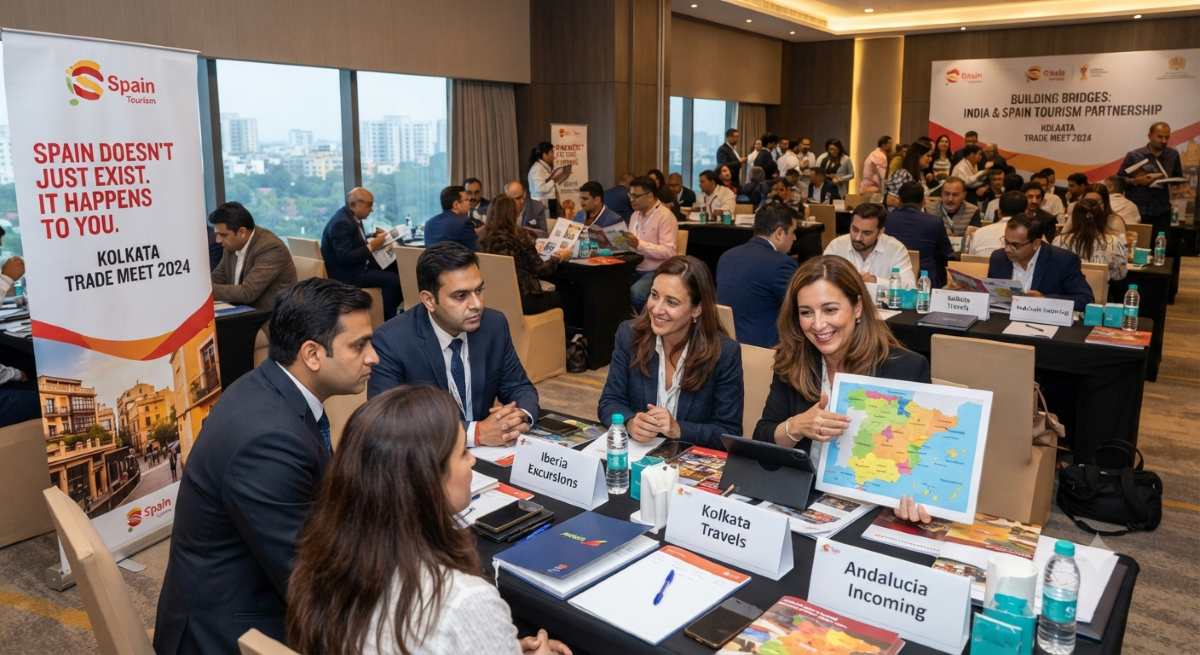
Image generated with Ai
The contemporary landscape of international tourism continues to witness dynamic promotional strategies aimed at reinforcing cross-border relationships. Recently, Spain Tourism successfully orchestrated a high-profile trade networking session located within the vibrant cultural hub of Kolkata. This strategic initiative was designed to bridge the geographical distance between the rich tourism offerings of the Iberian nation and the expanding outbound travel market of eastern India.
Organized with meticulous attention to detail, the event served as a collaborative platform where industry stakeholders could converge. A total of twenty-one selected regional travel agents were brought into direct dialogue with seven distinct Spanish tourism partners. Through this focused delegation, international suppliers and local intermediaries were given a formalized environment to exchange destination knowledge, understand shifting consumer preferences, and establish foundational business alignments tailored to the modern traveler.
Impact on Travellers
For outbound holidaymakers and corporate adventurers, promotional gatherings of this magnitude generate profound downstream benefits. As local travel planners gain deeper, first-hand insights into niche Spanish destinations, bespoke itineraries, and regional attractions, the quality of consumer travel planning is significantly elevated. Rather than relying on standard packaged tours, vacationers from the region are anticipated to receive highly curated, immersive travel recommendations.
Furthermore, the strengthened synergy between regional ticketing networks and Spanish hospitality providers is expected to streamline logistical processes. Travelers stand to experience enhanced connectivity, smoother visa facilitation frameworks, and more competitive holiday packages. Whether individuals seek the architectural heritage of Barcelona, the culinary trails of San Sebastián, or the coastal serenity of Mediterranean islands, the enhanced collaboration ensures that custom-tailored journeys are rendered more accessible and transparent.
Advertisement
Advertisement
Industry Insights
From a broader commercial perspective, trade interactions held in secondary and tertiary economic hubs like Kolkata represent a crucial evolution in destination marketing. Industry analysts note that decentralizing promotional efforts away from traditional metropolitan centers allows tourism boards to tap into high-potential, emerging consumer segments. The active participation of twenty-one regional intermediaries signifies a growing confidence among domestic agencies toward long-haul European destinations.
Simultaneously, the presence of seven specialized Spanish collaborators underscores a decentralized export strategy. By engaging directly with frontline sellers who understand local consumer nuances, Spanish entities can better position their tourism products—ranging from luxury leisure and heritage tours to adventure and MICE tourism. Such targeted engagements foster robust B2B ecosystems, reducing reliance on generalized advertising and replacing it with personalized, relationship-driven commercial channels.
Advertisement
Advertisement
Practical Information
Participants and observers of the trade engagement noted several operational highlights that governed the day’s proceedings. The collaborative format emphasized structured business-to-business networking sessions, allowing each participating agent to engage in targeted discussions with the Spanish delegations. Comprehensive resource kits, destination guides, and updated connectivity itineraries were distributed to equip regional agencies with accurate, up-to-date marketing materials.
The venue was selected to ensure optimal professional interaction, providing specialized breakout areas for individual consultations. Travel professionals interested in aligning with these new offerings are advised to coordinate directly with the participating regional agencies to access the newly curated portfolios, seasonal travel advisories, and specialized promotional incentives stemming from the Kolkata meet.
Advertisement
Advertisement
Comparison with Previous Policies or Developments
When evaluated against historical promotional frameworks, recent initiatives by international tourism boards in India reflect a distinct strategic pivot. Previous tourism promotion models relied heavily on generalized, large-scale consumer fairs or centralized capital-city roadshows, which often overlooked the rich, localized potential of eastern markets like West Bengal.
In contrast, contemporary development policies emphasize hyper-targeted, boutique delegations—evidenced by the precise gathering of twenty-one regional agents and seven specialized partners. This shift demonstrates a move away from broad-spectrum outreach toward intimate, high-yield professional exchanges. By focusing on localized relationship-building, current promotional efforts achieve greater conversion efficiency and build long-term institutional trust compared to older, mass-marketing methodologies.Spain Tourism Expands Footprint in Eastern India Through Targeted Kolkata Trade Meet
Advertisement
