
Albania Joins Bosnia, Bulgaria and More as Europe’s Best-Value Autumn Escapes Take Centre Stage in 2026: All You Need to Know

Published
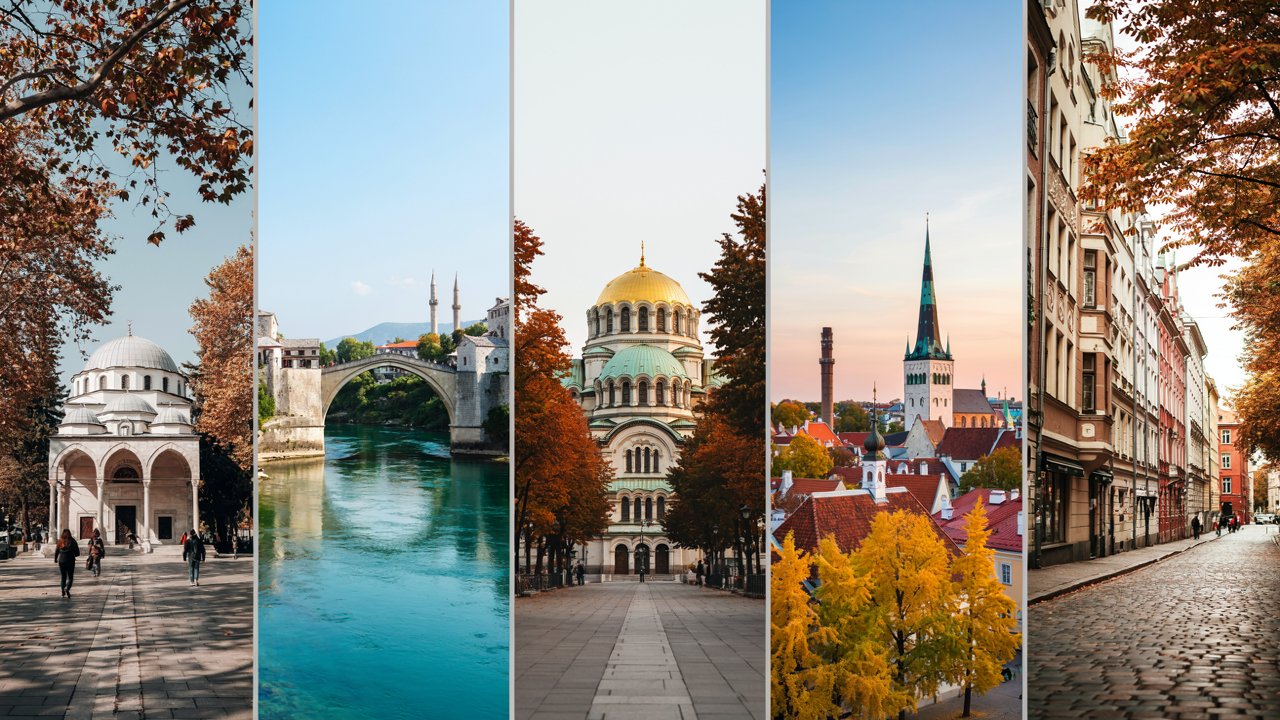
Image generated with Ai
Europe’s famous capitals can become expensive during the busiest travel months, but autumn opens another door. Tirana, Sarajevo, Sofia, Tallinn and Riga offer travellers historic districts, striking architecture, distinctive food cultures and attractions that can be explored largely on foot or with public transport.
These five capitals stretch from the Balkans to the Baltic Sea. They are not interchangeable “cheap destinations”. Each carries a very different history and cultural identity. What connects them is their suitability for travellers who value compact sightseeing, public spaces, heritage and experiences that do not always require expensive admission tickets.
For an autumn European getaway, that combination can make every travel day go considerably further.
Five European Capitals Worth Considering for an Autumn City Break
| City | Country | Standout Experience | Notable Area | Strongest Appeal |
|---|---|---|---|---|
| Tirana | Albania | Skanderbeg Square and Dajti | Blloku | Culture and mountains |
| Sarajevo | Bosnia and Herzegovina | Baščaršija and Sebilj | Old Town | History and food |
| Sofia | Bulgaria | Ancient Serdica | Historic centre | Roman heritage |
| Tallinn | Estonia | Medieval Old Town | Telliskivi | History and creative culture |
| Riga | Latvia | Old Town and St Peter’s Church | Historic Centre | Architecture and city views |
Why Do These Cities Work Particularly Well for Value-Conscious Travellers?
A city break becomes considerably easier to control financially when major attractions sit within walkable districts.
Advertisement
Advertisement
That is one advantage shared by these capitals. Tirana’s Skanderbeg Square places visitors close to several significant cultural institutions. Sarajevo concentrates considerable history around Baščaršija. Ancient remains appear directly within central Sofia. Tallinn preserves an unusually complete medieval urban environment, while Riga’s historic centre invites exploration through streets filled with architectural landmarks.
Public squares, historic streets, architecture and neighbourhood exploration can fill substantial parts of an itinerary without requiring a paid attraction at every stop.
Advertisement
Advertisement
However, travellers should avoid assuming “affordable” means prices remain permanently low. Airfares, accommodation, attractions and restaurant prices fluctuate. Checking current official transport and attraction tariffs before travelling remains essential.
Tirana Turns an Albanian City Break Into a Journey Between History and Mountains
Albania’s capital has undergone a striking urban transformation, yet its historical layers remain easy to find.
Advertisement
Advertisement
Skanderbeg Square provides the logical starting point. Albania’s National Tourism Agency describes it as one of Tirana’s most important public spaces. Its current form dates from a major redevelopment completed in 2017. Natural stone sourced from different Albanian regions covers the square, which is surrounded by important cultural and civic institutions.
From there, travellers can explore Blloku.
The neighbourhood has one of Tirana’s most interesting modern histories. During Albania’s communist period, ordinary citizens could not freely enter the area because it was associated with the ruling elite. Today, Albania’s tourism authority describes Blloku as a heavily visited district filled with restaurants, bars and nightlife.
That transformation gives travellers a revealing glimpse of how dramatically Tirana has changed.
Advertisement
Advertisement
Dajti Adds a Mountain Escape Without Leaving Tirana Far Behind
Tirana’s unusual advantage is how quickly an urban trip can turn into a nature experience.
Dajti National Park lies roughly 26 kilometres from the capital’s centre. Albania’s official tourism organisation highlights its mountain scenery, forests and opportunities for hiking, mountain biking, camping and picnicking.
The Dajti cable car adds another dimension, carrying visitors above the surrounding landscape towards the mountain.
This makes Tirana particularly appealing for travellers who do not want to choose between a city break and outdoor scenery. One itinerary can move from the architecture and public spaces around Skanderbeg Square to Blloku’s contemporary urban life and then towards the mountains.
For a relatively short European break, that variety is significant.
Sarajevo Makes Walking Through History Part of the Experience
Sarajevo offers a very different atmosphere.
Advertisement
Advertisement
Baščaršija forms the historic and cultural core of the Bosnian capital. Sarajevo’s official tourism material identifies the Sebilj fountain in its principal square as one of the city’s most recognisable symbols.
The surrounding streets reveal Sarajevo’s long relationship with craftsmanship and trade. Areas including Kazandžiluk and Bravadžiluk retain connections with the old commercial heart of the city.
The Gazi Husrev-Beg Mosque adds another important historical layer. Built in 1531, it remains a major Islamic religious site in Bosnia and Herzegovina.
What makes Sarajevo especially rewarding is the concentration of these experiences. Walking rather than constantly relying on taxis can become part of the sightseeing itself.
Sarajevo’s Real Attraction Is the Story Written Across Its Streets
Sarajevo should not be reduced to one historical era.
Ottoman heritage, Austro-Hungarian architecture, religious landmarks and twentieth-century history coexist within a relatively concentrated urban landscape.
Advertisement
Advertisement
That makes the city especially rewarding for curious travellers who prefer understanding a destination rather than simply photographing its most recognisable landmarks.
Food also becomes part of the experience. Exploring the old commercial streets naturally brings visitors close to traditional restaurants, bakeries and cafés.
Autumn can complement this style of travel particularly well. Cooler conditions can make extended walking more comfortable, while cafés provide natural pauses between historic sites.
Sarajevo therefore works best when travellers resist rushing. Its strength lies in noticing how different historical periods overlap within the same neighbourhood.
Sofia Lets Travellers Walk Above an Ancient Roman City
Few European capitals reveal ancient history quite like Sofia.
The Bulgarian capital contains the archaeological remains of Serdica directly beneath and around its modern centre.
Advertisement
Advertisement
The Ancient Serdica cultural and archaeological complex covers approximately 16,000 square metres. Visitors can see parts of ancient streets alongside remains of residential and religious buildings, courtyards, water systems and other elements of Roman urban life.
Roman thermal baths and temples provide another window into the ancient settlement. Sofia’s official tourism authority explains that mineral springs and bathing facilities played an important role in Serdica’s prosperity.
For travellers, the result is remarkable: ancient history does not sit far outside Sofia. It intersects with the contemporary city.
Alexander Nevsky Cathedral Gives Sofia an Unmistakable Skyline
Sofia’s architectural identity extends well beyond archaeology.
St Alexander Nevsky Cathedral is among its defining landmarks. The Neo-Byzantine Bulgarian Orthodox cathedral covers around 3,170 square metres and can accommodate approximately 10,000 people, according to Sofia’s official tourism authority.
Getting around is also relatively straightforward.
Advertisement
Advertisement
Sofia Metro operates four lines, and the network connects the airport with the city centre. The journey from Sofia Airport to central Sofia takes around 20 minutes.
That airport-to-centre connection is particularly useful for short breaks because travellers can begin exploring without arranging expensive private transfers.
Sofia consequently combines three qualities city-break travellers often seek: major historical attractions, extensive public transport and a centre where several important sights sit close together.
Tallinn Offers One of Europe’s Most Complete Medieval City Experiences
Tallinn changes the mood again.
The Estonian capital’s Old Town is a UNESCO World Heritage Site whose value comes not from a handful of isolated monuments but from the preservation of the broader medieval urban environment.
Visit Estonia describes an area of cobbled streets, defensive walls and centuries-old buildings that has retained remarkable historical integrity. Tallinn’s Old Town entered UNESCO’s World Heritage List in 1997.
Advertisement
Advertisement
Today, boutiques, craft shops, restaurants and cafés operate within this historic setting.
Travellers can therefore experience Tallinn without constructing an attraction-heavy itinerary. Wandering through Old Town, exploring viewpoints and studying its streetscapes can become the main event.
For photographers and architecture enthusiasts, early autumn can add another visual layer as cooler northern light and seasonal colours change the appearance of the city.
Telliskivi Reveals Tallinn Beyond the Medieval Walls
Tallinn’s character changes dramatically once travellers move towards Telliskivi Creative City.
Established inside a former industrial complex, Telliskivi has transformed old factory buildings into galleries, studios, restaurants, cafés and cultural spaces. Murals and changing exhibitions contribute to its contemporary identity.
The contrast is precisely what makes Tallinn interesting.
Advertisement
Advertisement
Travellers can spend the morning surrounded by medieval streets and move into a repurposed industrial creative district later the same day.
Estonian sauna culture adds another autumn-friendly experience. Tallinn Sauna has operated since 1882 and remains a functioning public sauna, while other traditional and contemporary sauna experiences operate throughout the city.
As temperatures fall, the sauna becomes more than another attraction. It offers visitors a route into a deeply established element of Estonian culture.
Riga Turns Architecture Into a Free-Flowing Walking Tour
Riga is particularly rewarding for travellers who prefer discovering cities on foot.
Old Riga contains a dense collection of architectural styles, including Romanesque, Gothic, Baroque, Classical and later influences. The historic centre has held UNESCO World Heritage status since 1997.
The neighbourhood naturally encourages wandering.
Advertisement
Advertisement
Historic churches, merchant buildings, courtyards, cafés and narrow streets create an itinerary without requiring visitors to move constantly between distant attractions.
The Latvian capital also offers a wider architectural story beyond its medieval core. The nineteenth- and early twentieth-century boulevards surrounding Old Riga form part of the historic centre, while the city’s renowned Art Nouveau architecture provides another reason to explore beyond the oldest streets.
St Peter’s Church Opens One of Riga’s Defining City Views
St Peter’s Church is among Riga’s most recognisable landmarks.
Its tower provides views across the red roofs of Old Riga, the modern city, the Daugava River and the wider urban landscape. Latvia’s official tourism portal identifies it as Riga’s tallest church.
The observation area rises to around 72 metres, making it particularly useful for travellers wanting to understand the geography of Riga from above.
From there, exploring at street level reveals another side of the city.
Advertisement
Advertisement
Old Riga’s combination of architecture, cafés and public spaces means travellers can control their spending by deciding which interiors and paid attractions genuinely interest them rather than buying admission everywhere.
Which City Fits Which Type of Traveller?
Choosing among these capitals depends less on which one is supposedly “best” and more on the experience a traveller wants.
Tirana works particularly well for people wanting energetic urban culture combined with nearby mountains. Sarajevo suits travellers interested in layered history, traditional streets and food. Sofia offers perhaps the strongest combination of Roman archaeology and practical metropolitan transport.
Tallinn is compelling for medieval architecture, contemporary creative culture and sauna traditions. Riga stands out for travellers who enjoy architecture, walkable historic districts and panoramic city views.
This diversity makes the five destinations particularly useful when planning a European trip beyond the continent’s conventional city-break circuit.
How Can Travellers Keep an Autumn European City Break Affordable?
Accommodation location matters almost as much as nightly price.
Advertisement
Advertisement
A slightly more expensive room within walking distance of major attractions can sometimes reduce daily transport spending. Public transport should also be researched before departure rather than relying repeatedly on taxis.
Travellers can then structure each day around free public spaces and streets before selecting a smaller number of paid attractions.
In Tirana, that could mean Skanderbeg Square and Blloku. Sarajevo offers Baščaršija. Sofia places archaeology throughout its centre. Tallinn’s Old Town rewards walking, while Riga’s historic centre offers hours of architectural exploration.
The objective is not to spend nothing. It is to spend selectively on experiences that genuinely add value.
Frequently Asked Questions
1. Which five European capitals feature in this autumn travel guide?
Tirana in Albania, Sarajevo in Bosnia and Herzegovina, Sofia in Bulgaria, Tallinn in Estonia and Riga in Latvia.
2. Which destination combines a capital-city break with mountains?
Tirana is particularly convenient because Dajti National Park lies about 26 kilometres from the centre and offers hiking, mountain biking and other outdoor activities.
Advertisement
Advertisement
3. Which city is especially good for Roman history?
Sofia. Ancient Serdica remains visible within the modern city centre, including streets, buildings and infrastructure from the Roman settlement.
4. Which destination has a UNESCO-listed historic centre?
Tallinn’s Old Town is UNESCO-listed, while Riga’s Historic Centre is also on the World Heritage List.
5. Which city offers a traditional sauna experience?
Tallinn has several sauna options. The historic Tallinn Sauna dates from 1882 and continues operating today.
6. Can travellers reach central Sofia by metro from the airport?
Yes. Sofia’s metro connects the airport with the city centre, with the journey taking approximately 20 minutes.
7. Are these cities guaranteed to be cheap in autumn?
No. Accommodation and airfare vary according to dates, demand and booking conditions. Their walkable historic centres, public spaces and public transport can, however, help travellers build itineraries without relying entirely on expensive attractions or private transport.
Europe’s Autumn Value Can Be Found Beyond Its Most Famous Capitals
Tirana, Sarajevo, Sofia, Tallinn and Riga demonstrate that a memorable European city break does not have to revolve around Paris, London, Amsterdam or Rome.
Advertisement
Advertisement
These capitals deliver something different.
Tirana connects contemporary Albania with nearby mountains. Sarajevo compresses centuries of history into walkable streets. Sofia places Roman ruins beneath the modern capital. Tallinn protects an extraordinary medieval core while embracing contemporary creativity. Riga transforms architecture and public space into an attraction in their own right.
For autumn travellers watching their spending, that variety matters. A strong value trip is not simply about finding the lowest hotel price. It is about choosing a destination where walking, public transport, heritage and accessible experiences allow the travel budget to stretch further without making the journey feel compromised.
Advertisement
