

Greece Cruise Travel Disrupted as Scarlet Lady Breaks Moorings and Drifts Into Boats in Rhodes

Published
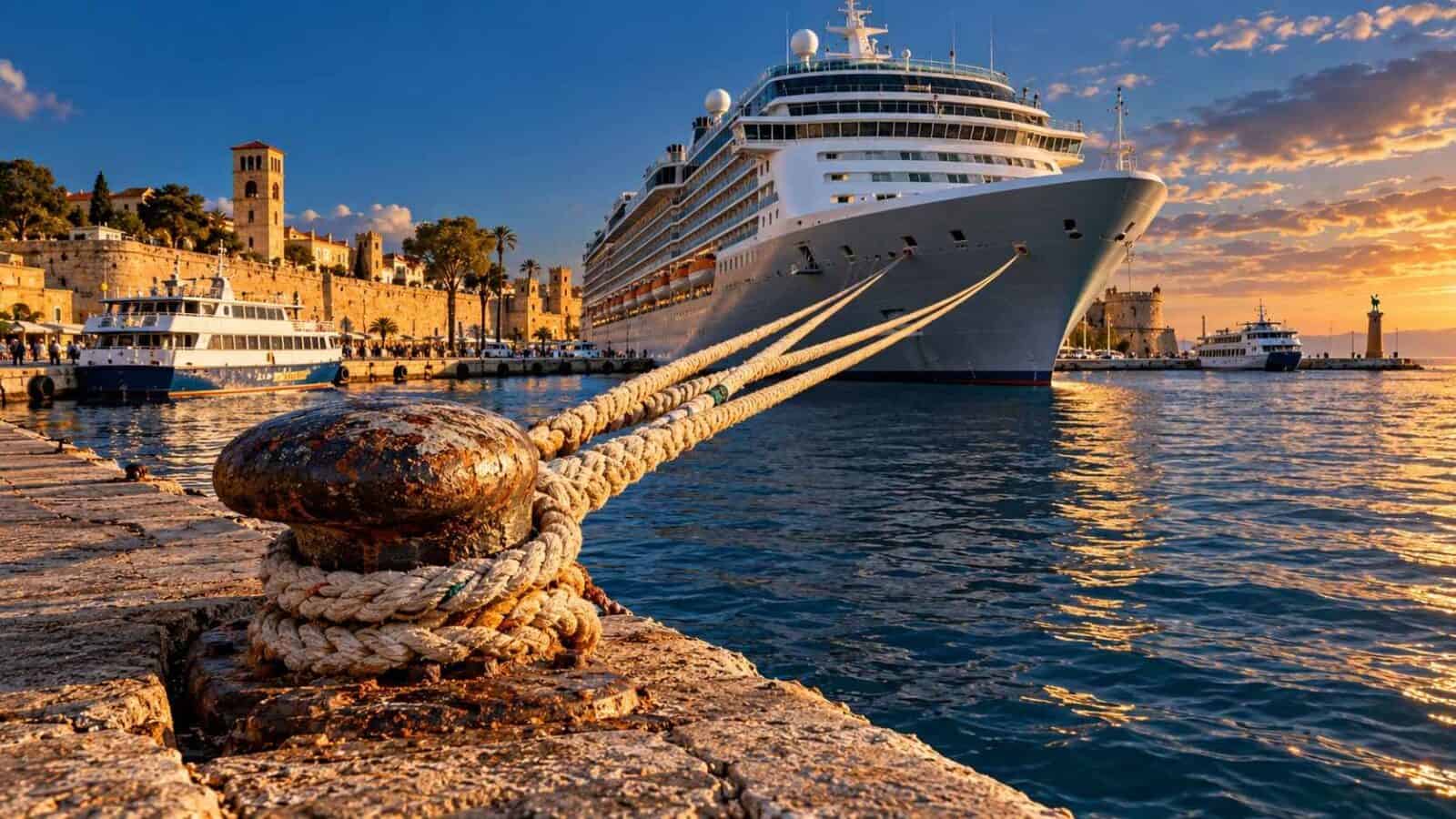
A cruise ship lost its mooring lines at the Rhodes tourist port on 30 September 2026 moved away from its dock and hit another passenger ship. This caused emergency measures and limited departures. Greece cruise travel was questioned after the event, which the Hellenic Coast Guard confirmed in a statement on 1 October. Both ships returned to their docks using their power. Officials said there were no injuries, no pollution in the water and no water entering the ships. For people traveling the main concern is if a ship has permission to leave, not whether it has safely gone back, to the dock after the event itself.
What the official Rhodes report confirms
The Hellenic Coast Guard bulletin describes a Bahamas-flagged cruise ship whose mooring lines broke while it was alongside at Rhodes tourist port. The vessel shifted and contacted a Palau-flagged passenger ship berthed ahead of it.
Advertisement
Advertisement
Authorities activated an emergency search-and-rescue plan and alerted a safety tug. Both ships subsequently manoeuvred back and secured themselves.
The bulletin records three reassuring findings: nobody was injured, no marine pollution was observed and neither vessel suffered water ingress. However, those findings did not remove the requirement for further checks. ΛΣ-ΕΛΑΚΤ
Advertisement
Advertisement
Greece cruise travel depends on clearance after an incident
Rhodes Central Port Authority prohibited both vessels from departing until they submitted seaworthiness certificates from their respective classification societies. The authority also opened a preliminary investigation.
This is the most consequential verified detail for passengers. Returning to a berth and receiving permission to resume a voyage are separate developments.
Advertisement
Advertisement
The reviewed bulletin does not establish when those certificates were supplied or when the restrictions were lifted. Its departure ban should therefore be described as the action taken following the incident, rather than a restriction confirmed to remain in force today. ΛΣ-ΕΛΑΚΤ
Verified information at a glance
| Issue | Officially established position |
|---|---|
| Incident date | Evening of 30 September 2026 |
| Location | Rhodes tourist port |
| Initial event | Cruise ship mooring lines broke |
| Contact | With a passenger vessel berthed ahead |
| Immediate response | Emergency plan activated; safety tug alerted |
| Outcome | Both vessels returned and secured themselves |
| Departure requirement | Seaworthiness certificates required |
| Latest clearance status | Not established in the reviewed bulletin |
Source: Hellenic Coast Guard, bulletin dated 1 October 2026. ΛΣ-ΕΛΑΚΤ
Advertisement
Advertisement
Why the Scarlet Lady identification needs separate confirmation
Scarlet Lady belongs to Virgin Voyages, whose official media material identifies it as part of the company’s fleet. However, that background information does not independently establish its involvement in this incident.
The coastguard notice describes the ships by type and flag. It does not publish their names.
Consequently, a strict primary-source account cannot attach the official findings to Scarlet Lady without an additional named confirmation. The same limitation applies to the reported fallen gangway and contact with two additional boats, which are excluded here.
The passenger priority is a clear operational update
Travellers affected by a berth incident should request a dated update from their cruise operator. The useful questions concern departure clearance, boarding arrangements and any confirmed change to the next port call.
Advertisement
Advertisement
A practical checklist is:
- Confirm the latest departure time directly with the operator.
- Ask whether boarding or shore access has changed.
- Check excursion arrangements before leaving the ship.
- Retain written notices and booking receipts.
- Inform transfer providers when a confirmed schedule changes.
These are planning recommendations, not claims that each disruption occurred in Rhodes.
Safety procedures provide context, not an incident verdict
Virgin Voyages states on its official safety page that its crew receive regular emergency training. It also says passengers must attend a safety briefing on their departure date.
Those published procedures explain the company’s general approach to passenger preparedness. They are not a statement about the Rhodes event or evidence that a particular response met every requirement.
For guests, the practical advice is straightforward: follow crew instructions and ask for assistance if access arrangements are unclear. An operational incident is a poor moment to rely on an old itinerary screenshot or an unofficial message forwarded by another passenger. virginvoyages.com
Excursions and transfers need booking-specific decisions
For a passenger with a prepaid excursion, the first task is to establish whether the activity can still operate within the confirmed shore window. Ask the provider to explain its cancellation or rescheduling terms in writing.
Advertisement
Advertisement
For a separately arranged transfer, share the revised collection time only after the operator confirms it. Avoid replacing one uncertain connection with another expensive booking.
Passengers should distinguish between a changed excursion, a delayed departure and a cancelled voyage. Each requires different information, and none should be assumed from the fact that mooring lines broke.
Local businesses need accurate information
The immediate commercial concern is coordination between ships and shore providers. A guide, driver or boat operator needs dependable information about when passengers can arrive and when they must return.
This is an operational assessment, not a measured loss from the Rhodes incident. No incident-specific revenue figure, employment estimate or compensation total was established in the official material reviewed.
It would also be unsupported to extend the event into claims about cancelled flights, airport disruption or falling hotel demand. Those outcomes require separate evidence.
The investigation should guide the next update
The coastguard bulletin confirms a preliminary investigation, but it does not publish a final explanation for the broken lines. It therefore cannot establish negligence, equipment failure or responsibility.
Advertisement
Advertisement
Likewise, the notice does not announce a new tourism policy, port investment programme or infrastructure project. Adding unrelated initiatives would obscure the concrete development.
The next useful reporting step is a named official statement, a clearance update or published investigation findings. Until then, travellers need accurate operational information rather than predictions about future sailings.
Traveller FAQs
Were passengers injured in the Rhodes incident?
The coastguard reported no injuries. It also recorded no observed marine pollution or water ingress following the contact between the vessels.
Does returning to the berth mean a ship can depart?
The bulletin says both vessels faced departure restrictions pending seaworthiness certificates. Their return to secure berths did not itself satisfy that requirement.
Advertisement
Advertisement
Should travellers cancel a future Rhodes cruise?
The reviewed notice does not announce cancellation of future cruises. Check your specific sailing with the operator before changing flights, accommodation or excursions.
What travellers should take from the incident
The Rhodes incident shows cruise passengers a lesson about reporting: just because a ship returns to port doesn’t mean all questions about the trip ahead are answered. The official report confirms emergency steps were taken the vessel was safely. Seaworthiness certificates were required.. It does not say which ships were involved or whether they were cleared later. Travelers should always get dated instructions from their cruise operator before making changes to excursions, transfers or future travel plans. More information should come after published inspection results and named statements from officials are released. This way the story stays accurate avoids spreading disruption claims and keeps passenger safety as the top priority over dramatic but incomplete details, about what happened.
Official Sources
- Hellenic Coast Guard: Rhodes incident bulletin, 1 October 2026
- Virgin Voyages: Safety and security procedures
- Virgin Voyages: Official media fact sheet
Advertisement
