
Switzerland Emerges Alongside Austria and More in Railway Travel Review as Pass Fares Rise

Updated
Published
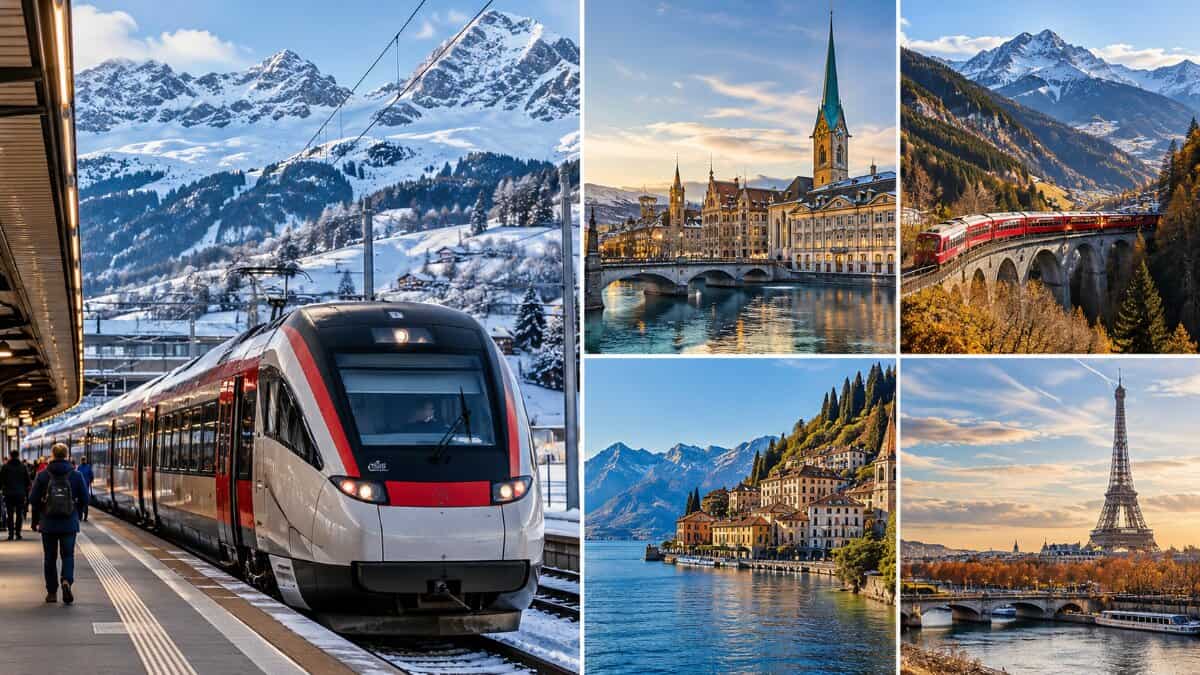
Switzerland’s confirmed railway fare increase from 13 December 2026 is creating a new cost-planning consideration for tourists combining Swiss scenic trains with international connections from Austria, Germany, Italy and France. The second-class Day Pass for the Half Fare Travelcard will rise from CHF 78 to CHF 81, while the first-class price will increase from CHF 128 to CHF 134. According to Swiss Federal Railways (SBB) and Alliance SwissPass, the adjustment applies to selected Swiss transport products, not a coordinated five-country fare increase. Travellers can still compare discounted international tickets, Swiss visitor passes and regional scenic services.
Switzerland’s December 2026 Railway Fare Increase Changes the Winter Travel Calculation
The most immediate development concerns the pricing of Swiss national railway travel products. According to Alliance SwissPass, the organisation coordinating Switzerland’s public transport tariff system, the December adjustment will affect Day Passes, General Travelcards, Half Fare Travelcards and selected additional transport products.
The industry originally proposed an average national fare adjustment of 3.9%. Following discussions with Switzerland’s price supervisory authority, the average increase was reduced to 3.6%, with an expansion of discounted ticket availability also announced.
The adjustments reflect rising operating and infrastructure expenditure, rather than a separate charge introduced specifically for foreign tourists.
Advertisement
Advertisement
Official Swiss Railway Fare Changes Effective 13 December 2026
| Railway product | Price before change | New price | Increase |
|---|---|---|---|
| Half Fare Day Pass, second class | CHF 78 | CHF 81 | 3.85% |
| Half Fare Day Pass, first class | CHF 128 | CHF 134 | 4.69% |
| Six-day Half Fare Day Pass package, second class | CHF 468 | CHF 486 | 3.85% |
| Six-day Half Fare Day Pass package, first class | CHF 768 | CHF 804 | 4.69% |
| Adult annual Half Fare Travelcard, new purchase | CHF 190 | CHF 195 | 2.63% |
Sources: Swiss Federal Railways and Alliance SwissPass tariff announcements, updated through October 2026.
The second-class adjustment adds CHF 3 to each qualifying standard day-pass purchase. For passengers using three such passes, the direct increase totals CHF 9.
Advertisement
Advertisement
Although relatively modest, the change makes it important to examine the complete cost of Swiss sightseeing rather than concentrating exclusively on the advertised railway ticket.
Swiss Travel Pass and Half Fare Card Offer Different Savings for International Tourists
One crucial distinction concerns the difference between Switzerland’s annual Half Fare Travelcard and the one-month Swiss Half Fare Card marketed to international visitors.
Advertisement
Advertisement
According to SBB, the tourist Swiss Half Fare Card costs CHF 150 and provides reduced fares for one month. The Swiss Travel Pass, meanwhile, offers travel on consecutive days across the participating national transport network, alongside selected additional tourism benefits.
The published adult second-class Swiss Travel Pass prices for 2026 are CHF 254 for three days, CHF 309 for four days and CHF 399 for six days.
These visitor-pass prices are officially published as valid until 31 December 2026. They should not automatically be interpreted as guaranteed 2027 prices.
The distinction matters because the national fare increase does not establish an identical percentage adjustment across every tourist railway product.
Advertisement
Advertisement
For travellers, the practical question is whether several daily national tickets, advance-purchase Saver Day Passes, a continuous Swiss Travel Pass or individual point-to-point tickets best fit their actual itinerary.
Austria, Germany, Italy and France Create Four Distinct Gateways to Switzerland’s Scenic Rail Network
The five-country connection is based on established international railway services rather than a common pricing policy. Each neighbouring country offers different entry routes, fare structures and opportunities to extend a Swiss railway holiday.
For travel companies developing multi-country winter itineraries, these differences influence both journey costs and the amount of flexibility available after booking.
International Rail Connectivity and Published Fare Opportunities
| Country | Principal railway connections | Official fare position | Traveller benefit |
|---|---|---|---|
| Switzerland | Glacier Express, Bernina Express, SBB and regional railways | Half Fare Day Pass rises to CHF 81 | National sightseeing and mountain railway access |
| Austria | ÖBB Railjet, Railjet Xpress and Nightjet to Zurich | Sparschiene fares depend on route and availability | Alpine journeys and overnight travel options |
| Germany | Deutsche Bahn ICE and EuroCity services to Swiss cities | Switzerland Super Saver fares advertised from €19.99 | Advance-booking savings and extensive direct connections |
| Italy | Trenitalia EuroCity between Milan and Switzerland | SMART and SMART2 discounts, with limited availability | Transalpine travel and connections towards the Bernina route |
| France | TGV Lyria connecting Paris with Zurich, Basel, Geneva and Lausanne | Standard-class one-way fares advertised from €49 | High-speed connections into western and northern Switzerland |
Sources: SBB, ÖBB, Deutsche Bahn, Trenitalia and TGV Lyria. International starting fares are advertised entry prices, not verified quotations for a particular December departure.
Austria’s Railjet and Nightjet Services Support Alpine Railway Holidays
Austria provides an important eastern gateway to Switzerland.
According to Austrian Federal Railways, ÖBB, its Swiss network includes daytime Railjet services from Vienna, Salzburg and Innsbruck, alongside overnight connections.
Advertisement
Advertisement
The operator also offers Sparschiene advance-purchase fares extending to numerous Swiss leisure destinations. Such tickets are generally tied to selected trains and limited allocations.
For tourists combining Austrian Alpine destinations with Swiss panoramic railways, booking the international section separately from domestic sightseeing may provide useful pricing flexibility.
However, the chosen ticket’s refund conditions and connection arrangements should be assessed before purchase.
Germany Offers Competitive Advance Fares for Swiss Rail Access
Germany contributes substantial international railway connectivity through Deutsche Bahn.
The operator advertises second-class Super Saver fares to Switzerland from €19.99, including selected journeys towards Zurich. It also identifies more than 50 direct connections daily across its Switzerland service offering.
German departure points provide access to Basel, Zurich and Swiss mountain regions through onward connections.
Advertisement
Advertisement
The principal advantage is the opportunity to secure a discounted international journey without purchasing an expensive multi-country pass solely for the border crossing.
These advertised discounts remain subject to train selection, capacity and ticket conditions.
Italy Links Swiss Panoramic Railways With Transalpine Tourism
Italy has a particularly important geographical relationship with Swiss scenic railway tourism.
Trenitalia operates cross-border EuroCity services, while its SMART and SMART2 products provide limited-allocation discounted fares on eligible trains.
Travellers can combine northern Italian railway journeys with Swiss routes through Milan, Zurich and other interchange points.
Another distinctive connection is the Bernina railway, which links the Swiss Alps with Tirano in Italy.
Advertisement
Advertisement
This allows travellers to experience a celebrated panoramic railway corridor without constructing their entire holiday around a single premium tourist train.
France Adds High-Speed Rail Competition Through TGV Lyria
France offers a different railway proposition.
According to TGV Lyria, Paris–Zurich services take approximately four hours and four minutes, with Standard-class tickets advertised from €49 one way.
The service also connects Paris with other Swiss destinations, including Basel, Geneva and Lausanne.
For international tourists, this creates an alternative entry point into Switzerland’s national transport network.
The cost comparison becomes especially relevant when the passenger uses a discounted French international ticket and purchases a Swiss domestic pass only for the sightseeing days that follow.
Advertisement
Advertisement
Winter Railway Budget Comparison Reveals Significant Differences Between Swiss Ticket Options
An independent comparison of official Swiss railway tariffs demonstrates why the ticket product can have a greater effect on holiday expenditure than the December fare adjustment itself.
The following calculations use published second-class adult prices for three consecutive Swiss travel days between 13 and 31 December 2026. They exclude international journeys, accommodation and panoramic-train reservation charges.
| Ticket strategy | Illustrative calculation | Total Swiss rail cost |
|---|---|---|
| Three standard Half Fare Day Passes with tourist Swiss Half Fare Card | CHF 150 + (3 × CHF 81) | CHF 393 |
| Three-day Swiss Travel Pass | Published adult fare | CHF 254 |
| Three Saver Day Passes without half-fare entitlement | 3 × advertised CHF 52 minimum | From CHF 156 |
| Swiss Half Fare Card with three discounted Saver Day Passes | CHF 150 + (3 × advertised CHF 29 minimum) | From CHF 237 |
Calculated from SBB’s published tariffs. Saver Day Pass figures are theoretical minimums, not verified availability for three particular December dates. The Swiss Half Fare Card provides qualifying reduced-fare entitlement.
The CHF 254 Swiss Travel Pass is CHF 139 cheaper than combining a CHF 150 tourist Half Fare Card with three standard CHF 81 Day Passes.
However, advance-purchase Saver Day Passes could produce a lower ticket-only total if the necessary discounted allocations are available.
The comparison therefore requires actual booking quotations before any option can be recommended as the cheapest.
Advertisement
Advertisement
Glacier Express and Bernina Express Reservations Add Another Cost Layer
Premium scenic railway reservations introduce expenses beyond the national travel ticket.
According to the Glacier Express operator, its compulsory seat reservation costs CHF 54. Travellers need both this reservation and a valid ticket or accepted travel pass.
A CHF 81 Day Pass combined with the CHF 54 reservation therefore produces CHF 135 in travel and reservation charges, excluding the cost of obtaining half-fare entitlement.
On the Bernina Line, Rhaetian Railway offers a different arrangement. Regional-train seat reservations between St Moritz and Tirano cost CHF 5 and are optional, whereas reservations on the Bernina Express panoramic service are compulsory.
These regional trains offer access to the celebrated Alpine railway corridor without requiring the premium panoramic service.
Switzerland’s International Rail Expansion Adds Capacity but Also Requires Timetable Checks
The fare changes coincide with further international railway development.
Advertisement
Advertisement
In its May 2026 timetable proposal, SBB outlined an increase from one to two daily direct Zurich–Venice services in each direction, alongside adjustments to connections involving La Spezia and other Italian destinations.
These changes remained subject to the final timetable confirmation process.
Infrastructure also presents operational challenges. According to SBB, engineering works between Domodossola and Milan will continue affecting certain EuroCity operations, while works near Basel are expected to affect selected connections with France into early 2027.
The scale of demand reinforces the importance of reliable planning. SBB reported an average of 1.45 million daily passengers in the first half of 2026, up 4%, and 6.02 million international passengers, an increase of 1.3%.
Independent Analysis Shows the True Winter Rail Affordability Challenge
The central commercial finding is that a small national fare increase can be less important than the way international tickets, Swiss passes and scenic railway reservations are combined.
The CHF 3 rise in the standard second-class Swiss Day Pass is relatively limited. By comparison, one compulsory Glacier Express reservation adds CHF 54. Selecting a visitor pass without sufficient travel days to justify its purchase can create another substantial avoidable expense.
Advertisement
Advertisement
This produces three distinct budget considerations.
First, the international entry journey should be priced separately from Swiss domestic sightseeing. Second, pass validity must match the number and distribution of travel days. Third, travellers must calculate reservation supplements before comparing final prices.
For tour operators, the difference has implications beyond individual savings. A lower rail fare might carry restrictive cancellation terms, limited flexibility or greater exposure to missed connections.
Consequently, the most commercially useful comparison is not simply the lowest advertised fare. It is the lowest fully calculated itinerary cost that satisfies the traveller’s required route, service quality and flexibility.
This approach creates a more meaningful basis for designing affordable European winter railway holidays.
Cross-Border Railway Ticketing Requires Stronger Passenger Protection Planning
Ticket flexibility becomes particularly important when passengers use several railway operators.
Advertisement
Advertisement
The European Commission‘s rail passenger rights guidance distinguishes through-tickets from independently purchased tickets. Through-ticket protection can provide additional rights following missed connections, although the application of EU rules to journeys involving non-EU Switzerland depends on the service and relevant exemptions.
SBB also advises that international booking periods differ by railway operator and that splitting a journey into separate tickets may change passenger rights.
Critical Winter Railway Planning Priorities for Travel Agents and Tour Operators
- Verify December tariffs: Apply the new Swiss Day Pass prices from 13 December 2026.
- Compare complete costs: Include qualifying discount cards, international tickets and compulsory reservations.
- Check availability: Confirm discounted departures rather than relying on advertised minimum fares.
- Protect connections: Review through-ticket arrangements, international transfer times and refund conditions.
- Monitor operations: Recheck engineering notices, winter schedules and scenic-train reservation availability before departure.
European Winter Rail Tourism Enters a More Price-Sensitive Planning Period
Switzerland’s December fare adjustment illustrates how railway pricing, international connectivity and tourist-pass selection are becoming increasingly interconnected.
For Austria, Germany, Italy and France, established cross-border services create opportunities to attract passengers planning multi-destination Alpine holidays.
For Switzerland, the long-term opportunity lies in combining reliable international access with transparent domestic ticketing and competitive scenic railway experiences.
The likely commercial advantage will belong to travel businesses that compare total journey costs accurately while maintaining sufficient flexibility for international passengers.
Advertisement
Advertisement
FAQs
1. When will Switzerland increase its railway Day Pass prices?
The announced increase takes effect on 13 December 2026, coinciding with the annual Swiss public transport timetable change.
2. How much will the Swiss Half Fare Day Pass cost?
The standard second-class Day Pass will cost CHF 81, compared with CHF 78 previously. The first-class fare will rise to CHF 134.
3. Are Austria, Germany, Italy and France also introducing the same fare increase?
No. The confirmed adjustment concerns Swiss transport products. The four neighbouring countries are included because their international railway networks support comparative winter travel planning.
4. Is the Swiss Travel Pass cheaper than purchasing individual Day Passes?
It depends on the itinerary. A three-day Swiss Travel Pass costs CHF 254 at published 2026 adult second-class prices. Advance-purchase discounted Day Passes may cost less, depending on availability and eligibility.
5. Are Glacier Express and Bernina Express reservations included in Swiss rail passes?
No. Premium panoramic services require separate reservations or supplements where applicable. Travellers should purchase the required reservation in addition to holding a valid travel ticket or pass.
Advertisement
