
China Is Unlocking New Technology Tourism And Millions Of Globe-Trotters Are Completely Obsessed With It, Find Out Now

Published
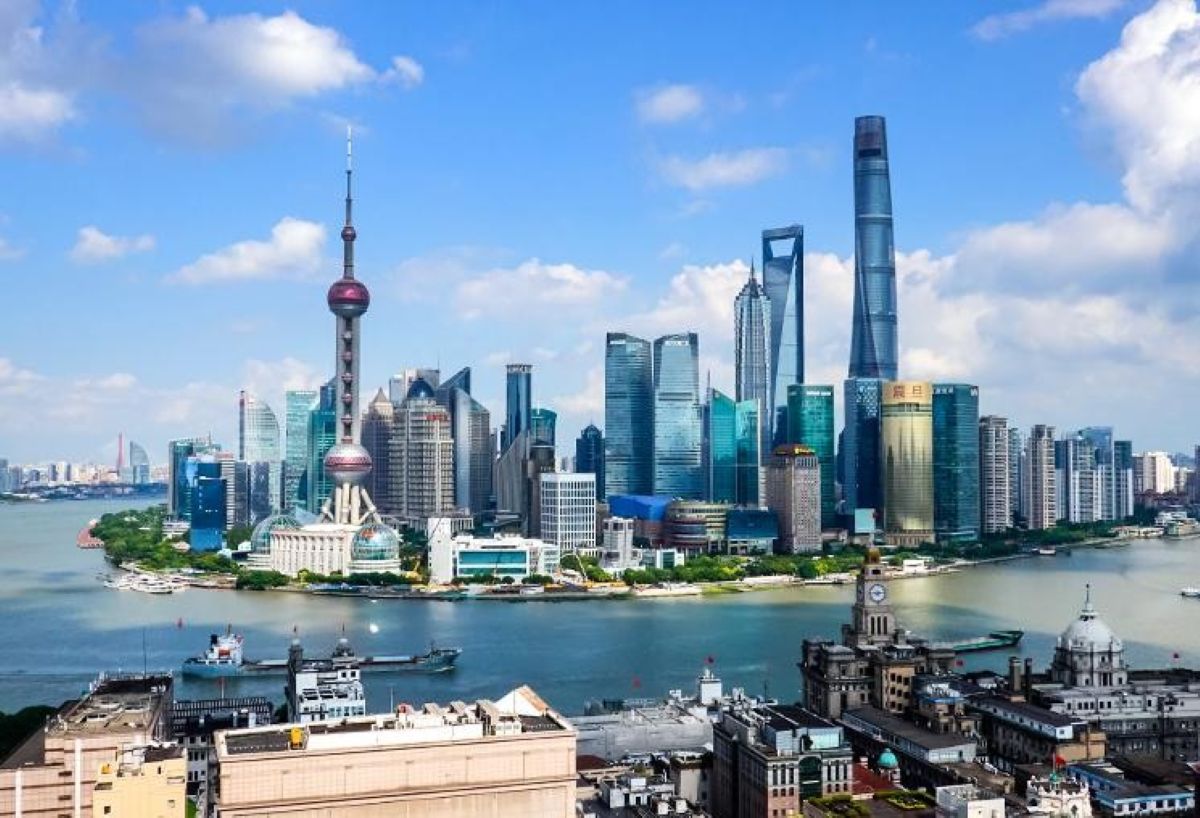
Image generated with Ai
Image Credit Shanghai Municipal Administration of Culture and Tourism
China provides the opportunity to see the future. In the past, the East attracted adventurers looking to explore ancient temples and vistas. Those days are over. Today people go to China to see how far and how fast the future can be. China has automated transport systems and delivery services. This offers people a new way to see the world and travel that enhances creativity. China transforms the stale travel experiences of the past. After someone has witnessed the future of China, they will never have the same boring travel experiences of the past.
An Overview of How China Is Unlocking New Technology Tourism Across Modern Hubs and Innovation Centers
In recent years, the global travel landscape has witnessed a remarkable transformation as China is unlocking new technology tourism across its primary metropolitan hubs and industrial corridors. Modern sightseers, international scholars, venture capital investors, and corporate executives are rapidly re-evaluating their vacation priorities. Instead of focusing exclusively on historic monuments or scenic landscapes, visitors are choosing high-tech manufacturing plants, advanced artificial intelligence laboratories, and automated assembly floors. Furthermore, this emerging movement seamlessly merges traditional leisure sightseeing with direct, hands-on exposure to humanoid robotics, automated supply chains, and self-driving vehicle networks. Consequently, cross-border travelers visiting these bustling metropolitan regions can observe a fully operational, futuristic economic ecosystem operating directly from factory floors and research facilities.
Advertisement
Advertisement
Moreover, targeted government policies and strong international consumer interest are accelerating this specialized sector’s rapid expansion across several key urban regions. For instance, municipal authorities in Beijing have designated over 140 official industrial tourism demonstration sites to welcome curious travelers from every corner of the globe. Meanwhile, leading electric vehicle manufacturing complexes in Beijing have successfully hosted more than 250,000 visitors since March 2024, frequently using digital lottery systems to distribute highly sought-after admission passes. Therefore, international tourists who previously spent their entire schedules touring ancient landmarks are now actively booking visits to automated vehicle assembly facilities, interactive technology exhibitions, and commercial drone hubs.
In addition, the financial scale of this specialized travel sector demonstrates extraordinary numerical growth on an international scale. Valued at approximately US$17.8 billion in 2025, the overall industry is on track to surpass 300 billion yuan (US$44.6 billion) by 2029. As a result, standard commercial tour packages are being redesigned to include technical study visits, interactive robotics demonstrations, and deep technical explorations. Ultimately, this structural evolution positions fully automated manufacturing complexes as a new global standard for educational, high-value travel experiences.
Advertisement
Advertisement
Strategic Policy Directives Driving National High-Tech Industrial Excursions
It was reported that an ambitious regulatory framework spearheaded by seven central government departments, including the Ministry of Culture and Tourism alongside the Ministry of Industry and Information Technology, issued a comprehensive national directive in 2026. This overarching state policy formally requested that commercial enterprises operating within the automotive, advanced robotics, and consumer electronics sectors grant guided public access to their working production lines. By establishing structured educational study trips and immersive behind-the-scenes site tours, government leaders aimed to seamlessly convert active commercial manufacturing centers into worldwide educational landmarks.
Consequently, this official governmental encouragement generated immediate enthusiasm among overseas tourists, academic cohorts, foreign venture capitalists, and global business leaders. Vacationers no longer limit their travel plans strictly to heritage sites or traditional cultural monuments; instead, they actively reserve entry to live research labs and automated transport hubs. This government initiative has effectively elevated working manufacturing plants into modern tourist attractions, granting visitors unprecedented public access to complex industrial operations that were once strictly confidential.
The Global Transformation of Travel Itineraries and Economic Visitor Dynamics
It was further explained that specialized travel arrangements across key technological centers—most notably Shanghai, Hangzhou, Shenzhen, Hefei, and Nanjing—have begun catering extensively to international travel markets. These multi-day commercial itineraries, such as the specialized Shanghai AI–Robotics Innovation Tour or the In-Depth Exploration of Electric Vehicles and Batteries, command prices ranging anywhere from a few hundred to several thousand dollars. In exchange, travelers secure exclusive access to restricted research and development spaces, startup incubators, and active robotic manufacturing floors.
As intense tech competition continues between global markets, these immersive journeys provide international visitors with an unvarnished look at next-generation manufacturing. Ultimately, integrating active industrial facilities into global travel networks redefines how nations project technological capability while capturing significant foreign tourist spending.
Advertisement
Advertisement
Massive Surge in Industrial Study-Tour Bookings and Consumer Demand Metrics
It was observed that public interest in high-tech industrial visits and manufacturing tours has experienced an extraordinary upward surge. Specialized consumer platforms report that user searches for automobile assembly lines, automated maritime shipyards, and high-tech manufacturing plants surged by 230% month-over-month. Furthermore, structured demand for educational industrial study tours expanded by over 50% year-over-year, driven by an eager mix of domestic vacationers and international travelers seeking direct access to modern technological hubs.
This rapid rise reflects a fundamental shift in traveler behavior across major metropolitan corridors. Vacationers are increasingly bypassing conventional scenic stops to secure direct entry into working production environments. Consequently, tour operators and educational institutions are restructuring their core itineraries to accommodate deep-dive technical excursions, interactive factory walkthroughs, and live demonstrations of cutting-edge manufacturing processes.
The Direct Inbound Tourism Catalyst and Visa-Free Policy Multiplier Effect
It was reported that recent border facilitation measures have created a massive multiplier effect for international visitor arrivals. Official data from the National Immigration Administration revealed that foreign visitor entries reached a record 22.9 million in early 2026, marking a 20.4% year-on-year increase. Notably, visa-free arrivals accounted for 17.8 million visits, representing 77.7% of all total entries into the country.
This unprecedented border accessibility directly fueled a 120% year-on-year surge in specialized tech-themed tour bookings across major entry hubs. Eased transit rules and unilateral visa waivers have drastically reduced administrative friction for international travelers. As a result, cross-border professionals, academic groups, and global sightseers can now seamlessly combine personal leisure travel with high-value technical excursions across key innovation centers.
Advertisement
Advertisement
Retail Monetization via High-Tech Consumer Shopping and Tax-Refund Spending
It was highlighted that the integration of technology hubs into general travel itineraries has generated a highly lucrative commercial shopping ecosystem. Overseas visitors now spend between 200 and 1,000 yuan ($30 to $145 USD) per day exclusively on interactive tech experiences, smart device purchases, and high-tech consumer products. This consumer behavior has transformed routine factory visits into immediate retail spending drivers for local commercial districts.
Moreover, tax-refunded foreign purchases experienced an astonishing 366% year-on-year growth across major commercial centers. Advanced consumer electronics, including artificial intelligence translation wearables, smart home devices, and personal consumer drones, accounted for nearly 80% of total tax-refund foreign shopping in primary digital commercial districts. Consequently, technology tourism is directly boosting local retail economies alongside traditional hospitality services.
The Strategic Integration of AI in National Tourism Infrastructure Market Growth
It was noted that the commercial deployment of artificial intelligence across hospitality operations and destination management represents a major growth sector. Industry market metrics demonstrate that the artificial intelligence market within the national tourism sector expanded from US$146.1 million in 2024 and is projected to reach US$617.8 million by 2029. This rapid expansion represents a compound annual growth rate (CAGR) of 27.2%.
This remarkable financial growth is driven by the widespread implementation of automated translation services, intelligent itinerary planners, and smart venue management systems. Travelers visiting major metropolitan centers encounter artificial intelligence at every stage of their journey, from biometrically enabled transit terminals to interactive AI destination guides. Ultimately, this technological foundation enhances the overall visitor experience while optimizing municipal tourism infrastructure.
Advertisement
Advertisement
Industrial Robotics Density and Dominance in Automated Manufacturing Attractions
It was further explained that unprecedented industrial automation has turned working assembly floors into primary visual attractions for tourists. Global robotics metrics indicate that annual industrial robot installations reached 295,000 units, representing over 54% of total global installations. This massive deployment has established an active operational fleet of 2.03 million industrial robots, a figure 4.5 times greater than the second-largest global market.
This extraordinary density of hardware provides visitors with an unmatched visual spectacle of automated precision engineering. Travelers touring smart factories can observe synchronized robotic arms executing complex assembly tasks with zero human intervention. Consequently, these highly automated assembly lines serve both as core industrial infrastructure and as compelling, futuristic sightseeing venues for foreign guests.
Revitalization of Historic Industrial Infrastructure into Digital Cultural Hubs
It was highlighted that urban renewal projects are successfully converting legacy industrial facilities into modern digital cultural destinations. A prime example is Chengdu’s famous “Eastern Suburb Memory” complex, which transformed a historic state-owned electronic tube factory into a vibrant creative district. By blending preserved industrial architecture with digital light displays and modern art spaces, the venue attracted over 18 million annual visitors in 2025.
These urban transformation projects allow metropolitan regions to preserve their industrial heritage while offering contemporary, tech-infused leisure spaces. Visitors can explore giant steel structures, vintage machinery, and historic brick warehouses alongside immersive digital art exhibitions and modern performance venues. Ultimately, this adaptive reuse strategy expands the geographic footprint of urban tourism into historic manufacturing districts.
Advertisement
Advertisement
Long-Term Macroeconomic Projections for the Five-Year Plan Horizon
It was reported that national strategic planning frameworks have formally embedded industrial and technology tourism as key economic development priorities. Official guidelines target a sustained annual compound growth rate of 18% for industrial tourism between 2024 and 2029. This policy mandate aligns high-tech factory showcases with broader national objectives alongside eco-tourism and cultural heritage preservation.
This strategic alignment bridges the country’s massive US$427.7 billion national travel market with its 16-year leadership in global manufacturing output. By opening state-of-the-art production lines to international visitors, the nation showcases its industrial capabilities while capturing high-margin foreign travel expenditures. Consequently, technology tourism serves as a vital macroeconomic bridge between advanced manufacturing and international hospitality.
Expanding Tech Tourism Footprints into Second and Third-Tier Regional Centers
It was observed that the popularity of technical itineraries is effectively decentralizing foreign tourism away from traditional capital cities. Specialized manufacturing hubs across East China and South China most notably Hangzhou, Hefei, Nanjing, and Shenzhen are capturing an increasingly large share of international visitor arrivals. Travelers are actively journeying into regional industrial clusters to inspect battery production, solar hardware, and consumer electronics plants.
This geographic dispersion distributes international tourist spending into rapidly growing regional economies. As foreign executives, technical cohorts, and sightseers travel to secondary manufacturing hubs, regional hospitality markets are benefiting from higher occupancy rates and longer visitor stays. Furthermore, this trend supports robust growth across the luxury accommodation sector, which is projected to expand at a 9.52% CAGR through 2031.
Advertisement
Advertisement
The Final Verdict
Watching a robot arm move makes folks think about where we might be in the future, especially, when it comes to how we get around. Dream up something fast enough and the journey we take to get there suddenly seems a lot less important. Traveling in a world that has implemented technologies from science fiction is something traveling tourists will want to experience firsthand. The anticipation to see these technologies is comparable to the anticipation to see ancient sites, and even takes precedence over seeing automation of the ancient world. Traveling to see the automated factories of the future is the most exciting travel of future vehicles compared to the ancient world travel.
Advertisement
