
Vancouver Rises With Victoria and Others in Fueling Canadian Cruise Tourism Sector with Over 20% Surge in US Tourists in 2026

Published
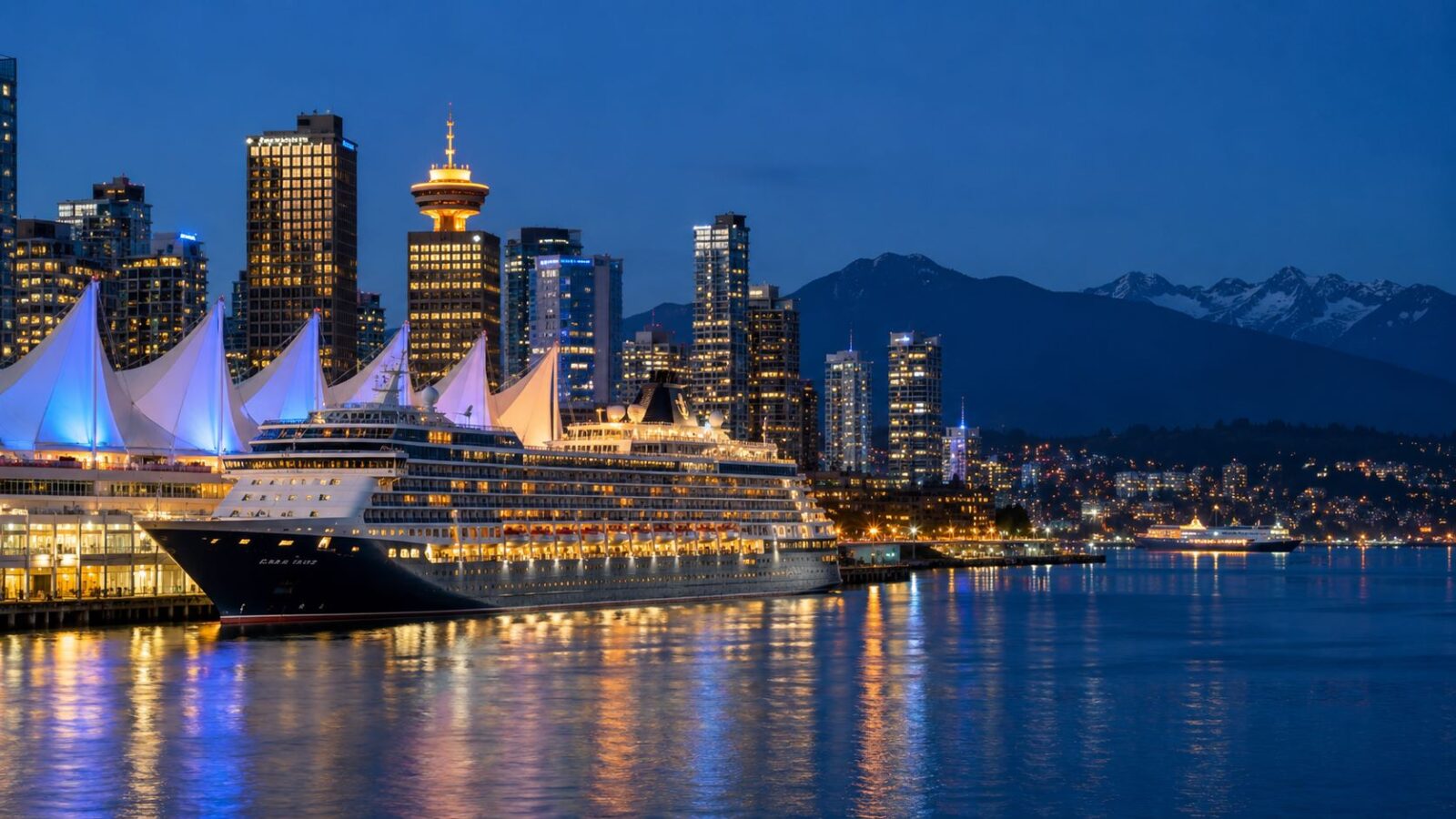
Vancouver rises with Victoria and others in fueling the Canadian cruise tourism sector with an over 20% surge in US tourists in 2026, driven by stronger Alaska, Canada–New England and St Lawrence cruise demand, higher ship calls and expanding passenger volumes.
Canada’s cruise tourism sector is gaining fresh momentum in 2026 as Vancouver rises with Victoria, Halifax, Sydney, Saint John, Québec City and Montréal, supported by expanding ship schedules and a sharp increase in cruise travel from the neighbouring United States.
The clearest sign of that momentum came in June. Statistics Canada recorded 335,800 US residents disembarking from cruise ships in Canada during the month, an increase of 20.5% compared with June 2025. That was considerably stronger than the 8.1% increase in US arrivals by automobile, while US arrivals by air actually declined by 1.3%.
The American influence is not new, but its scale is striking. Statistics Canada found that US residents represented 80% of cruise passengers entering Canada in 2025, equivalent to more than 1.52 million passengers. Overseas visitors represented 11.9%, while Canadian residents accounted for 8.1%. That means the health of the US cruise market has a direct bearing on ports, hotels, restaurants, attractions and excursion operators across both Atlantic and Pacific Canada.
Advertisement
Advertisement
Against that backdrop, Canadian cruise cities are entering 2026 with very different strategies. Vancouver and Victoria are building around the enormous Alaska market. Halifax, Sydney and Saint John are drawing heavily from Canada–New England itineraries. Québec City and Montréal are using the St Lawrence corridor to attract longer stays, luxury vessels and embarkation traffic.
Canada’s Cruise Tourism Outlook for 2026
| Canadian cruise city | 2026 projection or scheduled volume | 2026 calls / operations | Main tourism role |
|---|---|---|---|
| Vancouver | More than 1.4 million passengers | Nearly 360 calls | Major Alaska homeport |
| Victoria | 1,008,109 passengers | 335 calls | Leading Alaska port of call |
| Halifax | About 363,000 guests | 189 calls | Atlantic Canada cruise gateway |
| Sydney | More than 166,000 scheduled passenger capacity in published schedule | Multiple calls through November | Cape Breton gateway |
| Saint John | Active 2026 programme | Published cruise schedule | Bay of Fundy and New England itineraries |
| Québec City | About 115,000 passengers | 100 calls | St Lawrence destination and turnaround port |
| Montréal | Nearly 50,000 passenger-days | 39 operations | Luxury, Great Lakes and St Lawrence cruising |
The numbers are not perfectly comparable because ports use different measures. Some count passenger visits, some count expected guests and Montréal reports passenger-days. Sydney’s schedule is based on vessel capacity rather than a final realised passenger total. Even so, the scale shows how broad Canada’s cruise economy has become.
Advertisement
Advertisement
Vancouver Drives Canada’s Cruise Boom With a Record 2026 Season
Vancouver is heading into the strongest cruise season in its history. The Vancouver Fraser Port Authority expects more than 1.4 million passenger visits and nearly 360 cruise calls during 2026, powered primarily by its position as a major gateway to Alaska. The port expects passenger traffic to be around 30% above 2019 levels, illustrating how far the Alaska cruise market has expanded beyond its pre-pandemic base.
American demand is central to that story. Alaska cruising is heavily dependent on the North American market, and Vancouver serves as both a departure and arrival city for itineraries linking British Columbia with Alaska. Statistics Canada’s finding that US residents represented 80% of Canadian cruise arrivals in 2025 therefore provides important context for Vancouver’s record season. A stronger US cruise market can translate into more guests flying into Vancouver, staying in hotels, dining downtown and extending holidays before or after sailing.
Advertisement
Advertisement
Vancouver Benefits More From Cruise Travellers Who Stay Before and After Sailing
Vancouver’s tourism advantage is that cruise passengers do not simply walk ashore for a few hours. As a homeport, Canada Place generates substantial pre- and post-cruise spending. Travellers may arrive a day or two before departure, stay in downtown hotels, eat at restaurants, visit Stanley Park or Granville Island and use local transport before boarding.
The port authority says cruise operations support more than 17,000 jobs across Canada and estimates that each cruise ship visit generates an average of roughly C$3 million in local spending. With nearly 360 calls scheduled in 2026, cruise tourism therefore reaches well beyond the waterfront.
The rising US market amplifies that effect because American passengers can combine an Alaska cruise with a Canadian city break. Vancouver effectively becomes part of the holiday rather than simply the location where the ship departs.
Victoria Breaks Through the One Million Passenger Mark
Victoria is expected to welcome 1,008,109 cruise passengers from 335 scheduled calls in 2026, pushing the British Columbia capital beyond the 1 million passenger threshold. The number of calls would be a record for the terminal, subject to normal weather and schedule changes.
Advertisement
Advertisement
Victoria’s cruise model differs from Vancouver’s. It functions primarily as a port of call, particularly on Alaska itineraries operating from US Pacific ports and Vancouver. That means huge numbers of passengers enter the city for concentrated shore visits rather than beginning or ending their journey there.
The rise in US cruise travel is particularly important because those Alaska itineraries are heavily exposed to American consumer demand. More US travellers cruising north can mean more passengers stepping ashore at Ogden Point and heading towards Victoria’s Inner Harbour, restaurants, shops, cultural attractions and organised excursions.
Victoria Turns Short Cruise Stops Into a Major Visitor Economy
Victoria’s challenge is not attracting ships; it is maximising what visitors do during the limited hours they are in the city. A port call can send thousands of passengers into local tourism businesses simultaneously, creating concentrated demand for taxis, tour buses, attractions, restaurants and retail.
The 335 anticipated calls in 2026 include new vessels and cruise brands. The season includes inaugural visits from Virgin Voyages and MSC Cruises, while major vessels from Royal Caribbean and Princess Cruises are scheduled for repeated calls.
For Victoria, stronger US cruise demand therefore creates a volume opportunity. The more Alaska itineraries sold in the American market, the larger the potential shore-visitor pool becomes. The economic question is how much of that passenger flow can be converted into meaningful local tourism spending during each call.
Halifax Strengthens Atlantic Canada With 363,000 Cruise Guests
Halifax enters 2026 expecting approximately 363,000 cruise guests from 189 calls by 28 cruise lines. The season runs from April to November, giving Nova Scotia an unusually long operating window for cruise tourism.
Advertisement
Advertisement
The city is increasingly connected to large US source markets. Norwegian Cruise Line has expanded spring and summer activity through Bermuda itineraries that include Halifax, while Carnival has returned to the region through new homeporting from Norfolk, Virginia. Those connections matter because they place Halifax directly inside cruise programmes sold to American consumers rather than relying exclusively on traditional autumn Canada–New England voyages.
The US cruise surge therefore gives Halifax an opportunity to build beyond its familiar fall-foliage reputation and capture visitor spending over a longer part of the year.
Halifax Converts the Harbour Into a Gateway for Nova Scotia Tourism
Halifax benefits from a compact cruise geography. Passengers disembarking near the waterfront can reach downtown attractions quickly, while organised excursions distribute visitors towards Peggy’s Cove and other communities beyond the city.
Cruise already has a substantial economic footprint in Nova Scotia. A study cited by the Port of Halifax estimated that the sector generates nearly C$200 million annually and supports close to 1,000 jobs in the province.
That makes the surge in American cruise passengers relevant far beyond the terminal. US visitors can generate demand for guides, buses, food, retail, museums and coastal excursions. Halifax therefore functions as both a city destination and a distribution point for visitor spending across the province.
Sydney Uses Cruise Tourism to Put Cape Breton Before a Global Audience
Sydney is one of the strongest examples of how cruise can transform the visitor economy of a smaller Canadian city. The Port of Sydney’s published 2026 schedule lists ship capacities totalling more than 166,000 passengers, although this should be treated as scheduled capacity rather than a final passenger count because individual sailings may not operate at maximum occupancy and schedules can change.
Advertisement
Advertisement
The programme includes Holland America, Princess, Celebrity, Norwegian, Carnival, Regent and other cruise brands, giving Cape Breton direct exposure to large North American and international cruise audiences.
American passengers are especially important because Canada–New England itineraries are strongly sold in the United States. Sydney becomes the doorway through which those travellers discover Cape Breton rather than a standalone urban destination.
Cape Breton Turns Cruise Calls Into Scenic Tourism Demand
Sydney’s cruise appeal depends heavily on what lies beyond the harbour. Passengers use the city as an entry point for Cape Breton experiences, from scenic drives and coastal communities to cultural and heritage attractions.
That creates a different tourism economics from Vancouver. Sydney may receive fewer passengers overall, but a large share of cruise spending can move outward through organised excursions and transportation.
The rise of US cruise traffic can strengthen this model because American travellers frequently book Canada–New England voyages specifically for scenery, autumn colours and distinctive coastal destinations. Sydney can therefore use each ship call to introduce Cape Breton to travellers who may otherwise never have planned a standalone trip to Nova Scotia.
Saint John Uses the Bay of Fundy to Capture US Cruise Demand
Saint John remains another important Atlantic Canadian cruise gateway, with its 2026 programme continuing to connect New Brunswick with Canada–New England itineraries. Port Saint John’s published schedule confirms an active cruise season, while the destination continues to promote itself around the Bay of Fundy and its distinctive coastal tourism experiences.
Advertisement
Advertisement
The US market is fundamental to this model. American cruise passengers form the dominant nationality group nationally, and Canada–New England cruising naturally draws from large US East Coast markets.
For Saint John, the advantage is geographic differentiation. Cruise passengers can experience the Bay of Fundy, historic neighbourhoods and New Brunswick coastal scenery within a port call, creating a product that is distinctly different from the large-city experience offered by Montréal, Québec City or Halifax.
Saint John’s Fall Cruise Season Creates a Concentrated Tourism Window
Saint John’s peak cruise period coincides with autumn, when the region’s changing foliage becomes part of the tourism product. The port itself notes that fall is the peak part of its cruise season.
This seasonal concentration can produce very busy days when several vessels arrive within a short period. Restaurants, tour operators, shops and transportation companies can experience visitor volumes that are far greater than the city’s resident population would normally generate.
US cruise demand plays directly into this pattern because New England and Atlantic Canada itineraries are marketed heavily around autumn scenery. A 20.5% national increase in US cruise arrivals in June does not automatically mean Saint John itself grew by that percentage, but it signals strength in the source market on which the city’s cruise economy depends.
Québec City Builds a Higher-Value Cruise Tourism Model
Québec City expects approximately 115,000 cruise passengers during the 2026 season from 100 scheduled calls, including 20 arrival and departure operations. The season runs from 13 April to 1 November, with 4 inaugural calls also planned.
Advertisement
Advertisement
Québec City’s strength is not simply passenger volume. It is developing as both a destination and an embarkation point, allowing the city to capture travellers for longer periods.
A passenger who starts or finishes a cruise in Québec City is more likely to need a hotel, meals, airport or rail transfers and additional sightseeing than someone spending only several hours ashore. That gives the city an opportunity to create more economic value from each passenger rather than pursuing volume alone.
US Travellers Strengthen Québec City’s St Lawrence Position
The St Lawrence is becoming an increasingly important part of cruise itineraries connecting Canada with New England, the Great Lakes and the wider North Atlantic. That makes American passengers particularly important to Québec City.
The Port of Québec is also focusing on controlled development, excursion diversification and increasing local economic benefits rather than relying purely on passenger growth.
For US travellers, Québec City offers an experience that feels geographically close but culturally distinctive. Its historic centre, French-speaking identity, architecture and culinary offer give cruise lines a strong destination to pair with ports in the northeastern United States.
The result is a tourism model where US cruise growth can support hotels and local businesses even without Québec City matching Vancouver’s million-plus passenger scale.
Advertisement
Advertisement
Montréal Uses Luxury Cruising and Longer Stays to Compete
Montréal expects nearly 50,000 passenger-days across 39 cruise operations during 2026. The programme includes 17 ships from 16 cruise lines, with 9 port calls and 30 embarkation or disembarkation operations.
Montréal operates at a much smaller volume than Vancouver or Victoria, but its cruise strategy is different. The city is increasingly focused on luxury vessels, longer stays and itineraries connecting the St Lawrence with New England, Florida, Iceland, Germany and the Great Lakes.
Several ships are scheduled to remain at berth for more than a day, giving passengers additional time to spend in the city. That makes cruise tourism more closely connected with restaurants, museums, shopping, neighbourhood tourism and hotels rather than being limited to rapid sightseeing.
Montréal Turns American Cruise Demand Into a Longer Urban Experience
US cruise growth matters to Montréal because of its connections with New England, Florida and the Great Lakes. These itineraries can bring American travellers into Canada through a slower, destination-intensive form of tourism.
Montréal’s cruise season also peaks during the autumn foliage period, an especially attractive time for North American cruise passengers. In late September 2026, the port said 26 cruise operations remained before the end of the season, representing about 27,900 passenger-days.
The city’s opportunity therefore lies less in competing with Vancouver for maximum passenger volume and more in increasing the value of each visit. Longer port stays and embarkation operations give American travellers more reason to book accommodation, explore neighbourhoods and spend outside the immediate port district.
Advertisement
Advertisement
US Travellers Are the Engine Behind Canada’s Cruise Market
The most important national statistic is not a port forecast but the composition of Canada’s cruise passengers.
Statistics Canada recorded more than 1.9 million cruise passengers entering Canada in 2025. Of these, US residents accounted for approximately 1,525,661, or 80% of the total. Overseas residents represented 227,804, while Canadian residents accounted for 154,828.
| Cruise passenger residence, 2025 | Passengers | Share |
|---|---|---|
| United States | 1,525,661 | 80.0% |
| Overseas countries | 227,804 | 11.9% |
| Canada | 154,828 | 8.1% |
That concentration explains why the 20.5% surge in US cruise arrivals during June 2026 is so important. Canada is not simply benefiting from a broad global cruise recovery; its dominant cruise source market is showing strong year-on-year expansion.
June 2026 Shows Cruise Growing Faster Than US Air Travel
The contrast between transport modes makes the cruise story even more notable.
In June 2026, Canada received about 3 million trips from US residents across all modes, up 6.1% year over year. Automobile arrivals reached 1.7 million, increasing 8.1%. Air arrivals fell 1.3% to 725,600.
Cruise arrivals, by comparison, climbed 20.5% to 335,800.
Advertisement
Advertisement
| US resident travel to Canada | June 2026 | YoY change |
|---|---|---|
| Automobile | 1.7 million | +8.1% |
| Air | 725,600 | -1.3% |
| Cruise ship | 335,800 | +20.5% |
Cruise therefore recorded the strongest percentage growth among the major US travel modes cited by Statistics Canada.
Pacific Canada Remains the Cruise Powerhouse
British Columbia remains the centre of Canadian cruise tourism by passenger volume.
Statistics Canada’s first-port-of-call data for 2025 ranked Victoria first with 959,114 passengers and Vancouver second with 533,311. Halifax/Dartmouth followed with 149,926, while Saint John recorded 135,261. These figures differ from port-reported annual passenger visits because Statistics Canada records cruise travellers at their first Canadian port of call.
That distinction explains why Vancouver’s own port total can exceed 1 million while the Statistics Canada first-arrival figure is lower. A passenger may enter Canada first at Victoria and subsequently sail to Vancouver, meaning the two datasets measure different things.
For tourism analysis, both are valuable: port totals measure the scale of activity in each destination, while Statistics Canada shows where international cruise passengers first enter Canada.
Atlantic Canada Turns Cruise Ships Into Regional Tourism Distribution
Halifax, Sydney and Saint John demonstrate how cruise tourism can matter disproportionately to smaller markets.
Advertisement
Advertisement
A vessel carrying several thousand passengers effectively delivers a temporary wave of visitors directly into a city centre. Those visitors then spread into surrounding regions through coaches, walking tours, restaurants, heritage attractions and retail.
For Atlantic Canada, the value of the US cruise market is therefore not limited to port fees. American passengers can generate visitor spending in communities far from the dock.
Canada–New England itineraries also align closely with the region’s strongest tourism assets: coastal landscapes, maritime heritage, seafood, historic settlements and autumn foliage.
A growing American cruise market gives Atlantic Canadian destinations another channel through which to sell these experiences without requiring every visitor to arrive independently by air or road.
Canada’s Cruise Tourism Story Is Becoming Bigger Than the Ship
The most important development in 2026 is that cruise tourism is increasingly being treated as part of a wider visitor economy.
Vancouver uses homeport passengers to fill hotels and restaurants. Victoria converts Alaska calls into concentrated city visitation. Halifax distributes passengers throughout Nova Scotia. Sydney connects visitors with Cape Breton. Saint John uses the Bay of Fundy as its tourism anchor. Québec City captures longer-stay embarkation passengers, while Montréal is building around luxury cruising and overnight calls.
Advertisement
Advertisement
The common thread running through all of them is the United States.
With Americans representing 80% of Canada’s cruise arrivals in 2025 and US cruise arrivals jumping 20.5% year over year to 335,800 in June 2026, the American traveller remains the single most important external force shaping Canada’s cruise tourism performance.
Vancouver and Victoria Lead a Wider Canadian Cruise Expansion
Vancouver may be the biggest headline in 2026, with more than 1.4 million passengers expected and nearly 360 cruise calls, but Canada’s cruise growth story is much broader. Victoria is projected to exceed 1 million passengers, Halifax expects roughly 363,000 guests, Québec City anticipates around 115,000, while Montréal expects nearly 50,000 passenger-days. Sydney and Saint John continue to anchor important parts of the Atlantic cruise network.
What links these destinations is the ability of cruise ships to deliver visitors directly into local tourism economies.
The 20.5% rise in US cruise arrivals in June gives that model additional momentum. It also reinforces how closely Canada’s cruise fortunes are tied to American travel demand.
For Vancouver and Victoria, that means a larger Alaska market. For Halifax, Sydney and Saint John, it supports Canada–New England cruising. For Québec City and Montréal, it strengthens St Lawrence itineraries capable of turning a cruise holiday into a broader Canadian city experience.
Advertisement
Advertisement
Canada’s cruise sector in 2026 is therefore not simply growing through more ships. It is using those ships to connect millions of North American travellers with cities, communities and tourism businesses from the Pacific coast to the St Lawrence and Atlantic Canada.
Vancouver rises with Victoria and others in fueling the Canadian cruise tourism sector with an over 20% surge in US tourists in 2026, as stronger Alaska and coastal cruise demand lifts ship calls and passenger volumes.
In conclusion, Vancouver rises with Victoria and others in fueling the Canadian cruise tourism sector with an over 20% surge in US tourists in 2026, as stronger Alaska, Canada–New England and St Lawrence cruise demand lifts passenger volumes, ship calls and local spending. The growth matters because US travellers remain Canada’s dominant cruise market, helping ports, hotels, restaurants, attractions and excursion operators benefit from a broader expansion stretching from British Columbia to Atlantic Canada and Québec.
Advertisement
