

United States Officially Renames Florida’s Palm Beach International Airport as President Donald J Trump International Airport with New DJT Airport Code, Triggering a Historic Transition for Airlines, Travellers, and Global Aviation Systems

Published
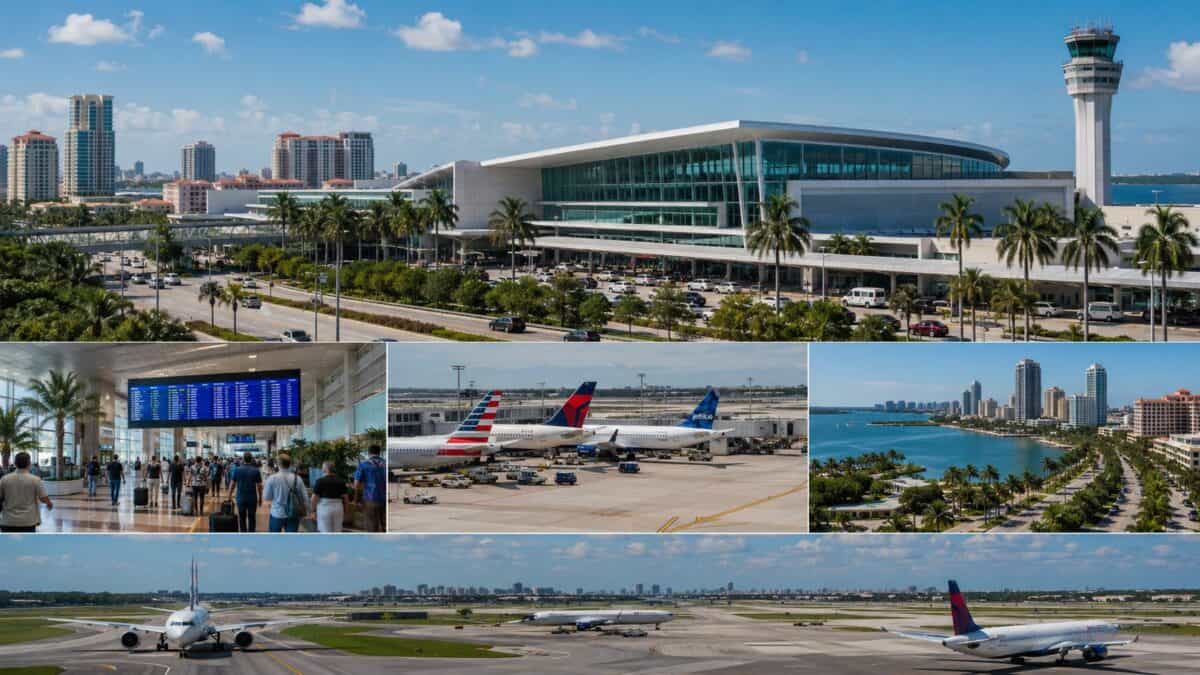
Florida has entered a new chapter in American aviation history after Palm Beach International Airport was officially renamed President Donald J Trump International Airport, becoming the first major operational airport in the United States to be named after a sitting president. The transition, which commenced on 9 July 2026, extends beyond a symbolic name change and introduces a carefully managed operational overhaul involving Federal Aviation Administration (FAA) systems, air traffic control, airline reservation platforms and, eventually, the airport’s internationally recognised three-letter identifier. While the airport will continue handling millions of passengers with no interruption to scheduled services, travellers are being advised that they will temporarily encounter both PBI and DJT airport identifiers during the phased migration.
The development represents one of the most significant airport branding changes seen in the United States in decades. FAA operational systems have already switched to DJT and KDJT, while the globally recognised International Air Transport Association (IATA) code will remain PBI for approximately 40 days before transitioning to DJT. Airlines including American Airlines, Delta Air Lines and JetBlue have introduced temporary booking adjustments to ensure passengers searching for the former airport code continue to receive accurate flight information. For travellers, the move is largely administrative rather than operational, yet it signals a landmark policy decision that intertwines aviation infrastructure, political legacy and destination branding in one of Florida’s busiest tourism gateways.
A Landmark Aviation Identity Change Reshapes One of Florida’s Key Tourism Gateways
The official transformation from Palm Beach International Airport to President Donald J Trump International Airport marks considerably more than the replacement of airport signage. It represents a coordinated aviation transition requiring synchronisation across airport operations, federal navigation systems, airline reservation technology, customs documentation, meteorological reporting, flight dispatch and international aviation databases.
Unlike conventional airport renaming exercises that often require years of gradual implementation, Florida authorities have adopted a structured multi-stage rollout designed to minimise disruption for airlines and passengers while maintaining uninterrupted operational safety.
Advertisement
Advertisement
Beginning on 9 July 2026, FAA operational databases officially recognised the airport under its new identifiers.
These changes immediately affected:
Advertisement
Advertisement
| Operational Element | Previous Identifier | New Identifier | Status |
|---|---|---|---|
| Airport Name | Palm Beach International Airport | President Donald J Trump International Airport | Active |
| FAA Airport Code | PBI | DJT | Active |
| ICAO Identifier | KPBI | KDJT | Active |
| Air Traffic Control | KPBI | KDJT | Active |
| Flight Planning Systems | PBI | DJT | Active |
| Weather Reporting | KPBI | KDJT | Active |
| Passenger Tickets | PBI | PBI (Temporary) | Transition Period |
| IATA Airport Code | PBI | DJT | Effective 18 August 2026 |
The phased approach reflects the complexity of international aviation systems, where airport identifiers are integrated into thousands of interconnected databases worldwide.
For aviation professionals, changing an airport code involves updates extending well beyond passenger-facing services. Flight management software, aircraft navigation databases, dispatch systems, baggage routing platforms, customs declarations, cargo manifests and international reservation systems must all recognise identical coding to avoid operational inconsistencies.
Advertisement
Advertisement
Consequently, authorities opted for a transition period rather than an immediate overnight conversion.
Why Travellers Will Continue Seeing ‘PBI’ Despite the Official Name Change
One aspect likely to confuse travellers is the temporary coexistence of both airport identifiers.
Although the airport officially operates under its new name, commercial airline customers booking flights over the coming weeks may continue seeing Palm Beach (PBI) throughout airline websites, boarding passes, luggage tags and travel itineraries.
This temporary measure has been introduced because airline reservation infrastructure depends primarily on IATA airport codes, which require coordinated implementation across hundreds of airlines, global distribution systems and travel agencies.
Advertisement
Advertisement
The IATA transition is scheduled for 18 August 2026, allowing airlines sufficient time to complete software updates.
Until then, passengers should expect a mixed environment where:
| Passenger Experience | What Travellers Will See |
|---|---|
| Airport Road Signs | President Donald J Trump International Airport |
| Airport Building Signage | Gradually Updated |
| Boarding Passes | PBI (Temporary) |
| Checked Baggage Tags | PBI |
| Airline Booking Websites | PBI with transition notices |
| FAA Flight Data | DJT |
| Navigation Charts | DJT/KDJT |
For most leisure and business travellers, this administrative distinction will have virtually no impact on journeys.
Flights, security procedures, terminals, parking facilities, lounges, rental car operations and customs processing remain unchanged throughout the transition.
Florida’s Growing Aviation Network Makes the Transition Particularly Significant
The airport occupies an increasingly important position within Florida’s aviation ecosystem.
Florida consistently ranks among the world’s leading tourism destinations, welcoming well over 140 million visitors annually in recent years according to statewide tourism data. Air travel remains the dominant mode of arrival for both domestic and international visitors, placing airports at the centre of the state’s visitor economy.
Advertisement
Advertisement
While larger gateways such as Miami International Airport, Orlando International Airport and Fort Lauderdale-Hollywood International Airport handle substantially higher passenger volumes, Palm Beach serves one of the state’s wealthiest tourism and residential markets.
The airport provides direct connectivity to major American cities while supporting international charter operations, private aviation, seasonal tourism and corporate travel.
Its location also makes it an important entry point for travellers visiting:
- Palm Beach
- West Palm Beach
- Boca Raton
- Jupiter
- Delray Beach
- Florida’s Atlantic coastline
The airport therefore plays a strategic role beyond simple passenger throughput, acting as a gateway to luxury tourism, business travel, meetings and conventions, golf tourism and high-end residential communities.
Airport Branding Increasingly Shapes Destination Recognition
Airport names have evolved into influential branding assets within global tourism.
Across the aviation industry, airports are no longer viewed solely as transportation facilities. Instead, they increasingly serve as the first physical interaction visitors have with a destination.
Advertisement
Advertisement
Consequently, governments and airport authorities often use naming strategies to reinforce regional identity, commemorate historical figures or enhance destination recognition.
Examples around the world include airports named after presidents, monarchs, national heroes, cultural icons and independence leaders.
For tourism marketers, airport branding contributes to destination awareness, digital search visibility and international recognition.
In Florida’s case, the transition creates one of the most recognisable airport names within North America while simultaneously generating significant international media attention.
Regardless of political interpretation, the renaming has already achieved substantial global visibility, introducing the airport to audiences that may previously have had limited familiarity with Palm Beach as an aviation gateway.
Airlines Move Quickly to Prevent Passenger Disruption
Aviation technology providers and airlines have worked extensively to ensure the transition remains largely invisible to travellers.
Advertisement
Advertisement
Major carriers serving the airport—including American Airlines, Delta Air Lines and JetBlue—have introduced temporary search mapping that automatically redirects customers searching for PBI to the renamed airport.
These measures reduce the likelihood of booking errors while reservation databases gradually transition towards the new identifier.
For travel agencies, online booking platforms and corporate travel managers, the temporary coexistence of two identifiers requires careful system synchronisation.
Industry specialists note that airport code changes are comparatively rare because they affect numerous interconnected global systems simultaneously.
Consequently, airlines typically implement comprehensive testing before activating new airport identifiers across reservation, departure control and baggage management platforms.
During the transition period, passengers are encouraged to rely on airline notifications rather than assuming differing airport codes indicate separate airports.
Advertisement
Advertisement
The phased implementation is expected to conclude once the IATA code officially changes to DJT on 18 August 2026, completing one of the most closely watched airport identity transformations in recent US aviation history.
What the Airport Renaming Means for Travellers and the Wider Tourism Economy
For passengers, the renaming of President Donald J Trump International Airport is expected to be almost entirely administrative. Flight schedules, terminal facilities, airline operations, security screening, customs procedures and ground transportation remain unchanged. Nevertheless, travellers should remain aware of the temporary coexistence of the PBI and DJT airport identifiers until the International Air Transport Association (IATA) officially completes the transition.
The airport continues to offer domestic and limited international connectivity through several major US carriers, serving as a vital gateway to South Florida’s luxury tourism market. Palm Beach County attracts millions of visitors each year, drawn by its renowned beaches, golf courses, luxury resorts, yachting facilities, cultural institutions and business events. Maintaining seamless airport operations during the rebranding is therefore critical to preserving visitor confidence.
The phased transition also demonstrates how modern aviation infrastructure has become increasingly dependent on integrated digital systems. A simple change to an airport name now requires updates across reservation systems, airline departure control software, navigation databases, airport display systems, weather reporting platforms, customs documentation and international travel distribution networks.
Traveller Checklist During the Transition
| Travel Element | What Travellers Should Know |
|---|---|
| Flight bookings | Continue using PBI until airlines fully migrate to DJT |
| Existing tickets | Remain valid without any modification |
| Airport location | No change; only the airport name has changed |
| Airline schedules | No operational disruption expected |
| Security procedures | Unchanged |
| Checked baggage | Temporary baggage tags may continue showing PBI |
| Navigation apps | Airport name may gradually update depending on software provider |
| Travel insurance | No changes required |
Passengers are also advised to monitor notifications issued by their respective airlines, particularly when travelling during the transition period, as booking confirmations and airport references may differ depending on when tickets were issued.
Florida’s Tourism Industry Continues to Depend on Strong Aviation Connectivity
Florida remains one of the world’s leading tourism destinations, supported by an extensive airport network connecting the state with domestic and international markets. According to state tourism statistics, Florida welcomed over 140 million visitors in recent years, with aviation accounting for the majority of long-distance arrivals.
Advertisement
Advertisement
Palm Beach County itself has developed into a major leisure and business destination. Beyond its well-known luxury resorts and beaches, the region hosts international equestrian competitions, golf tournaments, marine tourism, high-profile business conferences and seasonal events that attract affluent domestic and overseas travellers.
The airport plays a particularly important role in serving:
| Tourism Segment | Importance to Palm Beach Region |
|---|---|
| Luxury leisure travel | High |
| Golf tourism | High |
| Beach holidays | High |
| Meetings and conventions | Moderate to High |
| Corporate travel | High |
| Private aviation | Very High |
| Cruise pre- and post-stays | Moderate |
| Seasonal “snowbird” tourism | High |
Maintaining uninterrupted airport operations during the renaming process therefore supports not only passenger convenience but also the broader regional visitor economy.
Airport Renaming Is Rare in Global Commercial Aviation
Changing the official identity of an operational international airport is relatively uncommon because airport names and codes are deeply embedded within global aviation systems.
While terminal names frequently honour political leaders or public figures, complete airport renaming—including changes to operational identifiers—is significantly more complex.
Several internationally recognised airports have undergone similar transformations over the years.
Advertisement
Advertisement
| Airport | Country | Current Name |
|---|---|---|
| John F. Kennedy International Airport | United States | Named after President John F. Kennedy |
| Ronald Reagan Washington National Airport | United States | Named after President Ronald Reagan |
| George Bush Intercontinental Airport | United States | Named after President George H. W. Bush |
| Ben Gurion Airport | Israel | Named after David Ben-Gurion |
| King Abdulaziz International Airport | Saudi Arabia | Named after King Abdulaziz |
| Indira Gandhi International Airport | India | Named after former Prime Minister Indira Gandhi |
However, President Donald J Trump International Airport stands apart because it has become the first major operational US airport named after a sitting president, making the decision historically significant within American aviation.
The Technology Behind an Airport Code Change
Airport identifiers may appear straightforward to travellers, but they are fundamental to global aviation operations.
The FAA, International Civil Aviation Organization (ICAO) and International Air Transport Association (IATA) each maintain different coding systems used for distinct operational purposes.
| Organisation | Identifier Type | Purpose |
|---|---|---|
| FAA | DJT | Domestic operational management |
| ICAO | KDJT | Air traffic control, navigation and international flight planning |
| IATA | DJT (effective 18 August 2026) | Airline bookings, baggage and ticketing |
Every commercial airline, airport, travel agency and online booking platform worldwide relies on these identifiers to process reservations, route baggage, coordinate flight operations and exchange aviation data.
Because of this interdependence, aviation authorities typically introduce code changes gradually to minimise the risk of booking errors or operational disruptions.
Industry Perspective: More Than a Symbolic Name Change
From an aviation industry standpoint, the renaming reflects how airports increasingly function as both transportation hubs and destination brands.
Advertisement
Advertisement
Modern airports compete not only through infrastructure investment but also through global recognition, passenger experience and digital visibility. Airport branding now influences online search behaviour, tourism marketing campaigns, conference promotion and investment attraction.
The renaming has already generated significant international attention, placing Palm Beach firmly in global news coverage. For destination marketers, such visibility can increase awareness of a region that is often overshadowed by larger Florida gateways such as Miami and Orlando.
Industry observers will also be watching whether the new branding influences future marketing campaigns, route development initiatives or international tourism promotion linked to Palm Beach County.
Practical Information for Travel Advisors, Tour Operators and Corporate Travel Managers
Travel professionals should ensure clients understand that the airport remains fully operational despite the change in branding.
Reservation systems may temporarily display either PBI or DJT, depending on the airline and booking platform being used. Travel advisors should reassure passengers that both identifiers refer to the same airport during the transition period.
Corporate travel managers should also verify that internal travel booking tools, expense systems and itinerary management software recognise the updated airport coding once the IATA transition takes effect.
Advertisement
Advertisement
Tour operators offering Florida holiday packages may wish to update promotional materials, airport transfer information and destination guides as the new branding becomes standard across the travel industry.
Looking Ahead for President Donald J Trump International Airport
The transition from Palm Beach International Airport to President Donald J Trump International Airport represents one of the most closely watched airport rebranding exercises in recent US aviation history. While the operational impact on travellers is expected to remain minimal, the broader significance lies in the combination of aviation policy, destination branding and national visibility.
As the phased implementation progresses and the DJT identifier becomes fully integrated into global airline reservation systems, travellers can expect a seamless experience supported by coordinated updates across airlines, airport operators and aviation authorities.
For Florida’s tourism sector, the airport continues to serve as a strategically important gateway to one of the state’s most prestigious visitor destinations. Whether arriving for leisure, business, luxury travel or seasonal holidays, passengers will continue to access the same facilities, services and connectivity—now under a new name that has already become part of aviation history.
Advertisement
